

More news on this day
Avelo Airlines’ decision to slash nearly a third of its nonstop routes in early 2026 is forcing travelers across its network to rethink how, when and even whether they fly on the fast-growing ultra-low-cost carrier.
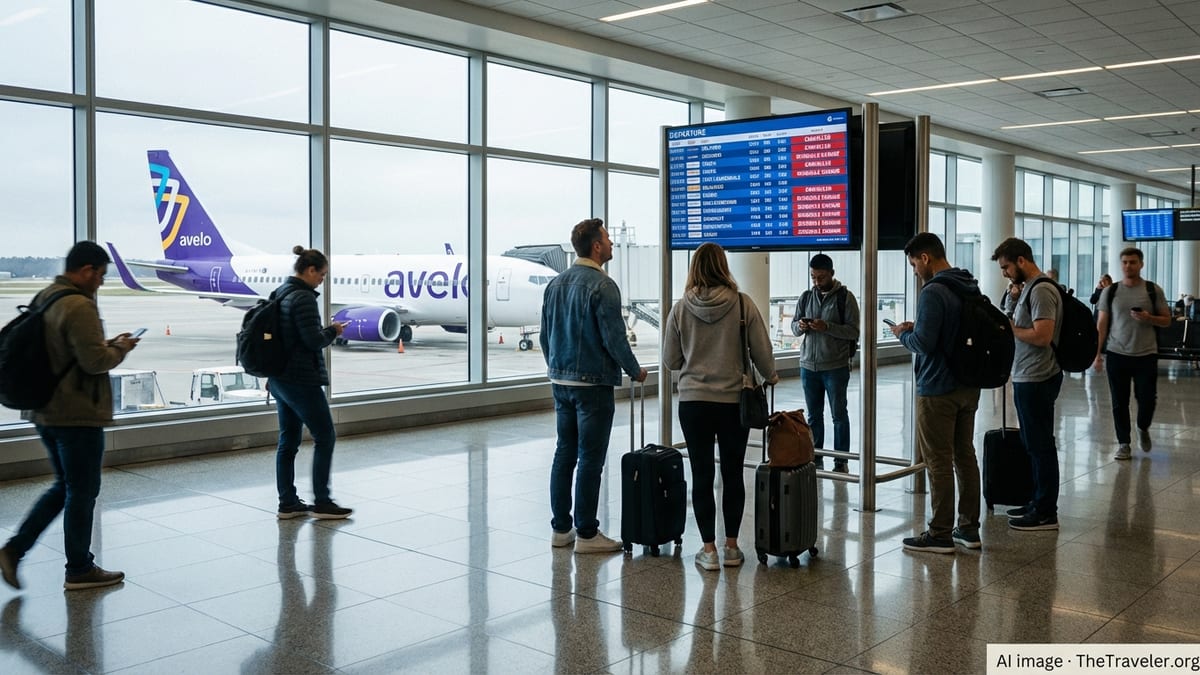
What Avelo’s 29% Cut in Nonstop Service Really Means
Avelo Airlines entered 2026 with a very different message from the hyper-growth narrative that defined its early years. Following a recapitalization and a sweeping restructuring of its network and fleet, the carrier has moved to eliminate roughly 29 percent of its nonstop routes, concentrating flying around a smaller number of bases and higher-performing markets. For passengers, particularly those in secondary cities that first embraced Avelo’s point-to-point model, the shift translates into fewer direct options and a new layer of complexity in trip planning.
The pivot comes as Avelo touts what it calls one of the strongest balance sheets in the U.S. airline industry relative to its size, but that financial strength is now being channeled into consolidation rather than expansion. The airline is paring back marginal routes, trimming underperforming city pairs and leaning harder into core East Coast and Central Florida operations. While its public messaging emphasizes long-term sustainability and future growth, the near-term impact for customers is a noticeable contraction in nonstop connectivity.
For leisure travelers who built itineraries around Avelo’s no-frills, nonstop model, the cutbacks mark a new travel reality. Fares may remain low on surviving routes, but the ability to hop on a direct flight from a small or mid-sized airport to a sunny vacation destination is no longer guaranteed. Instead, more passengers will find themselves piecing together alternatives, often on competing carriers, that involve connections, higher prices or both.
Bases Closed, Networks Redrawn: Where the Cuts Are Hitting
The most visible sign of Avelo’s retrenchment is at the base level. In January 2026 the airline confirmed it would close operations in Mesa, Arizona; Raleigh-Durham, North Carolina; and Wilmington, North Carolina, shifting its focus to four primary bases in New Haven, Connecticut; Wilmington, Delaware; Charlotte-Concord, North Carolina; and Lakeland in Central Florida, along with plans for a future base in the Dallas region. The move follows an earlier decision to wind down its original West Coast hub at Hollywood Burbank Airport, signaling a retreat from the highly competitive western U.S. market.
Those base closures have already translated into a wave of route cancellations. In late January, Avelo will discontinue at least ten routes tied to the Raleigh-Durham and Wilmington, North Carolina stations, including links from Raleigh-Durham to Albany and Grand Rapids and several leisure-focused flights from Wilmington to Florida, Long Island, Rochester and Punta Cana. At Wilmington International Airport, service is being scaled back to a handful of remaining destinations, with local officials confirming that eleven routes launched less than a year ago will vanish from schedules.
Even in surviving bases, the network is being simplified. In Delaware, where Avelo remains the sole commercial carrier at Wilmington Airport, the airline is trimming its portfolio from 14 to 10 routes as part of the restructuring. Some recently announced services to major hubs such as Atlanta and Chicago no longer appear in booking systems, underscoring how quickly the route map is being redrawn. For communities that celebrated new nonstop options just months ago, the reversal is abrupt.
At the same time, Avelo continues to extend schedules and add flying selectively from key bases, particularly in Central Florida and New England, creating an uneven picture across its network. While passengers in some cities are losing nearly all nonstop connectivity, others are seeing expanded options to Orlando, Lakeland and popular East Coast destinations, highlighting the carrier’s sharpened focus on a narrower set of origin airports.
Fleet Downsizing and a New Growth Story
Underpinning the 29 percent reduction in nonstop service is a structural shift in Avelo’s fleet strategy. The carrier is removing six Boeing 737-700 aircraft from its operation, a move that cuts overall capacity in the short term while leaving it primarily operating larger, more efficient 737-800s. That smaller fleet means fewer aircraft to spread across a far-reaching point-to-point network, forcing the airline to choose between breadth and depth. It has opted for depth in core markets, sacrificing a host of thinner routes that struggled to achieve sustainable load factors or yields.
At the same time, Avelo is positioning the cuts as a prelude to a new growth chapter. The airline has placed an order for up to 100 Embraer 195-E2 aircraft, a modern, fuel-efficient narrowbody suited to medium-density routes from secondary airports. Executives argue that the recapitalization and fleet refresh will allow the company to scale sustainably from a stronger financial footing, rather than chasing rapid expansion with a patchwork of marginal routes.
In the near term, however, this balancing act leaves passengers navigating a patchy map. Some cities where Avelo once marketed itself as a hometown carrier are now watching aircraft and crews redeploy to other regions. Others, such as Lakeland and New Haven, are seeing their importance rise as the airline’s strategy coalesces around a smaller number of anchor airports. For travelers, the practical effect is that nonstop access increasingly depends on being within driving distance of those favored bases.
The contrast is especially stark when compared with competitor low-cost carriers that are using the moment to expand. Breeze Airways, for instance, has moved to take over several former Avelo routes on the West Coast, underscoring how nimble rivals can rapidly fill gaps when a competitor retrenches. For bargain-hunting flyers, the shifting landscape underscores the importance of watching not just one carrier’s route map but the broader competitive field.
How Travelers Are Feeling the Impact on the Ground
For customers, the headline figure of a 29 percent nonstop reduction translates into very personal disruptions. In some markets, passengers are learning of cancellations only weeks before departure, often after already booking hotels, rental cars and other nonrefundable elements of a trip. While the airline is offering refunds and, in some cases, modest travel credits, those gestures do not always cover the higher cost of rebooking on another carrier, particularly during peak travel periods or school holidays.
In Wilmington, North Carolina, small business owners and leisure travelers alike say the drawdown feels like a step backward after a brief period of expanded connectivity. Some booked trips to the Philadelphia-New Jersey region or to newly available Florida destinations only to see their itineraries canceled and reissued as refunds. Airport officials have tried to reassure the community by noting that other airlines already serve several of the lost routes, but for travelers who had come to rely on Avelo’s nonstop options, the loss stings.
Raleigh-Durham passengers face a different kind of recalibration. Even as Avelo shuts its base there and drops multiple routes, it is keeping a limited presence through flights from New Haven and Rochester. That leaves local travelers with a narrower, more niche set of options, and often at lower frequencies than they had grown accustomed to. In practice, that can mean less flexibility on travel days and a higher risk that any disruption will spill over into missed connections or forced overnight stays.
Further north, some markets are seeing relative stability or even modest growth as Avelo extends schedules on surviving routes through mid-2026. For them, the restructuring can appear abstract, a story unfolding elsewhere in the network. Yet even these customers are reminded that with a leaner fleet and a smaller route map, the airline has less slack to absorb operational hiccups, leaving fewer backup options when weather or technical issues arise.
Scrambling for Alternatives: Connections, Competitors and Cars
The contraction in nonstop service is pushing many travelers into a familiar but often unwelcome pattern: trading simple point-to-point flights for connections, longer drives or more expensive tickets on larger carriers. In cities where Avelo has withdrawn entirely or sharply reduced service, passengers are turning to regional hubs served by mainline airlines, accepting connections in exchange for reliability and schedule depth. That can add hours to a journey that once took little more than the flight time itself.
In some cases, competitors are stepping in. On the West Coast, for example, Breeze Airways has moved quickly to fill the void on several former Avelo routes, presenting an alternative for price-sensitive travelers who still want nonstop service between secondary markets. In other regions, legacy carriers and larger low-cost airlines already operating at airports such as Raleigh-Durham and Wilmington, North Carolina, are likely to capture some of the displaced demand, even if they cannot match the lowest promotional fares Avelo once offered.
For travelers in smaller communities, driving farther to reach a viable airport is increasingly part of the calculation. With Avelo consolidating around bases like New Haven and Lakeland, some passengers are choosing to drive several hours to board a surviving nonstop rather than accept a connection from their local field. Others decide that the combination of higher fares, limited schedules and the risk of last-minute changes outweighs the savings, and revert to road trips or rail where feasible.
The ripple effects extend beyond individual vacations. Tourism boards and local businesses in destinations that briefly enjoyed new nonstop links are now recalibrating marketing plans, anticipating fewer impulse weekend getaways and more reliance on traditional hubs. Hotels and attractions that invested in targeting Avelo’s customer base may need to pivot once again as the flow of direct flights dries up.
What to Check Before You Book with Avelo in 2026
For travelers still attracted by Avelo’s low fares, the new environment demands a more cautious and informed approach to booking. The first step is to verify that a desired route is not only available today but appears stable across the travel period in question. The airline has been extending its schedule in blocks, particularly out of East Coast and Central Florida bases, which can create apparent gaps that later fill in and, conversely, advertised routes that disappear in subsequent timetable updates.
Passengers planning trips several months ahead may want to monitor their bookings more actively than they would with larger carriers, checking itineraries regularly for time changes or cancellations. Enrolling in text or email alerts and confirming that contact details are current can reduce the chances of learning about a cancellation only after showing up at the airport. Keeping hotel and car rental reservations on refundable rates, even if they cost slightly more up front, can provide a valuable hedge against unexpected schedule shifts.
Another consideration is the trade-off between price and protection. Avelo’s bare-bones fares can look compelling, but they do not always include extras such as seat selection, carry-on baggage or flexibility. Adding those options, or purchasing third-party travel insurance that covers schedule disruptions, can narrow the price gap with larger airlines, particularly when connections are factored in. Travelers should weigh whether the total trip cost, including ancillary fees and the risk of last-minute changes, still delivers meaningful savings.
Finally, those flying from airports where Avelo has recently cut or reduced service may want to research backup options before committing to nonrefundable arrangements. Knowing which competitors serve similar routes, and how easily a trip could be rebooked in a worst-case scenario, can help set expectations and avoid unwelcome surprises during peak travel seasons.
The Bigger Picture for Budget Travel in Secondary Markets
Avelo’s route retrenchment underscores a broader tension in the ultra-low-cost airline model, particularly in secondary and underserved markets. These carriers often arrive with an appealing message: nonstop flights from smaller airports to leisure destinations at prices traditional airlines struggle to match. Communities respond with enthusiasm, viewing each new route as a sign of economic vitality and increased accessibility. Yet the razor-thin margins and volatile demand patterns inherent in the model can make such services vulnerable when costs rise or when growth outpaces profitability.
As Avelo reduces nearly a third of its nonstop service while rivals like Breeze continue to expand, the episode highlights how quickly fortunes can change in the low-fare sector. Routes added with fanfare one season can be withdrawn quietly the next, leaving travelers and local airports to absorb the shock. That volatility does not mean the model is doomed, but it does suggest that passengers in smaller markets may need to treat new nonstop options as opportunistic rather than permanent features of the landscape.
For airports, the lesson is equally stark. Incentive packages and marketing support can attract ultra-low-cost carriers, but long-term stability depends on consistent demand and a route’s ability to generate revenue beyond introductory promotions. Some fields that banked on Avelo as an anchor tenant are now looking to diversify their airline mix, courting additional low-cost and legacy carriers to avoid relying too heavily on a single operator’s strategy.
In the meantime, travelers navigating this new reality face a more fragmented map. The promise of simple, cheap, nonstop flights from nearby airports has not disappeared, but it is now paired with a clear reminder: in the world of ultra-low-cost aviation, today’s nonstop is no guarantee of tomorrow’s schedule.