

Traveling from Rome to the Amalfi Coast is one of the most rewarding routes in Italy, weaving together grand urban history, ancient ruins, and cliffside villages that plunge into the Tyrrhenian Sea. This itinerary is designed to help you move smoothly from the capital to the coast, combining must see highlights with quieter corners, realistic transport options, and timing strategies that reflect how the region actually works today.
Planning Your Route From Rome to the Amalfi Coast
The distance from Rome to the Amalfi Coast is roughly 270 to 280 kilometers, depending on your final destination, and the journey typically takes between three and five hours. That window reflects the different travel styles available: fast high speed trains to Naples or Salerno, direct buses in season, scenic but slower coastal roads, and ferries that operate mainly in the warmer months. Deciding which combination fits your trip makes all the difference to how relaxed your arrival on the coast will feel.
Most travelers use Naples or Salerno as a gateway. High speed trains from Rome Termini to Naples Centrale take around one hour and ten minutes on the fastest services, with dozens of departures daily from early morning to late evening. From there, you can connect to local trains toward Sorrento or buses and private transfers along the coast. Salerno, slightly farther south, is another strategic hub with rail links from Rome and seasonal ferries running to towns such as Amalfi and Positano.
Driving remains an option, but it is not the most stress free choice for a first visit. The motorway stretch from Rome to the Bay of Naples is straightforward, yet the famous coastal road that follows is narrow, winding, and frequently congested in high season. Parking is scarce and often expensive in the clifftop villages. Unless you are confident with tight mountain roads and complex parking rules, it is usually easier to rely on trains, ferries, and local drivers and leave the coast itself to those who know it best.
Before you commit to a route, consider how much luggage you will have, how comfortable you are changing vehicles, and whether you prefer speed over scenery. A high speed train plus a short transfer will suit those eager to reach a beach lounger as quickly as possible. Travelers keen to stop at Pompeii, pause for pizza in Naples, or detour to Sorrento might choose slower connections but gain more experiences along the way.
When To Go: Seasons, Crowds, and Coastal Rhythm
Choosing the right time of year for this itinerary can completely change your impression of both Rome and the Amalfi Coast. From late June through August, the coast is at its liveliest, but also at its most crowded, with traffic backing up along the cliffside highway and popular beaches filling by mid morning. Hotel and restaurant prices tend to be higher, and advance reservations are essential. For many visitors, that peak season energy is part of the appeal, but it is not the only way to experience the region.
Spring and early autumn often provide the best balance of pleasant weather and breathing room. April and May usually bring mild temperatures, blooming wisteria, and longer daylight hours without the full weight of summer crowds. Early June and September are particularly attractive periods for those seeking warm seas and a wider choice of open restaurants and ferry routes, yet with slightly calmer streets and promenades. During these shoulder months, ferries run frequently and coastal paths are comfortable for walking in the mornings and late afternoons.
From late October through March, the Amalfi Coast becomes much quieter. Some hotels, beach clubs, and ferry services close or operate on reduced schedules, especially in smaller villages. The atmosphere can be wonderfully local and reflective, with cooler air and moody sea views, but travelers need to plan more carefully around opening hours and limited transport. Rome, by contrast, remains busy year round, though even there the depths of winter and the hottest weeks of August see somewhat fewer international visitors in the museums.
For this Rome to Amalfi Coast itinerary, a visit between April and early June or between September and mid October is ideal for most travelers. These periods allow you to walk through Rome comfortably, explore archaeological sites such as Pompeii without intense heat, and enjoy the coastal terraces in the evening without struggling quite as much against crowds. Whenever you come, build flexibility into your schedule to adapt to weather shifts and local conditions along the coast.
Rome: Setting the Stage for the Journey South
Starting your itinerary in Rome allows you to adjust to Italy’s pace while absorbing some of the country’s most compelling history. Plan at least three nights in the capital before heading south. This gives you enough time to see core sights such as the Colosseum, Roman Forum, and Vatican Museums while still leaving hours to wander neighborhoods like Trastevere, Monti, and the Jewish Ghetto. These areas offer a more intimate sense of the city than any checklist of monuments alone.
Rome’s central station, Termini, will anchor your onward journey, so it is practical to choose accommodation with convenient access to either Termini itself or the metro and bus lines that reach it. The station can feel overwhelming at first, but signage is clear and there are staffed ticket counters, machines, and information booths. Arriving a little early for your southbound train reduces stress, especially if you are traveling with luggage or during peak hours.
As you plan your days in Rome, try to align your final evening with a gentle wind down rather than a rush to cross off last sights. A stroll through Piazza Navona at dusk, gelato near the Pantheon, or dinner in a quieter side street will help you shift from the high energy of urban sightseeing to the more languid rhythms awaiting on the coast. Have your train or transfer reservations confirmed in advance and keep copies or screenshots ready; mobile signal in large stone buildings can be unreliable when you most want to check details.
On departure day, give yourself extra time to move from your hotel to Termini, allowing for traffic or crowded buses. Italy’s high speed trains generally run punctually, but delays can happen and connections in Naples or Salerno may be tight. Packing a small day bag with essentials such as water, sunscreen, a hat, and a light layer means you can step straight into exploring or sitting on a terrace once you reach the coast, without feeling tethered to your suitcase.
Via Naples and Pompeii: The Classic Southbound Connection
Traveling from Rome to Naples is one of the most straightforward train journeys in Italy and forms the backbone of many Rome to Amalfi Coast itineraries. High speed services connect Rome Termini with Naples Centrale in just over an hour on the fastest trains, with slower and cheaper options taking a bit longer. Booking tickets in advance usually provides access to better fares and reserved seats, though regional trains may work well for flexible travelers on shorter notice.
Once in Naples, your next step depends on your plan. For travelers heading toward Sorrento, the local Circumvesuviana railway runs from a lower level of the station to Sorrento along the Bay of Naples. These commuter trains are inexpensive and frequent, with journeys typically around one hour. They can be crowded, particularly at rush hour and in summer, and they are basic in comfort, often without air conditioning or reserved space for large luggage. They are, however, an efficient way to reach Sorrento and to access stops for archaeological sites along the way.
Many travelers incorporate a stop at Pompeii or Herculaneum on this leg of the journey. Stations near the sites sit on the same commuter line that runs from Naples toward Sorrento, making it entirely feasible to store your luggage at a facility in Naples or Sorrento and visit one of the ruins as a long day trip. Spending several hours among the preserved streets, villas, and frescoes provides powerful context for Rome’s imperial monuments and for the volcanic landscapes you glimpse from the train window.
Travelers who prefer to limit changes and crowds might instead opt for a private transfer or dedicated shuttle from Naples to their Amalfi Coast base. While significantly more expensive than public transport, these options allow you to step off the high speed train and head directly to a waiting vehicle, a relief for families, groups, or those carrying more luggage. Some services can also route via viewpoints or local villages, turning a transfer into the first chapter of your coastal exploration.
Sorrento as a Gateway: A Gentle Introduction to the Coast
For many, Sorrento is the ideal bridge between the intensity of Rome and the steep drama of the Amalfi Coast. Perched above the Bay of Naples, the town overlooks Vesuvius and the islands offshore while still offering relatively level streets, a broad waterfront, and a full range of services. Its train links to Naples and its bus and ferry connections toward Positano, Amalfi, and Capri make it an exceptionally practical base for the first few nights by the sea.
Staying in Sorrento for two or three nights lets you settle into coastal life without immediately confronting the steep staircases and sometimes complex logistics of smaller Amalfi Coast villages. The town center is compact enough to explore on foot, from citrus scented gardens and cloistered churches to marinas lined with simple seafood restaurants. This is also an excellent place to adjust to slower service rhythms, local dining hours, and the habit of lingering over a late evening passeggiata.
From Sorrento, buses and, in season, ferries fan out along the peninsula. Public buses toward Positano and Amalfi depart from near the train station, but they can be crowded at peak times, with limited space for luggage. Ferries, when operating, often provide a calmer and more scenic way to travel, with sea breezes and coastal cliffs unfolding ahead of you. Building in some flexibility, such as avoiding the very first or last bus of the day when everyone else is traveling, makes these legs of the itinerary feel less pressured.
As you plan your onward journey from Sorrento, consider whether you will keep it as a home base for day trips or move onward to stay in one or more villages along the Amalfi Coast itself. Those who prefer hotel changes should treat Sorrento as a launchpad to Positano, Amalfi, or Ravello. Travelers who like to unpack once and explore broadly may be content to stay in Sorrento and sample the coast via day cruises and daylong bus or boat excursions.
Choosing Your Amalfi Coast Base: Positano, Amalfi, Ravello and Beyond
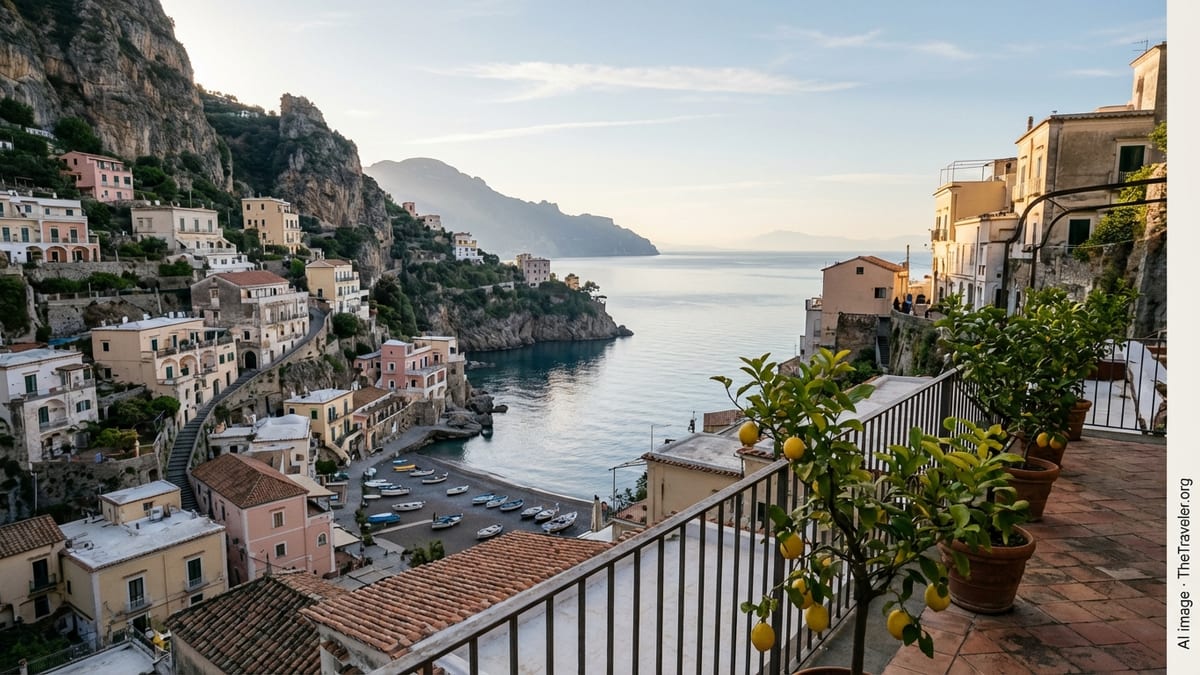
The Amalfi Coast stretches along a series of cliffs and coves, dotted with villages that each have their own character. Picking the right base shapes your entire experience. Positano rewards visitors with its iconic vertical profile, pastel houses stacked above the sea, and lively beachfront. It tends to be busy and expensive, with many accommodations built directly into the hillside. Stays here often involve multiple staircases between your room, the beach, and the road, and views are part of what you pay for.
Amalfi town sits more centrally along the coast and offers a blend of history and practicality. Its cathedral dominates a main piazza lined with shops and cafes, and the harbor serves as a hub for local ferries. Accommodation ranges from simple guesthouses tucked into narrow alleys to refined hotels with terraces above the water. Using Amalfi as a base allows relatively straightforward day trips by bus or boat to villages such as Atrani, Minori, and Maiori, each with quieter promenades and long stretches of beach.
Ravello, perched high above the sea, offers a different atmosphere. Famous for its gardens and music festivals, it feels more contemplative than the coastal towns below. Views from its villas and terraces sweep across the coastline, and the altitude brings slightly cooler evenings, especially welcome in summer. Staying in Ravello requires planning for bus schedules or private transfers to reach the shoreline, but many travelers find the trade off worthwhile for the serenity and open vistas.
Beyond these headline destinations lie smaller communities that can reshape your sense of the coast entirely. Villages such as Praiano, Cetara, Minori, and others along the route often provide a more local rhythm, with family run trattorias, small fishing harbors, and fewer day trippers. They can be excellent choices for travelers seeking longer stays, more modest prices, or a feeling of being woven into everyday life rather than skimming only the most photographed corners of the coast.
Experiencing the Coast: Ferries, Trails, and Time on the Water
Once you have reached your chosen base, slow your pace and give priority to experiences that reveal the coastline from multiple angles. Ferries, operating chiefly from spring through early autumn, link towns including Sorrento, Positano, Amalfi, and Salerno. They are often the most pleasant way to move between destinations, sidestepping traffic on the narrow coastal road and providing an ever changing panorama of cliffs, villages, and terraces as you glide along the water.
Spending at least one full day on or near the sea helps you understand why this coastline has fascinated travelers for centuries. Short coastal cruises, small group boat trips, and private charters are widely available in season, ranging from simple rides to nearby coves to longer outings that combine swimming stops with visits to offshore islands. When planning any boat excursion, account for the strong sun reflecting off the water by bringing hats, sunscreen, and light cover ups, and keep in mind that afternoon wind and swell can occasionally affect schedules.
On land, a network of ancient paths and mule tracks lace the hills behind the villages, offering some of the region’s most rewarding views. Trails vary from gentle promenades to more demanding hikes that involve steep stone staircases and uneven ground. Proper footwear makes a significant difference, as pavements and paths can be slick with dust or sea spray. Early morning starts help you avoid both heat and crowds, especially on renowned routes where scenery and popularity go hand in hand.
Allow unstructured time in your itinerary. Sitting on a shaded terrace with a coffee in the morning, wandering through lemon groves, or watching the pattern of local boats coming and going can provide as much satisfaction as ticking off specific viewpoints. The Amalfi Coast rewards lingering. Its villages reveal new details as the light shifts through the day, and some of the most memorable moments arise not from must see landmarks but from quiet, unexpected corners discovered while simply walking.
Practical Logistics: Tickets, Luggage, Safety and Local Etiquette
A successful Rome to Amalfi Coast itinerary depends not only on beautiful views but also on smooth practical planning. For the high speed leg between Rome and Naples or Salerno, booking train tickets in advance is recommended, particularly in the busier months and on weekends. Digital tickets on your phone work well, but carrying a backup printout or screenshot is wise in case of network issues. Regional and commuter services generally use separate tickets that must be purchased and, where required, validated before boarding.
Luggage management can be one of the biggest challenges on this route, particularly in coastal towns where steep stairways, narrow alleys, and stepped hotel entrances are common. Whenever possible, travel with smaller, easy to handle bags rather than large suitcases, and confirm in advance whether your accommodation offers luggage assistance or elevator access. At major stations, paid left luggage services may allow you to store bigger bags while you visit an archaeological site or explore a city center.
Safety on this itinerary is largely a matter of awareness and common sense. Trains and stations can attract pickpockets, especially around ticket machines, escalators, and doorways. Keeping valuables in a money belt or zipped inner pocket and keeping bags in front of you in crowded situations reduces risk. On the coast, the biggest hazards usually come from traffic on narrow roads and from underestimating heat and sun exposure. Using marked pedestrian paths, obeying local traffic signals, and staying hydrated go a long way.
Finally, a few words on local etiquette help ensure a smoother welcome. In both Rome and the Amalfi Coast towns, greeting staff with a simple “buongiorno” or “buonasera” before launching into requests is appreciated. Many restaurants and bars operate with table service, and lingering over a drink or coffee is considered normal rather than a problem. Dressing respectfully in religious sites, including covering shoulders and knees where requested, and keeping voices low late at night in residential lanes are small gestures that show consideration for those who live year round in the places you are visiting.
The Takeaway
An ultimate itinerary from Rome to the Amalfi Coast is less about seeing everything and more about choosing a few well considered bases and moving between them thoughtfully. Starting with several days in Rome grounds you in the grand narratives of Italian history, while the journey south through Naples, Pompeii, and Sorrento layers in volcanic landscapes, archaeological depth, and the transition from city streets to sea cliffs.
By aligning your travel dates with the seasons, favoring a combination of high speed trains and local ferries, and selecting an Amalfi Coast base that matches your pace and preferences, you can avoid much of the strain that crowds and traffic sometimes bring. Building time for simple pleasures, from morning walks through quiet alleys to evenings watching the horizon shift color over the Tyrrhenian Sea, ensures that this trip feels less like a race and more like the unfolding of a classic, deeply Italian journey.
FAQ
Q1. How many days do I need for a Rome to Amalfi Coast itinerary?
You can complete the route in about a week, with three nights in Rome and four on or near the coast, though ten to twelve days allows a more relaxed pace and additional side trips.
Q2. What is the easiest way to travel from Rome to the Amalfi Coast?
For most travelers the easiest route is a high speed train from Rome to Naples or Salerno, followed by a prebooked transfer, bus, or ferry to your chosen Amalfi Coast base.
Q3. Should I drive from Rome to the Amalfi Coast?
You can drive, but many visitors find coastal roads narrow, busy, and stressful, with limited parking. Public transport and local drivers are usually more convenient and less tiring.
Q4. Is Sorrento part of the Amalfi Coast and should I stay there?
Sorrento sits on the nearby Sorrentine Peninsula rather than on the official Amalfi Coast, but it works very well as a gateway town, with easier access, good services, and strong transport connections.
Q5. When is the best time of year to visit the Amalfi Coast?
April to early June and September to mid October generally offer warm weather, good ferry schedules, and fewer crowds than the height of summer.
Q6. Can I visit Pompeii on the way from Rome to the Amalfi Coast?
Yes, many travelers route via Naples and use the local train toward Sorrento to reach Pompeii, visiting the site as a day trip before continuing to Sorrento or the coast.
Q7. Which town is best as a base on the Amalfi Coast?
Positano offers iconic views, Amalfi is central and practical, Ravello is quieter and elevated, and smaller villages provide a more local atmosphere with fewer crowds.
Q8. How much luggage is practical for this itinerary?
Smaller rolling cases or backpacks are best, as many stations lack elevators and most coastal accommodations involve steps. Managing one main bag per person keeps moving days simpler.
Q9. Are ferries reliable for getting around the Amalfi Coast?
In season, ferries are a comfortable and scenic way to travel, though services depend on sea conditions. It is wise to check schedules locally and allow time for possible weather related changes.
Q10. Is the Amalfi Coast suitable for travelers with limited mobility?
Some hotels and towns offer step free access, but many streets and paths are steep and uneven. Choosing accommodations near road level and confirming accessibility details in advance is important.