


More news on this day
Thousands of passengers across Europe faced lengthy delays, missed connections and overnight airport stays after at least 2,649 flights were delayed and 126 cancelled in a fresh bout of disruption hitting key markets including Germany, the United Kingdom and France, with knock-on effects from Copenhagen to Madrid.
Get the latest news straight to your inbox!
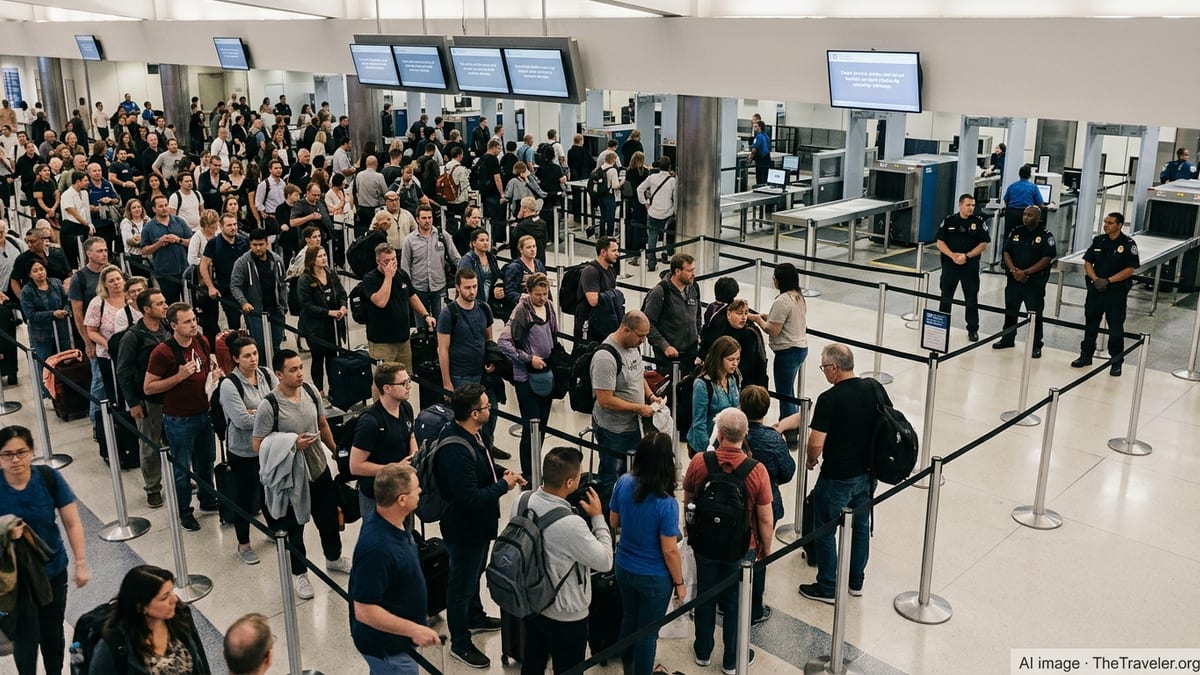
Widespread Delays Hit Germany, UK, France and Beyond
Operational data from flight-tracking and airport monitoring platforms indicates that Germany, the United Kingdom and France sit at the heart of the latest wave of disruption, with their congested airspace and hub airports amplifying problems across the continent. Major German airports, including Frankfurt, Munich, Berlin, Düsseldorf, Hamburg and Hanover, collectively reported close to 1,000 delays and dozens of cancellations in a single day, contributing significantly to the overall tally.
Similar patterns have been reported in the UK and France, where busy hubs such as London Heathrow, London City and Paris Charles de Gaulle routinely handle dense schedules and heavy transfer traffic. When disruption takes hold in these markets, it quickly affects services in neighbouring countries, including Spain, Denmark, the Netherlands and Italy, as airlines attempt to reroute flights and reposition aircraft.
Analysts note that the figures of 2,649 delayed flights and 126 cancellations are broadly in line with other severe disruption days observed in Europe this year, underlining the fragility of the network during the peak 2026 summer travel season. Even when cancellations remain a relatively small share of total operations, the combination of high load factors and tight aircraft utilisation can leave thousands of travellers stuck at airports far from their intended destinations.
Budget Carriers Among Hardest Hit
Publicly available flight statistics show that leading low cost and leisure focused airlines such as easyJet, Ryanair and Eurowings are among the carriers most exposed to the latest disruption. With large short haul networks criss crossing Europe and aircraft often scheduled for multiple sectors per day, a delay in the morning can rapidly snowball into missed slots, crew shortages and downstream cancellations by evening.
Ryanair, which routinely operates more daily flights than any other European airline, has seen repeated bouts of disruption whenever congestion or airspace constraints arise in core markets such as France, Germany and the UK. easyJet, heavily concentrated at London and major continental bases, has also faced waves of delays on busy days when weather, staffing pressures or knock on effects from air traffic control issues reduce capacity.
Eurowings, closely linked to Germany’s domestic and regional network, has reported particular pressure at airports like Düsseldorf and Hamburg during recent disruption spikes. Reports indicate that while network carriers such as Lufthansa, Air France and British Airways also experience schedule problems, point to point operators can find it more difficult to accommodate stranded passengers because they offer fewer alternative routings and less spare capacity.
Copenhagen, Madrid and Other Hubs Feel the Ripple Effect
The disruption has not been limited to the largest traditional hubs. Data from airport monitoring services and media coverage of recent operations highlight ripple effects across a wide range of European gateways, including Copenhagen, Madrid, Amsterdam and secondary city airports.
In Copenhagen, tight turnaround times and a busy schedule of intra European services mean that even modest delays arriving from Germany, the UK or France can trigger missed connections and late departures onward to Scandinavia and the Baltics. Passengers on low cost and hybrid carriers have reported extended waits as airlines attempt to consolidate flights or rebook travellers on later departures.
Madrid has seen similar issues as late arriving aircraft from northern Europe disrupt outbound services to other parts of Spain, the Canary Islands and Latin America. With many summer leisure routes operating near full, disrupted travellers often face limited same day alternatives, particularly when cancellations are used to help airlines recover their schedules.
Other airports, including Amsterdam Schiphol, Zurich, Oslo, Birmingham and regional bases in Italy and Greece, have periodically recorded clusters of delays linked to airspace bottlenecks, weather systems and staffing constraints elsewhere in the network. These knock on impacts illustrate how heavily Europe’s aviation system depends on precise coordination across multiple countries and control centres.
Causes Range From Airspace Bottlenecks to Operational Strain
Recent months have seen a combination of factors driving repeated disruption days across Europe. Industrial action affecting air traffic control in parts of France and other states, periodic staffing shortages, weather related capacity reductions and the introduction of new border checks under the EU Entry Exit System have each added pressure to an already busy summer timetable.
EU aviation briefings and monitoring reports indicate that French air traffic control issues alone have previously generated hundreds of thousands of minutes of delays over just a few days, forcing airlines to reroute flights around congested sectors. These reroutings extend flight times, consume additional fuel and can make it harder for carriers to maintain tight schedules, especially for short haul rotations.
At the same time, airports and ground handlers continue to balance high passenger volumes with staffing and infrastructure limits. Long queues at security, check in and border control have been reported at various European gateways, and airlines have publicly encouraged travellers to arrive earlier than usual to avoid missing departures. When flights fall behind schedule as a result, operators face difficult choices between operating late into the evening or cancelling later rotations to reset aircraft and crew.
What Stranded Passengers Can Expect Under EU and UK Rules
For passengers caught up in the most recent wave of disruption, entitlement to care, rebooking or financial compensation depends on the specific circumstances of each delay or cancellation. European Union Regulation EC 261 and its UK equivalent set out minimum rights for travellers departing from EU and UK airports, or flying into these markets on EU or UK carriers.
Under these frameworks, airlines are generally required to provide assistance such as meals, refreshments and hotel accommodation when passengers experience long delays or overnight disruptions that are within the carrier’s control. Monetary compensation may also be payable in some cases, although exemptions apply for extraordinary circumstances such as severe weather or certain forms of air traffic control action.
Consumer advocates and travel rights organisations consistently advise affected travellers to retain boarding passes, booking confirmations and any written communication from airlines, and to submit claims through official channels if they believe they are eligible for reimbursement or compensation. They also highlight the importance of checking real time flight status through airline apps or airport information screens before travelling to the airport, given the elevated risk of late schedule changes during the current period of instability.