

More news on this day
Thousands of air travelers across the United States are facing long delays, missed connections, and abrupt cancellations today as more than 4,000 flights are delayed and over 200 are canceled at major hubs including Los Angeles, Atlanta, Boston, Chicago, Houston, Orlando, and New York.
Get the latest news straight to your inbox!
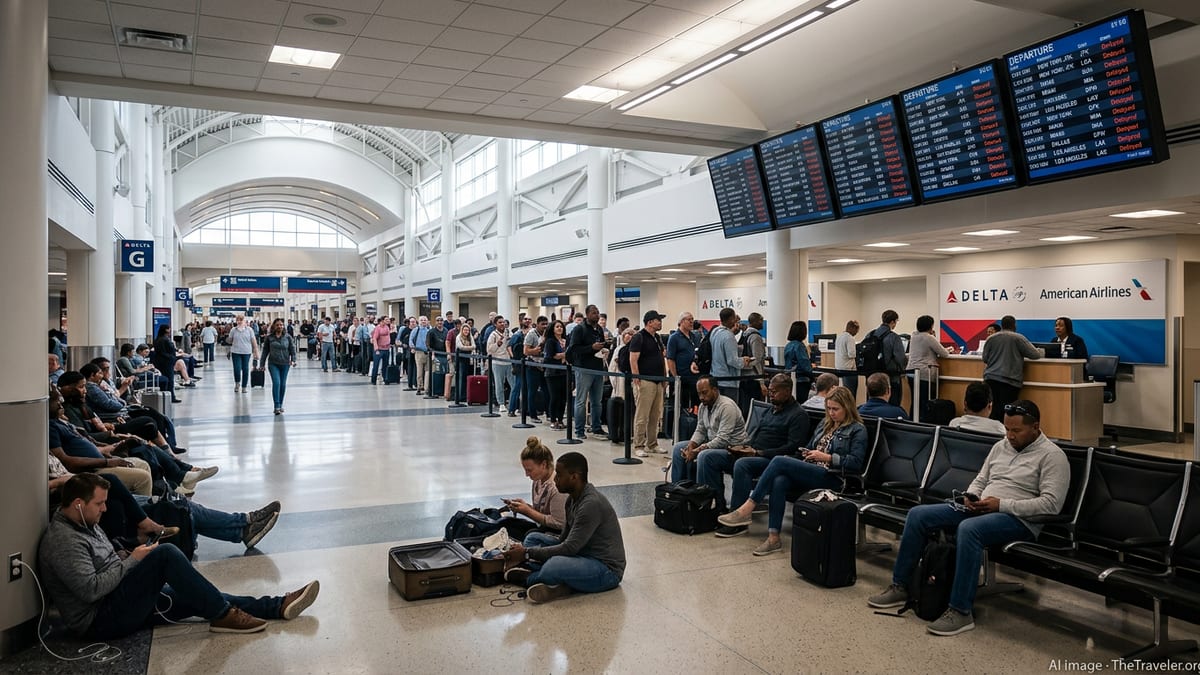
Nationwide Disruptions Hit Major U.S. Airports
Publicly available flight-tracking data for April 7 indicates 4,395 delays and 207 cancellations across the United States, with disruption concentrated at some of the country’s busiest airports. Reports highlight widespread issues at Atlanta, New York area airports, Orlando, Boston, Chicago, Los Angeles, Houston, and additional hubs where tight schedules leave little room to recover once operations begin to slip.
Coverage from aviation and travel outlets notes that this latest wave of disruption follows a turbulent Easter travel period marked by repeated surges in delays and cancellations across the U.S. system over several consecutive days. The current figures add another layer of strain for passengers who may already have experienced earlier schedule changes or missed connections over the weekend.
Large coastal and Sun Belt gateways such as Los Angeles International and Orlando International are seeing knock-on effects as aircraft and crews arriving late from other parts of the network struggle to turn around on time. In the Northeast, congestion around New York and Boston is contributing to cascading schedule adjustments, as even small operational hiccups quickly ripple through densely packed timetables.
While the number of outright cancellations remains relatively modest compared with major storm events, the sheer volume of delays is extending travel times by hours for many passengers, effectively leaving thousands in terminal queues, on tarmacs, or stuck in intermediate cities far from their planned destinations.
Airlines From Legacy Giants to Low-Cost Carriers Affected
The disruption is affecting a broad cross-section of U.S. carriers. Reports indicate schedule impacts at American Airlines, Delta Air Lines, Southwest Airlines, United Airlines, Spirit Airlines, Alaska Airlines, Frontier Airlines, and several smaller and regional operators. No single airline appears isolated from the current turbulence, though some are bearing a heavier share of cancellations at particular hubs.
Delta is cited in multiple data summaries as recording the highest number of cancellations among major carriers today, with dozens of flights scrubbed and hundreds more delayed, particularly around its Atlanta and coastal hubs. Other full-service airlines, including American and United, are facing substantial delay tallies as they work to keep aircraft rotating through congested airports despite earlier knock-on disruptions.
Low-cost and ultra-low-cost carriers such as Southwest, Spirit, Frontier, and Alaska are also experiencing schedule pressure, especially on high-frequency domestic routes where aircraft utilization is tight and slack in the system is limited. When aircraft or crews arrive out of position, these carriers can face difficult choices between delaying multiple sectors or canceling selected departures to rebalance their networks.
Industry analyses suggest that in periods of extreme congestion or weather-related strain, many airlines now favor long delays over mass cancellations in an effort to keep equipment and staff moving. That strategy can reduce the total number of canceled flights but still leave large numbers of passengers stuck in terminals for extended periods as departure times continually slide back.
From Easter Turbulence to Lingering Operational Strain
Today’s figures come on the heels of what several outlets describe as a chaotic Easter travel period, with severe weather and surging passenger demand combining to overwhelm parts of the aviation system. Over the Easter weekend and into Easter Monday, publicly available data showed tens of thousands of delays and several thousand cancellations across North America, with Delta and American among the carriers most affected on key days of the holiday rush.
Analysts note that disruptions on April 5 and April 6, including more than 4,000 delays and several hundred cancellations in the U.S. market alone on some days, created a backlog of displaced aircraft and crews that has proven difficult to unwind. Even as weather conditions improve, the residual impact persists in the form of rolling delays, tight crew duty limits, and aircraft rotations that remain out of sync with original schedules.
Reports on Monday’s travel patterns highlighted continued pressure at hubs such as Dallas–Fort Worth, Chicago O’Hare, Atlanta, Newark, and New York’s JFK and LaGuardia, as airlines attempted to work through earlier disruptions. Smaller airports, including regional facilities like Albany, also reported elevated levels of delays and cancellations linked to national network turmoil rather than local weather.
Industry commentary frames the current situation as another example of how tightly wound the U.S. air travel system has become following years of capacity optimization. With high load factors and heavy reliance on hub-and-spoke connectivity, localized operational challenges can quickly become nationwide events, especially around peak travel periods and holidays.
Airports Struggle With Congestion, Staffing, and Airspace Limits
The strain is not limited to airlines. Airport operations and air traffic control constraints are also contributing to today’s disruption. Published coverage referencing Federal Aviation Administration traffic management programs points to ground delay initiatives and volume-related restrictions at some busy hubs, measures that slow the rate of arrivals and departures to keep traffic flowing safely through crowded airspace.
These traffic management tools, while necessary for safety and efficiency, frequently translate into extended gate holds and airborne holding patterns for passengers. When applied during already busy periods, they can quickly lead to backlogs in departure banks and lengthy queues for takeoff, particularly at airports with limited runway capacity or complex terminal configurations.
Staffing challenges, especially in air traffic control and airport security screening, remain another pressure point. Recent analyses of U.S. aviation performance trends have highlighted persistent shortages of controllers at key facilities and ongoing recruitment and training demands. At the checkpoint level, reports have noted longer lines and occasional staffing gaps that add minutes or hours to the passenger journey before travelers even reach their gates.
For airport operators, the present wave of delays underscores the difficulty of managing record or near-record passenger volumes with infrastructure and staffing that were already under strain. While many airports have invested in new terminals, expanded security lanes, and upgraded baggage systems, the pace of demand growth, particularly around holiday peaks, continues to challenge available capacity.
Passengers Face Missed Connections and Limited Options
For travelers caught in today’s disruption, the most immediate impacts are missed connections, extended layovers, and overnight stays in unexpected cities. With seat availability constrained across many routes, especially following a busy holiday period, same-day rebooking options can be limited, forcing some passengers to accept multi-stop itineraries or travel on later days.
Consumer advocates and travel analysts frequently highlight the importance of understanding airline policies for delays and cancellations, stressing that compensation and accommodation vary widely depending on whether a disruption is within a carrier’s control. During periods of systemwide disruption, passengers may also struggle to reach call centers or secure in-person assistance at customer service desks, particularly when multiple flights are affected simultaneously.
Travel industry advisories issued in recent days have reiterated practical steps for navigating volatile conditions, including monitoring flight status apps closely, avoiding overly tight connections through busy hubs, traveling with essential items in carry-on baggage, and considering travel insurance to hedge against severe disruption. For those already en route, proactive use of airline apps and kiosks can sometimes secure rebooking options more quickly than waiting in line.
As airlines and airports work through the latest wave of delays and cancellations, observers note that passengers are likely to face residual effects beyond today, with some early-morning flights and regional connections tomorrow still at risk of adjustment while networks reset. For now, the 207 cancellations and thousands of delays reported across the country serve as a pointed reminder of the fragility of high-intensity air travel during peak periods.