

More news on this day
Hours-long airport security lines at some major U.S. hubs are turning routine trips into endurance tests, as a partial government shutdown collides with record passenger volumes and long-running staffing challenges across the aviation system.
Get the latest news straight to your inbox!
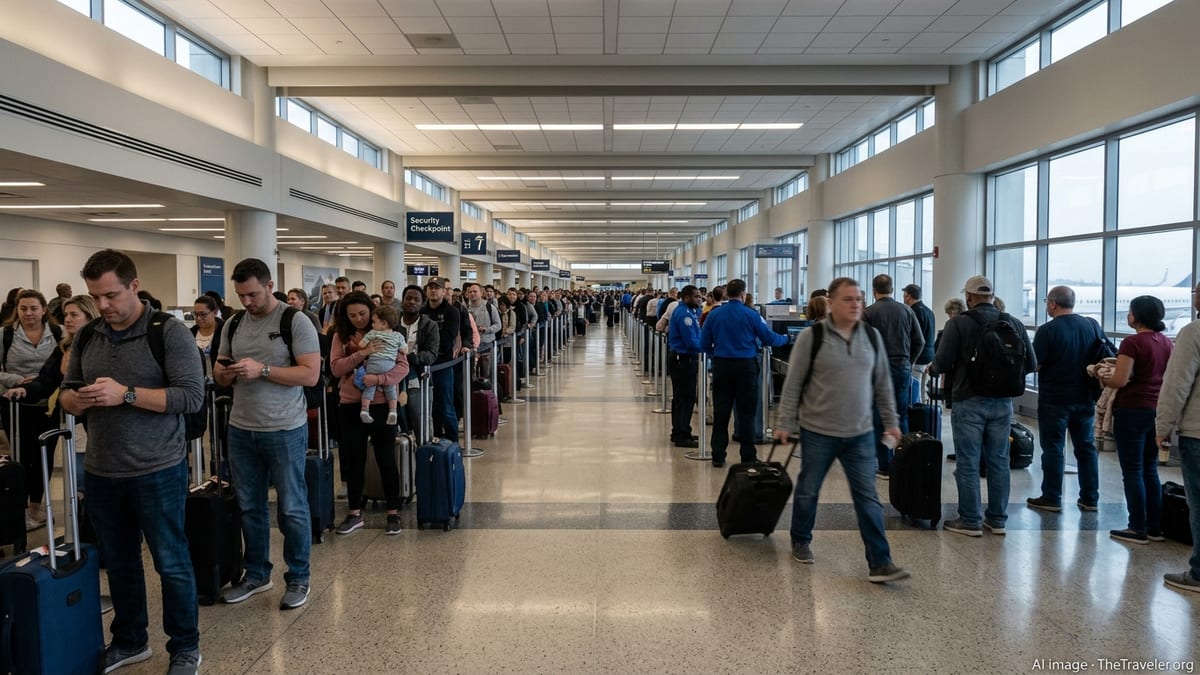
Shutdown Fallout Pushes Wait Times Past Three Hours
Recent coverage of the partial U.S. government shutdown describes airport security checkpoints under acute strain, with reports of travelers waiting up to three hours or more at some terminals. At Houston’s airports, local accounts point to peak-time queues stretching through concourses and, at moments, out toward curbside areas as screening lanes operate with fewer Transportation Security Administration staff than usual.
Reports indicate that thousands of security officers have been working without pay since the impasse began in mid-February 2026, compounding a workforce that was already grappling with high turnover and low morale. Publicly available information describes an uptick in resignations and sick calls as the shutdown has dragged on, leaving fewer screeners in place just as spring break and Easter travel ramp up.
In response to mounting congestion, published coverage notes that immigration enforcement personnel from Immigration and Customs Enforcement have been sent to selected airports to support checkpoint operations, although they are not performing primary screening. Other reports describe discussions about temporarily closing or scaling back operations at smaller regional airports so that limited security staff can be redeployed to heavily congested hubs.
The disruption has renewed attention on security wait times as a key vulnerability in the U.S. travel system. Passengers at affected airports are being advised through airport communications and travel advisories to arrive significantly earlier than usual, with some guidance suggesting arriving three hours before departure even for domestic flights.
Record Passenger Demand Meets Thin Capacity
The squeeze at security lanes is occurring against a backdrop of record air travel demand. Data from international aviation industry groups for 2024 and 2025 show global passenger traffic surpassing pre-pandemic levels, with total demand in 2025 up by more than 5 percent compared with the previous year and load factors hovering near historic highs. Airports Council International has similarly reported that worldwide passenger volumes have recovered fully and are on a trajectory of steady growth.
North American hubs sit at the center of this rebound. Domestic demand in the United States has remained robust, while international routes have continued to recover, placing sustained pressure on terminal infrastructure designed for fewer passengers. In many cases, traffic growth has outpaced the speed at which airports can expand checkpoints, modernize baggage systems or retrofit aging terminals.
Industry outlooks published over the past year emphasize that aviation’s recovery is being built on relatively thin operational margins. While airlines are benefiting from strong demand, the broader system depends on finely calibrated staffing plans, predictable government funding and stable technology platforms. Any shock, such as a budget impasse or a sharp change in traveler behavior, can quickly expose these tight tolerances, particularly at security and border control choke points.
For travelers, the result is a widening gap between advertised flight schedules and the on-the-ground experience of getting to the gate. Airlines may operate largely on time, yet passengers arriving at congested airports without extra buffer risk missing flights because of security bottlenecks rather than airline delays.
Staffing Strains and Long-Standing Structural Issues
Long lines triggered by the shutdown are layered onto structural challenges that have been documented for years in public audits and workforce studies. Government accountability reports have repeatedly highlighted that security screening jobs rank low on federal employee satisfaction indexes, citing relatively modest pay, unpredictable schedules and high rates of attrition.
Recruitment has struggled to keep pace with both turnover and growing passenger volumes. Even in years without political disruption, some busy airports report chronic difficulty staffing all available checkpoints during peak morning and evening banks of flights. When sudden shocks occur, such as the current funding lapse, there is little slack in the system to absorb absenteeism without visible impacts on travelers.
Meanwhile, the physical configuration of many U.S. terminals limits how quickly new lanes can be added. Older concourses that predate current security requirements often lack space for expanded queuing areas or for reallocating space from retail and concessions. Upgrades such as computed tomography scanners, which can speed screening by allowing electronics and liquids to remain in bags, are still rolling out unevenly, leaving some checkpoints reliant on older, slower technology.
The combined effect is a system in which staffing shortages and equipment constraints compound one another. At airports where newer technology and more flexible layouts are in place, reports suggest that security lines, while longer than normal, remain manageable. Elsewhere, the same pressures translate into three-hour queues that erode traveler confidence and strain frontline staff.
Workarounds: Trusted Traveler Programs and Real-Time Data
As pressure mounts, attention is turning back to tools designed to smooth passenger flows. Homeland Security recently restarted enrollment and processing for the Global Entry trusted traveler program after a temporary pause related to the shutdown, with the aim of shifting more pre-vetted international arrivals into expedited lanes. Alongside TSA PreCheck and other risk-based screening programs, these initiatives are intended to reduce bottlenecks by separating low-risk travelers from standard queues.
Digital tools are also playing a larger role. Public information points to growing use of the MyTSA mobile application and airport websites that display estimated wait times in near real time, allowing travelers to adjust arrival times or select less congested checkpoints where multiple security locations are available. Some airports have introduced virtual queuing systems that allow passengers to reserve a time window for screening, a model that has seen adoption in Europe and parts of North America.
However, these mitigations have limits when systemic shocks occur. Trusted traveler memberships, for example, do not fully insulate passengers from delays if overall staffing is insufficient to operate dedicated lanes, or if lines to enter the checkpoint area back up into general terminal space. Real-time data can help redistribute crowds at the margins, but cannot replace the need for adequate staffing and resilient funding.
Travelers are increasingly advised by airlines, airports and travel organizations to factor security uncertainty into their planning, building in additional time, traveling with carry-on luggage only when feasible and avoiding the busiest departure banks where options exist.
Debate Over Funding, Outsourcing and Future Resilience
The latest disruption has amplified debate in Washington and across the aviation industry over how to insulate critical security functions from political stalemates. Recent reporting on congressional negotiations indicates that lawmakers are weighing targeted funding measures to keep aviation security and certain border functions operating even when broader budget disputes remain unresolved.
At the same time, published commentary from aviation and policy analysts has revived discussion of allowing more airports to contract private security screening under federal supervision, a model already in place at a limited number of U.S. facilities. Proponents argue that this approach could offer more flexible staffing and compensation structures, while critics warn of uneven standards and complex oversight challenges.
Beyond the shutdown itself, global passenger forecasts from airport and airline industry bodies suggest that today’s congestion could be a preview of more frequent pressure points if infrastructure and staffing do not keep pace. Projections show passenger volumes rising steadily through the 2030s and 2040s, with many of the world’s largest hubs, including those in North America, expected to absorb a substantial share of that growth.
For now, the three-hour lines being reported at some U.S. airports have become a visible symbol of a travel system under pressure. How policymakers, airport operators and industry stakeholders respond in the coming months will help determine whether such scenes remain exceptional flare-ups or become a recurring feature of peak travel seasons.