


More news on this day
Severe thunderstorms across south east England on Saturday, June 27 triggered widespread disruption at London Gatwick Airport, with hundreds of flights delayed, dozens cancelled and passengers facing extended waits in terminals and on aircraft.
Get the latest news straight to your inbox!
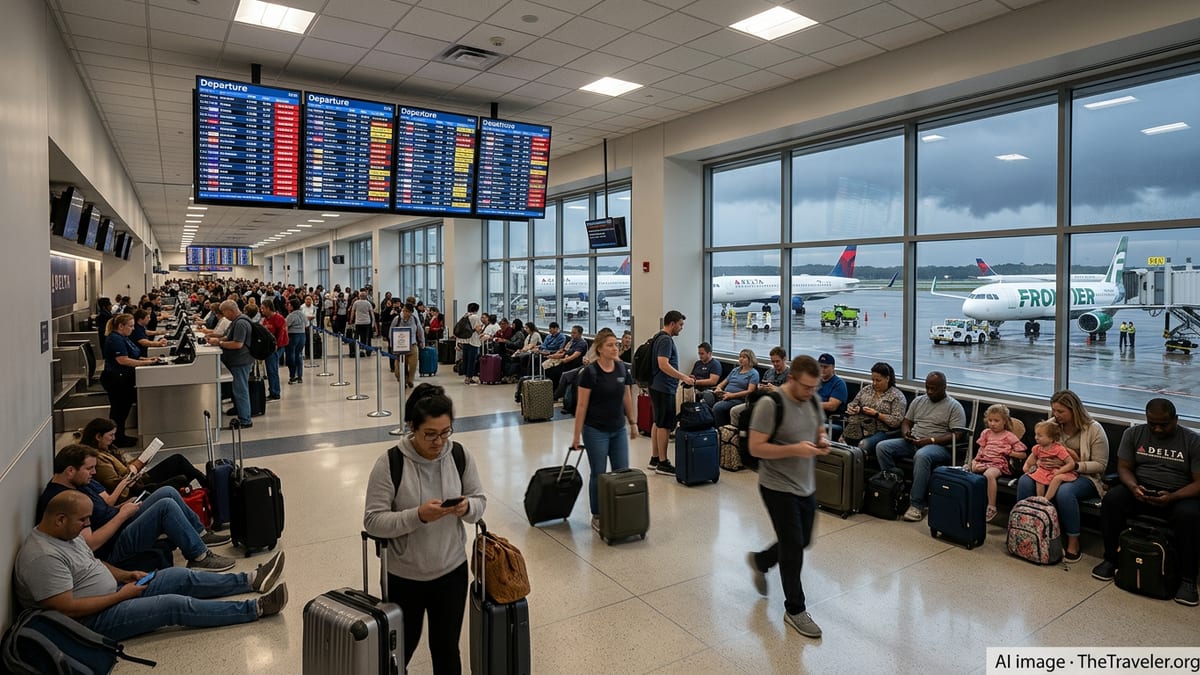
Storm cells stall operations at one of Britain’s busiest hubs
Weather radar images and aviation tracking data indicate that a line of slow moving storm cells developed over southern England and the Channel in the early hours of Saturday before intensifying through the morning. The convective activity brought frequent lightning and heavy downpours, conditions that typically lead to temporary suspensions of ground handling and restrictions on departures and arrivals for safety reasons.
Coverage from UK and European news outlets describes a rapid build up of delays at both Heathrow and Gatwick as air traffic controllers reduced the flow of aircraft into congested London airspace. By mid afternoon, publicly available data compiled by regional and international media suggested that more than 800 flights across the two airports had been delayed, with Gatwick accounting for a significant share of the disruption.
Information from Gatwick’s live departure and arrival boards, as reported by travel tracking platforms, showed a dense pattern of late running services, rolling estimated departure times and clusters of outright cancellations on short haul leisure and European routes. The knock on effects spread throughout the day, with aircraft and crews displaced across the network as storms continued to affect parts of northwestern Europe.
Some flights managed to depart close to schedule when gaps opened in the weather, but the overall operation remained heavily constrained for several hours as new storm cells formed and moved across key air corridors.
Hundreds of flights delayed and dozens cancelled
Data collated by aviation analytics services and cited in regional reporting indicate that more than 800 flights in and out of London’s two main airports experienced delays on June 27, with many affected services linked to Gatwick’s busy low cost and holiday carriers. At Gatwick specifically, live airport status pages during the afternoon showed rows of flights marked as delayed by several hours, alongside repeated notices of cancellations on routes to Mediterranean and island destinations.
Examples from publicly accessible flight boards included easyJet services to Alicante, Kalamata, Milan, Thessaloniki and Mykonos that were either significantly postponed or cancelled outright, as well as British Airways flights to regional leisure destinations and longer haul departures such as Kingston experiencing substantial schedule changes. Some services operated but left London hours later than planned, with revised arrival times stretching into late evening.
Separate regional and international news coverage reported that delays at both Heathrow and Gatwick in some cases extended to as much as six to eleven hours, as thunderstorms over the UK interacted with a wider storm front affecting parts of continental Europe. Airlines were forced to reshuffle aircraft rotations, rebook passengers on later flights where possible and, in some cases, divert inbound aircraft to other UK airports when conditions around London temporarily deteriorated.
Observers noted that while weather was the primary trigger, the scale of disruption was amplified by the high volume of weekend summer traffic, limited spare capacity in the air traffic system and the tight turnaround schedules that characterize many short haul operations.
Passenger experience: long queues, tarmac waits and diversions
Accounts compiled by broadcasters and digital news outlets described lengthy queues at check in and security, crowded departure lounges and passengers waiting on board aircraft that were unable to depart while lightning was active or arrival slots were restricted. In some instances, travellers reported being held on aircraft at Gatwick for several hours before flights were ultimately cancelled when operational limits were reached.
Media summaries of passenger testimony from both UK and European airports highlighted cases of holidaymakers stranded at departure points such as Venice and other Mediterranean gateways after their return or onward flights to Gatwick were delayed for four hours or more. The combination of heat, limited terminal amenities and uncertainty over revised departure times added to frustration for those attempting to reach London.
Social media posts and aviation forum discussions monitored by local outlets pointed to diversions of some London bound flights to alternative airports, including Birmingham, when storm cells and air traffic constraints made approaches into the capital temporarily unviable. Travellers on those services faced additional ground transfers or overnight stays as airlines worked to reposition aircraft and crews once weather conditions improved.
Despite the disruption, regular operations gradually resumed on many routes later in the day as the most intense storms moved away from south east England and air traffic flows were recalibrated. However, residual delays and aircraft out of position were expected to affect some late evening and early Sunday services.
Advice for affected travelers and wider operational context
Publicly available passenger guidance from airlines and airport information channels emphasized that travellers due to fly from Gatwick on June 27 and into the following day should monitor their booking details closely and make use of carrier apps or email updates for the latest status. In cases of cancellation, customers were generally offered rebooking on alternative flights where seats were available or the option of a refund, in line with standard conditions of carriage.
Consumer advice referenced in media coverage noted that, under UK and European air passenger protection rules, severe thunderstorms are typically classified as extraordinary circumstances. This means that while airlines remain responsible for providing care such as refreshments and, where necessary, accommodation during extended waits, automatic entitlement to fixed financial compensation for delays may not apply when weather is the primary cause.
Aviation analysts quoted in recent industry reports have also pointed out that London Gatwick operates close to capacity during peak summer weekends, which reduces the system’s resilience to sudden shocks such as intense convective storms. When combined with broader meteorological instability over Europe and existing air traffic control constraints, a relatively short lived weather event can rapidly cascade into network wide disruption.
Forecasts from meteorological agencies referenced by national and regional media suggest that while the most severe storms of the day have passed, unsettled conditions could persist at times over parts of the UK and nearby European airspace. Travellers using Gatwick over the remainder of the weekend are therefore being encouraged, through published guidance, to arrive in good time, stay alert to schedule changes and prepare for the possibility of further delays if additional storm activity develops.