

More news on this day
Thunderstorms sweeping across the Bay Area triggered a ground stop at San Francisco International Airport on Saturday evening, disrupting operations and leaving hundreds of flights delayed as airlines struggled to keep schedules on track.
Get the latest news straight to your inbox!
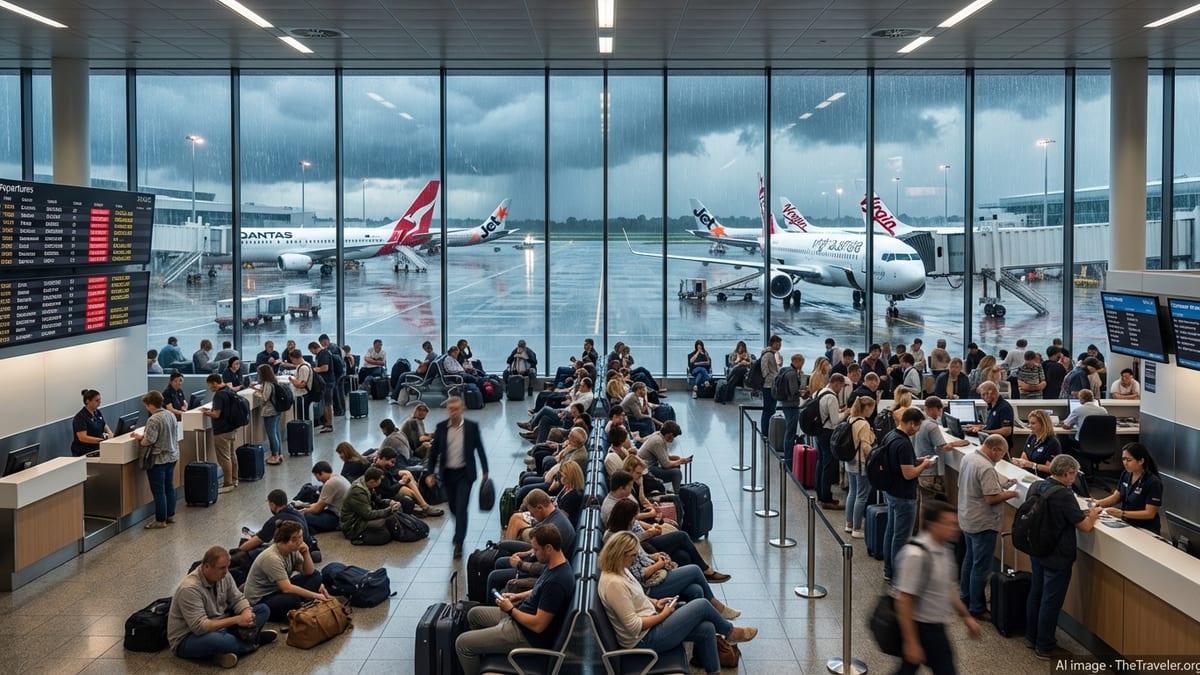
Ground Stop Ripples Through Weekend Travel
Publicly available information indicates that San Francisco International Airport temporarily halted flight operations late Saturday afternoon as a line of thunderstorms moved across the region. Flight tracking data showed a sharp rise in delays beginning shortly after 5 p.m. Pacific time, when a formal ground stop was posted for the airport.
Coverage from local outlets reported that the ground stop, initiated around 5:19 p.m., was expected to last for more than an hour as heavy rain, lightning and shifting winds reduced the number of arrivals the airport could safely handle. During that window, aircraft already on the ground were held at gates or on taxiways while inbound flights were slowed or paused further out in the national airspace system.
By early evening, delay statistics compiled by aviation tracking services showed hundreds of flights affected. Average holdups around the time of the ground stop hovered close to an hour for both departures and arrivals, and projections suggested wait times could stretch toward two and a half hours as airlines tried to work through backlogs created while storms were overhead.
The disruption unfolded on a busy spring weekend that was already forecast to be wet across the Bay Area. Meteorologists had warned that a strengthening Pacific storm would bring bands of heavy rain and embedded thunderstorms, with locally gusty winds capable of complicating airport operations.
Why Thunderstorms Hit SFO So Hard
Weather alone does not fully explain the severity of delays at San Francisco International. Aviation analysts frequently point to the airport’s runway layout and proximity to coastal weather patterns as key reasons why even relatively brief storms can cause outsized disruption compared with some other major hubs.
SFO’s closely spaced parallel runways limit the number of aircraft that can land simultaneously when clouds, rain or low visibility move in. In clear conditions, arrival rates are relatively high, but published technical material and prior industry analyses note that the allowable arrival rate is reduced when traffic must be funneled into more conservative configurations for safety. When thunderstorms pass over or near approach paths, the Federal Aviation Administration often responds with tools such as ground delay programs or full ground stops to manage the flow of aircraft.
Past reporting has highlighted that, in rainy or windy weather, SFO’s average delays can grow longer than those at nearby Oakland and San Jose airports, which have different runway configurations and tend to see fewer bottlenecks under similar conditions. Saturday’s thunderstorms fit that established pattern, with SFO bearing the brunt of regional flight disruptions despite relatively short-lived bursts of intense weather.
In addition to immediate weather impacts, the airport is also preparing for longer term operational changes. Recent public discussions of a federal decision to restrict certain parallel landing procedures at SFO in the coming months have raised concerns among frequent travelers that stormy days could become even more challenging as arrival rates are reduced in marginal conditions.
Delays Spread Across Airlines and Routes
Data from widely used flight tracking websites on Saturday showed delays affecting a broad cross-section of domestic and international routes serving SFO. No single carrier appeared to be insulated from the disruption, with larger network airlines, low cost carriers and overseas operators all reporting late departures and arrivals.
Published figures late in the day showed well over 300 flights delayed and a smaller but notable number canceled outright as crews and aircraft were repositioned. Once a ground stop is in place, aircraft bound for the affected airport may be held at their origin, which can quickly cascade into schedule changes on subsequent legs, especially for aircraft that were scheduled to make multiple trips in a single day.
Because many flights into San Francisco connect to longer haul routes, including transcontinental and transpacific services, the thunderstorms had potential to disrupt travel far from the Bay Area. Passengers in other cities reported through social media and airline forums that their flights were being held or rerouted because destination arrival slots into SFO were temporarily unavailable.
Aviation planners note that even after a storm band clears the immediate area, congestion can persist. When operations resume, there is often a surge of aircraft competing for limited runway and gate capacity, and crews must remain within regulated duty time limits. As a result, delays can linger well into the night, and in some cases push residual disruptions into the following day’s schedule.
Forecast Calls for More Rain and Traveler Frustration
The ground stop at SFO coincided with a broader pattern of unsettled weather across Northern California. Forecast discussions issued before the weekend emphasized the potential for multiple rounds of showers and thunderstorms, along with locally strong winds and brief downpours that could reduce visibility at coastal airports.
Meteorologists tracking the system warned that rainfall totals across the San Francisco region could climb to levels not seen in more than a year for the month of April, with the heaviest bursts concentrated in narrow bands of convection. That setup can make it difficult for aviation planners to predict precisely when and where conditions will deteriorate, leading to conservative traffic management as storms approach.
Travel industry coverage in recent days has also underscored how often weather has been the dominant driver of U.S. flight delays so far in 2026. Federal summaries cited in those reports suggest that weather has accounted for a majority of late operations nationwide, with thunderstorms and strong frontal systems playing an outsize role as the spring travel season ramps up.
For SFO, which already contends with a reputation for delays tied to low clouds and coastal fog, the arrival of a dynamic thunderstorm pattern has added another strain point. The weekend disruption is likely to reinforce the airport’s status as a challenging gateway when atmospheric conditions deteriorate, even as airlines and regulators explore changes intended to improve resilience.
What Passengers Can Expect Next
By late Saturday, publicly available flight boards suggested that the most intense phase of the ground stop had passed, but long lines and revised departure times continued to dominate the terminals. Travelers with evening and late night flights were advised through airline channels to monitor their reservations closely and expect the possibility of rolling delays as aircraft and crews cycled back into position.
Consumer travel outlets frequently recommend that during significant weather disruptions, passengers consider rebooking to early morning flights on subsequent days, which tend to have more availability and are less exposed to knock-on delays. However, with demand already high for spring weekend trips, same day alternatives out of San Francisco, Oakland and San Jose were limited for many popular routes.
The latest incident also comes as SFO prepares for a busy summer marked by both infrastructure work and evolving air traffic management rules. Federal notices in recent weeks have outlined new ground delay program frameworks and procedural changes for major hubs, including San Francisco, that aim to balance efficiency with safety during peak periods and adverse weather.
For travelers, Saturday’s thunderstorms serve as a reminder that even a short-lived storm can cascade through a tightly scheduled airline network. As spring systems continue to move across the West Coast in the weeks ahead, those planning to fly through SFO may face more days where a shifting forecast turns into a long wait at the gate.