

More news on this day
Tianjin is accelerating plans to reinvent itself as a laboratory for next-generation urban travel, combining smart-city technology, ambitious waterfront redevelopment and culture-led tourism to attract a new wave of global visitors.
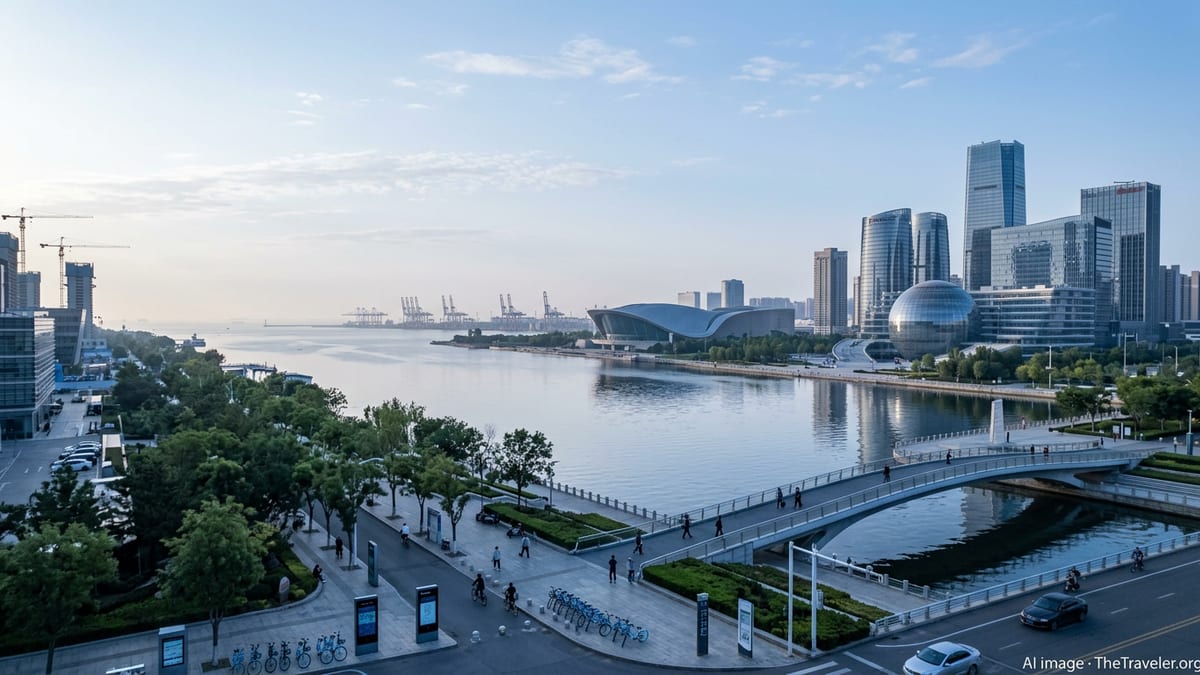
Smart-City Blueprint Reshapes the Visitor Experience
Long known as the maritime gateway to Beijing, Tianjin is now leaning into its role as a smart-city pioneer, using data, connectivity and artificial intelligence to rethink how visitors navigate and experience the city. Authorities in the Binhai New Area have spent recent years rolling out intelligent transport systems, 5G coverage and citywide sensing networks that are beginning to filter directly into travel services, from real-time crowd management around major attractions to seamless digital payment across transit.
Municipal planners describe the effort as a shift from traditional sightseeing to what they call scenario-based tourism, in which mobility, hospitality and culture are tightly integrated. Smart mobility corridors link high-speed rail, metro and port terminals with emerging cultural districts, while pilot projects in eco-neighbourhoods test technologies such as AI-enabled traffic control and integrated visitor service platforms. These tools are designed to reduce friction for tourists while providing the city with granular data on flows, preferences and seasonal patterns.
For Tianjin, the aim is not only efficiency but also differentiation in a crowded domestic tourism market. As major Chinese destinations compete on experiences and digital convenience, the city is positioning its smart-city infrastructure as a backbone for new forms of travel, including personalised urban exploration, low-carbon itineraries and business trips that blend seamlessly with leisure time on the waterfront.
Binhai New Area Emerges as a Living Testbed
Nowhere is Tianjin’s travel vision more visible than in the Binhai New Area, the coastal district that has been transformed from industrial hinterland into an expansive urban laboratory. Once better known for port logistics and heavy industry, Binhai today combines free trade zones, high-tech parks and experimental eco-districts with a growing constellation of cultural and leisure attractions aimed at both residents and international visitors.
The district’s leadership has tied tourism development directly to its innovation strategy, encouraging companies in fields such as artificial intelligence, brain-computer interfaces and smart transport to pilot visitor-facing applications. In practice, that has meant everything from intelligent wayfinding and multilingual virtual guides to immersive exhibition technologies inside museums and themed venues. New industrial tourism routes also give travelers curated access to advanced manufacturing sites, maritime facilities and green-energy projects along the coast.
At the same time, Binhai’s urban fabric is being reshaped around its role as a destination. Waterfront promenades, civic squares and landscaped canals are framed by striking new architecture, while upgraded metro links knit the coastal area more tightly to central Tianjin and the national high-speed rail network. Hotels, convention facilities and shopping streets are extending the district’s appeal beyond day trips, allowing it to market itself as a standalone coastal city break for domestic and, increasingly, overseas travelers.
Cultural Flagships Anchor a New Urban Narrative
Alongside its technology push, Tianjin is banking on high-impact cultural projects to refresh its global image and give visitors new reasons to stay longer. Landmark venues in Binhai, including the National Maritime Museum of China and the visually iconic Binhai Library, have quickly become key stops on emerging cultural itineraries. Their dramatic designs and interactive exhibitions underscore the city’s effort to pair architectural ambition with more engaging storytelling about maritime heritage, science and urban futures.
These flagships are complemented by a broader program to revitalize historic districts closer to the city’s traditional core. In neighbourhoods such as Hedong, local authorities are investing in creative industries, cultural festivals and nighttime economy pilots that seek to blend Tianjin’s treaty-port history, industrial legacy and contemporary arts scene. For visitors, this is expanding the range of experiences beyond the well-known European-style concessions to include renovated warehouses, riverside performance spaces and curated walking routes through older street grids.
The integration of culture and innovation is increasingly explicit in municipal planning language, with officials describing new cultural tourism zones as platforms for experimenting with digital content, augmented reality and data-driven crowd services. This convergence is reshaping how museums, libraries and public spaces operate, turning them into interactive hubs where residents and tourists encounter both heritage and cutting-edge technology in the same visit.
Eco-City and Green Mobility Redefine Coastal Tourism
Environmental sustainability sits at the heart of Tianjin’s travel ambitions, particularly in and around the Sino-Singapore Tianjin Eco-City in Binhai. Conceived as a model low-carbon community, the district has steadily added transit links, green public spaces and energy-efficient buildings that together form a blueprint for climate-conscious urban tourism. Visitors arriving by high-speed rail can transfer to metro lines that bring them into eco-neighbourhoods designed with generous walking routes, cycling lanes and car-light streets.
Within the Eco-City, smart infrastructure supports both residents and tourists, from centralised energy monitoring and water management systems to intelligent lighting and security networks. Operators of key attractions have worked with telecom and technology firms to ensure robust 5G coverage, enabling services such as app-based interpretation, digital ticketing and dynamic language support. The emphasis on compact, mixed-use planning means that hotels, cafés, parks and waterfront promenades are within easy reach of one another, encouraging visitors to move on foot rather than rely on private vehicles.
Beyond the Eco-City, Tianjin is experimenting with ways to align coastal industry and tourism with broader green goals, including showcasing large-scale renewable energy projects through controlled visits and educational centers. For the travel sector, these sites provide a narrative that links Tianjin’s industrial muscle with efforts to decarbonize, offering an experience that is part city break, part climate-learning journey.
Global Events and Policy Support Signal Long-Term Commitment
Tianjin’s push to become a new frontier of travel innovation is also reflected in the events and policies it is using to draw international attention. Major expos focused on smart industry and digital transformation are increasingly highlighting tourism applications, while local government programs encourage startups and established firms to develop products that enhance urban travel, from AI-powered translation tools to cross-border payment solutions that work seamlessly for foreign visitors.
Officials have framed these efforts as part of a larger strategy to deepen cooperation across the Beijing-Tianjin-Hebei region, positioning the city as a coastal gateway that can absorb visitor flows from the capital while offering a contrasting experience by the sea. Incentives targeting talent in cultural industries, tourism technology and design aim to ensure that innovation around travel is not limited to hard infrastructure but also includes fresh approaches to storytelling, branding and service design.
For the global travel industry, Tianjin’s evolving model offers a glimpse of how second-tier cities with strong industrial bases can reposition themselves through a combination of smart-city investment, cultural flagship projects and eco-conscious planning. As new transport links, digital services and waterfront districts come online, observers will be watching to see whether Tianjin can turn its ambitious vision into a distinctive, resilient proposition on the international tourism map.