

Japan has become far more card friendly in recent years, but it is still not a place where you can rely on plastic alone. Knowing which credit cards work best, where they are accepted, and how to pair them with local payment tools like IC cards can make the difference between a smooth, cash-light trip and a string of awkward "cash only" surprises at the register. This guide focuses on the cards and features that work especially well in Japan in 2026, with practical advice for both short-term visitors and longer-stay travelers.
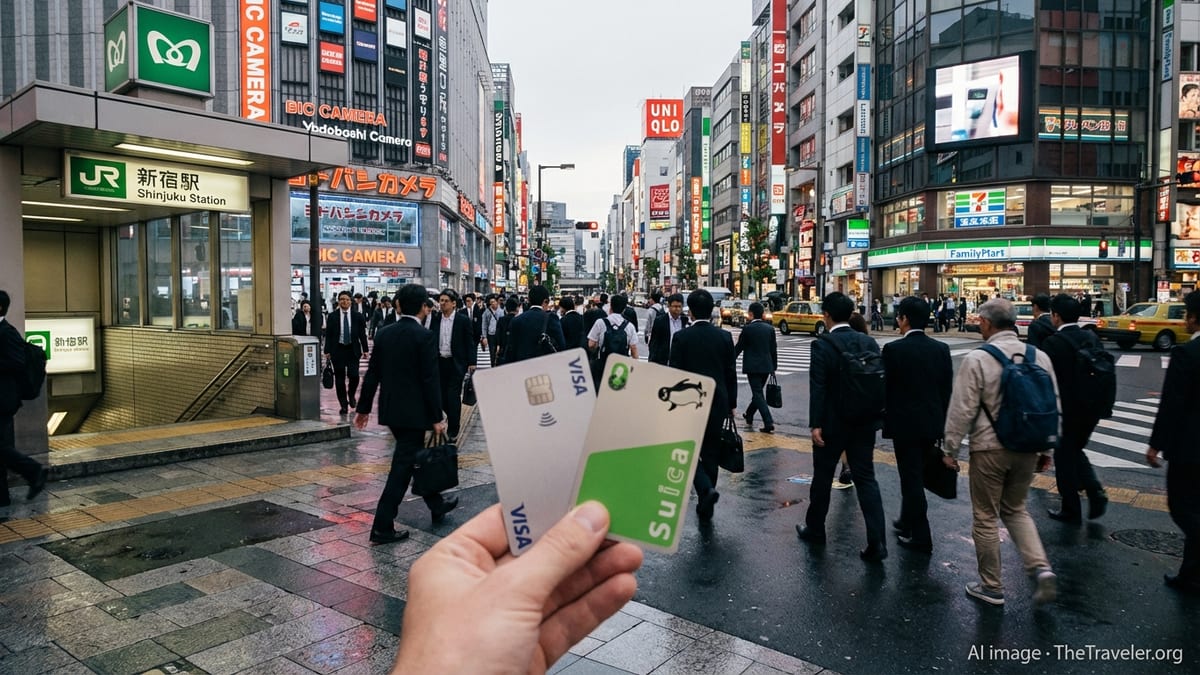
How Credit Cards Are Accepted in Japan in 2026
Visa and Mastercard have the broadest acceptance across Japan in 2026, especially at hotels, department stores, major restaurant chains, convenience stores, and larger retailers. American Express generally trails behind those two networks, while Discover and Diners Club are the least reliably accepted and may only work at select international chains or tourist-oriented businesses. Overall card acceptance has improved compared with a decade ago, but it still falls short of most Western European destinations.
Travel cost guides aimed at 2026 itineraries consistently note that many small, family-run restaurants, neighborhood shops, rural accommodations, and temple or shrine donation boxes remain cash only or prefer cash. That means even with a strong travel card you should be ready to use yen for some everyday transactions. A realistic approach is to treat your credit card as your primary tool in cities and trains, and cash as a necessary backup for local spots and countryside travel.
Contactless payments have expanded quickly. Most modern terminals in cities now accept tap-to-pay using compatible Visa and Mastercard cards, as well as mobile wallets such as Apple Pay and Google Pay when they are linked to eligible cards. However, contactless still is not universal. You might see a chip-and-signature or chip-and-PIN process instead, especially at smaller venues or older terminals. It is wise to assume that a working chip is more critical than contactless capability.
Because card infrastructure continues to evolve, conditions can vary from one neighborhood or region to another. In central Tokyo and Osaka you can typically tap or insert a Visa or Mastercard in most chain cafes and stores, while in a rural onsen town you could find that only your ryokan and the nearest convenience store accept cards. Planning around this patchwork is key to choosing the right card mix.
Key Features to Look For in a Japan-Friendly Card
For travelers from abroad, the most important feature in Japan is a card with no foreign transaction fees. Many general-purpose cards still add around 3 percent to every purchase made in a foreign currency, which can add the equivalent of several thousand yen to a typical trip budget. Recent roundups of travel cards emphasize that a growing list of mainstream travel products have eliminated this surcharge, making them far more suitable for overseas use.
Next, focus on strong acceptance and backup options. In practice, that means prioritizing at least one Visa or Mastercard-branded card, since these networks work at the broadest range of Japanese merchants. An American Express card can still be a valuable secondary option for its travel perks, but it should not be your only card for a Japan trip. If you rely heavily on a Discover or Diners Club-branded card at home, treat it strictly as a backup and do not assume it will work reliably in Japan.
Rewards structures matter, but they are secondary to acceptance and fees. Cards that earn elevated points on travel and dining can pair nicely with a Japan itinerary that includes hotels, trains, and restaurant spending. Recent analyses of popular travel cards highlight products that award bonuses on general travel purchases, online travel portals, or broad categories like supermarkets and gas stations, all of which you are likely to encounter on a Japan trip. Whenever possible, choose rewards programs that allow flexible redemptions, including transfers to airline or hotel partners that serve Japan.
Finally, look at side benefits that align with Japan-specific travel patterns. Useful perks include primary rental car insurance for rural road trips, trip delay protections that can help when seasonal weather disrupts flights or trains, and credits that offset global entry or airport screening fees. While these benefits are not Japan-specific, they can reduce the overall cost of getting there and back, and many of the leading no-foreign-fee travel cards now bundle at least some of these protections.
Top International Travel Cards That Work Well in Japan
Several of the most recommended travel cards for international use in 2026 are strong performers in Japan thanks to their lack of foreign transaction fees, wide network acceptance, and rewards structures tuned to travel spending. Recent personal finance coverage singles out cards such as popular Visa and Mastercard travel products, as well as premium and mid-tier offerings from major U.S. banks, as particularly suitable for trips to Asia.
Widely cited options include mid-fee travel cards on the Visa network that charge no foreign transaction fees and offer bonus points on worldwide travel and dining purchases. These cards are often praised in current Japan-focused credit card guides for their combination of solid earning rates and robust acceptance at hotels, train ticket offices, and restaurants across major Japanese cities. Because they run on Visa, they typically work at the majority of Japanese payment terminals that support international cards.
Another group of highly regarded cards consists of flat-rate travel cards that earn a fixed number of miles or points per dollar on almost every purchase and also waive foreign transaction fees. Their simplicity makes them attractive for travelers who prefer not to track bonus categories during their trip. These cards are also commonly issued on Visa or Mastercard, which helps ensure they run smoothly in Japan’s increasingly contactless-ready retail environment.
Premium travel cards, including some high-fee products on the American Express network, can also serve Japanese travelers well as long as they are not used in isolation. While their acceptance is narrower than Visa or Mastercard, they can be powerful companions thanks to extensive airport lounge access, travel credits, and airline or hotel perks that can be used on routes to and from Japan. Many travelers carry a premium card for benefits and a Visa or Mastercard for routine purchases on the ground.
Local Japanese Credit Cards and When They Matter
For short-term visitors, obtaining a locally issued Japanese credit card is usually impractical because of residency, income verification, and documentation requirements. However, for foreign residents or those on long stays, certain Japanese cards can be especially convenient because they are tuned to local payment ecosystems and services. Recent guides aimed at foreigners living in Japan highlight several domestic issuers that focus on straightforward approval processes, digital issuance, and solid everyday rewards.
Some of the more accessible options for newcomers include domestic cards that emphasize quick digital issuance and compatibility with mobile wallets such as Apple Pay and Google Pay. These products often charge no annual fee at entry level and integrate tightly with Japanese-language apps, making it easy to manage spending, set usage limits, and enable contactless payments in shops and on transit systems that accept card taps.
Other popular domestic choices for residents are cards that pair closely with major QR-code payment apps or telecom ecosystems. These cards are attractive to long-term users because they provide boosted rewards when used inside a particular digital wallet or shopping platform that is common in Japan. For a tourist, these cards are not essential, but for someone staying in Japan for work or study, they can be an efficient way to match local payment habits while still enjoying the familiarity of card-based spending.
Even if you do not hold a Japanese-issued card, understanding that many people in Japan now route payments through domestic QR apps and IC cards can help set expectations at checkout. Some merchants may be more prepared to accept a local QR payment than a foreign credit card, particularly outside city centers. That is another reason to back up your international travel card with yen cash and, where possible, a local IC transit card that also works for small purchases.
Using Credit Cards With IC Cards, Trains, and Transit
One of the most powerful combinations for Japan is pairing a good international credit card with an IC transit card such as Suica, PASMO, or ICOCA. Recent how-to guides for 2025 and 2026 note that standard Suica and PASMO card sales, which were restricted during a semiconductor shortage, have now largely stabilized, with physical Suica cards again widely available through JR East ticket machines and travel service centers at major stations and airports. At the same time, tourist-oriented Welcome Suica cards remain a convenient option for short stays, especially when purchased at Narita or Haneda airports.
These IC cards are not credit cards themselves. Instead, you load them with prepaid yen and then tap at ticket gates or payment terminals that display the IC or specific brand logo. Your international credit card comes into play either when you buy or top up the IC card at a machine that accepts foreign cards, or when you charge a mobile version of the card inside a digital wallet on your phone. Some recent discussions and official materials indicate that the ability to load digital Suica and PASMO with foreign cards has improved after earlier restrictions, though the exact card networks and issuing countries that work can vary.
For now, the most reliable strategy is to use cash to top up physical IC cards and to consider credit card loading as a bonus when it works. Travelers who manage to link a foreign Visa, Mastercard, or American Express card to a digital Suica or PASMO on Apple Pay or Google Pay may be able to route everyday transport and convenience-store spending through their travel card, earning points or miles on what would otherwise be cash transactions. However, because support has changed multiple times in recent years, it is best to treat this as a nice extra rather than a guaranteed feature.
Looking ahead, major transit operators are gradually bringing direct credit card contactless payments to ticket gates. Tokyo Metro, for example, has been piloting and expanding touch payment boarding services using compatible credit, debit, and prepaid cards, with plans to cover all lines with post-payment touch access around spring 2026. That shift will make it increasingly feasible to tap a foreign Visa or Mastercard at the gate without using an IC card, although rollout timing and coverage can vary. Until such systems are fully established across networks, IC cards will remain the most universally reliable choice for rail and bus travel.
Managing Fees, Dynamic Currency Conversion, and Cash
Even with the right card, how you pay in Japan has a direct impact on your costs. The largest controllable expense is often the foreign transaction fee. As noted in several 2026 travel money guides, choosing a card that charges no such fee can save you the equivalent of several percent of your total trip spending. If you have multiple cards, prioritize the one with no foreign transaction fee for almost all purchases in Japan, even if its rewards rate is slightly lower.
Another point to watch carefully is dynamic currency conversion, often abbreviated DCC. This occurs when a terminal offers to charge your card in your home currency rather than in yen. While it might seem convenient to see a familiar currency on the screen, the conversion rate used is usually worse than what your card network would apply, effectively adding an extra hidden fee. As a rule, always choose to pay in Japanese yen when you are offered a choice. That allows your card’s own exchange system to do the conversion, which is typically more favorable.
Cash still matters in Japan, so factor ATM access into your planning. Many foreign-friendly ATMs in convenience stores such as 7-Eleven and at post offices allow withdrawals using Visa, Mastercard, American Express, and other international cards. Your bank at home may charge a flat ATM fee, a percentage fee, or both on foreign withdrawals. Some premium travel cards and bank accounts reimburse some or all of these fees, which can take the edge off relying on cash. When possible, withdraw moderate amounts rather than tiny sums to dilute any per-withdrawal charges.
Finally, keep an eye on your card’s security features. Set up transaction alerts if your issuer supports them, and let your bank know in advance that you will be traveling to Japan, especially if you are visiting multiple regions or making large purchases such as rail passes or electronics. Strong fraud systems are an asset, but they can also trigger false alarms if your bank is not expecting overseas use.
The Takeaway
Japan in 2026 is friendlier to credit cards than ever, but still not a cashless society. Visa and Mastercard remain the safest bets for broad acceptance, especially when paired with a card product that charges no foreign transaction fees and offers solid rewards on travel and dining. American Express can add valuable perks, though it is best treated as a secondary option rather than your only card.
Combining an international travel card with an IC card such as Suica or PASMO is still the most seamless way to move through Japanese cities and make quick small purchases. As contactless gate payments using foreign cards expand across networks like Tokyo Metro, that landscape will keep evolving, but for now a hybrid strategy is best. Credit cards handle hotels, big-city restaurants, and larger shops, while cash and IC cards cover the many smaller places where cards remain rare.
If you prioritize a no-foreign-fee Visa or Mastercard, understand how dynamic currency conversion works, and carry a modest cash cushion, you will be well positioned to enjoy Japan without worrying about payment hurdles. Your credit cards can then do what they do best: quietly turn your everyday spending on trains, noodles, and souvenirs into the rewards that help fund your next trip back.
FAQ
Q1. Which credit card network is most widely accepted in Japan?
Visa and Mastercard are generally the most widely accepted networks in Japan, especially at hotels, large stores, chain restaurants, and convenience stores in major cities.
Q2. Do I really need a card with no foreign transaction fees for Japan?
It is strongly recommended. Many cards charge around 3 percent on foreign purchases, which can quietly add up over a typical Japan itinerary, while many modern travel cards waive this fee.
Q3. Will my American Express card work in Japan?
American Express is accepted at some hotels, department stores, and international chains, but coverage is patchier than Visa or Mastercard. Treat it as a backup rather than your only card.
Q4. Can I rely on Discover or Diners Club in Japan?
Discover and Diners Club have limited acceptance and may work mainly at select international merchants. They are not reliable as primary cards for everyday purchases across Japan.
Q5. Can I use my credit card to ride trains and subways directly?
Direct contactless credit card payments are expanding on some systems, with operators such as Tokyo Metro rolling out touch payment gates, but coverage is still incomplete, so IC cards like Suica remain more reliable.
Q6. What is the best way to use IC cards like Suica with my foreign credit card?
The most dependable method is to buy and top up a physical Suica or similar IC card with cash, then tap for transport and small purchases. In some cases you may also be able to load a mobile Suica or PASMO with an eligible foreign card, but this capability can vary.
Q7. Should I accept the option to pay in my home currency at Japanese card terminals?
In most situations you should choose to pay in Japanese yen rather than in your home currency. The home currency option usually uses a weaker exchange rate and can cost more overall.
Q8. How much cash should I carry if I have good credit cards?
Many recent guides suggest carrying at least enough yen to cover a day or two of expenses, particularly for small restaurants, local shops, and rural areas where cards are still uncommon.
Q9. Do Japanese ATMs accept foreign credit and debit cards?
Many ATMs at convenience stores and post offices accept international cards, though fees and limits vary by issuer. Check your bank’s policies and consider withdrawing moderate amounts to reduce fixed per-withdrawal charges.
Q10. Is it worth getting a Japanese credit card as a foreign resident?
For long-term residents, a Japanese card can be helpful for local rewards and smoother integration with mobile wallets and QR payment apps, but short-term visitors are usually better served by well-chosen international travel cards.