

Germany can be an excellent destination for budget-conscious travelers, but only if you avoid unnecessary bank fees. The right travel credit card can help you save on foreign transaction charges, ATM withdrawals and dynamic currency conversion, while also adding useful perks such as travel insurance and stronger consumer protections. This guide explains how payments work in Germany, which types of cards make the most sense, and how to use them smartly so you keep more euros in your pocket.
How Card Payments Work in Germany Today
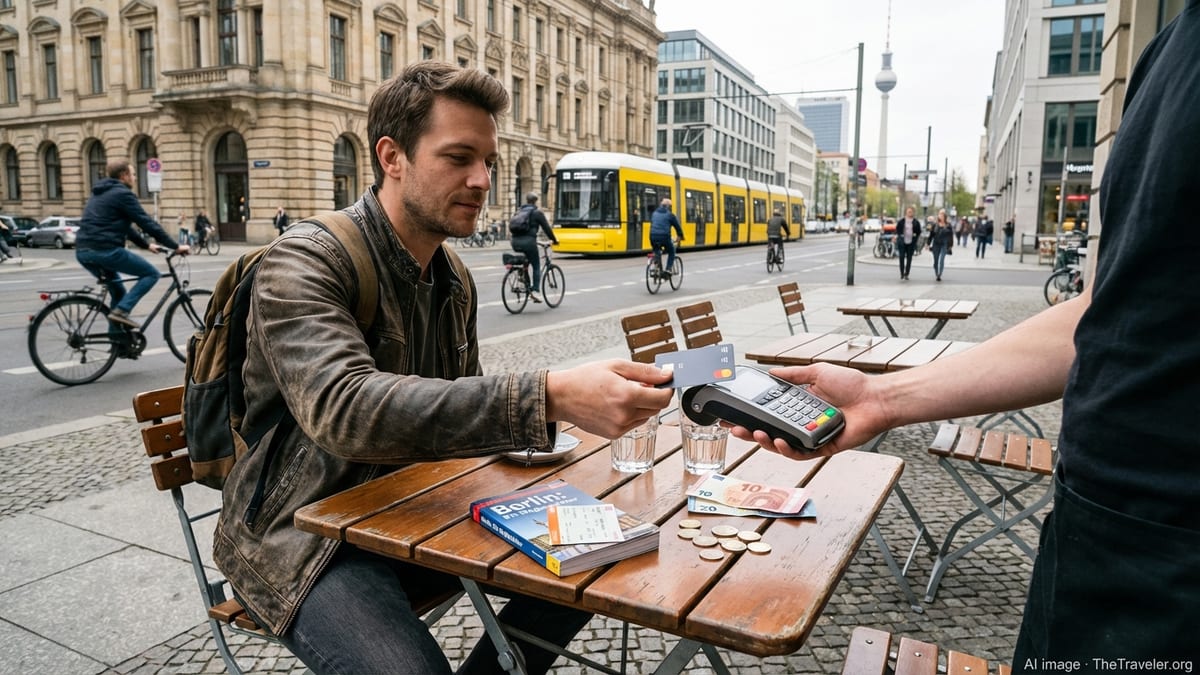
Germany used to be known as a cash-first country, but payment habits have changed noticeably, especially in cities and tourist regions. Travelers will find Visa and Mastercard widely accepted at hotels, chain supermarkets, intercity trains, ticket machines and most restaurants in larger towns. Contactless payments via phone and watch are now common, and many new terminals default to tap-to-pay. Still, smaller bars, independent shops and rural guesthouses may prefer debit cards or cash, so planning a mix of payment options is essential.
In practice, a modern credit card from a major global network often works smoothly at point-of-sale terminals in Germany, provided that it supports chip-and-PIN or strong customer authentication. Cards that rely only on magnetic stripes can be problematic. Some merchants may still favor local bank debit products, so you should not be surprised if a café accepts cards but refuses foreign-issued American Express or certain prepaid cards. Bringing at least one mainstream Visa or Mastercard, plus a backup, is a smart hedge against isolated acceptance issues.
European Union rules have also made card payments more predictable. Within the EU, banks must charge the same for a payment in euros to another EU country as they do for a domestic euro transaction, which means foreign transaction markups on euro purchases are more of a commercial choice than a regulatory requirement. Card surcharges at the till are generally prohibited, so shops should not add an extra percentage fee simply because you pay by card. That gives travelers more confidence to tap instead of paying in cash when a terminal is available.
Despite this progress, card payments are not universally guaranteed. Public toilets, some local bakeries, farmers’ markets and certain regional trains may still operate on a cash-only basis. Keeping a modest euro cash reserve and pairing it with at least one fee-friendly credit card is the safest approach if you want to avoid scrambling for an ATM at inconvenient times or paying inflated withdrawal fees under pressure.
The Key Features That Actually Save You Money
Not every travel-branded card is equally helpful in Germany. The single most important feature for saving money is the absence of foreign transaction fees. Many cards add around 3 percent to every purchase in a non‑domestic currency, which quickly erodes your budget. Opting for a card that clearly states zero foreign transaction fees on purchases in euros and other currencies can translate into meaningful savings over the course of a trip.
ATM withdrawal costs are the next major factor. Even if your issuer advertises free cash withdrawals abroad, local ATM operators may charge their own markups, displayed on the screen before you confirm the transaction. Some cards also only waive fees above certain withdrawal thresholds or limit how many free withdrawals you get per month. Reading the fine print on both issuer fees and ATM usage conditions will help you avoid surprises, especially in destinations outside the euro area that you might combine with Germany on the same trip.
Interest rates and repayment rules matter too, even if you always intend to pay in full. Many popular fee-free travel cards in Germany operate as revolving credit products with relatively high annual percentage rates. If you accidentally miss a payment or choose installment repayment, the cost of carrying a balance can outweigh what you saved in transaction fees. Setting up automatic full-balance payments and monitoring your account through a mobile app is one of the simplest ways to keep a travel card genuinely cheap.
Finally, consider benefits that complement your travel style. Some cards issued in Germany or across the EU offer built-in travel insurance, extended warranty coverage or purchase protection when you pay with the card. Others provide access to discounts or cashback on bookings through dedicated travel portals. While it is rarely worth paying a high annual fee solely for these extras, they can tip the balance when comparing otherwise similar cards with zero foreign transaction fees and comparable acceptance.
Top German-Issued Cards for Frequent Travelers
Travelers who live in Germany or spend significant time there can benefit from local credit cards specifically designed for international use. A frequently recommended option is the Gebührenfrei Mastercard Gold from Advanzia Bank, which has no annual fee and charges no foreign transaction fees on card purchases. Independent overviews highlight that it is best suited for people who pay off the full balance every month, since interest on revolving balances and cash advances can be relatively high. Used carefully, though, it can be a low-cost workhorse for trips inside and outside the eurozone.
Another strong contender is the GenialCard offered by Hanseatic Bank. This Visa credit card typically carries no annual fee and no foreign currency fee on card purchases worldwide, with conversion taking place at standard Visa rates. Cardholders can withdraw cash abroad without an issuer-side fee, although withdrawals in Germany normally incur a small fixed charge per transaction. The default setting is an installment repayment of a small percentage each month, but customers can change this to full repayment to avoid interest accrual after any promotional grace period ends.
Digital-first banks in Germany have also entered the travel card space. Providers such as N26 combine app-based current accounts with Mastercard or debit products that do not add fees for card payments in foreign currencies. Premium tiers like N26 You or N26 Metal remove or reduce charges on foreign-currency cash withdrawals and can include travel-related insurance. This can be attractive for frequent travelers who appreciate being able to freeze or unfreeze a card instantly via mobile app and manage spending limits in real time while abroad.
Other German banks offer travel-friendly cards as part of broader account packages, sometimes bundling global ATM withdrawals or airline lounge access with higher monthly account fees. These can be worthwhile for very frequent flyers, but casual visitors and exchange students usually gain more from a straightforward no-annual-fee card with zero foreign transaction charges, especially if it runs on the globally accepted Visa or Mastercard networks and integrates smoothly with mobile wallets.
Best Options for Visitors from the United States and Beyond
Visitors arriving in Germany from the United States, Canada or other non‑euro countries will often rely on cards issued at home. Many leading U.S. issuers now market travel cards that do not charge foreign transaction fees, including general bank products and airline co‑branded cards. Choosing one of these before departure is typically the easiest way to cut costs, since the card will apply the network’s exchange rate with no added percentage markups from the issuer. Travelers should confirm that their chosen card supports chip-and-PIN verification, as some unattended machines in Europe still require it.
American Express is accepted at many larger German merchants, hotels and car rental agencies, but its acceptance can be patchier at smaller shops and restaurants compared with Visa and Mastercard. For that reason, most travelers are better served by carrying at least one Visa or Mastercard credit card with no foreign transaction fee as their primary option, and treating any American Express card as a secondary backup when it is explicitly accepted. This combination tends to minimize both costs and awkward payment refusals.
In addition to traditional credit cards, some foreign visitors arrive with multi-currency or prepaid travel cards that can be loaded in advance. These products can help with budgeting and may offer competitive foreign exchange rates, but the fee structures vary widely. Some cards charge monthly account fees or impose markups on ATM use, while others operate almost like a standard debit card with low or no additional charges. Before relying on such a product in Germany, it is worth reviewing its schedule of fees for foreign point-of-sale transactions and withdrawals in euros.
Travelers from outside the EU should also be aware that they are protected by card network rules and local consumer law when using their cards in Germany. For example, merchants generally cannot add a separate surcharge simply because you pay by card, and your home issuer will have established dispute procedures if something goes wrong with a transaction. Nonetheless, keeping records of receipts, monitoring your account while abroad and promptly reporting any suspicious activity remains important, particularly when using cards at unattended terminals or unfamiliar ATMs.
Using Credit Cards Smartly in Germany Day to Day
Carrying the right card is only half the equation. The way you use it in Germany will determine how much you actually save. One of the most important rules is to always pay in the local currency when a terminal offers a choice. Some payment machines ask whether you want to be charged in euros or in your home currency, a service known as dynamic currency conversion. Choosing your home currency typically results in a poorer exchange rate and sometimes additional hidden fees, making your purchase more expensive than simply paying in euros and letting your card network handle the conversion.
When withdrawing cash from ATMs, read every on-screen prompt carefully. Even if your own bank does not charge a fee for foreign withdrawals, the ATM operator may add its own fixed fee or a percentage markup. German-language screens usually make this clear before you confirm the transaction, and many machines offer an English option as well. If the fee seems excessive, you can cancel before committing and look for a different ATM, especially in larger cities where banks and cash machines are plentiful.
Security habits are another part of smart card use. Germany, like the rest of the EU, requires strong customer authentication for most online and higher-value in-person transactions. You can expect to confirm payments via a banking app, text code or PIN. While this adds a step, it also reduces fraud risk. Make sure your bank has your current contact details and that you have roaming or Wi‑Fi access to receive authentication prompts. In crowded places such as Christmas markets or busy train stations, shield your PIN and keep card wallets secure to reduce the risk of theft or skimming.
Finally, it pays to monitor your spending in real time. Many modern card issuers, including those in Germany, provide instant push notifications for every transaction. Enabling this feature helps you spot erroneous or duplicate charges quickly, and it can also serve as a gentle reminder of how much you are spending in another currency. At the end of your trip, reviewing your statement for unusual items and checking that any temporary hotel or rental car authorizations have been released is a simple way to tidy up and make sure there are no lingering issues.
Consumer Protections and Travel Rights You Should Know
Using a credit card in Germany comes with a web of consumer protections built into both national law and European Union rules. For card payments in euros, banks within the EU are required to charge the same fees for cross‑border euro payments as they do for equivalent domestic transfers, which helps keep costs transparent when you pay a German merchant with a card issued in another EU country. Surcharges for using a card are generally banned in retail and online settings, so you should not be asked to pay more at the till than a cash‑paying customer for the same product or service.
The EU has also strengthened protections for package travel, which is relevant if you book bundled holidays that include flights, accommodation and other services. Updated rules clarify your rights to refunds and compensation when tour operators cancel trips or cannot provide contracted services, improving the position of travelers who have paid deposits or full amounts by card. While these rules apply regardless of your payment method, paying by credit card can add another layer of protection through chargeback procedures if a provider fails to deliver.
In the broader financial sphere, EU law limits the liability of consumers in cases of card fraud once they have reported a loss or theft, and sets caps on how much they may need to cover for unauthorized transactions before reporting. Banks must also provide clear pre‑contractual information when offering consumer credit, including revolving credit lines attached to cards, so that borrowers can compare costs and understand repayment obligations. This is particularly relevant for travel credit cards marketed with easy installment options, which can be convenient but become expensive if used without attention to the underlying interest rates.
For cross‑border travelers within the EU, passenger rights regulations for air, rail, coach and sea travel define compensation and assistance rules in cases of major disruption. Although these rights are not tied to card use, paying with a card often makes it easier to prove purchase dates and amounts, which can be important when filing claims. Keeping digital records of booking confirmations and statements linked to your travel card can therefore simplify the process of asserting your rights if a journey does not go as planned.
The Takeaway
Credit cards are no longer an afterthought in Germany’s payment landscape. With contactless terminals widespread and card surcharges largely prohibited, paying with plastic or a digital wallet can be both convenient and cost‑effective, provided you choose your card wisely. Zero foreign transaction fees, clear rules around ATM usage and manageable interest rates should be at the top of your selection criteria, whether you apply for a German‑issued travel card or arrive with a foreign card in your wallet.
Among residents, popular options such as the Gebührenfrei Mastercard Gold from Advanzia Bank, Hanseatic Bank’s GenialCard and travel‑oriented products from digital banks like N26 demonstrate that it is possible to travel often without paying annual fees or currency markups on everyday purchases. Visitors from abroad, especially those from the United States and other non‑euro countries, can achieve similar savings by choosing modern travel cards that waive foreign transaction surcharges and support secure chip‑and‑PIN authentication before they board their flight.
Ultimately, the best travel credit card for Germany is the one that matches your habits and that you use with intention. Combining a primary no‑fee travel card with a backup, keeping a modest cushion of cash, and applying simple habits like always paying in euros and monitoring real‑time notifications will go a long way toward stretching your budget. With the right mix of products and practices, the money you save on bank fees can instead fund extra museum visits, regional train trips or evenings in the beer garden.
FAQ
Q1. Do I really need a credit card to travel in Germany, or is cash enough?
Cash is still useful in Germany, especially in small shops and rural areas, but having at least one widely accepted credit card gives you more flexibility, better protection on larger purchases and access to online bookings that may not accept cash or traditional bank transfers.
Q2. Which card networks work best in Germany?
Visa and Mastercard are the most broadly accepted networks in Germany, particularly in cities and tourist regions. American Express and certain prepaid or store cards are accepted in fewer places, so it is wise to carry a Visa or Mastercard as your primary travel card.
Q3. How much can I save by choosing a card with no foreign transaction fees?
Many cards add around 3 percent to every purchase made in a foreign currency. A no‑foreign‑transaction‑fee card removes this markup, which can save you the equivalent of several restaurant meals or train tickets over the course of a typical one or two‑week trip.
Q4. Are German ATMs safe and affordable to use with foreign cards?
German ATMs are generally reliable and secure, but costs vary. Your own bank may charge a fee, and the ATM operator can also add a separate charge, shown on screen before you confirm. Using a travel card that waives its own ATM fees and rejecting machines that display high local surcharges helps keep withdrawals affordable.
Q5. Should I pay in euros or in my home currency when asked by a card terminal?
It is almost always cheaper to choose payment in euros. Selecting your home currency triggers dynamic currency conversion, which typically uses a poorer exchange rate and may include extra fees compared with simply paying in euros at the card network’s rate.
Q6. What is the advantage of getting a German‑issued travel credit card if I live in Germany?
German‑issued travel cards often combine zero foreign transaction fees with features tailored to local banking, such as integration with German current accounts, travel insurance that covers trips starting from Germany and customer service in German. This can make day‑to‑day use and problem resolution easier than relying solely on a foreign card.
Q7. Can I rely on mobile wallets like Apple Pay and Google Pay in Germany?
Contactless and mobile payments are widely accepted in German cities, supermarkets and many restaurants. As long as your underlying card is compatible and you have an internet connection for authentication when needed, mobile wallets can be a convenient way to pay without carrying a physical card everywhere.
Q8. How many cards should I bring on a trip to Germany?
Bringing two cards from different issuers or networks is prudent. Use one no‑foreign‑transaction‑fee Visa or Mastercard as your main card, and keep a second card separate as a backup in case of loss, technical issues or unexpected acceptance problems at particular merchants.
Q9. Do travel credit cards for Germany usually include insurance?
Some travel‑oriented cards include benefits like trip cancellation, delay coverage or rental car insurance, but the details vary widely. It is important to read the policy conditions carefully and not assume comprehensive coverage. For many travelers, a standalone travel insurance policy remains the primary safety net.
Q10. What should I do if my card is lost or stolen while in Germany?
If your card goes missing, contact your card issuer immediately using the emergency number listed in your app or on a separate note. They can block the card, help monitor for fraudulent transactions and arrange a replacement. Filing a local police report may also be helpful, especially if you plan to claim insurance or need documentation for your bank.