

More news on this day
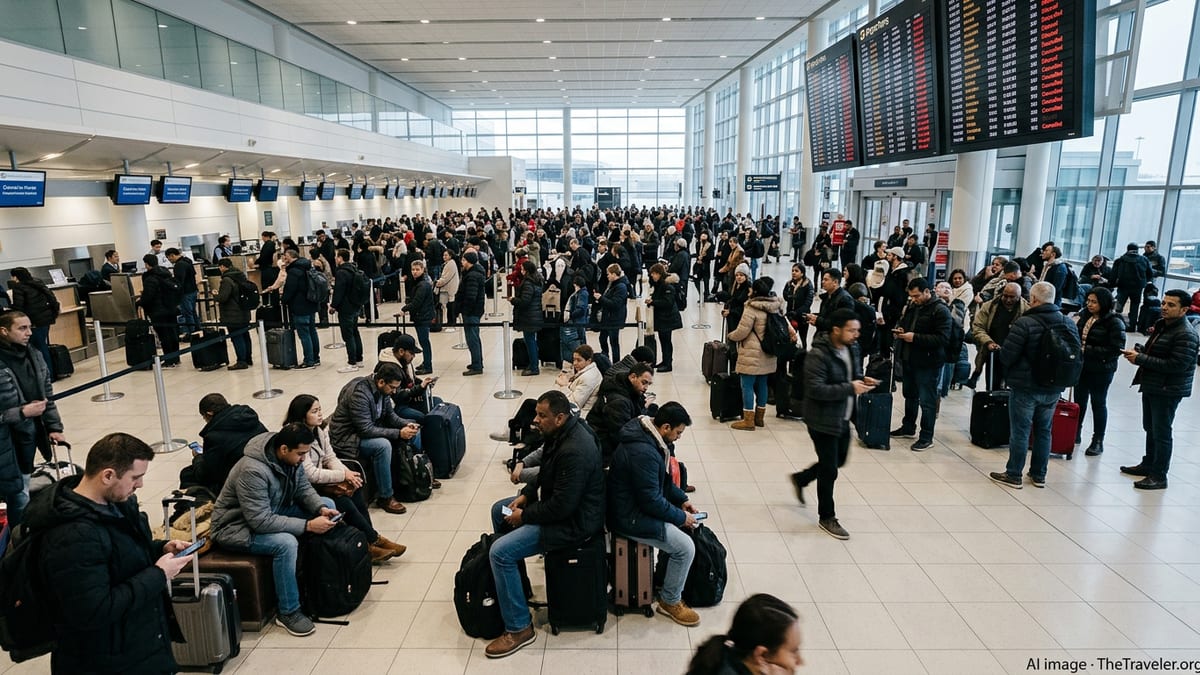
Hundreds of flights in and out of Toronto Pearson International Airport faced disruption on March 15, with publicly available tracking data showing 347 delays and 80 cancellations that rippled across Canada and the United States, stranding thousands of travelers in cities including Sudbury, Sault Ste. Marie, Nashville and Philadelphia.
Get the latest news straight to your inbox!
Major Hub Disruption Sends Shockwaves Through Regional Networks
Toronto Pearson functions as the primary connecting hub for much of eastern Canada, meaning that even a few dozen disrupted flights can quickly cascade into widespread schedule problems. With 347 flights delayed and 80 canceled on Saturday, the impact extended far beyond the Greater Toronto Area, affecting travelers on both domestic and transborder routes.
Regional centers such as Sudbury and Sault Ste. Marie rely heavily on connections through Pearson for access to the rest of Canada and the United States. When aircraft and crews are held in Toronto, smaller airports typically feel the effects first in the form of reduced frequencies, rolling delays and last minute cancellations. Travelers booked on early morning departures often encountered long waits as aircraft arrived late from the previous night’s disrupted operations.
Transborder routes were not spared. Flight-tracking boards showed knock-on effects on services linking Toronto with U.S. cities like Nashville and Philadelphia, where passengers were left facing missed connections, unplanned overnight stays and rebookings onto already busy services. The result was an uneven patchwork of delays across North American networks well beyond Toronto itself.
While the specific combination of factors behind the disruption at Pearson varied by airline and route, published coverage and operational data point to a familiar mix of weather related constraints, tight aircraft utilization and congestion in peak periods. Together, these elements can quickly push a major hub to a tipping point where recovery becomes slow and uneven across the network.
Sudbury and Sault Ste. Marie See Outsized Impact
Smaller northern Ontario cities such as Sudbury and Sault Ste. Marie experienced disproportionate fallout from the disruption, as most scheduled services to and from these airports pass through Toronto Pearson. With limited alternative routings and fewer daily frequencies, even a single canceled rotation can leave travelers with few same day options.
Publicly available arrival and departure boards for these regional airports showed gaps in service and significant schedule changes as airlines attempted to reposition aircraft and crews once conditions in Toronto began to stabilize. Travelers bound for medical appointments, work assignments or onward connections often faced difficult choices between extended delays, overnight stays or rebooking for later in the week.
Because many of these routes operate with smaller aircraft and relatively tight turnarounds, disruptions in Toronto can also mean crews reaching duty time limits before reaching their final destination. When that happens, flights may be canceled even after passengers have checked in, compounding the sense of uncertainty for those trying to reach or leave remote communities.
The situation underscores how dependent northern communities remain on a small number of trunk connections through Pearson. When the hub struggles, there is limited slack in the system to protect regional travelers, who frequently bear a significant share of the inconvenience despite representing a small fraction of total passenger volume.
Transborder Travelers in Nashville and Philadelphia Face Missed Connections
In the United States, the ripple effects were especially visible in mid sized markets such as Nashville and Philadelphia, both of which have strong business and leisure links to Toronto. Disruptions at Pearson translated into late arriving or canceled inbound aircraft, leading to schedule changes for both departing and arriving passengers.
At Nashville International Airport, travelers connecting to Canadian destinations via Toronto reported a combination of rolling delays and abrupt cancellations as flight status boards shifted throughout the day. Those relying on tight connection times in Toronto often found their onward segments already delayed or removed from the schedule by the time they arrived at the gate.
Philadelphia, which handles a mix of corporate travel and cross border tourism, saw similar patterns. Late departing flights from Toronto reduced connection windows for passengers heading deeper into the United States, while late arriving aircraft from Canada forced airlines to adjust departure times or consolidate services. In some cases, travelers found themselves automatically rebooked through other hubs, adding travel time and additional airport transfers.
For U.S. based passengers, the disruption served as a reminder that reliance on a foreign hub can introduce additional points of vulnerability. When operations at Pearson slow down, passengers in cities like Nashville and Philadelphia often have fewer backup options than travelers in larger U.S. gateway airports.
Why 347 Delays and 80 Cancellations Matter for Passengers
On paper, 347 delays and 80 cancellations at a large international hub may appear as routine operational turbulence. In practice, these figures translate into thousands of individuals facing missed family events, disrupted business trips and unexpected expenses for hotels and meals. The scale of the disruption is amplified by the interconnected nature of airline networks, in which a single delayed aircraft can affect multiple flights across an entire day.
Publicly available data on Pearson’s operations show that the airport regularly manages more than one thousand flights per day during busy periods. When more than a quarter of those movements are delayed or canceled, recovery can take several schedule cycles. Passengers booked on later flights may find that aircraft and crews are still out of position, generating a second wave of delays even after the initial cause of disruption has eased.
For travelers, the operational details manifest as long lines at customer service desks, congested gate areas and limited availability on alternative services. Those without flexible tickets or travel insurance may face out of pocket costs for overnight stays, meals and last minute ground transport. Some airlines provide vouchers in specific circumstances, but policies vary widely and often depend on whether the disruption is categorized as weather related or within the carrier’s control.
The day’s statistics also contribute to a broader conversation about reliability at major hubs. Surveys in recent years have highlighted passenger frustration with delays at large North American airports, and days like this reinforce perceptions that the system offers little margin for error during busy travel periods.
What Travelers Should Do: The New List of Key Actions
As disruptions unfolded at Toronto Pearson, airlines and travel platforms updated flight status pages and mobile apps with rolling changes, effectively creating a constantly shifting list of affected services. Travelers were encouraged by widely shared guidance to treat this live data as the primary reference point rather than relying solely on original itineraries.
For passengers still planning to travel through Pearson over the coming days, several practical steps emerge from the latest disruption. First, checking flight status multiple times before leaving for the airport can prevent unnecessary hours spent in terminals if a cancellation has already been posted. Second, using airline mobile apps or online tools can sometimes unlock self service rebooking options faster than waiting in line at a customer service counter.
Travel experts and consumer advocates regularly recommend building longer connection windows when routing through busy hubs like Pearson, particularly in winter and early spring when weather and congestion often intersect. Carry on baggage, where feasible, can also reduce vulnerability to missed connections, as passengers without checked bags can switch flights more flexibly when rebooking options appear suddenly.
Finally, reviewing credit card benefits and standalone travel insurance policies before departure can clarify what support may be available in the event of long delays or cancellations. While coverage varies, many products offer compensation for meals, hotels or alternative transport once specific delay thresholds are reached, turning a stressful disruption into a more manageable inconvenience.