

More news on this day
Hundreds of Air Canada passengers passing through Toronto Pearson International Airport in recent days have faced abrupt cancellations, missed connections and overnight delays, as a series of operational disruptions combined with harsh winter weather to create scenes of long queues, crowded terminals and confused travelers searching for alternatives.
Get the latest news straight to your inbox!
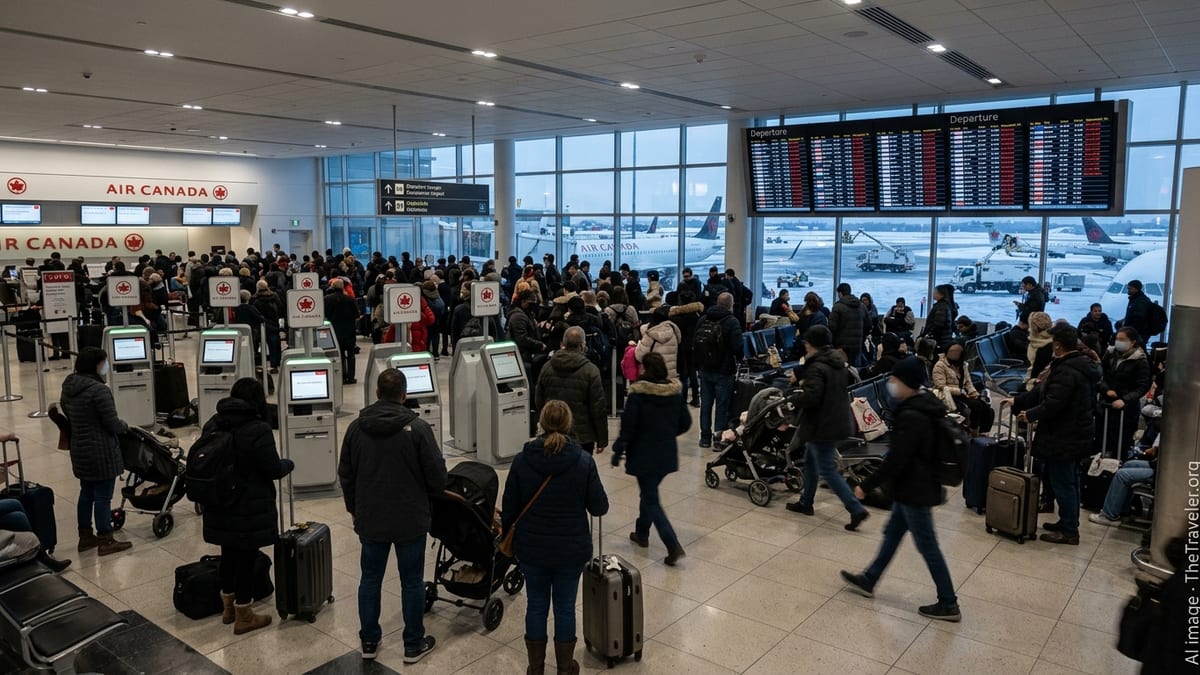
Wave of Cancellations Hits Canada’s Busiest Hub
Toronto Pearson, Canada’s largest airport and a major North American transit hub, has seen an elevated number of Air Canada cancellations and long delays through late winter 2026. Publicly available airport data and media coverage point to days when dozens of the carrier’s departures and arrivals were scrubbed, with ripple effects across the airline’s network from Ottawa and Montreal to western Canada and key U.S. gateways.
Recent winter storms have repeatedly targeted southern Ontario, including a late January system that produced record single-day snowfall at Pearson and forced the cancellation of hundreds of flights across all airlines. In such conditions, Air Canada’s schedule out of Toronto has been particularly vulnerable, given the carrier’s heavy reliance on the airport as its primary global hub.
Travel forums and social media posts from March describe passengers arriving to find flights delayed multiple times before being cancelled outright, sometimes with limited explanation beyond generic references to weather or operational constraints. Many reported long lineups at customer service desks and difficulty reaching call centers while trying to salvage vacation plans, business trips or onward international connections.
While weather is a central factor, industry observers note that tight scheduling, crew duty limits and ongoing fleet and staffing challenges have limited the buffer airlines can use to recover once a hub like Pearson falls behind, turning a difficult day into what some travelers have described as an airport meltdown.
Passengers Stranded Overnight as Options Run Out
As cancellations accumulated at Toronto Pearson, many Air Canada customers found themselves stranded for hours or overnight in the terminal, with limited hotel availability and rapidly shrinking rebooking options. Travel discussion boards include accounts of passengers sleeping on benches or airport floors after being unable to secure accommodation or timely alternate flights.
Some reports describe travelers on domestic feeder routes losing their Toronto connection to long-haul flights and then struggling to be reaccommodated, particularly on sun destinations and peak transborder routes that were already heavily booked for March break and late winter holidays. Affected passengers say they were sometimes rebooked a day or more later, or advised to consider alternate airports or even ground transport to reach their final destination.
Publicly available guidance from Canadian and international regulators emphasizes that when cancellations are outside an airline’s control, such as severe weather, carriers are generally not obliged to provide hotel stays or meal vouchers, though many do offer limited assistance where capacity allows. In contrast, when disruptions are classified as within an airline’s control, passengers may have stronger claims for compensation or covered expenses, depending on the circumstances and the governing rules.
The practical reality at a congested hub is more complex. When hundreds of travelers compete for the same small pool of remaining seats and nearby hotel rooms, even those with theoretical entitlements can find themselves with few real-world options. That dynamic has fueled frustration and renewed calls for clearer, more proactive communication from airlines when disruption at a hub is clearly escalating.
Weather, Operations and a Fragile Winter Network
Behind the scenes, a combination of persistent winter weather, tight turnaround times and the intricate design of hub-and-spoke networks has made Toronto particularly vulnerable. Heavy snow and extreme cold slow de-icing operations, limit runway capacity and can force temporary closures, reducing the number of flights the airport can safely handle in a given hour.
Public information from aviation authorities and meteorological services shows that storms this season have brought high winds, low visibility and significant snow accumulations to the Greater Toronto Area. Each time Pearson’s operations are curtailed, aircraft and crews fall out of position, leading to a chain reaction as planes that should have arrived in Toronto to operate onward flights are delayed or grounded elsewhere.
According to airline scheduling data and analysis from aviation industry commentators, carriers often respond by preemptively cancelling flights with lower load factors or those seen as easier to rebook, concentrating remaining capacity on core trunk routes. For Air Canada, that has meant some regional and leisure flights linked to Toronto have been disproportionately affected when conditions deteriorate.
These cascading disruptions highlight a structural tension in modern airline operations. Highly optimized schedules and lean staffing are efficient in normal conditions but leave limited slack when a major hub like Toronto experiences repeated shocks. The result for passengers can be days of lingering delays and last-minute cancellations long after the worst of a storm has passed.
Rules, Rights and the Passenger Experience
The wave of cancellations at Toronto Pearson has again focused attention on Canada’s air passenger protection rules and what travelers can reasonably expect when flights are disrupted. Publicly available information from regulators outlines different obligations depending on whether a cancellation is deemed within the airline’s control, within its control but required for safety, or outside its control entirely.
In cases categorized as within the airline’s control, passengers may be entitled to compensation and to specific standards of treatment such as meals, hotel rooms and transportation to and from accommodation. When cancellations are attributed solely to severe weather or air traffic control restrictions, airlines are generally required only to complete the passenger’s itinerary as soon as possible, which can still prove challenging at times of peak disruption.
Recent enforcement actions against Canadian carriers for past events, including penalties related to inadequate care during delays and cancellations, suggest regulators are taking a closer interest in how airlines interpret and apply these rules. Consumer advocates have argued that clearer classification of disruptions and more transparent communication from carriers would help passengers understand their options and reduce confrontations at customer service counters.
For now, publicly available travel guidance stresses practical steps: monitoring flight status closely, checking in early, keeping essential items and medications in carry-on baggage, and documenting expenses if seeking reimbursement later. At a complex hub like Toronto, where a missed connection can cascade into days of delay, these precautions can make a significant difference when cancellations strike.
Implications for Toronto’s Role as a Global Gateway
Persistent disruption at Toronto Pearson raises broader questions about the resilience of Canada’s primary gateway at a time of growing demand for international and transborder travel. Air Canada’s strategy relies heavily on funneling domestic and U.S. passengers through Toronto to connect onto Europe, Asia, the Caribbean and Latin America, making smooth operations at the airport central to the carrier’s business model.
Travel industry analysts note that recurring periods of severe congestion and mass cancellations risk eroding traveler confidence, particularly among international visitors and high-yield business travelers who value reliability. Tour operators and corporate travel managers are increasingly attuned to operational performance when selecting routings for clients, including the likelihood of being stranded by a missed connection at a major hub.
For the city and region, prolonged scenes of stranded passengers and disrupted itineraries cut against efforts to promote Toronto as a convenient and welcoming gateway. Local tourism organizations and airport stakeholders have emphasized the importance of long-term investments in infrastructure, de-icing capacity and contingency planning to mitigate the impact of extreme weather and operational shocks.
As winter gives way to the busy spring and summer travel seasons, travelers, airlines and regulators will be closely watching whether recent turmoil at Toronto Pearson subsides or recurs in different form. For many passengers caught up in the latest wave of cancellations, the experience has underscored how quickly a routine connection through Canada’s busiest airport can unravel into an unexpected and costly delay.