

More news on this day
Hundreds of American and European tourists are stranded on Yemen’s remote Socotra Island after a sharp deterioration in relations between Saudi Arabia and the United Arab Emirates disrupted flights and triggered new security alerts across the region.
Get the latest news straight to your inbox!
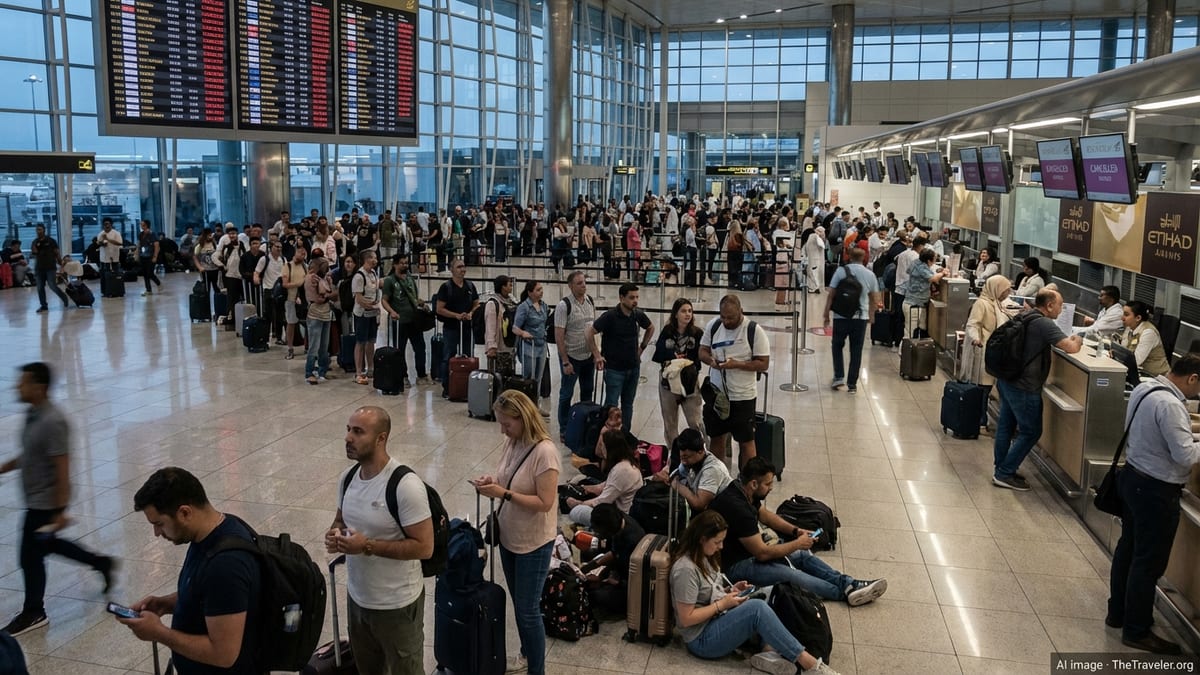
Remote Island Becomes Flashpoint in Gulf Rivalry
The latest disruption on Socotra began in late December 2025, when authorities declared a state of emergency across the archipelago and suspended all commercial flights after fighting escalated on the Yemeni mainland. Publicly available reporting links the shutdown to clashes between forces aligned with Saudi Arabia’s internationally backed Yemeni government and units loyal to the Emirati-supported Southern Transitional Council, which has pushed a new offensive in southern Yemen.
As the confrontation deepened into early 2026, limited air links that had funneled small-group tours from the United Arab Emirates and Saudi Arabia into Socotra’s capital, Hadibo, were abruptly halted. Travel-industry coverage and regional media describe hundreds of foreign visitors, many of them adventure travelers from Europe, North America, Russia and Australia, caught mid-itinerary as departure flights were canceled or repeatedly delayed.
Socotra, a UNESCO-listed island in the Arabian Sea known for its dragon’s blood trees and isolated beaches, had been marketed in recent years as a rare frontier destination despite long-standing travel advisories against visiting Yemen. The current crisis highlights how quickly that niche tourism model can unravel when access depends on a narrow set of politically exposed routes.
Regional analyses note that Socotra’s location, between the Gulf of Aden and the Indian Ocean shipping lanes, has given it strategic importance in the broader Yemen conflict. The island has seen a growing footprint from Emirati-aligned forces over the past decade, while Saudi Arabia has sought to maintain influence through its support for Yemen’s recognized government, setting the stage for the current standoff.
Stranded Western Tourists Face Uncertain Exit Options
Recent coverage in international and regional outlets indicates that more than 400 foreign tourists remain on Socotra, including American, British, French, German, Polish and other European nationals. Some had arrived on seasonal departures timed around the New Year holiday, only to learn that return flights to Abu Dhabi and Saudi gateway cities were no longer operating as scheduled.
Accounts compiled from public reports suggest that many Western travelers are currently concentrated in basic beachside camps and small guesthouses along Socotra’s northern coast. While the island itself has been described as calm and physically safe, the sudden lack of onward connections has left visitors dealing with expiring visas in transit hubs, changing airline schedules and rising costs for extended stays.
Tour operators that specialize in Socotra expeditions have acknowledged, in media interviews and public statements, that their clients are affected by the shutdown. Some companies report working through consular channels in the United Arab Emirates, Saudi Arabia and Oman to identify potential evacuation corridors, including ad hoc charter flights or sea passages toward the Omani coast, though such options remain limited and subject to security approvals.
Travel advisories from Western governments, updated in response to the latest unrest, continue to classify all of Yemen, including Socotra, as a destination to avoid. Guidance for citizens caught on the island largely emphasizes registering with consular services in nearby embassies, maintaining communication with tour organizers and preparing for short-notice travel should departure options open.
Fragile Resumption of Flights Offers Only Partial Relief
Local and international outlets report that a small number of commercial flights have tentatively resumed from Socotra in recent weeks, following intense diplomatic engagement and internal security negotiations. These initial operations appear to focus on moving out the most time-sensitive cases, including families with children and travelers whose transit permissions in third countries are close to expiring.
However, the restart remains fragile. Airline schedules are subject to abrupt change, and aviation notices continue to reference the possibility of renewed closures if ground conditions in southern and eastern Yemen deteriorate. Travel-industry reporting notes that some tourists with tickets on early outbound flights have faced last-minute cancellations, leaving them once again in limbo.
For many stranded visitors, the uncertainty extends beyond Socotra itself. A number of itineraries were built around multi-country trips pairing the island with stopovers in Gulf hubs such as Abu Dhabi, Dubai, Jeddah, Doha or Muscat. With several states in the region issuing stronger advisories on travel related to Yemen and tightening security screening, even confirmed onward connections may be subject to additional checks or rerouting.
Industry analysts suggest that until a more durable understanding is reached between Riyadh and Abu Dhabi over the conduct of forces in southern Yemen, airlines and charter operators are likely to treat Socotra as a high-risk destination. That, in turn, makes it harder to schedule the steady flow of flights needed to clear the current backlog of visitors and restore confidence among tour companies.
Travel Advisories and Regional Responses Intensify
The Socotra crisis is unfolding against a broader backdrop of rising travel warnings across the Middle East. Public advisories from the United States and European governments had already urged citizens to avoid all travel to Yemen due to conflict, terrorism and limited consular access, and recent notices reiterate that this guidance applies equally to Socotra, regardless of its relative calm compared with the mainland.
Regional tourism and aviation reporting shows that several Gulf states have adjusted their own policies in response to the latest escalation. Countries including Qatar, Bahrain and Oman have announced temporary measures to support travelers stranded by route suspensions, such as short-term visa flexibility and special assistance desks at major airports, reflecting concern that disruptions linked to Yemen could spill over into broader tourism flows.
Travel-focused outlets describe how some Western embassies are coordinating with partner states in the Gulf to monitor the situation on Socotra and identify possible transit points for any organized departures. In the absence of a clear timetable, however, individual tourists are left weighing whether to wait on the island for an official solution or attempt complex overland or maritime routes that carry their own risks.
Insurance implications are also emerging. Many policies exclude coverage for destinations under comprehensive travel bans or active conflict advisories, raising questions about reimbursement for extended accommodation, missed onward flights and emergency evacuation. Industry commentary suggests that travelers may face significant out-of-pocket expenses, particularly those who booked through smaller operators that lack large-scale contingency resources.
Socotra’s Tourism Future in Question
Before the current crisis, Socotra had slowly re-emerged on the global travel map as a once-in-a-lifetime destination for photographers, trekkers and nature enthusiasts. Small-group tours, often routed through the United Arab Emirates, capitalized on social media images of alien-looking landscapes and empty beaches, even as human rights organizations and policy think tanks debated the legality and ethics of tourist operations in a conflict-affected zone.
The mass stranding of foreign visitors has now prompted fresh scrutiny of how tourism to Socotra is organized and marketed. Commentaries in regional and international media question whether operators have been sufficiently transparent about the legal complexities of entering Yemeni territory, the overlapping influence of Emirati- and Saudi-aligned forces on the island, and the very limited options available if flights are suddenly cut.
Analysts of Yemen’s conflict suggest that the island will remain exposed to the push and pull of regional power politics, regardless of whether frontline fighting reaches its shores. With relations between Riyadh and Abu Dhabi under visible strain over the conduct of their respective allies, Socotra’s airspace, ports and visitor facilities are likely to be viewed as strategic assets rather than purely civilian infrastructure.
For now, the experience of the Americans and Europeans stuck on Socotra serves as a cautionary case study for high-risk travel. As long as Yemen’s internal divisions intersect with a wider Saudi Arabia, United Arab Emirates and regional rivalry, even remote islands marketed for escapism can quickly become entangled in crises far beyond the control of the tourists who arrive on their shores.