

More news on this day
Toyooka City in Hyogo Prefecture is moving to broaden its appeal to international travelers by expanding inclusive meal options that better serve vegetarian, vegan, halal and allergy-conscious visitors across its hot spring towns and rural attractions.
Get the latest news straight to your inbox!
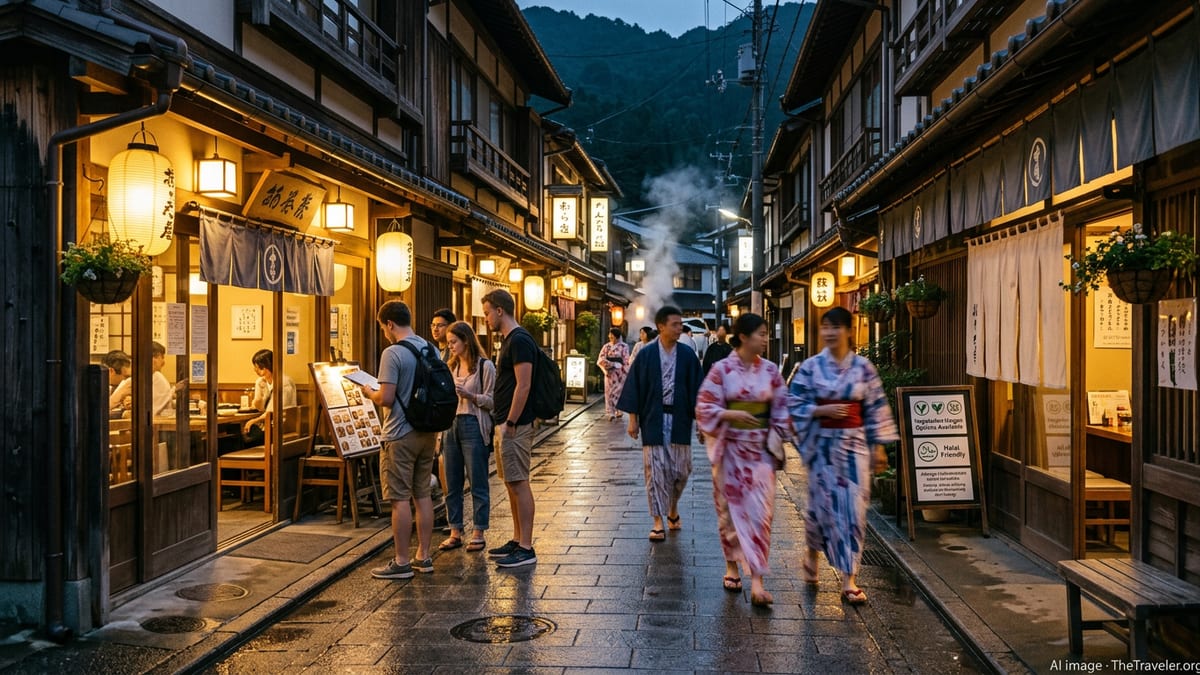
New Focus on Diverse Diets in a Growing Destination
Toyooka City, known internationally for Kinosaki Onsen and its stork conservation initiatives, is emerging as one of rural Japan’s more forward-looking destinations for travelers with specific dietary needs. Recent tourism coverage highlights rising inbound arrivals, particularly from North America and Europe, bringing increased demand for vegetarian, vegan and halal-friendly meals alongside traditional Japanese cuisine.
Publicly available information on Japan’s tourism strategy shows that national and regional authorities are encouraging local communities such as Toyooka to adapt to diverse dietary and cultural requirements. Subsidy programs and model projects promote clearer ingredient labeling, multilingual menus and the development of inclusive dishes that retain a strong sense of place. Toyooka is aligning with this trend as it competes with better-known urban hubs for international visitors.
Travel media reports describe Kinosaki Onsen’s recent tourism growth as part of a broader renaissance in Hyogo Prefecture’s coastal and countryside regions. As more international guests book stays in ryokan and boutique hotels around Toyooka, food has become a central focus of the visitor experience, prompting local businesses to adjust long-standing menus built around seafood, wagyu beef and traditional kaiseki cuisine.
Industry observers note that Toyooka’s positioning as a sustainable, nature-rich destination dovetails with rising interest in plant-forward and responsibly sourced food. This convergence is encouraging chefs and accommodation providers to treat dietary inclusion not simply as an obligation, but as an opportunity to reinterpret regional ingredients for new audiences.
From Ryokan Dining to Street-Level Options
One of the most notable shifts in Toyooka is occurring inside its ryokan, where elaborate set-course meals are a core part of the stay. Travel accounts referencing Kinosaki Onsen and surrounding areas indicate that more properties now provide advance-request vegetarian and vegan menus, and in some cases pescetarian or pork- and alcohol-free options suitable for many Muslim travelers.
These changes are often implemented through flexible menu design rather than entirely separate kitchens: seasonal vegetables, soy-based products, local tofu and rice grown under Toyooka’s well-publicized stork-friendly methods are being used to craft alternative courses that parallel the presentation of standard kaiseki. This approach allows guests with restrictions to share in the visual and cultural experience of multi-course dining without feeling sidelined.
Outside traditional inns, Toyooka’s dining scene is gradually incorporating more casual options that are easier for independent travelers to access. Cafes and small restaurants in and around Kinosaki Onsen are beginning to advertise meat-free dishes, dairy-light menus and simple rice or noodle bowls that can be adapted for various needs. Some businesses promote the use of vegetable-based broths or clearly flag the presence of common allergens.
Local tourism materials also emphasize the role of convenience-oriented choices such as bento, onigiri and simple rice or vegetable platters, which can be important backups for visitors navigating language barriers or strict diets. While fully vegetarian or halal-certified venues remain limited compared with major cities, the cumulative effect of these adjustments is a more navigable food landscape for travelers with constraints.
Aligning with National Efforts on Inclusive Food Tourism
Toyooka’s evolving approach sits within a broader national push in Japan to make regional destinations more welcoming to travelers with diverse diets. Reports on programs supported by the Japan Tourism Agency describe model projects across the country that fund pictogram-based ingredient labels, multilingual menu development and training on serving vegetarian and Muslim visitors in smaller communities.
These initiatives are framed as both an accessibility measure and an economic strategy. Studies on culinary tourism cited in Japanese media place global spending on food-focused travel at significant levels, strengthening the case for destinations that can combine local specialties with inclusive offerings. Toyooka, already recognized for environmental initiatives around Oriental stork reintroduction and low-pesticide rice cultivation, is well positioned to present itself as a holistic model of sustainable and inclusive regional tourism.
Tourism guides and sustainability features highlight that visitors increasingly expect destinations to balance authenticity with flexibility. In practice, this means providing clear information on ingredients, offering alternative broths for noodle dishes, and creating plant-based versions of local favorites rather than simply defaulting to generic international fare. Toyooka’s restaurants and accommodations are beginning to reflect this approach, promoting regional rice, vegetables and river produce in new guises suitable for a wider range of guests.
Observers also point out that inclusive meal provision intersects with other accessibility improvements, such as multilingual signage and easier booking systems for those needing to flag dietary requirements in advance. As Toyooka prepares for upcoming cultural events and theater festivals expected to draw more overseas visitors, these interconnected upgrades are becoming part of its core tourism infrastructure rather than optional extras.
Opportunities and Remaining Challenges for Visitors
Despite the momentum, travelers with strict dietary rules still face challenges in Toyooka compared with Japan’s major metropolitan centers. Travel guides and online trip reports continue to advise advance communication with ryokan and restaurants, especially for vegans, visitors with celiac disease or those requiring fully halal or kosher meals. Many kitchens remain small, and cross-contact with common allergens or animal-based stocks can be difficult to entirely avoid.
However, publicly available guidance suggests that Toyooka’s hospitality businesses are increasingly accustomed to accommodating clear, early requests. International visitors are encouraged to specify in simple English or Japanese what they cannot eat and to confirm details such as dashi base, sauce ingredients and use of alcohol in cooking. Tourism-facing staff in onsen towns and city information centers are playing a growing role in mediating these conversations.
For local producers, the shift presents both complexity and potential reward. Farmers tied to Toyooka’s sustainable rice and vegetable initiatives may find new markets in plant-forward menus that foreground their ingredients, while small food businesses can distinguish themselves by clearly signaling allergy-aware and vegetarian options. The city’s reputation for nature and wellness-oriented travel suggests that these efforts could resonate strongly with health-conscious and eco-minded visitors.
As Toyooka City continues to refine its tourism offer in the lead-up to major cultural programs and future peak travel seasons, inclusive meal choices are emerging as a key part of its competitive identity. The combination of traditional hospitality, rural landscapes and a steadily more flexible food scene is positioning this Hyogo destination as an appealing option for international travelers who value both cultural depth and dietary peace of mind.