


More news on this day
Residents in parts of Bucyrus, a small city in Crawford County, Ohio, were urged to leave their homes late Sunday after a Norfolk Southern freight train derailed near a busy crossing, prompting warnings about a potential chemical leak and the risk of an explosion.
Get the latest news straight to your inbox!
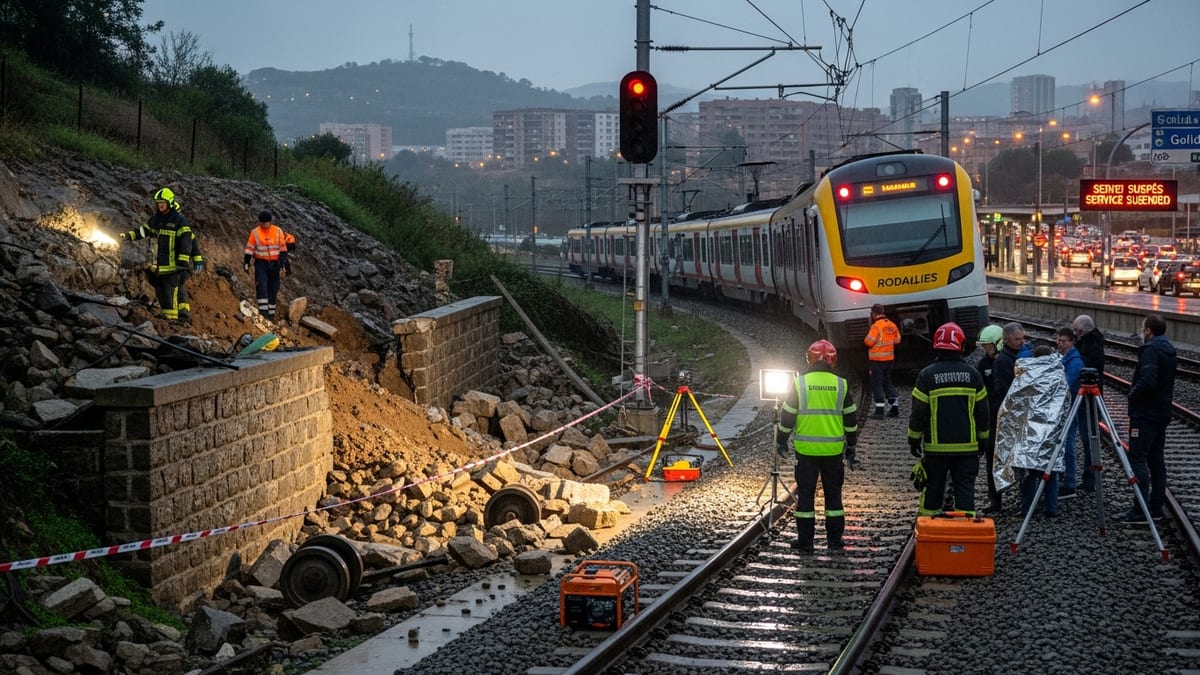
Evacuation orders after nighttime derailment
Publicly available information indicates that the derailment occurred shortly before 9 p.m. on July 5 at the Whetstone Street railroad crossing near Auto Avenue, a mixed residential and commercial area on the south side of Bucyrus. Initial posts from local agencies described several cars off the tracks, including at least one tanker believed to be carrying hydrochloric acid.
Early alerts asked people living within approximately a one mile radius of the crossing to evacuate as a precaution. Reports from local outlets describe residents leaving their homes with little notice, some heading to stay with relatives while others turned to temporary shelters set up in the city.
Initial guidance stressed that people should avoid the area around the crossing, both to limit potential exposure to chemicals and to keep access clear for fire, hazmat and railway response teams working in tight quarters along the roadway.
By late evening, updates from local media indicated that Bucyrus High School had been opened as a shelter for evacuees, offering a centralized space for those who could not immediately secure accommodation elsewhere.
Chemical leak and explosion risk under review
Early information from the scene suggested that one derailed tanker car might be leaking hydrochloric acid, a corrosive chemical commonly transported by rail for industrial uses. Publicly available statements referenced a concern that any leak could create a hazardous plume and, in a worst case scenario, support a powerful explosion if conditions aligned.
Hydrochloric acid can cause respiratory irritation and burns to skin and eyes at high concentrations. Emergency planning guidance used by local and state agencies generally supports wide evacuation zones when a potential release involves a tanker car, which helps explain why the initial protective radius around the derailment was relatively large.
Overnight, as rail and hazmat teams moved into position, monitoring focused on determining whether any significant leak was taking place and whether heat, pressure or structural damage on the tanker posed an acute explosion risk. Publicly available updates from Monday morning indicated that crews had not identified an ongoing release posing an immediate offsite threat, allowing the evacuation zone to be reduced to a smaller area closer to the tracks.
Cleanup and inspection work continued into Monday, with specialized teams assessing the damaged railcars and track, checking valves and fittings on the chemical tanker and using air monitoring equipment to track any changes in conditions around the site.
Impact on residents and local services
The derailment disrupted a quiet Sunday evening in Bucyrus, with families asked to leave at short notice and road closures affecting several nearby streets. Those who evacuated reported leaving behind pets, medications or work equipment in the scramble, highlighting how quickly routine life can be interrupted when hazardous cargo is involved.
Local coverage notes that Bucyrus High School served as a central shelter location, offering a staging point for evacuees and a place to receive basic support while the situation unfolded. Community organizations and nearby residents reportedly helped with supplies and transportation, underscoring the role of informal networks in the first hours after such incidents.
Road closures around Whetstone Street and Auto Avenue diverted traffic into residential blocks and onto alternate routes. While the derailment affected only a relatively small portion of track, its position at a roadway crossing meant that motorists and pedestrians had to adjust their routines, with some businesses near the scene seeing reduced access as emergency vehicles and equipment moved in.
As the immediate danger assessment evolved and the evacuation footprint shrank, many residents were gradually able to return home, though some remained cautious about lingering odors, noise from heavy equipment and the ongoing presence of response crews.
Ongoing questions about cause and rail safety
Available reports indicate that the derailed train was operated by Norfolk Southern, a major freight carrier in the region, and that approximately half a dozen cars left the tracks at the Bucyrus crossing. As is standard after such events, the exact cause of the derailment is expected to be examined through internal railway reviews and, potentially, federal safety investigations.
The Bucyrus incident comes amid heightened national attention on rail safety and hazardous materials transport, particularly in Ohio, where a series of derailments in recent years have prompted renewed scrutiny of aging infrastructure, train lengths and emergency preparedness. While the Crawford County derailment appears to have been contained without a large release, the precautionary evacuation underscores the scale of risk that communities along busy freight corridors must routinely navigate.
Emergency management plans in Ohio typically account for chemical incidents involving road, rail and fixed facilities, using predefined evacuation radii and shelter options that can be activated quickly. The Bucyrus response, with rapid alerts, a sizable initial evacuation zone and a designated shelter, reflects this approach, even as local residents and officials continue to weigh how well those plans function under real-world pressure.
In the coming days, more detailed information is expected to emerge about the train’s manifest, the condition of the rails and crossing, and the performance of railcars carrying hazardous materials. Those findings are likely to feed into broader debates over how frequently such cargo moves through small cities and what additional protections, if any, are warranted for communities along the line.
Travel and regional implications for visitors
For travelers passing through north central Ohio, Bucyrus sits along several regional routes linking larger cities in the state. The derailment and related road closures around Whetstone Street and Auto Avenue have the potential to cause localized delays, particularly for those using smaller connectors rather than major highways.
Travelers who planned to move through Bucyrus in the days immediately following the incident may encounter detours near the affected crossing while rail and roadway repairs are completed. Publicly available updates suggest that main highway corridors remain open, with disruptions concentrated in the immediate vicinity of the derailment.
For visitors staying in or near Bucyrus, the presence of emergency vehicles, work crews and heavy machinery may be noticeable, especially at night while recovery operations continue. Travelers with respiratory conditions may wish to pay attention to local advisories in case of any lingering air quality concerns, even though monitoring to date has not indicated a large, sustained release from the site.
The incident serves as a reminder for travelers across the region to stay alert to local alerts when passing through communities where freight rail lines intersect with residential areas. Checking for current advisories and giving wide berth to any active response scene can help minimize disruption and support the work of those managing the aftermath of the derailment.