

Arizona is usually associated with epic road trips, but some of the state’s most memorable journeys unfold on rails rather than highways. From vintage locomotives climbing toward the South Rim of the Grand Canyon to excursion trains gliding through red rock canyons and river-carved desert, train travel in Arizona offers a relaxed, nostalgic way to see landscapes many drivers never reach. Whether you are a rail enthusiast, a family planning an easy day trip, or a traveler seeking a low-stress way to experience the desert, Arizona’s routes and scenic options can add a distinctive chapter to your itinerary.
Why Consider Train Travel in Arizona
Arizona’s rail journeys appeal to travelers who want to trade driving for looking out the window. On the state’s main excursion routes, trains move at a comfortable pace through country that is often inaccessible by car, following historic right-of-ways laid down more than a century ago. The emphasis is not on speed, but on scenery: red rock cliffs, high desert plateaus, piñon and ponderosa pine forests, and river valleys that cut like green ribbons through the arid landscape.
Train travel here is also about atmosphere. Several of Arizona’s best-known routes use restored mid-20th-century passenger cars, pairing climate-controlled interiors with big picture windows and, on some lines, access to open-air viewing cars. While details vary by operator, the overall feel is leisurely and social. Many excursions build in commentary on local history and geology, or layer in themed experiences, from wine tastings to seasonal holiday rides.
For visitors who are not accustomed to desert driving or who prefer not to rent a car, these routes can be a particularly attractive option. Trains simplify logistics around parking, navigation, and park entrance timing, especially at busy destinations such as Grand Canyon National Park. They also offer a lower-stress alternative for multigenerational groups and travelers who simply want to sit back, relax, and let someone else handle the journey.
Most Arizona train trips operate as day excursions from well-established hubs like Williams and Clarkdale, making them easy to tuck into a broader Southwest itinerary. With a bit of advance planning, it is possible to combine more than one route into a longer trip, sampling the variety of landscapes and rail experiences the state now offers.
Grand Canyon Railway: Classic Route to the South Rim
The Grand Canyon Railway is Arizona’s flagship rail experience, carrying passengers between the small town of Williams and the South Rim of Grand Canyon National Park. Originally opened in 1901 to serve early park visitors, the line later fell into decline before being revived as a heritage operation. Today, it runs as a daily excursion for most of the year, and for many travelers it is the most convenient and atmospheric way to reach the South Rim without driving.
The rail journey covers roughly 64 miles across varied terrain. Departing Williams, the train rolls out of high-desert grasslands, then climbs gradually through pinyon-juniper scrub into denser ponderosa pine forest as it approaches the national park boundary. The ride typically takes a little more than two hours in each direction, with a layover of several hours at the canyon that is long enough for passengers to walk the rim, visit viewpoints close to the Historic Village, and grab a meal before reboarding.
On board, the experience combines practical transport with a sense of theater. The railway operates a mix of restored 1950s-era coaches with big windows, plus higher-service classes that might include dome cars or parlor-style seating depending on the season and schedule. Costumed staff often provide light entertainment, from musicians to staged “outlaw” encounters that nod to the region’s Old West lore. For families, this can turn what might have been a long drive into a day of built-in activities.
One of the advantages of taking the train is how efficiently it drops passengers within walking distance of the South Rim. The northern terminus is in the Historic Village area, close to classic viewpoints and early park lodges. You avoid the challenge of finding parking near the rim, which can be time-consuming at peak times. While you will not see the canyon itself from the train windows, the rail journey sets up a full afternoon at the rim with minimal logistical friction.
Verde Canyon Railroad: Red Rock and River Scenery
If the Grand Canyon Railway is about linking a town to a national park, the Verde Canyon Railroad is all about the journey itself. Departing from the small community of Clarkdale, in central Arizona, this excursion line travels along about 20 miles of track through a remote red rock canyon carved by the Verde River. The train uses a branch line originally built in 1912 to serve copper mining operations, now repurposed for passenger excursions that highlight the region’s geology and wildlife.
A typical trip runs as a four-hour, roughly 40-mile round journey between Clarkdale and the historic ranching area of Perkinsville. The train closely follows the Verde River, crossing multiple trestles and passing through a curved tunnel as it winds between cliff faces and riparian thickets. Because the line passes through territory that is largely surrounded by national forest lands and not served by public roads, much of the canyon feels surprisingly wild despite its proximity to communities like Cottonwood and Sedona.
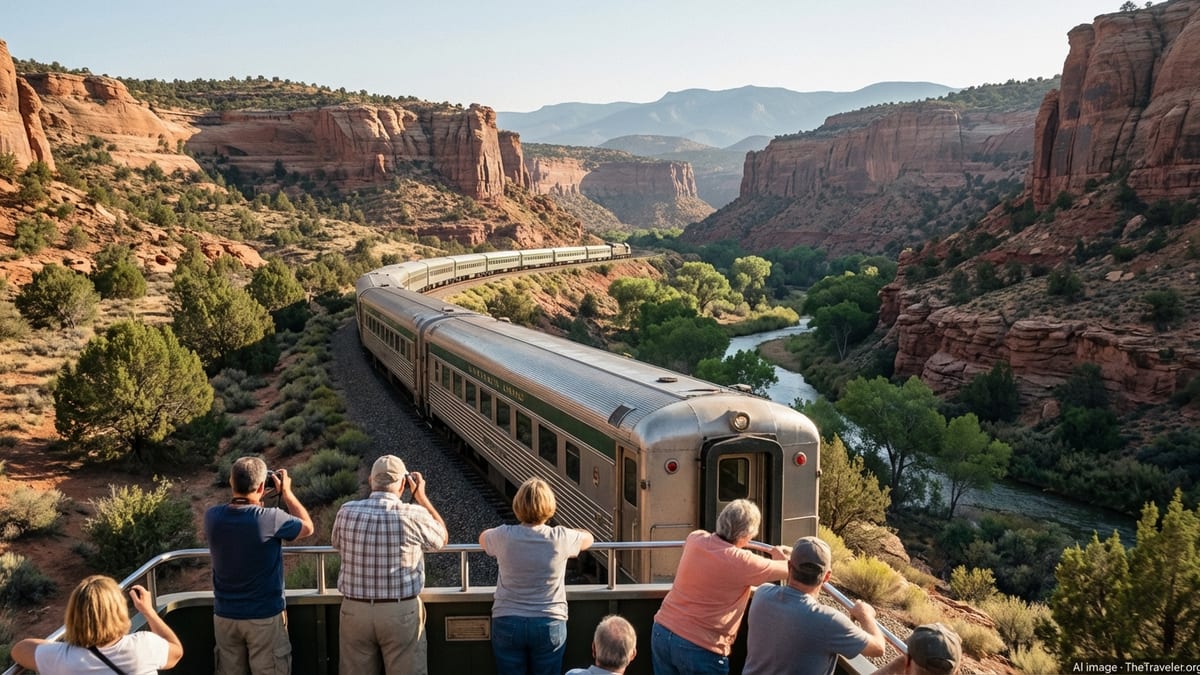
On board, passengers ride in climate-controlled vintage coaches with large windows and have access to dedicated open-air viewing cars, which are one of the railroad’s signatures. These outdoor platforms make it easy to photograph the canyon walls, spot raptors riding thermals overhead, or simply enjoy the rush of desert air as the train moves along the river. Staff narrate key segments, pointing out old mining remnants, Native American sites visible on the cliffs, and seasonal changes in the vegetation that lines the waterway.
The Verde Canyon Railroad operates year-round, with different seasons emphasizing different aspects of the landscape. Spring brings fresh green foliage along the river corridor, summer highlights the contrast between sunlit rock and shaded water, autumn can deliver pockets of golden color in the cottonwoods, and winter sometimes dusts higher ridges with snow. Because tickets for popular dates and special events often sell out, advance reservations are strongly recommended.
Amtrak Across Arizona: Long-Distance Rail Through the Desert
In addition to heritage and excursion lines, Arizona sits on two of Amtrak’s major long-distance routes, which together offer another way to experience the state’s landscapes by train. The Southwest Chief runs roughly east–west across northern Arizona, while the Sunset Limited and Texas Eagle combination passes through the southern part of the state. These trains are geared toward interstate travel rather than sightseeing, but their routes still provide extended views of desert, plateau, and mountain country from the comfort of a reclining seat or sleeper compartment.
The Southwest Chief crosses Arizona between New Mexico and California, serving stations such as Winslow, Flagstaff, and Kingman. Much of the route in this segment follows the historic main line of the Atchison, Topeka and Santa Fe Railway. Views vary from the open, high-desert plains around Winslow to the pine forests near Flagstaff and the wide basins further west. For travelers linking multiple destinations in the broader Southwest, this train can form a backbone itinerary that connects Arizona, New Mexico, and onward toward the Midwest or California.
Farther south, the Sunset Limited, sometimes operating in combination with the Texas Eagle segment, traverses Arizona between New Mexico and California with stops that have included cities such as Tucson and Yuma. The southern route emphasizes low desert scenery: broad valleys, distant mountain ranges, and glimpses of saguaro and other Sonoran Desert plants. While the exact schedule can place much of the Arizona segment in early morning or late-night hours depending on direction and timetable, travelers who plan carefully may be able to enjoy substantial daylight views.
Because Amtrak’s long-distance trains must share track with freight railroads and cover many hundreds of miles, schedules can be subject to change and delays. Anyone using these trains as part of an Arizona-focused trip should build in generous buffers, especially if they need to connect to flights or tours. That said, for travelers who value the experience of a multi-day rail journey and want to see Arizona as part of a broader cross-country route, these services offer a different, more meditative perspective on the landscape than a quick flight.
Seasonal and Themed Rail Experiences
Many of Arizona’s train operators supplement their standard schedules with seasonal or themed excursions that change the mood of the journey. For families, one of the most widely recognized examples is the winter holiday service offered on the Grand Canyon Railway, which runs special evening trains from Williams to a dedicated “North Pole” area along the line. These departures typically incorporate festive lighting, holiday music, and a shorter round trip that focuses on the on-board experience rather than a long layover at the canyon.
The Verde Canyon Railroad has developed its own calendar of recurring special events that layer food, drink, or timing themes onto the standard canyon trip. Wine-focused excursions pair tastings with late afternoon or evening departures, while craft beer events highlight regional brews alongside the usual scenery. Night or near-night runs, sometimes branded as starlight or moonlight rides, showcase how different the canyon feels as the sun drops and temperatures shift, with the river and cliffs taking on deeper colors and the night sky becoming part of the show.
Some specialty rides emphasize wildlife and conservation. In partnership with rehabilitation organizations, the Verde Canyon depot has hosted regular raptor-themed programs, where guests can see birds of prey up close before boarding the train. While sightings of wild eagles or hawks along the route can never be guaranteed, the combination of education at the depot and the potential for observation from the train cars helps connect passengers more deeply to the surrounding ecosystem.
Because these themed journeys often operate on limited dates and sell out quickly, it is wise to check schedules well in advance, particularly if your travel window is narrow. Travelers who prefer a quieter atmosphere may opt for standard daytime departures outside peak holiday or event periods, when the focus is mainly on scenery and narration rather than additional programming.
Planning Your Arizona Train Trip
Organizing train travel in Arizona begins with choosing the right route for your interests and schedule. Travelers focused on iconic sights will often prioritize the Grand Canyon Railway as part of a visit to the national park, especially if they are already planning to stay overnight in or near Williams. Those drawn more to lush river corridors and red rock formations may gravitate toward the Verde Canyon Railroad from a base in Clarkdale, Cottonwood, or Sedona. Long-distance rail enthusiasts might weave one of the Amtrak routes into a broader Southwest or cross-country itinerary.
Once you have chosen a route, the most important step is to secure reservations as early as practical, especially during popular seasons such as spring and autumn. Arizona’s excursion railroads typically assign seats and operate with set capacities that can fill well ahead of departure, particularly for higher service classes or themed rides. Booking early also gives you more flexibility to align train times with lodging check-in and checkout, as well as with other activities such as hiking or sightseeing tours.
Logistics on the ground are usually straightforward but deserve attention. Both Williams and Clarkdale are reachable by car from major Arizona cities, and many visitors arrive with rental vehicles. Parking near the depots is generally organized and clearly signed, but plan to arrive well before departure time to allow for check-in and boarding procedures. If you are connecting from Amtrak or a regional shuttle, confirm how you will transfer between stops and depots, as walking distances and local transport options vary.
For travelers linking multiple rail experiences, consider spacing trips so that each major excursion has its own day. It can be tempting to pack two train journeys back to back, but the slower pace of rail travel rewards time to absorb each landscape. Allowing a day between trips also provides a cushion for any delays and lets you explore the nearby towns, from Williams’s Route 66–influenced main street to Clarkdale’s small museums and the Old Town district of nearby Cottonwood.
Practical Tips for Comfort, Climate, and Safety
Arizona’s weather and altitude can surprise visitors, even when they are spending much of the day on a train. Many routes climb or descend several thousand feet between departure and destination, and temperatures at the Grand Canyon or in higher-elevation forests can feel markedly cooler than in the low desert. Dress in easily adjustable layers, including a light jacket, so that you remain comfortable when stepping onto open-air cars or exploring outdoor viewpoints during layovers.
Hydration is important across the state, and it remains relevant on rail journeys. While excursion trains typically offer beverages on board, carrying a refillable water bottle and sipping regularly will help offset the drying effects of desert air and higher elevations. For longer trips, a small supply of snacks can be useful, particularly if you are traveling with children or have dietary preferences. Check ahead to understand what food and drink options are available on your chosen route and whether outside items are permitted.
Photography is a major part of the appeal of Arizona train travel, and a few habits can improve both your images and your safety. When shooting from open-air cars, secure camera straps and avoid leaning beyond railings to frame a shot. Dust and sun glare can be significant; a lens cloth, hat, and sunglasses will help protect both your gear and your eyes. Inside climate-controlled coaches, reflections in the windows can be minimized by wearing darker clothing and, when possible, moving closer to the glass.
Finally, respect on-board announcements and rail staff guidance. Train equipment and right-of-way areas contain hazards that may not be obvious at first glance, from uneven steps to close track clearances in tunnels or narrow cuts. Remaining within designated passenger spaces and following instructions about when to move between cars helps keep the experience focused on scenery and relaxation rather than on mishaps that could have been avoided.
The Takeaway
Train travel in Arizona offers a slower, more contemplative way to cross a state better known for open roads and dramatic drives. Whether it is the Grand Canyon Railway easing you into a day at one of the world’s most famous natural landmarks, the Verde Canyon Railroad threading quietly along a river beneath high desert cliffs, or an Amtrak long-distance train rolling through the night on its way to another state, each route reveals facets of the landscape that can be hard to appreciate from behind the wheel.
These journeys also serve as reminders of how central railroads once were to Arizona’s development, connecting mining towns, ranches, and remote settlements to the wider world. Riding today’s excursion and intercity trains is as much about stepping into that history as it is about reaching a destination. With thoughtful planning, realistic expectations about pace, and an openness to unhurried travel, you can turn a day on the rails into a highlight of your time in the Southwest.
For many travelers, the enduring appeal of Arizona’s trains lies in their combination of practicality and romance. They smooth the logistics of reaching big-ticket sights, yet they also invite you to lean back, watch the landscape gradually change, and listen to the rhythm of wheels on rail. In a travel era that often prizes speed and constant movement, Arizona’s rail journeys are an invitation to slow down and savor the spaces between the places on your map.
FAQ
Q1. What are the main scenic train routes in Arizona?
The most prominent scenic routes are the Grand Canyon Railway between Williams and the South Rim and the Verde Canyon Railroad between Clarkdale and Perkinsville. Amtrak’s long-distance trains also cross the state and offer broader desert views, though they function primarily as intercity services.
Q2. Do I need to book Arizona train trips in advance?
Advance booking is strongly recommended, especially in peak seasons such as spring and autumn or around major holidays. Excursion trains operate with fixed capacities, and popular classes of service and themed rides often sell out days or weeks ahead.
Q3. Can I see the Grand Canyon from the train itself?
No, the canyon is not visible from the train while you are en route. The Grand Canyon Railway brings you directly to the Historic Village area at the South Rim, where you can walk to multiple viewpoints during the layover.
Q4. Is the Verde Canyon Railroad suitable for young children?
Yes, the Verde Canyon Railroad is generally family-friendly. The relatively short duration, open-air cars, and narrated commentary tend to keep children engaged. As with any excursion, parents should supervise children closely, particularly in outdoor viewing areas.
Q5. What is the best time of year for scenic train travel in Arizona?
Spring and autumn are popular for their moderate temperatures and vivid colors along river corridors and in forests. Summer can be hot, especially at lower elevations, but air-conditioned coaches help. Winter offers quieter trains and the possibility of snow at higher elevations, though some services adjust schedules seasonally.
Q6. Are Arizona’s excursion trains accessible for travelers with limited mobility?
Most major operators provide some level of accessibility, such as ramps, lifts, or designated seating areas, but details vary by train and car type. It is important to contact the railroad in advance to confirm what accommodations are available for your specific needs.
Q7. Can I combine Amtrak travel with local scenic railways?
It is possible, but it requires careful planning. Amtrak serves cities such as Flagstaff and Tucson, while excursion trains depart from towns like Williams and Clarkdale. You may need a rental car, shuttle, or taxi to bridge the gap between stations and excursion depots, and schedules should be checked closely to allow for delays.
Q8. What should I wear and bring on an Arizona train trip?
Wear comfortable, layered clothing to adapt to changing temperatures, and choose sturdy shoes for walking on platforms and at viewpoints. A hat, sunglasses, sunscreen, water bottle, and light snacks are useful, along with a camera or smartphone if you plan to photograph the scenery.
Q9. Are there dining options on board the trains?
Most excursion railways in Arizona offer snacks and drinks for purchase, and some provide more substantial food service depending on the class of ticket and type of trip. Long-distance Amtrak trains have café cars and, on certain services, full meal options for sleeping car passengers. Check specific offerings when you book.
Q10. Is train travel in Arizona safe?
Arizona’s established rail operators follow standard safety regulations and procedures, and incidents are rare. Passengers contribute to safety by following crew instructions, staying within designated areas, using handrails on steps, and supervising children, especially in open-air or moving between cars.