

Austria is one of Europe’s easiest countries to explore by rail. Dense timetables, modern trains and scenic Alpine routes make it simple to move between grand Habsburg cities, spa towns and high mountain valleys without ever needing a car. Whether you are planning a short city break or a cross-country adventure, understanding how Austria’s train network works will help you travel confidently and make the most of every journey.
The Austrian Rail Network at a Glance
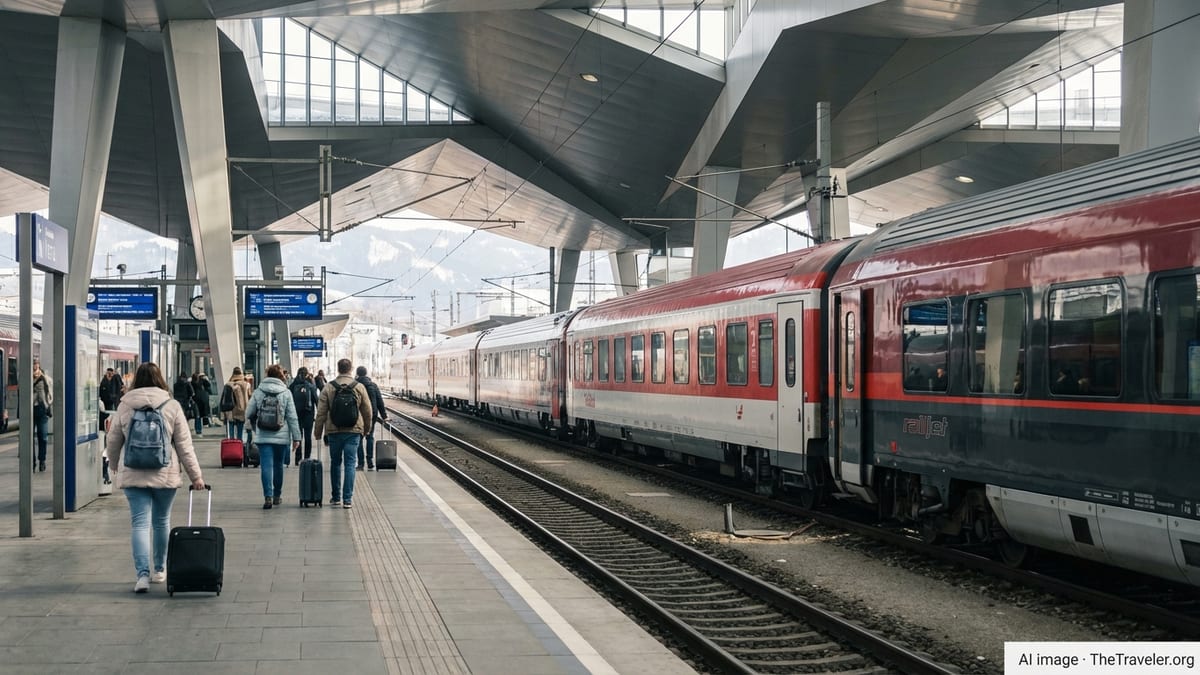
Austria’s rail network is compact but remarkably comprehensive, reflecting the country’s long tradition of rail travel and its focus on sustainable mobility. Trains link all major cities, regional capitals and many resort towns, with frequent services on the main east west and north south axes. For visitors, this means you can board a train at Vienna Airport and reach Salzburg, Innsbruck or Graz on a direct long distance service, then connect seamlessly to local lines.
The main national operator is ÖBB, the Austrian Federal Railways. It runs most long distance and regional services, including high speed Railjet trains and Nightjet sleeper services. Alongside ÖBB, open access operators such as Westbahn on the Vienna to Salzburg corridor provide additional choice and often competitive fares. Regional transport authorities coordinate local trains and integrated tickets within each federal state.
Many routes cross borders, so rail travel in Austria often links naturally with journeys to Germany, Italy, Switzerland, Hungary or the Czech Republic. Direct Railjet services typically connect Vienna with cities such as Munich, Budapest and Prague, while cross-border EuroCity and regional trains handle shorter hops. For international travelers, this makes Austria an ideal hub for multi-country rail itineraries.
Infrastructure has seen steady investment, with new tunnels and upgraded lines cutting journey times through the Alps. Classic mountain routes such as the Arlberg and Semmering lines remain spectacular, while newer projects like the Koralm tunnel are reshaping connections between regions. Together, they create a network suited both to practical point to point travel and leisurely scenic journeys.
Major Routes and Scenic Journeys
The backbone of Austrian rail travel is the east west main line from Vienna through St. Pölten and Linz to Salzburg and on towards Innsbruck and Bregenz. High speed Railjet and long distance InterCity services run frequently on this corridor, joined by Westbahn trains between Vienna and Salzburg and onwards to western Austria and southern Germany. For most visitors, this is the line that links together classic city stops such as Vienna, Linz and Salzburg.
From this spine, several lines branch south into the Alps. The historic Semmering route, one of the world’s earliest mountain railways, connects Vienna via Wiener Neustadt and the Semmering Pass to Bruck an der Mur and Graz. It combines engineering heritage with sweeping views of wooded valleys and viaducts. New direct services on this axis, including extended Westbahn trains from Vienna to Graz and Klagenfurt, have made the line even more attractive for both commuters and tourists.
Further west, the Arlberg railway links Innsbruck with Bludenz and Bregenz, running through high Alpine landscapes, long tunnels and deep gorges. This is one of Austria’s most scenic daytime routes, particularly in winter when ski resorts along the line fill with visitors. The Tauern railway, connecting Salzburg with Villach in Carinthia, is another classic mountain line. Its reopening after engineering works restored fast links between central Austria, Slovenia and northeast Italy, as well as overnight connections from cities such as Salzburg and Munich towards Venice and Rome.
Other important corridors include the north south routes from Vienna and Salzburg towards Carinthia and Italy via the Pyhrn and Brenner lines, and the lines from Vienna to Budapest and Prague. Around each major city, dense networks of regional trains and S Bahn suburban services reach nearby lakes, hiking areas and spa towns, making rail an easy choice for day trips as well as long distance travel.
Train Types and On Board Experience
Understanding the main categories of train will help set your expectations when planning Austrian journeys. Railjet is ÖBB’s flagship high speed service, operating on key intercity routes such as Vienna to Salzburg, Innsbruck, Bregenz and Graz, as well as international services to Germany, Hungary and the Czech Republic. Railjet trains offer three classes, quiet zones and family areas, with at seat catering in First and Business Class and a restaurant or bistro for other passengers.
InterCity and EuroCity trains provide long distance links on important domestic and cross border routes that are not part of the Railjet network. They usually offer two classes, air conditioned carriages and basic catering, sometimes via a minibar trolley or small café car. RegionalExpress and Regionalbahn trains are slower stopping services that connect smaller towns and rural areas. In mountainous regions they can be particularly scenic, with large windows and a more relaxed pace.
For overnight travel, Nightjet sleeper trains operated by ÖBB connect Austrian cities with destinations such as Rome, Venice, Milan, Hamburg and Amsterdam. Within Austria, they also serve as comfortable night links between regions. Passengers can choose between seats, couchettes and sleeper cabins, with a higher level of privacy and comfort in the sleeping car. Advance reservations are essential, and on busy dates popular routes may sell out well ahead of departure.
On board, Austrian trains tend to be clean, modern and well maintained. Power sockets are standard on most long distance services, and Wi Fi is widely available, though performance can vary in tunnels and remote valleys. Luggage space is usually sufficient for suitcases and backpacks, with overhead racks and designated areas near doors. Food options range from full restaurant service on some Railjets and Nightjets to basic snacks from vending machines or trolleys on regional lines, so bringing your own refreshments for longer journeys is a sensible backup.
Tickets, Klimaticket and Rail Passes
Ticketing in Austria is straightforward once you know the main categories. Standard flexible tickets allow you to travel on a chosen date with some freedom over train selection, especially on regional services. Advance purchase offers, sold under names such as Sparschiene, provide cheaper fares on many long distance domestic and international journeys, but are tied to specific trains and are usually non refundable or only partially refundable. Buying early often secures the best prices, particularly on popular Railjet and Nightjet routes.
Tickets can be purchased through ÖBB’s website and app, at station ticket counters and from machines. Private operators such as Westbahn sell their own tickets through dedicated channels and on board, and their tickets are generally not interchangeable with ÖBB tickets. When planning an itinerary that mixes operators, check carefully which ticket covers which train, and consider whether a rail pass might suit your plans better.
An important innovation in Austrian ticketing is the Klimaticket, a flat rate pass that covers almost all public transport nationwide, including most trains, regional buses, trams and city networks. Travelers can choose between a nationwide ticket or versions covering one or two regions. The nationwide Klimaticket is sold as an annual pass and has become a popular option for residents and long term visitors who travel frequently. Prices have been adjusted over time to reflect inflation, and new tickets from 2025 and 2026 are higher than in the scheme’s early years, but the offer remains attractive for heavy users.
For visitors staying only a short time, regional day tickets, weekend specials and city cards that include local public transport often provide better value than an annual Klimaticket. In Vienna, Graz, Salzburg and Innsbruck, simple zone based tickets make it easy to combine local trams and buses with S Bahn suburban trains. When in doubt, use the official journey planners or ask at staffed ticket counters, where English is widely spoken and staff are used to helping tourists navigate the various options.
Seat Reservations, Classes and Comfort
On many Austrian trains, especially regional services, reservations are not required and passengers simply board with a valid ticket and sit in any free seat in the appropriate class. On long distance trains, optional seat reservations can be highly recommended at busy times such as Friday evenings, Sunday afternoons and holiday periods. Reservations allow you to choose specific seats or zones, such as quiet areas or compartments suitable for families.
First Class on most long distance services offers more spacious seating, a quieter environment and sometimes additional services such as at seat catering or complimentary newspapers. Business Class on Railjet trains is a small premium cabin with very generous space, high backed armchairs and personal service, targeted at travelers who value extra comfort and privacy. Second Class is perfectly adequate for most journeys, with comfortable seats, power outlets and large windows, and it represents good value on typical intercity routes.
For overnight journeys on Nightjet services, reservations are mandatory regardless of whether you travel in a seat, couchette or sleeper. Couchettes are shared compartments with bunks, usually in four or six berth layouts, and are popular with families and budget travelers. Sleeper cabins offer more privacy, often with en suite wash facilities or even private showers in higher categories. When planning a night train journey, booking as early as possible increases your chances of securing the exact accommodation type you prefer.
Regardless of class, it is wise to arrive at the station a little before departure, especially in major hubs such as Vienna Central Station, Salzburg or Innsbruck, where long distance trains can be busy and platforms may change. Display boards are generally clear, but last minute alterations do occur, and having a few spare minutes reduces stress. On board, seat reservation displays above or beside seats indicate if a place is booked for part of the journey, so always check before sitting down.
Practical Tips for Smooth Train Travel
Austrian trains are punctual by European standards, but Alpine weather, engineering works and cross border delays can still disrupt timetables. Building realistic connection times into your itinerary, especially when changing between operators or from long distance to regional services, will help you avoid stress. For important international connections or airport transfers, consider allowing extra time, particularly in winter when snow and ice can slow services.
At major stations, platforms are usually accessible, with lifts or ramps alongside stairs. Vienna Central Station and other large hubs have clear signage in German and English, as well as information desks. Smaller rural stations can be more basic, sometimes with limited shelter or amenities, so it is sensible to check in advance if you need step free access or facilities such as toilets and waiting rooms.
Tickets must be valid from the moment you board. In some regions, local tickets bought from machines or kiosks need to be validated before boarding by stamping them in small machines on the platform. On most long distance services, mobile tickets displayed in the official apps are accepted without further validation. Conductors carry handheld devices to scan QR codes or check passes such as the Klimaticket, and spot checks on unstaffed stations are not uncommon, so always ensure you have your proof of travel ready.
When traveling with luggage, try to keep bags manageable and clearly labeled. Trains serving ski resorts and Alpine towns can be crowded with bulky equipment in peak seasons, so reserving seats near luggage racks or doors can be useful. For bicycles, advance reservation is often required on long distance trains, with only a limited number of spaces on each departure. Pets are generally allowed under specific conditions, which may include leashes or carriers and, for larger dogs, muzzles; exact rules vary slightly between operators, so checking in advance remains important.
Arriving by Train at Vienna Airport and Major Cities
For many visitors, the first encounter with Austria’s rail system is at Vienna Airport. From the terminal’s lower level, several rail services connect the airport with the city and beyond. The S Bahn commuter line S7 offers a budget friendly link to central stations such as Wien Mitte and Wien Hauptbahnhof, running roughly every 30 minutes throughout most of the day. Railjet long distance trains provide direct connections from the airport to Vienna Central Station and onwards to cities including St. Pölten, Linz, Salzburg, Innsbruck, Bregenz and Graz, making it possible to land in Vienna and continue straight across the country by rail.
Alongside these public services, the dedicated City Airport Train connects the airport with Wien Mitte in under 20 minutes and includes features such as in town check in for certain airlines. It is faster and more expensive than the S Bahn, appealing mainly to travelers who value speed and extra comfort over price. All these services share convenient underground platforms directly accessible from the arrivals hall, with ticket machines and counters nearby.
In Vienna itself, the primary long distance hub is Vienna Central Station, a modern through station with extensive shopping and dining facilities. Many international and domestic trains also serve additional stations such as Wien Meidling, so it is worth confirming your exact arrival point when booking accommodation. Other cities follow a similar pattern, with Salzburg, Innsbruck, Linz and Graz all centered on main stations that are within walking distance or a short tram or bus ride from their historic centers.
Using trains for day trips from these cities is straightforward. From Salzburg, regional trains reach lakes such as Wolfgangsee and towns in the Salzkammergut. From Innsbruck, lines radiate into the Tyrolean Alps, linking ski resorts and hiking bases. Regular S Bahn and regional services allow you to visit smaller towns without the need for a car, provided you check the timetable for evening return services and any seasonal variations.
The Takeaway
Traveling by train in Austria combines practical efficiency with the pleasures of scenic journeys. A well developed network, modern rolling stock and clear ticketing systems make it straightforward even for first time visitors, while classic Alpine routes and comfortable overnight services add a touch of romance for those planning longer adventures. With a little preparation around ticket types, reservations and connections, you can move smoothly between airports, cities and mountain valleys.
New and upgraded routes continue to strengthen connections across the Alps, while integrated passes such as the Klimaticket reflect Austria’s commitment to public transport as a cornerstone of sustainable travel. Whether you are a city break traveler hopping between Vienna and Salzburg or a rail enthusiast tracing historic lines over high passes, the network offers a flexible canvas for your itinerary.
Most importantly, Austrian rail travel rewards those who slow down and look out of the window. From vineyards at the edge of Vienna to snow covered peaks on the Arlberg or Tauern lines, the landscapes outside your carriage tell a story of a country that has long integrated railways into its daily life. Understanding the basics of routes, tickets and tips will free you to enjoy that story in comfort, one station at a time.
FAQ
Q1. Do I need to book train tickets in Austria in advance?
Advance booking is not always required, but it is recommended for long distance Railjet and Nightjet services, especially on weekends, holidays and busy ski or summer travel periods. For regional trains, same day purchase is usually sufficient.
Q2. Is the Klimaticket good value for short visits to Austria?
The nationwide Klimaticket is designed primarily as an annual pass for residents and frequent travelers. For short visits, regional day tickets, city cards and advance purchase long distance fares usually offer better value unless you plan intensive travel every day.
Q3. Are reservations compulsory on Railjet trains?
Reservations on Railjet trains are generally optional within Austria, but they are strongly advised at peak times to guarantee a seat. For international segments and busy holiday dates, reservations may effectively be essential due to high demand.
Q4. How early should I arrive at the station before my train?
For domestic journeys, arriving 10 to 20 minutes before departure is usually enough, giving you time to find your platform and board calmly. For international trains or complex connections, allow extra time, particularly at large hubs such as Vienna Central Station.
Q5. Can I use one ticket on both ÖBB and Westbahn trains?
In most cases, tickets are specific to the operator, so an ÖBB ticket will not be valid on Westbahn services and vice versa. Always check the conditions of your ticket and, if necessary, purchase separate tickets when switching between operators.
Q6. Are Austrian trains accessible for travelers with reduced mobility?
Many modern trains and major stations offer step free access, lifts and designated spaces for wheelchairs, but not all smaller stations are fully accessible. If you require assistance, contact the operator in advance so staff can help with boarding, alighting and connections.
Q7. Do Austrian trains have Wi Fi and power sockets?
Most long distance and many regional trains provide power sockets at seats, and Wi Fi is common on Railjet and other intercity services. Coverage can be intermittent in tunnels and remote valleys, so do not rely on a continuous connection for critical tasks.
Q8. How much time should I allow when changing trains?
In smaller stations, a 5 to 10 minute connection can be workable, but in large hubs or when changing between operators, it is wiser to allow 20 to 30 minutes. In winter or when connecting to airport services, plan a safety margin in case of delays.
Q9. Can I bring a bike on Austrian trains?
Bicycles are allowed on many Austrian trains, often for an additional fee and sometimes requiring a reservation on long distance services. Space is limited, especially at peak times and on popular routes, so it is best to check the rules and book in advance where possible.
Q10. What is the best way to get from Vienna Airport to the city by train?
From Vienna Airport, the S Bahn line S7 offers an economical route to central Vienna, while Railjet trains provide quick links to Vienna Central Station and beyond. The dedicated City Airport Train is the fastest but more expensive option, favored by travelers who prioritize speed and convenience.