

Train travel in Malaysia has entered a new era, with fast electric services now linking the entire length of Peninsular Malaysia and commuter rail weaving through key cities. For visitors, that means an easy, good value way to cross the country without the stress of highways or domestic flights. From booking an Electric Train Service journey between Johor Bahru and the Thai border to using commuter trains around Kuala Lumpur and Penang, knowing how the system fits together will transform the way you move around the country.
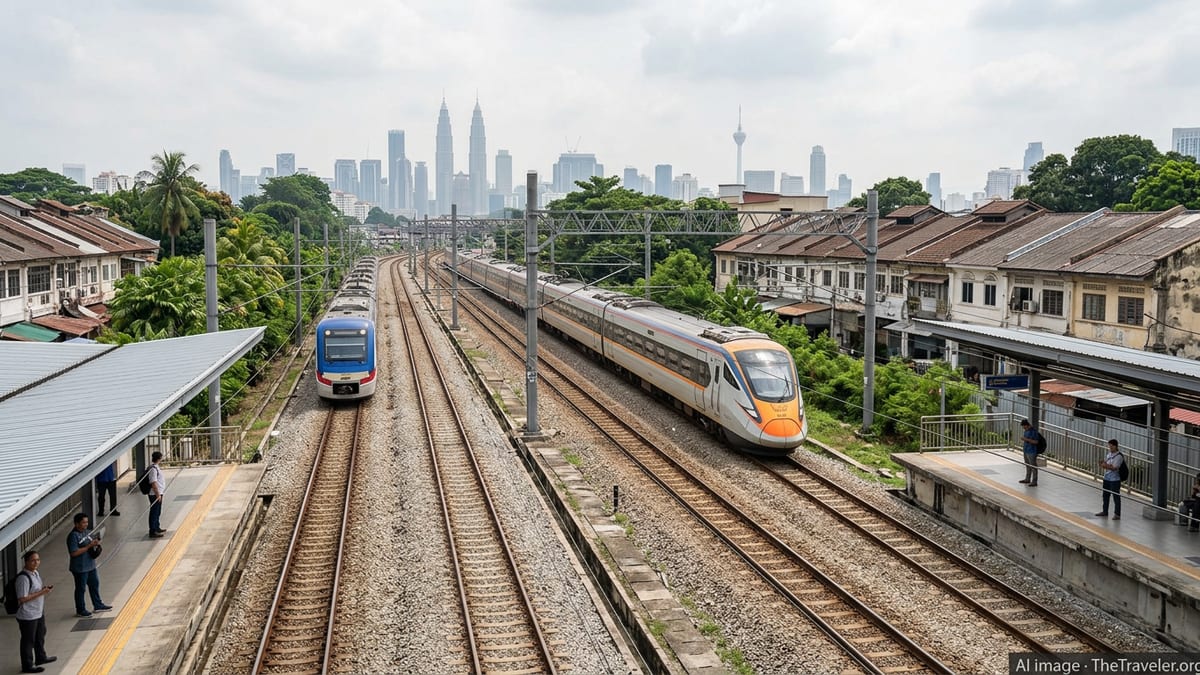
Understanding Malaysia’s Rail Network Today
Peninsular Malaysia’s main rail services are operated by Keretapi Tanah Melayu Berhad, widely known as KTM. The network combines long distance electric trains, older diesel intercity services and busy commuter lines that feed into Malaysia’s largest cities. Electrification and double tracking over the past decade have dramatically cut journey times and improved reliability on the core west coast corridor between Johor Bahru and the Thai border.
The flagship Electric Train Service, usually shortened to ETS, now offers a continuous north south spine, with trains running from Johor Bahru’s JB Sentral station in the south up through Kuala Lumpur and onward to Padang Besar on the Thai frontier. This development has turned what was once an overnight or all day journey into a comfortable daytime ride, with air conditioned carriages, assigned seats and basic onboard amenities.
Alongside ETS, KTM Intercity diesel trains still cover routes that are not yet fully electrified. The most famous is the so called East Coast Line from Gemas through the jungles and small towns of Pahang and Kelantan to Tumpat near the Thai border. These trains are slower and more rustic, but they remain an atmospheric choice for travellers seeking off the beaten track experiences away from the busy west coast.
At the metropolitan level, KTM Komuter services operate as suburban trains around the Klang Valley region centred on Kuala Lumpur, and on a separate northern sector serving Perak, Penang, Kedah and Perlis. These frequent stopping services integrate with city metro, light rail and bus systems, giving visitors an affordable way to reach suburban attractions and satellite towns without needing to drive.
Key Long Distance Routes and Journey Ideas
The star of Malaysia’s modern rail story is the ETS route linking Johor Bahru, Kuala Lumpur and the northern states. With the extension of electric trains to JB Sentral, it is now possible to ride a single train all the way from the Singapore border area to Padang Besar, where you can connect towards Hat Yai and Bangkok. Travellers commonly break this into shorter legs, such as JB Sentral to Kuala Lumpur, Kuala Lumpur to Ipoh or Penang, and onward to the Thai border.
For many visitors, a classic itinerary is to travel from Kuala Lumpur to Ipoh, a compact journey of only a few hours on ETS. Ipoh has become a popular weekend destination, known for its limestone hills, old town shophouses and famous food scene. Continuing north, Butterworth serves as the main rail gateway for Penang. Frequent ferries and road links connect Butterworth with George Town on Penang Island, making it easy to arrive by train and continue directly to your hotel.
Further north again, ETS services continue through Kedah’s paddy fields and small towns to Arau and Padang Besar. Arau is the gateway for Langkawi Island via Kuala Perlis, while Padang Besar functions as a busy border station where Malaysian trains meet Thai services. Some travellers choose to end their Malaysian journey here and transfer to Thai trains, while others use the town simply as a practical connection point before looping back south.
On the east coast, the intercity line between Gemas and Tumpat remains largely diesel operated and slower, but it has immense scenic appeal. Sometimes referred to by rail fans as the Jungle Railway, this route crosses dense rainforest, river valleys and traditional kampung villages. You can board at Gemas after reaching it by ETS from Kuala Lumpur, then continue to stops such as Jerantut for national park access, Wakaf Bharu for Kota Bharu and finally Tumpat near the northern tip of the peninsula.
Commuter and Urban Trains: Moving Within Cities
Within the Klang Valley, KTM Komuter trains form an important part of greater Kuala Lumpur’s public transport network. Lines radiate from the old Kuala Lumpur station and the main transport hub at KL Sentral to suburbs such as Port Klang, Seremban, Tanjung Malim, Batu Caves and other residential and industrial areas. For travellers, key uses include reaching Klang for heritage walks, Port Klang for ferries, or simply hopping between districts without battling traffic.
These commuter trains connect with other urban rail systems, including RapidKL’s LRT and MRT lines and the monorail running through Bukit Bintang. Interchange stations allow you to change from KTM Komuter to metro style services on a single journey, often within the same complex or via covered walkways. This integration means you can land at Kuala Lumpur International Airport, ride the airport rail link into town, then transfer to KTM Komuter or the MRT to reach your final destination.
In northern Peninsular Malaysia, KTM Komuter Northern Sector trains connect towns between Ipoh, Butterworth and Padang Besar. Services typically shuttle between Ipoh and Butterworth and between Butterworth and Padang Besar, stopping at a string of small towns and local centres on the way. For travellers based in George Town, this creates a simple way to explore inland areas for day trips before returning to Penang in the evening.
It is worth noting that commuter timetables can see periodic adjustments, especially during peak travel seasons or as new rolling stock is introduced. Frequencies around Kuala Lumpur have gradually improved as more trains enter service, yet there can still be longer gaps outside rush hour. When planning a day of sightseeing that relies heavily on Komuter services, build in generous buffer times, especially if you need to make a flight or an intercity connection afterwards.
How to Buy Train Tickets in Malaysia
Travellers today have multiple ways to purchase KTM tickets. For ETS and Intercity services, the most convenient approach is to book online in advance through KTM’s official channels or the company’s mobile app. These platforms usually open sales several weeks or months ahead of departure, with popular holiday periods such as Chinese New Year and Hari Raya often selling out quickly. Booking early is strongly recommended for weekends and school holidays.
At major stations such as KL Sentral, Butterworth, Ipoh and JB Sentral, staffed ticket counters and self service kiosks handle ETS and Intercity bookings. Kiosks are helpful if you choose to buy close to departure or prefer paying with bank cards on the spot. Queues can form before popular departures, particularly on Friday evenings and Sunday afternoons, so allow extra time if you plan to purchase in person rather than online.
KTM Komuter tickets generally work on a tap and ride principle using stored value cards or token tickets. On the Klang Valley network, travellers frequently use the same contactless cards that work on LRT, MRT and buses, tapping in at entry gates and tapping out at their destination. Fares are relatively low compared with taxis or ride hailing services, making commuter trains one of the most economical ways to move around the city.
For airport access, ticketing is handled separately by the airport rail operator, but integration with city cards and passes is improving. Some passes combine airport transfers with unlimited travel on LRT, MRT, monorail and selected bus routes for a fixed period, which can be good value if you plan to intensively use public transport for a couple of days after you land. Always check validity conditions carefully to see whether KTM Komuter is included or whether a separate ticket is required.
Classes, Seating and Onboard Experience
On ETS trains, tickets are sold with reserved seating, in air conditioned carriages arranged mostly in comfortable airline style rows. The main distinction on many services is between different fare tiers based on flexibility and journey length rather than sharply separated classes. Some trains offer slightly different configurations or branding, but for most travellers the experience is broadly similar throughout the train: cushioned seats, individual reading lights, power outlets on newer sets and overhead storage for small bags.
Larger luggage can typically be placed on racks at the ends of the carriage or in open spaces between seat blocks. There is usually a café counter or trolley offering drinks and light snacks, though the selection can be limited and availability may vary by time of day. Toilets are located at the ends of carriages, and while they are generally adequate, it is sensible to carry basic hygiene items such as hand sanitiser and tissues in case supplies run low on busy departures.
KTM Intercity trains on non electrified routes tend to be older and more basic, sometimes with a choice between air conditioned and non air conditioned coaches. The ride can be noisier and slower than ETS, but windows often open or are larger, giving better views and a stronger sense of connection with the landscape. Overnight services, where available, may feature reclining seats and occasionally sleeper berths, though availability can change as timetables are revised and rolling stock is modernised.
KTM Komuter trains are designed for short distance urban travel. They are open saloon style, with longitudinal or mixed seating and generous standing space. At peak hours, these trains can become very crowded, especially on routes serving central Kuala Lumpur and major employment hubs. There are usually dedicated waiting areas for women and families on platforms and women only coaches on some services, which can be a useful option for solo female travellers seeking extra comfort.
Practical Travel Tips for Riding Malaysian Trains
Malaysia’s railways are generally safe and straightforward to use, but a few practical habits will make your journeys smoother. Try to arrive at the station at least 30 minutes before the scheduled departure of ETS or Intercity trains, particularly at large hubs such as KL Sentral or JB Sentral where you may need to navigate through shopping areas and multiple platforms. Train doors typically close a few minutes before departure, and staff may not allow last second boarding once the signal is set.
Delays can occur, especially during heavy rain, track maintenance or on sections where freight trains share the line. Build in breathing space between your train arrival and any onward flight or ferry connection, and avoid planning tight same day transfers where a single delay could cascade. If you are making an important connection, such as an international flight, consider taking an earlier train and enjoying extra time for a meal or coffee at your destination station.
Inside trains, keep valuables close and within sight, as you would on any busy public transport system. Theft is not rampant but can happen in crowded conditions. Use small locks on luggage if you will be moving between your seat and the café counter, and avoid leaving passports, phones or wallets unattended. At night, it is wise to keep your belongings on your lap or next to you rather than on overhead racks where you cannot easily keep an eye on them.
Language is rarely a barrier when using the railway. Announcements and signage are usually in Malay and English, and staff at major stations tend to have at least basic English proficiency. Keeping screenshots of your booking confirmation and train number can help if there is confusion about platforms or schedules. Many travellers also find it useful to track trains using unofficial timetable websites or map based trackers that draw on open government data, particularly when planning complex multi leg journeys.
Connections, Passes and Planning Multi Modal Trips
One of the strengths of Malaysian rail travel is how easily it can be combined with other transport modes. Key interchanges such as KL Sentral act as hubs linking ETS, Intercity, KTM Komuter, LRT, MRT, monorail, airport rail and long distance buses under one roof. From here, you can ride the train from another state, change to the metro to reach a neighbourhood station and continue your trip by taxi or on foot to your hotel.
In Kuala Lumpur, daily and multi day passes sold by the city’s main urban rail operator offer unlimited rides on LRT, MRT, monorail and selected buses. While these passes do not always include KTM Komuter, they still make it convenient to fan out across the city after arriving by long distance train. Some visitors choose to base themselves near KL Sentral or other interchange stations to minimise transfers, especially if they plan frequent day trips by rail.
Beyond the capital region, train and bus connections are common at mid sized stations. For example, Butterworth station connects by road and ferry to Penang Island, while Arau is served by buses and taxis to the ferry terminal for Langkawi. On the east coast, stations such as Wakaf Bharu are linked by local transport to Kota Bharu and regional beaches. In many cases, informal shared taxis or ride hailing apps fill gaps in local bus coverage, particularly in smaller towns.
When planning multi modal trips, it pays to check not just schedules but also typical traffic patterns. A short distance by road can sometimes take longer than expected at peak hours or during holiday seasons, which matters if you are trying to catch a specific train. Conversely, using the train to bypass road congestion is often more relaxing than spending hours in highway traffic, especially around major holidays when Malaysians return en masse to their hometowns.
The Takeaway
Train travel in Malaysia has evolved into a practical, comfortable and often scenic way to explore the country. The completion of the north south electric corridor between Johor Bahru and Padang Besar has made it far easier to string together city breaks in Kuala Lumpur, Ipoh, Penang and the northern states, while still leaving room for slower adventures on the jungle lined east coast tracks. With a bit of forward planning, it is possible to cross large distances in a single day yet arrive far more relaxed than after a comparable road journey.
For visitors, the key is to match your expectations to the type of service you choose. ETS trains are modern and relatively fast, best suited to travellers who value comfort and predictable timetables. Intercity diesel trains bring a sense of nostalgia and connection to the landscape, at the trade off of longer travel times. Komuter services, in turn, operate as the everyday backbone for local commuters but can be an efficient tool for reaching suburban sites and nearby towns.
Tickets are increasingly easy to buy through official digital channels, and integration between rail, metro and bus systems is steadily improving, especially around Kuala Lumpur. While occasional delays and crowded journeys are part of the reality of any busy rail system, the benefits in terms of cost, environmental impact and stress reduction are significant. For many itineraries, especially those chaining several west coast cities or linking Malaysia with southern Thailand, the train is simply the most sensible choice.
Whether you are plotting a northbound run from Johor Bahru to the Thai border, hopping between Kuala Lumpur and Penang for a long weekend, or discovering the slower rhythms of the East Coast Line, Malaysia’s railways offer a window into everyday life that few other modes of transport can match. Pack light, book ahead for peak dates, allow generous buffers and embrace the small unpredictabilities of rail travel. With that mindset, the journey will become as rewarding as the destination.
FAQ
Q1. Do I need to book ETS tickets in advance or can I buy on the day?
For ETS trains, advance booking is strongly recommended, especially on weekends, holidays and school breaks. Same day tickets may be available on quieter departures, but popular trains often sell out.
Q2. How early should I arrive at the station before my train departs?
Arrive at least 30 minutes before departure for ETS and Intercity services, and longer at major hubs like KL Sentral or JB Sentral to allow for security checks and finding your platform.
Q3. Are Malaysian trains safe for solo travellers and families?
Yes, Malaysian trains are generally safe for solo travellers, including women, and for families. Normal precautions apply, such as keeping valuables close and avoiding leaving bags unattended.
Q4. Can I bring large luggage on ETS and KTM Komuter trains?
You can bring suitcases and backpacks on both ETS and Komuter services, but space is limited. Use luggage racks and avoid blocking doors or aisles; travelling light makes boarding easier.
Q5. Is there Wi Fi on Malaysian trains?
Onboard Wi Fi is not consistently available or reliable across all services. Some trains may offer it, but you should assume limited connectivity and rely on mobile data where coverage allows.
Q6. How do I reach Penang Island by train?
Take an ETS train to Butterworth station, the main rail gateway for Penang. From there, transfer to local buses, taxis or the ferry across to George Town and other parts of the island.
Q7. Are there women only coaches on Malaysian trains?
Many KTM Komuter services designate women only coaches and platform areas, marked with clear signage. These can be used by women and children and are helpful for added comfort at busy times.
Q8. What happens if my train is delayed and I miss a connection?
If a delay causes you to miss a planned connection, options depend on ticket conditions and seat availability. Speak to KTM staff as soon as possible to be rebooked onto a later service where feasible.
Q9. Can I take the train directly from Malaysia into Thailand?
Yes, trains run to border stations such as Padang Besar and Rantau Panjang or Tumpat, where you can connect to Thai services. You must still clear immigration and hold any required visas.
Q10. Are food and drinks available on board, or should I bring my own?
Most ETS and some Intercity trains have a café counter or trolley with light snacks and drinks, but selection can be limited. Bringing your own water and simple snacks is a good idea, especially on longer trips.