

More news on this day
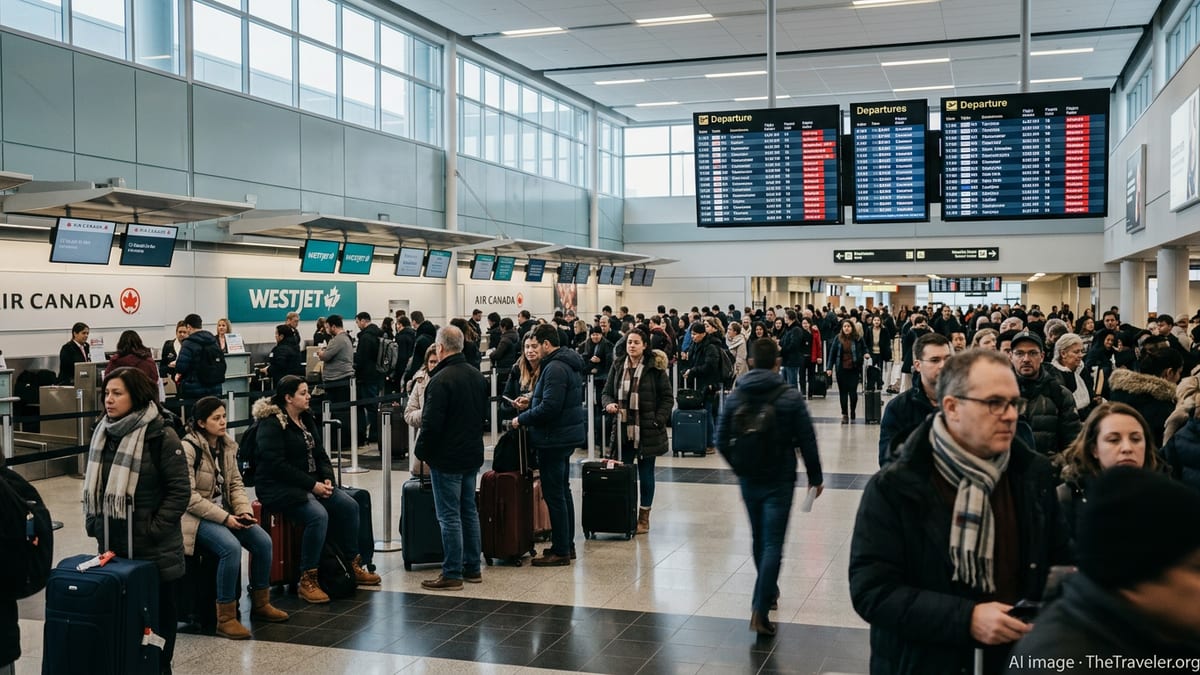
Montreal-Pierre Elliott Trudeau International Airport faced a fresh wave of disruption as 169 delays and 11 cancellations involving Air Canada, WestJet and Jazz rippled across key routes to Toronto, Vancouver, New York, London and several major U.S. cities, snarling schedules at the height of a busy late-winter travel period.
Get the latest news straight to your inbox!
Ripple Effects Across Canada, the U.S. and Europe
According to publicly available flight-tracking data and published coverage, the latest bout of disruption at Montreal-Trudeau has affected a dense web of domestic and international services, with a concentration on high-frequency routes to Toronto Pearson, Vancouver International and major hubs in the northeastern United States. Services to New York area airports and other large U.S. cities have seen rolling delays across the day, creating missed connections and extended layovers for hundreds of passengers.
Transatlantic links have also felt the strain. Flights to and from London, already operating close to capacity during the late-winter period, have experienced schedule knock-on effects when aircraft arrived late from North American feeder legs. Reports indicate that some of the delayed departures from Montreal triggered subsequent disruptions at downline airports, as aircraft and crews struggled to get back on schedule.
The 169 delayed flights and 11 cancellations form part of a wider pattern of volatility in the North American network this winter, with earlier storms and deep freezes having exposed how quickly operational challenges in one region can cascade into widespread disruption. Observers note that Montreal-Trudeau, as a key hub for both domestic and transborder operations, is especially vulnerable to these ripple effects.
Air Canada, WestJet and Jazz Under Pressure
Air Canada, WestJet and regional operator Jazz have borne the brunt of the latest operational turmoil at Montreal-Trudeau. Publicly available information shows that Air Canada, as the dominant carrier at the airport, has recorded the highest volume of delays, particularly on short-haul routes to Toronto and U.S. business destinations such as New York and Boston. These sectors feed into longer-haul transcontinental and transatlantic services, magnifying the impact when aircraft depart late.
WestJet, which has been expanding and reshaping its transborder and domestic networks, is also experiencing cascading delays on services linking Montreal with Toronto, western Canada and select U.S. cities. Industry analyses published in recent months have highlighted ongoing challenges with on-time performance across Canadian carriers during periods of severe winter weather, noting that congestion on the ground and in the air can quickly overwhelm available buffers.
Jazz, operating regional flights under capacity purchase agreements and feeding larger hubs for Air Canada, plays a critical role in connecting smaller Canadian communities and secondary U.S. markets through Montreal-Trudeau. When mainline services fall behind schedule, these regional operations are often forced into short-notice retimings, aircraft swaps or cancellations, as seen with the 11 scrapped flights in the latest disruption.
Weather, Operational Strain and a Fragile Winter Network
The latest travel chaos comes against a backdrop of an exceptionally challenging winter for aviation across Canada and the northern United States. Recent cold snaps and winter storms have brought heavy snow, freezing rain and extreme wind chills to major hubs including Toronto, Montreal and Vancouver, contributing to ground delays, de-icing backlogs and air traffic control flow restrictions. Public advisories from airlines in recent weeks have repeatedly pointed to weather-related constraints that limit their ability to operate on time.
Analysts note that while adverse weather can be the immediate trigger, the broader network is operating with limited slack. Tight aircraft utilization, crew duty limits and crowded airspace leave little room to recover once delays start to build. Montreal-Trudeau, sitting at the junction of transatlantic lanes and dense domestic corridors, has repeatedly been caught in the middle of these system-wide strains, with late-arriving aircraft from one storm-affected region spilling disruption into otherwise clear-weather cities.
Industry data compiled over recent seasons suggest that the share of flights affected by delays or cancellations at major Canadian hubs has remained elevated compared with pre-pandemic levels, particularly during peak travel periods and severe weather events. This winter has continued that trend, with disruptions at Montreal, Toronto and Vancouver frequently intersecting with major U.S. hubs, creating multi-day recovery efforts for airlines and airports.
Impact on Travelers and Key Routes
The 169 delays and 11 cancellations centered on Montreal-Trudeau have had outsized consequences for travelers using critical business and leisure routes. Frequent shuttle services between Montreal and Toronto, popular with corporate passengers and same-day return travelers, have seen schedule gaps and compressed departure banks, forcing many passengers onto later flights and eroding the convenience of high-frequency connections.
Routes to Vancouver and western Canada, important both for domestic tourism and for connections to Asia-Pacific services, have also suffered from staggered departure times and knock-on lateness. According to published coverage, some westbound flights left Montreal hours behind schedule, pushing arrivals late into the night and disrupting plans for travelers relying on onward connections or early-morning meetings.
Transborder routes to New York and other major U.S. cities have been especially sensitive to the cascading effects of delays, given the tight connection windows commonly used by business travelers. Late departures from Montreal have translated into missed onward flights in U.S. hubs, with passengers facing rebookings, overnight stays or re-routings through alternative cities. London-bound services, reliant on punctual feeder traffic from across the Canadian and U.S. networks, have similarly been affected when inbound aircraft and connecting passengers arrived late.
What Passengers Can Expect in the Coming Days
With the wider North American winter season still ongoing, travel experts caution that further disruption cannot be ruled out at Montreal-Trudeau and other major hubs. Long-range forecasts suggest the potential for additional bouts of unsettled weather, and recent experience indicates that even localized storms can have far-reaching consequences across interconnected airline networks.
Publicly available guidance from airlines and consumer rights organizations continues to emphasize the importance of checking flight status frequently, using airline apps or departure boards, and allowing extra time at the airport during known periods of operational stress. Travelers on routes that have already seen multiple delays, including those linking Montreal with Toronto, Vancouver, New York, London and other large U.S. cities, may be particularly exposed to schedule changes and rolling knock-on effects.
Observers also point out that the accumulation of delays and cancellations in recent weeks is likely to inform ongoing debates about passenger protections and compensation standards in both Canada and the United States. As travelers at Montreal-Trudeau once again confront long lines, shifting departure times and uncertain connections, pressure is growing for more resilient operations and clearer communication when the aviation system struggles under winter strain.