

More news on this day
Thousands of passengers across the United States are facing cascading flight delays, cancellations, and missed connections in early 2026, as winter storms, technology outages, and record security bottlenecks converge to create widespread travel chaos at major airports.
Get the latest news straight to your inbox!
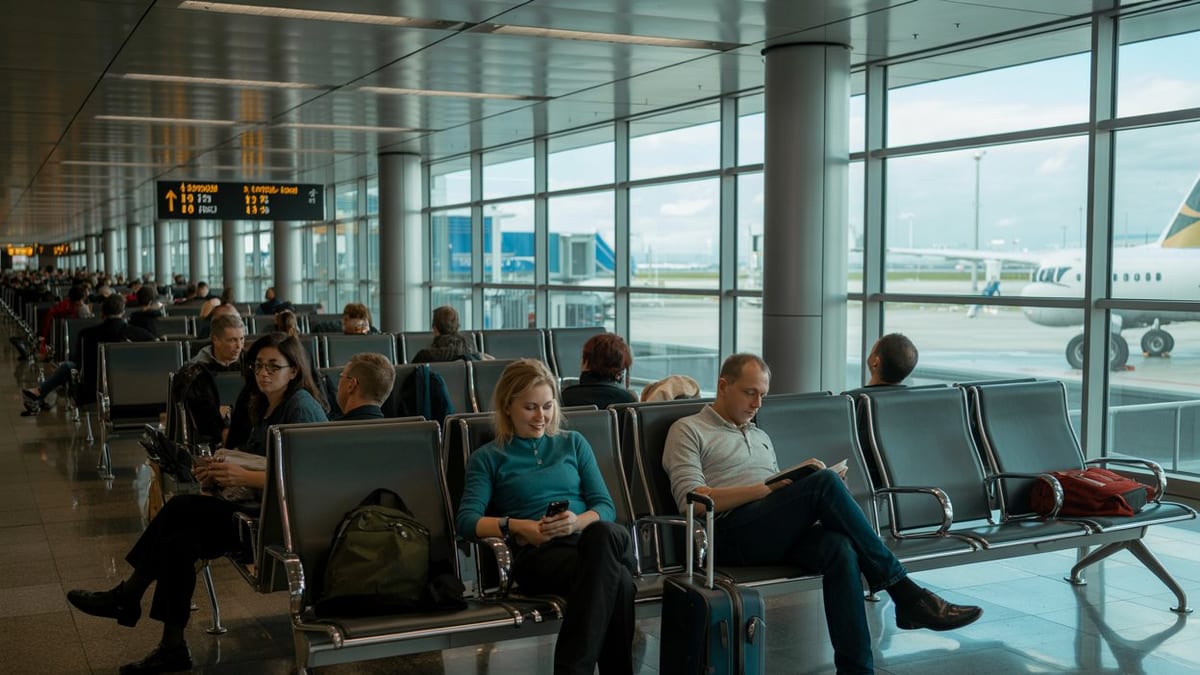
Image by Travel And Tour World
Storm-Battered Network Struggles to Recover
Major winter systems hitting different parts of the country since January have repeatedly disrupted the tightly scheduled US air network, with powerful blizzards forcing airport closures, widespread ground stops, and mass cancellations. A large winter storm in late January 2026, widely referred to as Winter Storm Fern in media coverage, produced one of the worst single days for US flight cancellations since the early pandemic era, with more than 11,000 flights scrubbed as snow and ice spread from northern Mexico through the southern and northeastern United States.
In February, a historic blizzard labeled the Blizzard of 2026 in published reports brought much of the Northeast to a standstill, with media tallies indicating roughly 9,000 flights canceled over just a few days and hundreds of thousands of homes and businesses losing power. With major hubs such as the New York City airports and Boston Logan operating at sharply reduced capacity during and after the storm, stranded travelers reported multi day waits for open seats as airlines worked to reposition aircraft and crews.
More recently, a mid March winter system and associated severe weather across the Rockies and Plains triggered significant knock on effects. Publicly available information shows Denver International Airport alone logged well over a thousand delayed or canceled flights as conditions deteriorated, contributing to a fresh round of missed connections for travelers trying to move through the national hub and spoke network.
Even where skies have remained clear, residual disruption has lingered. Industry advisories reviewed in late March point to continuing schedule adjustments as carriers dig out from earlier storms, with some routes still operating with reduced frequency while displaced aircraft and crew rotations are slowly realigned.
Security Lines Stretch for Hours Amid Government Shutdown
Compounding weather related disruption, an ongoing partial federal government shutdown has produced some of the longest airport security lines in recent memory. Reports from multiple outlets indicate Transportation Security Administration checkpoints at several large airports experiencing waits of more than four hours in recent days, as staffing levels and overtime capacity are strained.
Public radio coverage on March 28, 2026 described scenes of passengers missing flights despite arriving at airports well in advance, then joining airline customer service queues that in some cases stretched down concourses. Industry analysts note that these missed departures are not captured in formal cancellation statistics yet still contribute to the perception of “hidden” disruption, since travelers must scramble for same day rebooking or overnight accommodations.
Airlines have responded with a patchwork of waivers and flexible rebooking options. For example, one major carrier introduced a policy at its Atlanta hub allowing travelers stuck in security lines to change flights via digital channels without first speaking to an agent, an attempt to ease pressure on airport desks. Travel advocates advise passengers to monitor airline apps closely and to adjust itineraries proactively if wait time estimates suggest a risk of missing departure.
Aviation researchers note that security related delays increasingly act as a separate shock to an already fragile system. Recent academic work tracking delay patterns over more than a decade indicates that bottlenecks at large hub checkpoints now propagate through flight schedules in a more visible way than before the pandemic, especially on high frequency domestic routes.
Technology Outages and Local Incidents Add to Turbulence
Beyond weather and security backlogs, technology vulnerabilities and airport specific incidents are adding further strain. In early March, publicly circulating advisories described a brief but disruptive systems outage at one major US carrier that prompted a temporary ground stop and led to a wave of cancellations and rolling delays, particularly along the East Coast. While the technical problem was resolved within hours, residual disruption lasted well into the following day as aircraft and crews were out of position.
Industry observers frequently cite the global technology outage of July 2024 as a warning sign for what can happen when key airline systems go down. That event forced one large US carrier to cancel several thousand flights over multiple days, and policy analyses released in late 2025 highlighted the scale of financial losses and customer impacts. In 2026, airlines and regulators continue to examine how to harden critical software to reduce the risk of similar nationwide meltdowns.
Local operational shocks have also rippled through the system. On March 23, 2026, a fatal collision between a passenger aircraft and an emergency vehicle on a runway at New York’s LaGuardia Airport led to a temporary shutdown of the facility. Although the ground stop was lifted later that afternoon, National Airspace System alerts showed continuing arrival management programs and extended delays into March 24, affecting connecting itineraries across the country.
These events demonstrate how quickly capacity can evaporate at key choke points in the national network. When a hub like LaGuardia or another major coastal airport slows or closes, disruptions can cascade to smaller cities whose flights depend on those connection banks, leaving travelers stranded far from the original incident.
International Tensions and Regional Hubs Disrupt Holiday Travel
US travelers heading to or from nearby international destinations have also faced turbulence linked to geopolitical developments. In early January 2026, coverage from international outlets described how US military strikes on Venezuela led to widespread airspace restrictions and security reassessments across parts of the Caribbean. Dozens of holiday flights were canceled or rerouted, leaving vacationers stuck on islands and at regional hubs just as peak winter tourism traffic was underway.
Airlines serving the region, including major European and Latin American carriers, announced temporary suspensions or reshuffling of routes in response to changing risk assessments and regulatory guidance. Thousands of passengers with onward cruises or multi stop itineraries saw plans upended, with some forced to wait several days for replacement flights or to rearrange sailings and hotel stays at short notice.
The incident underscored how quickly international factors can spill into the US travel landscape. Even when mainland airports are operating normally, sudden changes to airspace permissions or security protocols over nearby regions can trigger diversions, last minute fuel stops, or tight crew duty time scenarios that eventually lead to cancellations back in US hubs.
Travel planners note that this year’s disruptions are encouraging more travelers to build slack into itineraries that involve Caribbean connections, advising at least one buffer day between flights and cruise departures due to the risk of sudden schedule changes.
What Travelers Can Expect Heading Into Spring 2026
With the traditional spring break period underway and summer bookings already strong, analysts expect continued pressure on the US aviation system in the coming weeks. While the most intense winter storms typically ease by April, residual aircraft and crew imbalances can linger, and severe weather risks such as thunderstorms and tornado outbreaks increase across central and southern states.
Recent social media posts and firsthand accounts from airports like Orlando, where late season storms combined with airline specific scheduling constraints, highlight how quickly terminals can become overcrowded when multiple flights are delayed or canceled at once. Travelers report full standby lists, long lines at low cost carrier counters, and difficulty securing same day alternatives when large numbers of flights on a single airline are disrupted.
Consumer advocates emphasize that federal tools such as the Department of Transportation’s online dashboard can help passengers compare carrier policies on meal vouchers, hotel coverage, and rebooking obligations in the event of disruption. Public guidance generally encourages travelers to keep essential items and medications in carry on bags, regularly refresh airline apps, and consider earlier departures in the day, which statistically face fewer knock on delays.
For now, publicly available data and news coverage point to a familiar pattern repeating in 2026: a heavily utilized air network operating with limited slack, where winter storms, security bottlenecks, technology failures, and local emergencies can combine to leave thousands of people stranded with little warning, and where recovery often takes days rather than hours.