

More news on this day
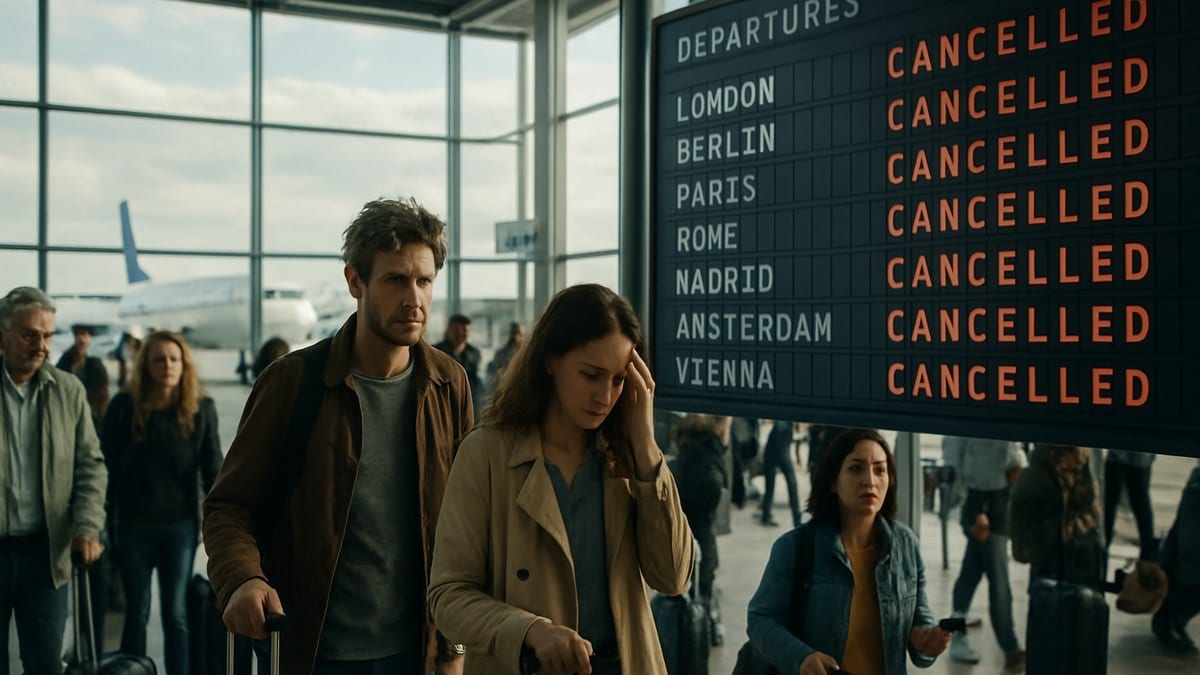
Passengers across Europe faced mounting disruption on Friday as industrial disputes involving Lufthansa, easyJet and Scandinavian carrier SAS led to at least 79 flight cancellations and a wider wave of delays at major hubs in Germany, Denmark, Spain and Greece.
Get the latest news straight to your inbox!
Strikes Hit Key European Hubs Ahead of Busy Spring Travel
Published coverage indicates that coordinated and overlapping walkouts by airline staff are driving a fresh bout of travel disruption just as Europe’s spring travel period accelerates. Cabin crew at Lufthansa and its regional unit Lufthansa CityLine staged a 24-hour strike focused on April 10, 2026, targeting the group’s main bases in Frankfurt and Munich along with several regional airports across Germany. The action follows a series of recent stoppages by cockpit and cabin staff over pay and working conditions.
Separate operational pressures are affecting low cost and regional carriers. According to recent industry summaries, easyJet and SAS appear among the airlines with measurable levels of delays and cancellations at airports such as Barcelona, Athens, Munich and Copenhagen. While the total number of affected flights remains a small proportion of overall schedules, the timing and concentration of the disruption have created bottlenecks for passengers relying on tightly timed connections.
Data compiled from flight tracking and passenger rights services suggests that across a recent 24-hour snapshot, 79 flights operated by airlines including Lufthansa, easyJet and SAS were cancelled, with a larger pool of services suffering significant delays. Travel industry outlets describe a pattern in which cancellations remain relatively contained but delays are widespread, complicating travel planning and increasing the risk of missed onward journeys.
At several airports, delays are being recorded even on flights still operating, as airlines adjust rosters, reposition aircraft and absorb congestion within limited runway and gate capacity. This has left some terminals visibly busier, with longer queues at check in, rebooking desks and security as travelers seek alternative routes.
Lufthansa Strike Grounds Majority of Departures in Germany
The most severe impact is being reported in Germany, where Lufthansa’s cabin crew strike coincided with one of the busiest periods of the early year holiday calendar. Publicly available information from the airline and passenger advocacy groups shows that hundreds of Lufthansa and Lufthansa CityLine flights were cancelled on April 10, affecting domestic routes, European services and some long haul departures.
Industry monitoring by passenger rights platforms suggests that more than 500 Lufthansa group flights were removed from the schedule for the day, with estimates of roughly 100,000 travelers affected. Frankfurt and Munich, the carrier’s two main hubs, saw the highest volume of cancellations, but disruption also spread to secondary cities and regional airports as inbound and outbound rotations were curtailed.
Union representatives for cabin crew have been seeking pay increases and improved rostering to reflect inflation and demanding duty patterns following the resurgence in post pandemic travel. Negotiations have so far failed to produce a settlement, following earlier walkouts by pilots in March that also forced substantial cuts to the schedule. For passengers, this has translated into a rolling sequence of disruptions, rebookings and last minute changes across several weeks.
To limit knock on effects, Lufthansa has been operating a reduced but stabilised timetable during strike periods, concentrating resources on a subset of domestic and long haul services. Passengers whose flights were cancelled have been offered rebooking and, on certain routes within Germany, the option to switch to rail under intermodal agreements with national train operators.
easyJet and SAS Add to Regional Disruption
While Lufthansa’s strike has drawn the most attention, low cost carrier easyJet and Scandinavian airline SAS are also contributing to what some travel outlets describe as “travel chaos” at selected European airports. Operational snapshots compiled by travel industry publications list both airlines among carriers with notable numbers of delays and cancellations in recent days.
In Spain and Greece, easyJet services at airports such as Barcelona and Athens have recorded clusters of late departures and arrivals, with a smaller number of outright cancellations. Reports attribute the disruption to a combination of crew availability issues, aircraft rotation challenges and the wider European environment of industrial action and airspace congestion, rather than a single coordinated strike within the airline.
In northern Europe, SAS has seen cancellations and schedule adjustments on routes linking Denmark, Sweden and Norway. Recent coverage points to cost pressures, including higher fuel prices, contributing to a tighter operating environment for the airline, which has been restructuring its network and capacity. These factors, combined with staffing constraints, have produced localized pockets of disruption that add to the perception of instability across the wider European market.
For travelers, the practical effect is similar regardless of the carrier: short notice schedule changes, reduced choice of departure times and an increased likelihood that even operating flights will arrive late. This is especially problematic for passengers with separate tickets on different airlines, who face a greater risk of missed connections and additional costs.
Airports Across Europe Report Delays and Cancellations
Travel and aviation news outlets tracking daily performance across major hubs report that the current wave of disruption is not confined to a single country. Aggregated figures for early April show cancellations and delays affecting airports in Germany, Denmark, Spain, Greece, the Netherlands and the United Kingdom, among others.
On April 9 and 10, flight data summaries highlighted Frankfurt, Munich and Berlin Brandenburg in Germany, Copenhagen in Denmark, Barcelona in Spain and Athens in Greece as particular hotspots. While total cancellations varied by day and location, the combined impact produced several hundred cancelled flights across Europe within a short window, alongside well over a thousand delays.
At some airports, departures and arrivals boards have shown clusters of cancelled services for specific airlines where strikes or staffing constraints are most acute, interspersed with delayed flights operated by carriers attempting to maintain their schedules amid congestion. The effect has been to blur the line between direct strike impact and secondary disruption, as ground handling, security screening and air traffic management all come under pressure.
Passengers transiting through hub airports have been especially affected, as missed connections and altered routings cascade through airline networks. This has led to growing demand for last minute hotel rooms near airports, longer lines at customer service counters and a surge in calls and messages to airline contact centers.
What Stranded Passengers Can Expect Under EU Rules
With multiple strikes and operational issues converging, passenger rights under European regulations have come into sharper focus. EU Regulation 261/2004 sets out common rules for compensation and assistance in cases of cancellation and long delay for flights departing from European airports or operated by EU based airlines.
Under this framework, travelers whose flights are cancelled are generally entitled to a choice between re routing at the earliest opportunity, re routing at a later date of their choosing subject to seat availability, or a refund of the unused ticket. Airlines must also provide care such as meals, refreshments and accommodation where necessary when passengers are stranded while waiting for alternative transport.
The question of cash compensation is more complex in strike situations. Case law has evolved around whether particular types of industrial action count as “extraordinary circumstances” that relieve airlines of compensation obligations, or whether they are considered part of normal business risk. Specialists advise passengers to keep detailed records of their disruption, including boarding passes, booking confirmations and receipts for additional expenses, and to submit claims directly to the airline before turning to third party services.
Given the scale of the latest disturbances involving Lufthansa, easyJet and SAS, consumer advocates expect a surge in claims over the coming weeks. Travelers are being encouraged to monitor their flight status closely, use airline apps where possible, and consider building longer connection times into future itineraries while industrial disputes and operational strains continue to shape European air travel.