

More news on this day
Fresh industrial unrest at several of Europe’s biggest airlines is causing new waves of disruption for air travelers, with strike actions linked to Lufthansa, easyJet and SAS contributing to 79 flight cancellations and widespread delays across major hubs.
Get the latest news straight to your inbox!
Strike Action Ripples Across Key European Hubs
Recent strike activity across Europe’s aviation sector is once again testing the resilience of passengers and airport operations. Data compiled from real-time flight tracking platforms and industry-focused outlets indicates that coordinated and overlapping disruptions at Lufthansa, easyJet and SAS have produced at least 79 flight cancellations and a far higher number of delays in the latest 24-hour period.
The most acute impact has been recorded in Germany, Denmark, Spain and Greece, with airports such as Frankfurt, Munich, Copenhagen, Barcelona and Athens reporting clusters of grounded or late-running services. Travel and aviation news coverage notes that cancellations remain a relatively small proportion of total flights, but the knock-on effect on connections and missed onward journeys has magnified the disruption.
In Germany, the latest phase of a cabin crew dispute at Lufthansa is driving concentrated disruption at Frankfurt and Munich. Reports from German and international media describe several hundred flights pulled from the schedule in connection with walkouts at the carrier and its regional arm, compounding residual delays from earlier strike days.
In Scandinavia, SAS services have also been affected by ongoing labor tensions, particularly at Copenhagen, while low-cost carrier easyJet is contending with operational strains linked to industrial actions and air traffic control constraints on select routes. Together, these developments have produced a patchwork of localized cancellations and systemwide delays that are being felt by travelers across the continent.
Lufthansa Cabin Crew Dispute Intensifies Holiday Disruption
Lufthansa, Europe’s second-busiest network carrier by daily flights, is once again at the center of strike-related turmoil. A series of recent cabin crew walkouts organized by staff unions has triggered large-scale cancellations at key German hubs, with publicly available airport data pointing to more than 500 flights scrubbed at Frankfurt alone on the latest strike day.
Travel-industry briefings describe the stoppage as poorly timed for passengers, coinciding with the tail end of the Easter travel period and a broader rebound in European air demand. Airlines had scheduled dense holiday timetables, meaning that each grounded aircraft affected large numbers of customers and rapidly exhausted spare capacity for rebooking.
Lufthansa has been attempting to maintain a reduced but functioning timetable on select long-haul and high-demand European routes, while cutting back feeder and secondary services to free up crews and aircraft. According to publicly accessible operational updates, the carrier has advised passengers not to travel to the airport without a confirmed rebooking and has encouraged the use of digital tools for checking flight status and changing itineraries.
Industry analysts note that repeated strike waves can erode passenger confidence and complicate crew planning and fleet utilization, especially for a hub-and-spoke airline. As cancellations ripple outward from Frankfurt and Munich, connecting travelers are particularly vulnerable to missed long-haul departures and involuntary overnight stays.
easyJet and SAS Face Parallel Pressures
While Lufthansa has drawn much of the spotlight, easyJet and SAS have also been contending with industrial and operational challenges that feed into the broader disruption picture. In several recent operational snapshots collated by travel news outlets, easyJet has registered a modest number of cancellations but a notable volume of delayed flights at Mediterranean and Northern European airports.
At airports including Barcelona and Athens, passengers on easyJet services have reported longer-than-usual waits, aircraft rotations out of sequence and late-evening arrivals as the airline works through congested schedules. Publicly available performance data suggests that these issues frequently stem from upstream delays elsewhere in the network, which then cascade along popular leisure routes.
Scandinavian carrier SAS, which serves a mix of business and leisure markets across Northern Europe, has simultaneously been facing its own strike-related pressures. Media coverage from Denmark and Sweden highlights cancellations and delays centered on Copenhagen and other Scandinavian hubs, as negotiations over pay and working conditions continue between management and employee representatives.
Although the absolute number of SAS and easyJet cancellations tied to the latest strike actions is lower than the figures at Lufthansa, their role as key regional connectors means that even a handful of grounded flights can have an outsized impact on travelers relying on tight connections or limited-frequency routes.
Airports Struggle With Knock-On Effects and Passenger Backlogs
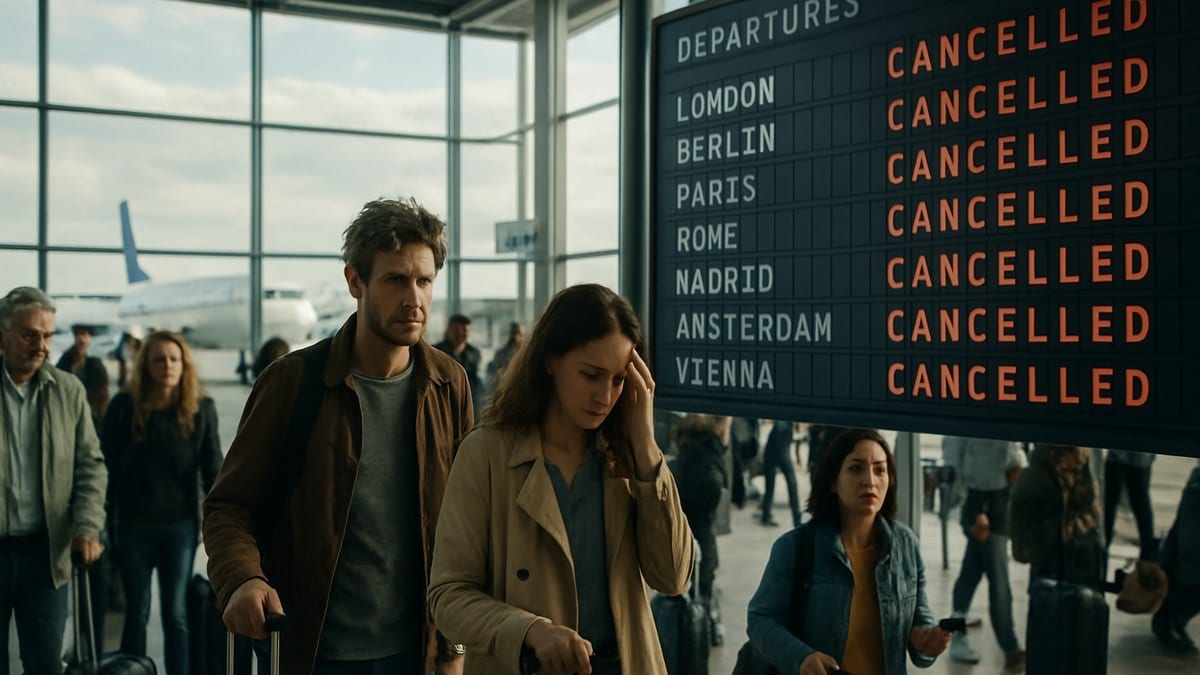
The cumulative impact of disruptions at multiple airlines is being felt most visibly at Europe’s interconnected hub airports. Passenger images and accounts shared through open news sources from Frankfurt, Munich, Copenhagen and other major gateways show crowded terminals, long customer-service queues and departure boards dotted with cancellations and late departures.
Airport operators have been working within constraints imposed by airline staffing levels and labor actions. While runways and terminals remain fully open, the absence of crews or aircraft on specific routes forces airports to adjust gate allocations and manage surges of affected travelers seeking assistance at the same time.
Operational data and airport statements referenced in public reporting indicate that some hubs have introduced temporary measures such as additional staff at information desks, priority handling for families and vulnerable passengers, and extended opening hours at security and check-in where feasible. However, observers caution that these steps cannot fully offset the impact of lost capacity when large blocks of flights are removed from the schedule.
As a result, residual disruption often lingers beyond the formal end of a strike period. Even after crews return to work, aircraft and passengers may be out of position, requiring several rotations to restore normal patterns. This can mean continued delays and last-minute timetable tweaks for travelers, even on days without active industrial action.
What the Disruptions Mean for Summer Travel
The latest wave of strike-related chaos is unfolding just as Europe’s airlines gear up for the peak summer season, raising questions about how resilient the system will be if labor disputes persist. Industry commentators point out that strong demand, higher load factors and limited spare capacity leave little margin for error when crews or aircraft are unexpectedly withdrawn.
Analysts following Lufthansa, easyJet and SAS note that each carrier is engaged, to varying degrees, in wage and conditions talks that reflect broader inflationary pressures and post-pandemic workforce strains. If agreements are not reached ahead of the busiest months, further stoppages cannot be ruled out, potentially repeating the scenes of crowded terminals and cancelled flights seen this week.
Consumer advocates, drawing on European Union air passenger rules, underline that travelers affected by cancellations and severe delays may be entitled to rebooking, care and in some circumstances financial compensation, depending on the cause of the disruption and how much notice was given. They advise passengers to keep documentation of their travel plans and any additional expenses incurred as a result of changes.
For now, travel planners are watching how quickly Lufthansa, easyJet and SAS can clear current backlogs and restore stability. The pace at which normal operations return in the wake of the latest 79 cancellations and associated delays will be closely scrutinized as an early indicator of how Europe’s aviation network might cope with any further labor unrest in the months ahead.