

More news on this day
Air travelers across North America are facing mounting disruption after a new wave of violence in western Mexico and a powerful winter storm in the northeastern United States triggered the cancellation of more than 100 flights, snarling connections between Mexican resorts and major hubs including Newark, Boston, Dallas Fort Worth and Miami.
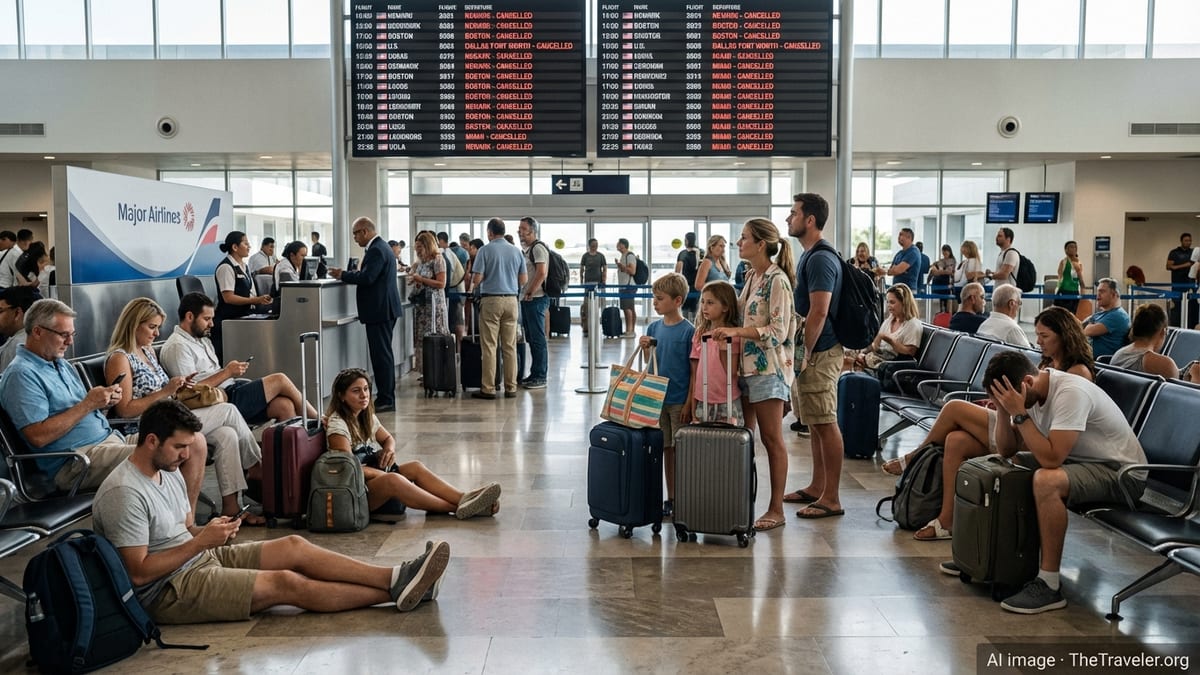
Cartel Unrest in Jalisco Sparks Widespread Flight Disruptions
Authorities in Mexico’s Jalisco state remain on high alert after a military operation on February 22 that killed cartel leader Nemesio “El Mencho” Oseguera Cervantes set off roadblocks, vehicle fires and gun battles in and around key tourist gateways. The unrest has been centered on Puerto Vallarta and Guadalajara, two of the country’s busiest international airports for leisure and business traffic.
In the immediate aftermath of the operation, airport access roads were blocked and security forces moved to secure terminals, prompting airlines serving Puerto Vallarta and Guadalajara to cancel or divert flights as a precaution. Mexican carrier Aeromexico and a slate of major U.S. and Canadian airlines, including United, American, JetBlue, Delta, Air Canada and WestJet, have all adjusted schedules or temporarily suspended service on select routes into Jalisco.
While Mexican airport operators report that terminals in Puerto Vallarta and Guadalajara remain under federal protection and technically open, airlines continue to warn that ground access remains uncertain and that further schedule changes are possible on short notice. Travelers are being urged to monitor flight status closely and to allow considerably more time than usual to reach affected airports if their journeys go ahead.
Over 100 Flights Cancelled on Key U.S.–Mexico Routes
By Tuesday, February 24, combined operational data from airlines and flight tracking services indicated that more than 100 flights linked to Mexico had been cancelled over a 48 hour period, as carriers tried to balance passenger safety, crew availability and rapidly shifting security conditions. The heaviest impact has been felt on routes serving Puerto Vallarta and Guadalajara from major hubs across the United States and Canada.
Flights between Mexican resorts and U.S. gateways such as Newark Liberty, Boston Logan, Dallas Fort Worth, Miami, Philadelphia and New York area airports have seen significant disruption. United has suspended flights to Guadalajara and Puerto Vallarta for the current travel window, offering affected passengers fee free rebooking options into early March. Other U.S. majors, including American and JetBlue, have issued similar waivers for travelers ticketed on Jalisco routes.
In addition to the Mexico specific suspensions, knock on effects are also being felt on connecting itineraries throughout North America and Europe. Passengers flying from European cities such as Frankfurt and Madrid into Puerto Vallarta have reported cancellations or diversions as European carriers and their U.S. partners react to both the security situation in Jalisco and the cascading network disruption.
U.S. Winter Storm Compounds Chaos at Northeast and Florida Hubs
The security crisis in Mexico has collided with a powerful winter storm sweeping the northeastern United States, creating a perfect storm of cancellations that has stretched far beyond Jalisco. Heavy snowfall, strong winds and low visibility over the weekend and into Monday led to thousands of disrupted flights across the country, with New York, Boston and Philadelphia among the hardest hit.
The same storm system is now rippling through Florida’s major airports, where many Mexico bound flights originate or connect. As of early Tuesday, Miami International, Fort Lauderdale Hollywood and Palm Beach International had collectively logged hundreds of cancellations, with JetBlue, Spirit, Delta, United and American all cutting services for safety and operational reasons. Miami, a key hub for American’s extensive Latin America network, has seen dozens of departures and arrivals scrubbed.
For travelers booked on Mexico flights, this dual pressure from weather and security is complicating recovery efforts. Even where airlines are willing to restore limited services to Puerto Vallarta and Guadalajara as on Tuesday’s partial resumptions by some U.S. carriers the lack of available aircraft and crew, stranded in other parts of the network by the storm, means schedules are likely to remain unstable for several days.
How Major Airlines Are Responding for Stranded Passengers
In response to the ongoing disruption, airlines are leaning heavily on flexible rebooking policies first rolled out during the pandemic and now standard practice during major operational crises. United, American, JetBlue and other carriers serving Mexico are waiving change fees and, in many cases, fare differences for passengers willing to rebook within a specified window, provided they travel between the same city pairs and cabin classes.
However, travelers should not expect airlines to cover hotel or meal costs where cancellations are attributed to weather or security issues beyond the carrier’s control, as both are treated as extraordinary circumstances under most contracts of carriage. Consumer advocates recommend that passengers keep receipts and check whether their credit card or standalone travel insurance policy offers coverage for additional expenses incurred due to delays and cancellations.
Airlines are advising passengers who no longer wish to travel to or through affected airports in Mexico to consider voluntarily postponing trips until the first week of March, when both the security situation in Jalisco and the U.S. weather pattern may become clearer. Some carriers are also allowing reroutes to alternative Mexican destinations, such as Cancun or Los Cabos, subject to seat availability and fare rules.
What Travelers Need to Know Before Heading to the Airport
With schedules changing by the hour, industry experts stress that the single most important step travelers can take is to stay closely connected to their airline through official apps, text alerts or airport departure boards. Same day notifications are proving critical as some flights are reinstated with additional seats, while others are cancelled with little notice as conditions evolve on the ground in Mexico or at U.S. hubs.
Passengers bound for Puerto Vallarta or Guadalajara in the coming days are being urged to verify not just that their flight is operating, but also that they can safely reach their hotel or final destination by road once they land. Security advisories from consular authorities continue to recommend caution in parts of Jalisco, and local transport services have been periodically interrupted by roadblocks and security operations.
For now, travelers with flexible plans may wish to delay non essential trips to the region, while those who must travel should build in extra time, pack medication and essentials in carry on bags, and be prepared for last minute itinerary changes. With airlines, security forces and weather systems all playing a role, the situation is fluid, and industry observers expect at least several more days of turbulence before Mexico’s vital air links to the United States and beyond begin to normalize.