

The Keweenaw Peninsula at the far tip of Michigan’s Upper Peninsula is one of the Midwest’s great road-trip frontiers. It is also remote, sparsely populated, and subject to some of the fiercest weather in the Great Lakes. Smart travelers can absolutely enjoy its forests, mining towns, and Lake Superior shorelines year-round, but doing so safely requires realistic expectations, careful planning, and respect for conditions on the ground. This guide explains what to know about Keweenaw weather, how to drive its rural highways and side roads safely, and the precautions that make a big difference when help may be many miles away.
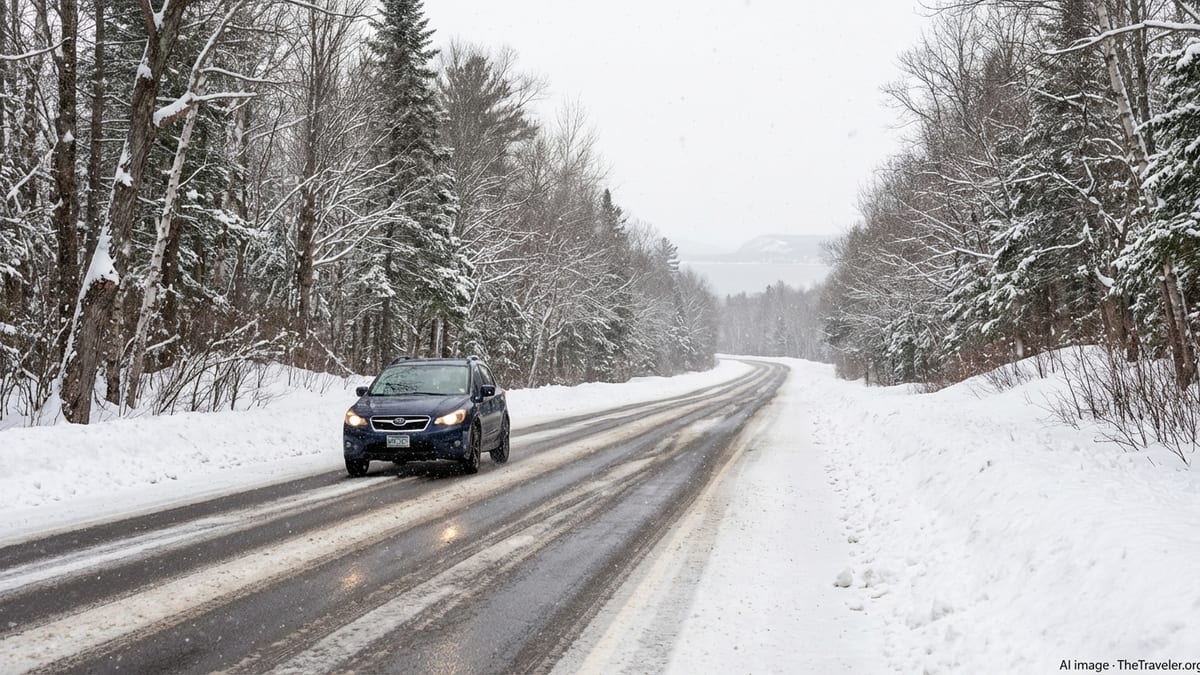
Understanding the Keweenaw’s Location and Remoteness
The Keweenaw Peninsula juts north into Lake Superior, forming the northernmost tip of Michigan. Much of the region lies in Houghton and Keweenaw Counties, with just a few small towns such as Houghton, Hancock, Calumet, Laurium, Mohawk, and Copper Harbor providing services. Once you leave this string of communities along US 41 and M-26, you are in the forested backcountry where cell service is spotty and traffic can be light, especially outside the summer season.
This remoteness is a big part of the Keweenaw’s appeal. The peninsula offers quiet beaches, historic mine ruins, and dense hardwood and conifer forests that feel far from busy interstates. But travelers should remember that long stretches of road have few gas stations and limited emergency resources. In winter, vehicles can go off the road in deep snow without immediate witnesses, and in shoulder seasons, you may drive for several miles before seeing another car.
Because of the distance from major urban centers, towing services and first responders may need significant time to reach remote incidents. Visitors used to downstate Michigan, Wisconsin, or Minnesota traffic volumes sometimes underestimate these delays. When planning a drive to places like Copper Harbor, Brockway Mountain, or remote trailheads, factor in not only the route distance but also the isolation you will experience once you leave the US 41 and M-26 corridors.
For most travelers, the safest approach is to treat any outing into the Keweenaw’s more remote corners like a light backcountry trip rather than a typical suburban drive. That means thinking about what you would need if you were delayed for several hours by weather, a breakdown, or a blocked road and packing your vehicle accordingly.
Weather Patterns and Seasonal Hazards
The Keweenaw Peninsula is famous for its lake-effect snow. Cold air passing over relatively warmer Lake Superior produces frequent, sometimes prolonged snowstorms, especially from late fall through early spring. Climate records and regional climate assessments describe the Keweenaw as one of the snowiest places in the United States east of the Mississippi River, with typical seasonal totals in the range of roughly 200 to 250 inches and higher accumulations at inland high points.
Snow often arrives in November and can continue into April. Storm systems may produce intense bursts of snow with rapidly changing visibility, while lingering lake-effect bands can deposit several inches or more over a single day. Local news outlets and the National Weather Service frequently highlight the risk of wind gusts, blowing snow, and near-whiteout conditions when strong weather systems pass over Lake Superior, all of which significantly affect driving safety.
Winters are not the only season that demands attention. Spring can be cool, wet, and foggy, with slick roads and lingering snowbanks in shaded areas. Thaw and freeze cycles can produce potholes and rough pavement that are hard on tires and suspensions. Starting in late winter, Michigan’s transportation authorities also apply weight and speed restrictions on certain roads to protect thaw-weakened pavement, which can alter trucking routes and occasionally influence traffic on secondary roads.
Summer brings milder temperatures along the lakeshore, often cooler than inland areas of the Upper Peninsula, but it also introduces its own hazards. Sudden thunderstorms can form over or near Lake Superior, bringing heavy rain, gusty winds, and sharply reduced visibility on exposed roads. Fog off the lake is common, especially when warm air passes over cold water, and can make cliffside or shoreline routes feel much more precarious. Autumn is generally crisp and clear but can bring early-season snow, sharp temperature swings, and leaf-covered pavement that becomes slippery when wet.
Road Networks, Plowing, and Closures
The Keweenaw’s primary travel spine is US 41, which runs from Houghton and Hancock north through Calumet, Mohawk, and into Copper Harbor, with branches and connecting segments shared with M-26. These highways are maintained as key corridors, and state and county crews prioritize them for plowing during winter storms. Even so, local reports often stress that during active snow and wind events, driving can be hazardous or slow going, with plows focusing on keeping at least one lane passable while heavy snow continues to fall.
Secondary county roads, such as those leading to trailheads, inland lakes, and remote cabins, receive lower plowing priority. Some unpaved roads are not maintained at all in winter and effectively become snowmobile or ski routes. Visitors sometimes discover that a road shown on a digital map is impassable because drifts, ice ruts, or snowbanks have accumulated over time. It is never safe to assume that a small side road is plowed or sanded just because a mapping app shows it as a through route.
Seasonal closures are another consideration. Certain scenic byways and overlooks, such as steep hill climbs or unpaved lookout roads, may be closed or inaccessible once snow and ice settle in. In shoulder seasons, thawing ground can render dirt and gravel segments muddy and deeply rutted, making passage difficult even for higher-clearance vehicles. Local transportation agencies and sheriff’s offices occasionally issue advisories discouraging travel on particular stretches when the combination of ice, drifts, and limited visibility becomes especially dangerous.
Before setting out, travelers should check regional road-condition resources and, when staying locally, ask hotel staff, campground hosts, or cabin owners about current conditions on the specific routes they plan to use. In an area where a single jackknifed vehicle or downed tree can temporarily block a narrow route, having an alternate plan and being willing to turn around are important parts of safe travel.
Winter and Shoulder-Season Driving Strategy
Michigan’s safety and transportation agencies consistently reinforce a simple message for winter: ice and snow mean slowing down. Crash data from across the state show that a large share of winter incidents involve drivers traveling too fast for conditions, even when they are at or below the posted speed limit. In the Keweenaw’s lake-effect snow, where visibility can change dramatically over a few hundred yards, this advice is especially relevant.
On snow-covered or icy roads, it can take many times longer to stop than it would on dry pavement. Safe Keweenaw drivers increase following distances, brake gradually, and anticipate curves and intersections well in advance. They avoid sudden lane changes or sharp steering inputs that can trigger skids, particularly on winding segments of US 41 and M-26 where the pavement curves around rock cuts and shorelines. Drivers should be alert for black ice on bridges, shaded hollows, and near Lake Superior, where moisture and wind can create slick surfaces even when inland roads appear clear.
Four-wheel drive and all-wheel drive vehicles are common in the Upper Peninsula, but local law enforcement and safety campaigns repeatedly point out that these systems do not improve braking distances or cornering grip on ice. They may help you move away from a stop, but they will not change how quickly you can come to a safe halt. Overconfidence in vehicle capabilities is a recurring factor in run-off-road crashes and rollovers on rural highways.
During active storms or when the National Weather Service issues a winter storm warning or lake-effect snow advisory, the most conservative strategy is often to postpone nonessential travel. Residents and officials sometimes warn that storms can stall over the Keweenaw, producing hours of heavy snow, gusty winds, and drifting. Travelers who choose to drive despite warnings should be prepared for reduced speeds, potential closures, and the possibility of having to wait in place while plows and emergency crews respond to incidents ahead.
Remote-Road Travel and Emergency Preparedness
Once you venture beyond the main highways into forest roads, narrow county routes, or long spurs leading to trailheads and cabins, the calculus of risk changes. Cell service can drop out unexpectedly, and some areas have no coverage at all. In winter or during shoulder-season storms, a vehicle stuck in a drift or on ice may not be visible from the main road, and passing traffic may be infrequent.
Because of this, it is wise to carry a well-thought-out emergency kit whenever you drive in the Keweenaw, particularly between late fall and early spring. Local emergency officials and towing companies commonly recommend items such as a shovel, snow brush, traction aid like sand or cat litter, a basic first-aid kit, warm clothing or blankets, hats and gloves, high-energy snacks, and bottled water. These supplies can make waiting for assistance more tolerable and safer if you are stranded for several hours in subfreezing temperatures.
Travelers should also keep their fuel tanks topped up more often than they might at home. Gas stations become less frequent as you drive north, especially late in the evening or in the off-season when some businesses reduce hours. In extreme cold, letting the tank drop too low increases the risk of fuel-line issues or being unable to run the engine intermittently for heat while stuck. It is also prudent to carry a phone charger, paper map of the peninsula, and any necessary medications in the vehicle rather than back at your lodging.
Before heading down any remote spur road, especially in winter, ask yourself how easily you could walk back to the main highway if your vehicle became disabled. If snowbanks line a narrow lane with few houses in sight, or if recent stories describe significant drifting and plows struggling to keep up, consider whether the risk is justified. Many experienced locals choose to park at plowed pullouts or lots and continue on foot, skis, or snowshoes rather than pushing their vehicles into marginal conditions.
Sharing the Road With Plows and Local Traffic
Plow trucks are a constant presence in the Keweenaw during winter weather. They often operate in the pre-dawn hours and during storms, moving slowly, stopping frequently, and sometimes driving in formation to clear multiple lanes. Michigan law requires drivers to give active plows significant space, including maintaining a substantial following distance when lights are on and the truck is spreading material or clearing snow.
Travelers should never tailgate a plow or attempt to slip closely around it. Snow thrown by the blade and swirling in its wake can create a near-whiteout directly behind or beside the truck, temporarily blinding both the plow operator and any nearby drivers. Transportation officials regularly stress a simple rule: if you cannot see the plow’s mirrors, the driver likely cannot see you. Waiting patiently behind a plow for an appropriate place to pass, or accepting a slower journey rather than forcing a risky maneuver, is one of the most effective ways to avoid winter crashes.
On narrower two-lane roads, be alert for oncoming plows that may need extra room, especially where snowbanks have narrowed the lane. Pulling slightly to the right, reducing speed, and avoiding abrupt steering inputs as you pass helps everyone maintain control. Remember that plow drivers are working long shifts in challenging conditions to keep the roads drivable. Giving them room and adjusting your expectations about travel time is part of responsible winter tourism in the Keweenaw.
Besides plows, you will also share winter roads with logging trucks, local commuters, and residents accustomed to the conditions. These drivers may maintain higher speeds than visitors are comfortable with. Do not feel pressured to match local driving habits. Pull over at safe, plowed spots if a line of vehicles builds up behind you, but otherwise focus on driving at a speed and style appropriate for your skill, your vehicle, and the current conditions.
Summer Driving, Wildlife, and Outdoor Recreation Traffic
While winter receives much of the safety attention, summer and autumn also present unique driving concerns on the Keweenaw Peninsula. Warmer months bring an influx of visitors towing boats, campers, and trailers to campgrounds, fishing spots, and trailheads. Some are unfamiliar with the area’s narrow roads, steep grades, and sharp curves, especially on scenic drives like the approach to Copper Harbor or elevated routes above Lake Superior.
With longer daylight and generally good weather, drivers can be tempted to speed or to focus more on scenery than on the road. Watch for cyclists, motorcyclists, and pedestrians near towns and popular beaches. Turnouts and designated scenic overlooks exist along portions of US 41 and M-26, and using these spots for photo stops or views is far safer than slowing abruptly on a blind curve or narrow shoulder.
Wildlife is another significant factor, particularly at dawn, dusk, and night. Deer are common along forest edges, and the region’s forests and wetlands support other animals that may dart into the roadway with little warning. Slower speeds and attentive scanning of roadside vegetation help reduce collision risk. In more remote stretches, you may also encounter turtles crossing the road in late spring or early summer and small animals on warm pavement at night.
Summer thunderstorms can develop quickly, with sudden downpours reducing visibility and creating standing water in low spots. Gravel roads to remote lakes or trailheads can washboard or develop muddy ruts after heavy rain. As with winter driving, the safest approach is to match your speed to what you can see and to what your tires can safely manage, not just to the posted limit or the pace of other drivers.
Planning, Local Information, and When to Rethink Your Plans
Preparation is one of the simplest and most effective safety tools for traveling the Keweenaw Peninsula. Before your trip, familiarize yourself with the general layout of the peninsula, the main north-south spine of US 41, and the loops and connectors formed by M-26 and local roads. Identify fuel stops, grocery stores, and clinics or hospitals in Houghton, Hancock, and the northern town centers, so you know where to find help if needed.
During your stay, check local forecasts and road reports each day before setting out. Pay attention to winter storm warnings, lake-effect snow advisories, wind advisories, and dense fog alerts that may mention the Keweenaw specifically. Local radio, regional news outlets, and tourism offices often amplify weather messages when conditions are expected to deteriorate significantly. If staff at your lodging advise against nonessential travel, treat their experience with respect. They know from long exposure how quickly the peninsula’s conditions can shift.
Having flexible plans is particularly important in the Keweenaw, where a single strong storm can alter travel for a day or more. Build slack into your schedule so that postponing a scenic drive, hike, or long backroad exploration does not derail your entire trip. Consider keeping at least one “buffer” day in your itinerary in case weather or road issues delay your departure or return.
It is also wise to share your intended route and expected return time with someone, especially when driving to remote trailheads, backcountry campsites, or quiet shoreline access points. A simple text or note at the front desk outlining where you are headed and when you expect to be back can help prompt a timely response if you do not return as planned. In remote country, early awareness of a potential problem often makes a significant difference in the effectiveness of any search or rescue effort.
The Takeaway
The Keweenaw Peninsula rewards those who approach it with both curiosity and caution. Its rugged coastline, deep forests, and mining history create a sense of discovery, but its isolation and intense Lake Superior weather demand more preparation than a typical weekend drive. Understanding the seasonal patterns of snow, ice, fog, and storms, as well as how local authorities maintain and prioritize roads, gives travelers the context they need to make wise decisions.
By slowing down in winter, giving plows and other drivers plenty of space, carrying a sensible emergency kit, and planning routes with fuel, daylight, and backup options in mind, visitors can greatly reduce their risk. Respecting local advice and being willing to postpone or reroute a drive when conditions deteriorate is not a sign of timidity but of experienced travel judgment.
Whether you are visiting in the depth of a snowy February or on a cool August evening when fog drifts off Lake Superior, the same principle applies: treat the Keweenaw Peninsula as beautiful, powerful country. With realistic expectations and thoughtful preparation, you can enjoy its remote roads and changing weather while keeping yourself and others safe.
FAQ
Q1. Is it safe to drive to Copper Harbor in winter?
It can be safe when conditions are favorable and roads are well plowed, but winter storms, drifting snow, and limited visibility frequently make travel hazardous. Always check the latest forecast and road reports, carry winter gear, and be ready to delay your trip or turn around if conditions worsen.
Q2. How much snow does the Keweenaw Peninsula usually get?
The Keweenaw typically receives several hundred inches of snow over a season, with many communities averaging well over 200 inches. Totals vary year to year and can be significantly higher at higher elevations and inland from the shore.
Q3. Do I need four-wheel drive to explore the Keweenaw?
Four-wheel or all-wheel drive is helpful, especially in winter and on unpaved backroads, but it is not a guarantee of safety. Careful driving, good tires, and respecting weather conditions matter more than drive type, and in severe storms nonessential travel should still be avoided.
Q4. Are Keweenaw backroads maintained in winter?
Major routes like US 41 and M-26 are plowed regularly, but many smaller county roads receive lower priority and some remote or unpaved roads are not maintained at all. Always assume a minor road may be unplowed, and verify conditions locally before relying on it.
Q5. What should I keep in my car for remote Keweenaw drives?
For remote or winter travel, carry a snow brush, small shovel, traction aid such as sand or cat litter, warm clothing or blankets, food, water, a first-aid kit, a phone charger, and paper maps. These basics help you stay safe and comfortable if you are delayed or stranded.
Q6. How reliable is cell service on the Keweenaw Peninsula?
Coverage is generally decent near larger towns, but it becomes spotty or nonexistent on some forest roads, shoreline stretches, and remote interior areas. Do not rely on having a signal at all times, and tell someone your plans before heading into less populated areas.
Q7. When is the safest time of year to drive the Keweenaw?
Late spring through early autumn usually offers the most predictable driving conditions, with clear roads and longer daylight. However, heavy rain, fog, wildlife, and increased visitor traffic still require attentive driving, so “safer” does not mean risk free.
Q8. How should I drive around plow trucks in the Keweenaw?
Keep a generous distance behind plows, never tailgate or crowd them, and avoid passing unless you can do so cautiously in clear visibility. Plows move slowly and can throw snow that briefly blinds nearby drivers, so patience and space are essential.
Q9. What happens if my car slides off the road in a storm?
If you can do so safely, remain in or near your vehicle, call emergency services, and make your car visible by keeping lights on or using hazard flashers. Your emergency kit will help you stay warm and hydrated while you wait for tow or rescue services, which may take time in severe weather.
Q10. Are night drives in the Keweenaw recommended?
Night driving is possible, but added risks include wildlife on the road, colder temperatures, potential refreezing of wet pavement, and reduced visibility on unlit rural stretches. If you must drive at night, slow down, use high beams when appropriate, and be especially alert for animals and icy patches.