

More news on this day
Travelers moving through Denver International Airport are facing another day of disruption as a combination of delays and two key cancellations on SkyWest and United-operated flights ripple outward to major cities including San Diego, Aspen, Vancouver and Toronto.
Get the latest news straight to your inbox!
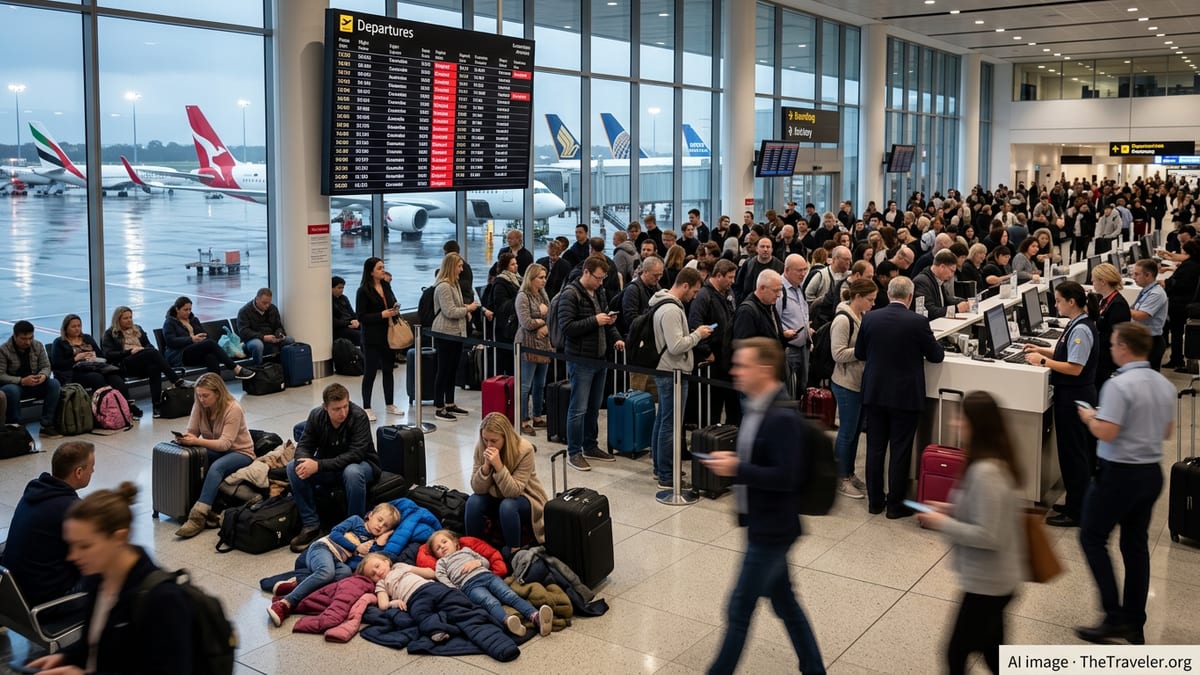
Targeted Cancellations, Widespread Delays at a Major Hub
Publicly available aviation data for the second weekend of April 2026 shows Denver International Airport once again under strain, with hundreds of delayed flights and a small but strategically significant number of cancellations involving United Airlines and its regional partner SkyWest. The latest counts indicate two cancellations tied to SkyWest and United services, set against a backdrop of far larger delay volumes across the United network.
Reports indicate that, taken alone, the two cancellations represent a very small share of Denver’s overall schedule, which typically handles well over a thousand movements per day in peak periods. Even so, those lost flights sit inside a dense web of connections, where a single cancellation on a regional leg can ripple across multiple downstream itineraries.
Separate industry tallies for April 11 and April 12 point to dozens of United-linked cancellations and well over a thousand delays nationwide, underscoring how even modest schedule cuts at one major hub can be magnified when the broader system is already fragile. Denver, serving as a cornerstone of United’s domestic and transborder network, becomes a pressure point when recovery margins shrink.
At Denver itself, earlier data for April 11 showed several hundred delays and a cluster of cancellations across multiple airlines, including United, American and Southwest, highlighting that the growing turbulence is not isolated to a single carrier. SkyWest’s role as a contract operator for several large airlines further complicates attribution for affected travelers.
San Diego, Aspen and Mountain Routes Feel the Strain
The impact of the Denver disruptions has been acutely felt on short- and medium-haul routes connecting Colorado’s Front Range to key leisure markets. Aspen, which relies heavily on regional jets operated under the United Express banner by SkyWest, is one of the first to experience the effects when Denver schedules wobble, given its limited runway capacity and weather-sensitive operations.
Recent flight tracking records show SkyWest-operated United services shuttling between Denver and smaller Western markets such as Aspen and Idaho Falls with tight turnaround windows. When delays propagate into Denver, those thin buffers can be quickly exhausted, leading to downgraded on-time performance and, in some cases, cancellations as aircraft and crews fall out of position.
Farther west, San Diego is seeing its own mix of delays and at least one cancellation across carriers, according to current-day airport disruption summaries. While not all of these issues trace directly back to Denver, the hub’s role as a connecting point for travelers moving between the Mountain West and Southern California means Denver-related misalignments can strand passengers mid-journey or force last-minute rerouting through other hubs.
For many leisure travelers heading to ski destinations or coastal getaways, this combination of tight regional schedules and hub-level delays is turning what should be straightforward weekend trips into multi-stop odysseys, with some passengers reporting missed connections and extended layovers as they attempt to rebook on remaining seats.
Cross-Border Links to Vancouver and Toronto Disrupted
The turbulence in Denver is also reverberating north of the border. Flight schedule databases show a robust pattern of nonstop services between Denver and Vancouver, operated by both United and Air Canada, as well as frequent links between Denver and Toronto via Star Alliance partners. These routes form part of a larger transborder corridor connecting western Canada to the central and southern United States.
When delays multiply at Denver, cross-border services can be among the first to suffer from compressed turnaround times, especially when aircraft are cycling through multiple domestic segments before operating international or transborder legs. Even if those longer-haul flights are not canceled outright, late arrivals into Denver can translate into missed onward connections for passengers bound for Canadian cities.
Historical schedule data and airline planning documents highlight how Vancouver in particular serves as a key gateway for Pacific Northwest and Asia-bound itineraries. Any disruption on the Denver link can complicate carefully timed connections, amplifying the inconvenience beyond the immediate Denver to Vancouver segment.
Travel patterns between Denver and Toronto show a similar sensitivity. With frequent services and strong business and leisure demand, even moderate delays can quickly fill rebooking options, leaving travelers with fewer same-day alternatives and forcing some to accept overnight stays or circuitous routings via other hubs.
Why a Small Cancellation Count Still Matters
On paper, a tally of just two cancellations involving SkyWest and United at Denver might appear insignificant, especially when nationwide figures show dozens of daily cancellations and thousands of delays across the United States. However, network analysis and historical performance data suggest that where cancellations occur often matters more than how many are recorded.
Denver’s status as a high-altitude, weather-exposed hub in close proximity to the Rocky Mountains creates frequent operational constraints, from high winds to shifting runway configurations. Aviation forums and federal advisories over recent years have repeatedly noted how such conditions can reduce arrival and departure rates, forcing airlines to trim schedules or accept rolling delays when storms or turbulence intensify.
Within this environment, canceling even a small number of flights tied to regional spokes can be a deliberate strategy to stabilize the overall operation. By cutting low-frequency or highly connection-dependent legs, airlines can consolidate passengers onto remaining services and free up crews and aircraft to protect busier trunk routes.
For affected passengers, however, that optimization is cold comfort. Those booked on the canceled SkyWest and United flights originating or terminating in Denver may face long gaps before the next available departure, particularly from smaller markets such as mountain towns or secondary regional airports with limited daily service.
Travelers Navigate a Familiar Pattern of Disruption
The latest turbulence at Denver fits into a broader pattern of periodic disruptions at major U.S. hubs, where high volumes, complex weather and tight schedules leave little room for error. Bureau of Transportation Statistics data over recent years has consistently placed Denver among the country’s busiest airports by passenger numbers, amplifying the impact when operations slow.
Travel discussion boards and social media posts from prior disruption events at Denver portray a familiar scene: long lines at customer service counters, rolling gate changes and uncertainty around departure times as airlines work through backlogs. While each event has its own triggers, the lived experience for passengers often feels much the same.
Current advisories and historical guidance from airlines suggest that travelers connecting through Denver on SkyWest- or United-operated flights may wish to build in longer connection windows during periods when weather or system strain is expected, especially in winter and shoulder seasons when conditions around the Rockies can change rapidly.
For now, operational data indicates that the two Denver-linked cancellations involving SkyWest and United sit within a broader tapestry of delays that stretches from San Diego and Aspen to Vancouver, Toronto and beyond. Even as carriers work to restore schedules, the latest episode serves as another reminder of how vulnerable modern air travel remains to concentrated disruptions at critical hubs.