

More news on this day
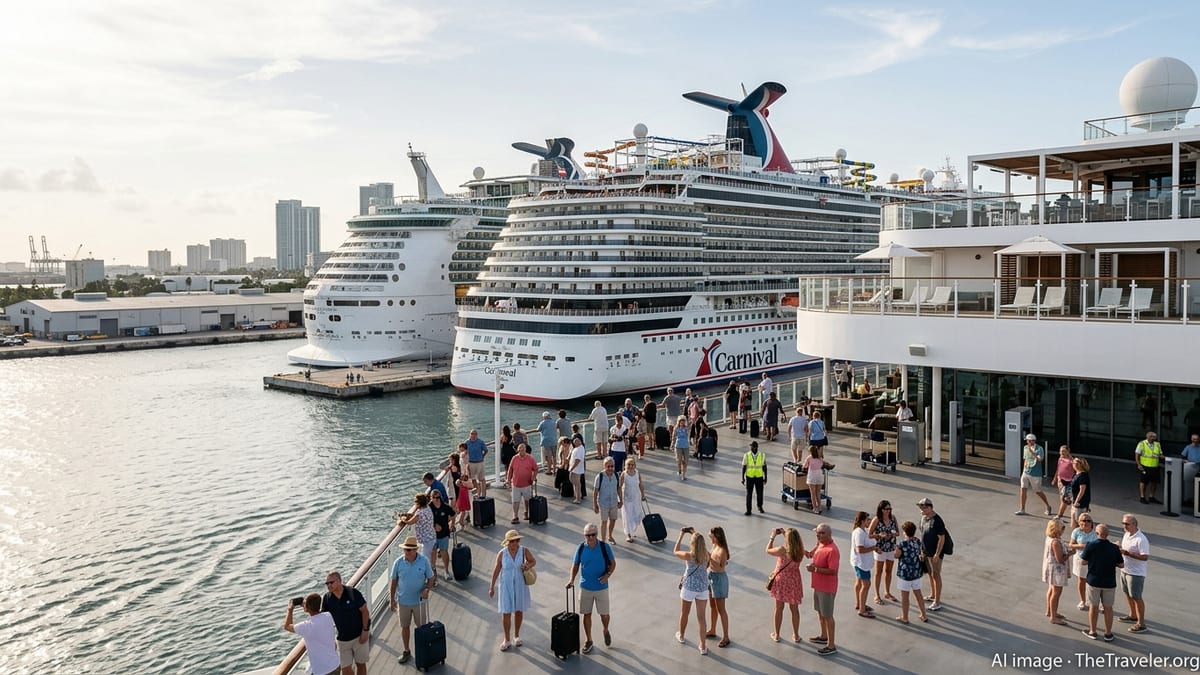
Americans are packing cruise terminals from Miami to Galveston as demand for ocean vacations surges and Carnival Cruise Line leans into upgraded ships, premium experiences and new destinations that edge closer to the luxury market.
Get the latest news straight to your inbox!
Record Cruise Demand Lifts U.S. Market
Recent industry forecasts point to an unprecedented wave of cruise interest across the United States, with projections that more than 20 million Americans will sail in 2025 and more than 21 million in 2026. Trade group and travel-agency data indicate that 2026 is on track to be the fourth consecutive year of record passenger volumes, underscoring how fully the sector has rebounded from the pandemic downturn.
Analysts note that American travelers now account for more than half of all global cruise guests, and that ocean cruising has outpaced hotel stays in growth over the last several years. Bank and credit-card spending reports show double-digit increases in cruise purchases compared with pre-pandemic baselines, signaling that the appetite for vacations at sea is still climbing.
Major U.S. ports are feeling the impact. PortMiami and Port Canaveral in Florida, along with Galveston in Texas, have reported new single-day and annual passenger records, supported by expanded terminal capacity and a roster of next-generation ships. Industry coverage describes weekend scenes of thousands of travelers boarding multiple megaships at once, reinforcing the perception of cruising as one of the fastest-growing corners of the leisure travel market.
Within this boom, Carnival, long associated with accessible “fun ship” vacations, is increasingly positioning selected hardware, itineraries and onboard venues to compete for travelers who might once have looked only at premium and luxury brands.
Carnival’s Evolving Take on Luxury at Sea
Publicly available company materials and recent earnings commentary show that Carnival is investing heavily in its fleet and destination portfolio, with a focus on experiences that carry a more upscale feel while keeping base fares comparatively accessible. The company’s Excel-class ships, including Carnival Celebration and Carnival Jubilee, have become flagships for this shift, with expansive suite decks, elevated specialty dining and multi-level entertainment zones designed to rival higher-end competitors.
Newly integrated vessels such as Carnival Venezia and Carnival Firenze, part of the Costa by Carnival concept, add another layer to the strategy. These ships, originally designed for an Italian brand, feature more elaborate interiors, tailored restaurants and themed public spaces that skew closer to a boutique, European-influenced atmosphere than traditional mass-market layouts.
Investor presentations and cruise line fact sheets highlight continued upgrades to stateroom categories, including enlarged suites, dedicated concierge-style services and priority embarkation for top-tier accommodations. While still priced below traditional luxury lines, these offerings are marketed as delivering many of the same comforts that higher-spending travelers expect, from enhanced bedding and amenities to quieter, access-controlled retreat areas on deck.
Onboard revenue data suggests the strategy is resonating. Reports of record yields and rising onboard spend per passenger indicate that guests are opting into specialty dining, spa treatments and curated shore excursions at higher rates, effectively layering luxury-style choices onto a value-oriented core fare.
Private Destinations and Longer Voyages Redefine Value
One of the clearest indicators of Carnival’s luxury-leaning ambitions lies in its destination development. Industry coverage of the company’s new and upgraded private ports in the Caribbean points to significant capital spending on white-sand beaches, cabana villages, overwater bars and enhanced waterfront dining intended to create a resort-style atmosphere that extends beyond the ship.
These private destinations, marketed as exclusive to Carnival guests on select itineraries, are often framed as highlights of the voyage, with upgraded shore packages such as private cabanas, adults-only retreats and guided water experiences commanding premium pricing. Analysts note that these add-ons help narrow the experiential gap between a mainstream cruise and a stay at a high-end Caribbean resort, while still keeping the overall trip competitively priced.
Carnival is also expanding its portfolio of longer and more immersive sailings. Its branded longer-voyage programs, which include extended Caribbean circuits, repositioning cruises through the Panama Canal and multi-week itineraries in regions such as the Asia Pacific, are attracting travelers who want a deeper, more curated experience without committing to traditional world-cruise price tags.
Travel agencies report that these sailings appeal in particular to repeat cruisers and retirees seeking a blend of comfort, service and exotic ports at a price point that often undercuts comparable land-based tours. For many, the ability to unpack once, dine in upgraded venues and access curated excursions across multiple countries is becoming a compelling alternative to conventional luxury travel packages.
New Customer Segments Seek Affordable Luxury
The surge in Carnival bookings from U.S. homeports is being fueled not only by traditional cruise loyalists but also by first-time guests, especially younger travelers and families. Survey data from travel membership platforms and auto-club organizations shows that millennials and Gen X travelers increasingly view cruising as a strong value, citing the ability to bundle lodging, transportation, entertainment and dining into a single upfront cost.
At the same time, interest in suite categories, spa cabins and upgraded dining is rising within these groups. Market research suggests that travelers who might previously have booked boutique hotels or all-inclusive resorts are now evaluating premium cabins on large ships as a more cost-efficient way to access similar amenities. Carnival’s ongoing push to highlight specialty restaurants, craft cocktail bars and adults-focused spaces aligns closely with this shift in expectations.
Geographically, growth is broadening beyond coastal states. Analysis of search data and booking patterns indicates that interest in cruise vacations has climbed sharply in interior markets such as the Midwest and Mountain West, helped by expanded airlift to Florida and Gulf Coast ports and aggressive marketing of drive-to hubs like Galveston. This diversification of the customer base is giving Carnival a wider audience for its upgraded offerings.
For many of these travelers, the promise of what might be termed “affordable luxury” is decisive. Publicly available pricing comparisons show that weeklong cruises in balcony cabins can undercut equivalent resort stays in popular U.S. and Caribbean destinations, particularly once onboard credits and promotional offers are factored in. As inflation continues to shape household travel budgets, the ability to experience aspects of luxury at a controlled price point is proving to be a powerful draw.
Competitive Pressures and the Next Phase of Innovation
The pivot toward more luxurious elements is unfolding in a crowded and increasingly sophisticated marketplace. Rival cruise operators have launched their own high-end brands, suite-only decks and exclusive ship-within-a-ship concepts, intensifying competition for travelers seeking upgraded service and privacy. Industry analysts note that Carnival’s challenge will be to elevate its product without losing the casual, high-energy atmosphere that has long defined the brand.
Financial disclosures and earnings commentary indicate that the company is attempting to balance this equation through selective price increases, targeted onboard investments and disciplined capacity management. With several older ships retired and new, more efficient vessels entering service, Carnival has been able to maintain strong pricing even as it adds premium features, supporting improved profitability while still marketing itself as an accessible choice for mainstream travelers.
Environmental expectations are shaping the next wave of luxury at sea as well. Global cruise forecasts highlight growing consumer interest in cleaner fuels, shore power connectivity and responsible excursions. Carnival’s newest ships feature more efficient engines and advanced exhaust systems, while destination development increasingly incorporates reef-friendly practices and nature-focused tours that appeal to guests looking for both comfort and conscience.
As U.S. travelers continue to flock to cruise vacations in record numbers, Carnival’s evolving blend of fun-focused branding and emerging luxury touchpoints is helping to redefine what a voyage from an American port can look like. For many passengers stepping aboard in 2026 and beyond, the result is a travel experience that feels significantly more upscale than the stereotype, without fully abandoning the accessible pricing that drew them to cruising in the first place.