

For a decade, I have watched travelers toss around the word "underrated" the way airlines toss around the word "sale." Everybody has a secret gem, a place the world supposedly misunderstands. So when conversations kept circling back to the same name Limón, the Afro-Caribbean coast of Costa Rica I was skeptical. Could a region suddenly trending in Skyscanner reports as a top rising destination for 2026 really still be underrated? I booked a ticket to find out.
Landing Somewhere That Felt Like a Different Country
The plane from San José to Limón was half empty on a Tuesday morning, which already felt like a clue. For all the marketing about Costa Rica’s beaches, most travelers still funnel west to Tamarindo or Manuel Antonio. Limón sits on the opposite side of the country, facing the Caribbean, closer in mood to a mellow island than a resort corridor. Even the air smelled different when we stepped off the plane: wet earth, sea salt, and a hint of wood smoke from roadside grills.
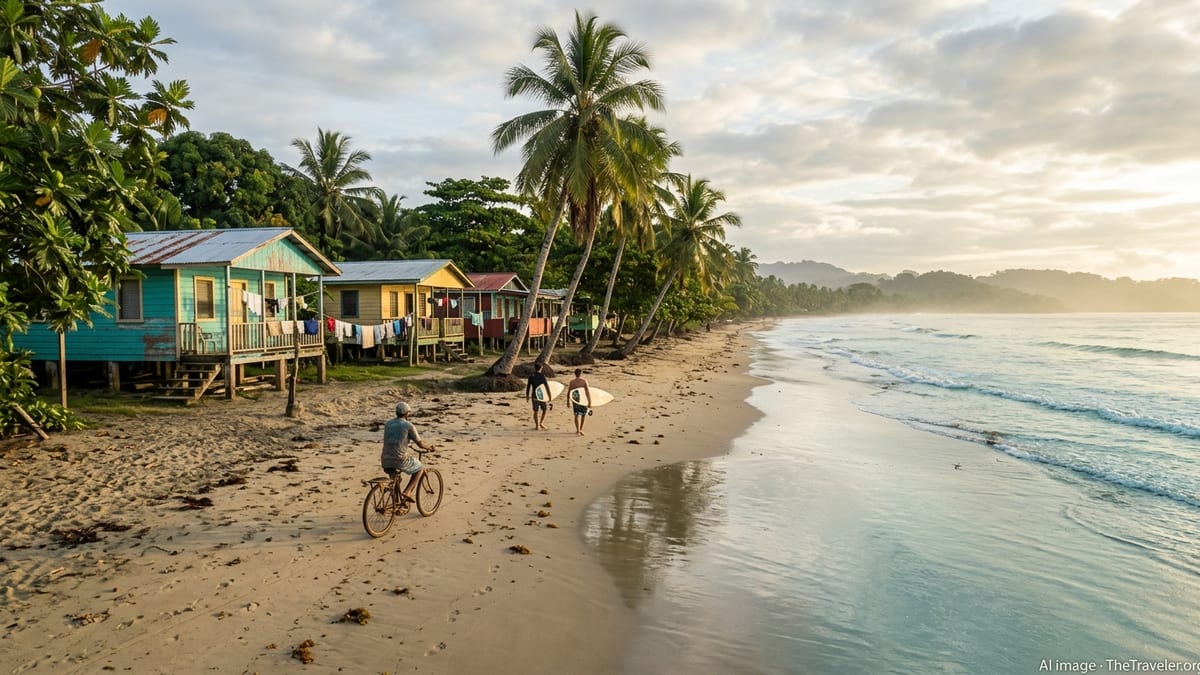
I shared a taxi into town with a Canadian couple who admitted they had almost changed their plans after friends warned them Limón was “too local” and “not like the real Costa Rica,” by which they meant the manicured version in brochures. Instead, the drive took us past stately breadfruit trees, rainbow-painted houses on stilts, and hand-lettered signs for sodas selling rondón fish stew and patí pastries. It felt more like arriving in a working coastline than in a curated theme park of tropical clichés.
My guesthouse, a restored wooden home a block from the water, cost about what I usually pay for an airport hotel breakfast elsewhere. The owner, a soft-spoken man named Javier, laughed when I told him Limón kept appearing on lists of “underrated places to visit next year.” He said, “People have been saying that since I was a kid. Maybe they’re finally ready to see us as we are.”
That first evening, walking along the malecón with families licking coconut ice cream and teenagers blasting dancehall from portable speakers, I realized how rare it is to land in a place that has been talked about so much by travelers and yet still feels firmly its own.
The Morning Puerto Viejo Changed My Definition of Crowds
Puerto Viejo de Talamanca is technically on the same coast, but it feels like a different chapter of the same story. I caught the 6 a.m. bus south for a few dollars, sharing the ride with grocery bags, surfboards, and one very patient chicken in a cardboard box. The road wound past banana plantations and misty hills until the jungle opened into a strip of small beach towns: Cahuita, Playa Negra, Cocles, names that appear more and more often on “hidden gem” lists.
Puerto Viejo has a reputation among backpackers as a laid-back surf village, but what struck me was how human-sized it still felt. At 8 a.m., the main street was mostly bicycles and barefoot surfers carrying boards, not Instagrammers queueing for the same angle. I ordered breakfast at a café where a handwritten chalkboard listed exactly three options, one of them a plate of gallo pinto with plantains and eggs for the equivalent of a modest fast-food meal back home.
Later, at Playa Cocles, I met an American family who had almost booked Guanacaste but changed plans after noticing how often Puerto Viejo appeared in recent “underrated coasts” articles. Their two teenagers had the kind of attention span that usually dissolves after five minutes without Wi-Fi. Yet here they were, spending an entire afternoon letting the waves knock them over, with no resorts in sight. Their mother told me, “It’s busy, but not Cancun busy. I feel like we’re in someone’s town, not someone’s product.”
Standing at the tideline, watching tanagers dart between almond trees and listening to a mix of reggae and Spanish floating from a beach bar, I realized that “underrated” here did not mean empty. It meant alive with its own rhythm, moving at a tempo that had not yet been rewritten by outside expectations.
Cahuita: Where a National Park Still Belongs to the Community
If there is a place that captures why Limón deserves its new reputation, it is Cahuita National Park. Guides in San José had told me it offered some of the best wildlife viewing on the Caribbean side, but they always mentioned it as an afterthought, like a footnote to the better-known Pacific parks. In person, the park felt like a quiet rebuttal to that hierarchy.
The entrance to Cahuita is by donation if you come through the town gate, which immediately changes the energy. Locals jog the trails in the early morning, school groups wander in with packed lunches, and tour groups blend into the flow instead of dominating it. Within ten minutes of stepping under the forest canopy, I had spotted a sloth curled in a cecropia tree, a troupe of white-faced capuchins arguing over something invisible to me, and a line of leafcutter ants that looked like a moving necklace of green.
I ended up hiring a local guide, Mariela, who had grown up in Cahuita and now supports her family by leading small groups. She carried a battered pair of binoculars and knew which trees the howler monkeys favored at that hour. At one point she stopped, raised a finger to her lips, and pointed to what looked like a knot in a branch. It was a sleeping eyelash viper, coiled like a piece of jewelry. Without her, I would have walked right past it. She told me that for years, most tour operators in San José pushed visitors toward private reserves elsewhere, skipping Cahuita entirely. “Now people come because they see our park on lists of underrated places,” she said. “I just hope they also see the people protecting it.”
We ended the hike where the jungle simply leaned into the sea. No big visitor center, no zipline complex, just a strip of white sand with driftwood benches and families from Limón sprawled under palm trees. If Limón is finally getting its due, it is in large part because of places like Cahuita, where community and conservation still feel inseparable.
Costa Rica, but in a Different Accent
Calling Limón “underrated” ignores an important truth: for Afro-Caribbean communities who have lived here for generations, the region was not waiting for outside approval. It just existed, with its own language, music, and rituals. What many travelers are only now discovering is that this cultural texture is exactly what makes the coast feel so different from the rest of the country.
On my third night, I found myself at a small roadside spot on the outskirts of Limón city, drawn in by the smell of curry and the bassline of an old reggae track. Inside, a woman named Miss Clara served plates of rice and beans cooked in coconut milk, jerk chicken, and patacones fried until they crackled. She switched between Spanish and Limón Creole depending on who stepped up to the counter, her accent rolling like the sea. Two backpackers from Germany, who had just come from La Fortuna, told me they felt like they had “changed countries without crossing a border.”
The next day, in the town of Bri Bri inland, I visited a small cacao farm run by an Indigenous family. The experience was a world away from the glossy plantation tours marketed near the capital. We ground roasted beans by hand, mixed them with water and a touch of cane sugar, and drank the resulting chocolate inside a palm-thatch shelter while rain hammered the roof. Our host spoke candidly about how tourism here often skips the Indigenous territories entirely, despite their proximity to some of the coast’s most-visited beaches. “People say they want something authentic,” he said, “but sometimes they are afraid when they find it.”
Walking back to the main road, I understood why Limón has stayed on the margins of the country’s tourism story for so long. It is not a place that smooths over its complexity for visitors. Instead, it invites you to sit with the fact that “paradise” can hold poverty, history, and resilience at the same time. Travelers who are calling it underrated now are really saying they are finally ready for that conversation.
How the Word “Underrated” Breaks When the Crowds Arrive
There is another side to all this attention. Over dinner in Puerto Viejo, I met a pair of digital nomads who had come specifically because they saw Limón crowned a top “trending but still under-the-radar” beach destination for the coming year. They were already worried that they had arrived too late. “It feels like Tulum ten years ago,” one of them said, “which means in a few years it might feel like Tulum now.”
Locals expressed a more grounded version of that fear. A surfer named Diego, who rents boards on Playa Cocles, told me it used to be rare to see more than a handful of people in the water on a weekday. Now, some mornings look more like a lesson zone in a developed surf resort. He is grateful for the business; his board rentals and beginner lessons help support his extended family. But he pointed to a patch of beach where new guesthouses are creeping closer to the treeline. “Underrated is just a word people use until investors notice,” he said.
Yet even with the uptick in visitors, Limón still lacks the sprawling, all-inclusive complexes that define so many coastal destinations. Many guesthouses are owned by local families or long-term residents. Restaurants close when the fish runs out instead of trucking in frozen fillets from across the country. Bus schedules still shape daily life more than flight timetables. For now, at least, the underlying fabric remains intact.
As a traveler, arriving in a place at this exact moment feels both thrilling and precarious. You get to experience a coast that is finally benefitting from the recognition it deserves, while hoping that acclaim does not flatten the very things that made it special. Limón is no longer a total secret. But compared with the Pacific hotspots that dominate Costa Rica’s postcards, it is still remarkably itself.
Traveling Limón on Real-World Time and Budget
One of the reasons travelers are starting to call Limón underrated is simple: it stretches your time and budget further than many better-known coastal regions. When I checked prices the week before flying, I saw beachside rooms in Puerto Viejo and Cahuita listed at nightly rates comparable to inland chain hotels in more touristed countries. They were not bargain-basement cheap, and you should not expect rock-bottom prices in a country that generally values its natural resources. But compared with Costa Rica’s busy Pacific strip in high season, the Caribbean coast often comes in noticeably lower.
Getting around is refreshingly straightforward. Buses between Limón, Cahuita, and Puerto Viejo run regularly and cost what many travelers might spend on a coffee at a major-chain café back home. Renting a bicycle in Puerto Viejo for the day to hop between Playa Negra, Cocles, and Punta Uva costs less than a taxi ride across most big cities. I met a solo traveler from Chicago who was working remotely from a simple cabina with a desk and reliable Wi-Fi, spending less in a month than she usually does on two weeks in a heavily marketed European capital.
The rhythm of daily life also rewards travelers who are willing to move on local time. Breakfast might mean waiting an extra ten minutes for coconut rice to finish steaming, but you eat it with a view of the sea instead of a lobby television. Afternoon rainstorms are inevitable, but they become a welcome excuse to duck into a bakery for warm pan bon and a cup of strong coffee. Tours, like snorkeling in Cahuita’s reef or visiting a family-run cacao farm, are often organized through handwritten signs and WhatsApp numbers instead of sleek booking platforms.
Far from feeling like a drawback, this slightly analog approach is part of what makes Limón feel underrated in the best way. You are not simply passing through a polished attraction; you are stepping into a living place that has learned to welcome guests without rewriting itself around them.
The Takeaway
I arrived in Limón armed with a healthy dose of cynicism about the word “underrated.” I left understanding why travelers keep using it here, and why for once, the label fits. This is a region that has spent years in the shadows of Costa Rica’s glossy Pacific coast, not because it lacks beauty or infrastructure, but because it does not conform to the easiest version of a tourism story.
On this stretch of Afro-Caribbean coast, national parks still feel local, beaches still feel like gathering places more than photo sets, and guesthouses are often extensions of family homes rather than corporate brands. It is a place where you can surf in the morning, drink hand-ground cacao in the afternoon, and listen to live calypso at night, all without feeling like someone designed the day for your feed.
Limón is changing. Trend reports and travel rankings are shining a brighter light on its beaches and forests. More visitors are coming, and with them, real questions about how to balance recognition with preservation. But if you go now, with curiosity, respect, and the humility to remember that you are stepping into someone else’s home, you will find a coast that finally matches the stories travelers have been telling about it for years.
Underrated, it turns out, is not just about how many tourists a place gets. It is about how honestly it gets to be itself. On that measure, Limón might be one of the last true underrated shores left in Costa Rica and one that, at long last, the travel world is finally seeing clearly.
FAQ
Q1. Where exactly is Limón, Costa Rica, and how do you get there?
Limón is on Costa Rica’s Caribbean coast, east of San José. Most travelers either fly into San José and take a short domestic flight to Limón city or ride an intercity bus that reaches the coast in several hours.
Q2. Is Limón safe for solo travelers?
Limón is similar to many working port regions: generally welcoming, with areas that require common-sense precautions. Staying in established guesthouses, avoiding isolated areas late at night, using registered taxis, and asking locals which neighborhoods to avoid goes a long way toward a smooth trip.
Q3. When is the best time to visit Limón’s Caribbean coast?
The Caribbean side does not follow the classic dry and rainy seasons of Costa Rica’s Pacific. Weather patterns are more variable, though many travelers favor February to April and September to October for a higher chance of sunny days, while remaining prepared for brief tropical showers year-round.
Q4. How does Limón compare to Costa Rica’s Pacific beaches?
The Pacific coast is more developed, with larger resorts and more extensive tourism infrastructure. Limón’s Caribbean coast feels smaller-scale and more rooted in local communities, with Afro-Caribbean culture, reggae and calypso music, and a mix of Spanish and Creole that give it a distinctly different character.
Q5. Do I need to rent a car to explore Limón?
You do not need a car, though some travelers appreciate the flexibility. Regular buses connect Limón with Cahuita, Puerto Viejo, and other coastal towns, and many visitors rely on bicycles, walking, and local taxis once they arrive.
Q6. What kind of budget should I expect for accommodation and food?
Prices vary by season and comfort level, but basic guesthouses and cabinas in coastal towns are often more affordable than comparable stays on Costa Rica’s busiest Pacific beaches. Simple local meals at sodas tend to be reasonably priced, while imported or international cuisine can cost more.
Q7. What are the must-see spots in Limón province for first-time visitors?
Many first timers combine time in Limón city with visits to Cahuita National Park, Puerto Viejo de Talamanca, nearby beaches such as Playa Cocles and Punta Uva, and short trips inland to Indigenous communities or small cacao farms.
Q8. Is Limón a good destination for families with children?
Yes, many families enjoy Limón’s relaxed beaches, wildlife in national parks like Cahuita, and the slower pace of the coastal towns. Parents should still observe standard safety measures around currents, sun exposure, and insect protection, and choose accommodations that are clearly family friendly.
Q9. What should I pack for a trip to Limón?
Lightweight, breathable clothing, a rain jacket, comfortable walking shoes or sandals, reef-safe sunscreen, insect repellent, and a dry bag for electronics are practical essentials. A reusable water bottle and a small daypack are useful for beach days and hikes.
Q10. How can travelers be respectful and support the local community?
Choosing locally owned accommodations and tours, eating at family-run sodas, learning basic Spanish or a few Creole phrases, and following local guidance on environmental protection all help. Being mindful with photography, especially of people and in Indigenous communities, is another key aspect of traveling respectfully.