

More news on this day
Air travelers across the United States faced a bruising start to the weekend on April 11 as at least 1,759 flight delays and a wave of cancellations rippled through major hubs, snarling connections and forcing thousands of passengers to abruptly redraw their plans.
Get the latest news straight to your inbox!
Storm System and Operational Strains Converge
Publicly available flight-tracking dashboards for April 11 showed a sharp spike in disrupted operations across US carriers, with delays far outpacing cancellations but combining to create widespread congestion in terminals and on taxiways. The figures placed the day among the more difficult travel periods of the spring, as airlines worked to keep aircraft and crews moving in the face of unsettled weather and tight schedules.
Meteorological outlooks for the central and eastern United States on April 11 highlighted an energetic pattern featuring strong wind fields, pockets of heavy snow and freezing rain in the Upper Midwest, and severe thunderstorms stretching from the Plains toward the Great Lakes. Forecasts from major weather services pointed to damaging gusts, low cloud ceilings and bands of wintry mix that were likely to trigger cascading air-traffic restrictions over several states.
Coverage of the storm described hurricane-force winds and blizzard conditions in parts of the Midwest, with Chicago, Minneapolis and surrounding regions bracing for prolonged transport disruption and power outages as the day unfolded. In parallel, storm updates for the central US flagged repeated rounds of severe thunderstorms capable of producing hail and turbulent conditions, elements that commonly feed into ground delays and reroutes for commercial aviation.
Aviation performance reports published in recent months show that extreme weather now accounts for a significant share of US delay minutes, alongside congestion in the national airspace system and aircraft arriving late from previous sectors. Against that backdrop, the April 11 figures underscored how a single, broad weather system can quickly translate into hundreds of late departures even when outright cancellations remain comparatively limited.
Key Hubs From Phoenix to Dallas Feel the Impact
The disruption on April 11 was not confined to one region. At Phoenix Sky Harbor International Airport, local tallies compiled from flight-status boards indicated 163 delayed flights and two cancellations, affecting services on American Airlines, Southwest Airlines and JetBlue to major hubs such as Chicago, New York and Los Angeles. While the federal delay map did not show an extended ground stop, rolling gate holds and late inbound aircraft produced visible bottlenecks across multiple concourses.
Elsewhere in the Southwest, travel analysis noted that Phoenix has generally maintained a strong on-time record in recent months, making the April 11 slowdown stand out as an exception driven by external weather and network pressures rather than chronic local inefficiencies. For many passengers starting spring trips in Arizona, the ripple effects meant missed connections further east as aircraft arrived late into busier hubs.
In Texas, Dallas Fort Worth International Airport emerged as another focal point. Operational summaries referencing flight-tracking data show that around 197 flights linked to DFW on April 11 were affected by schedule changes, including both delays and cancellations. As one of the country’s primary connecting platforms, any disturbance at DFW tends to radiate outward, influencing airline performance metrics across entire route networks.
Detroit Metropolitan Wayne County Airport also reported significant disruption, according to regional aviation coverage, with both domestic and international flights facing extended waits on April 11. Reports on airline operations around Detroit noted that some carriers were forced to juggle staff availability as crew duty-time limits approached, leading in certain cases to short-notice cancellations when earlier delays pushed work shifts beyond allowable windows.
Passengers Face Long Lines, Missed Connections and Costly Rebooking
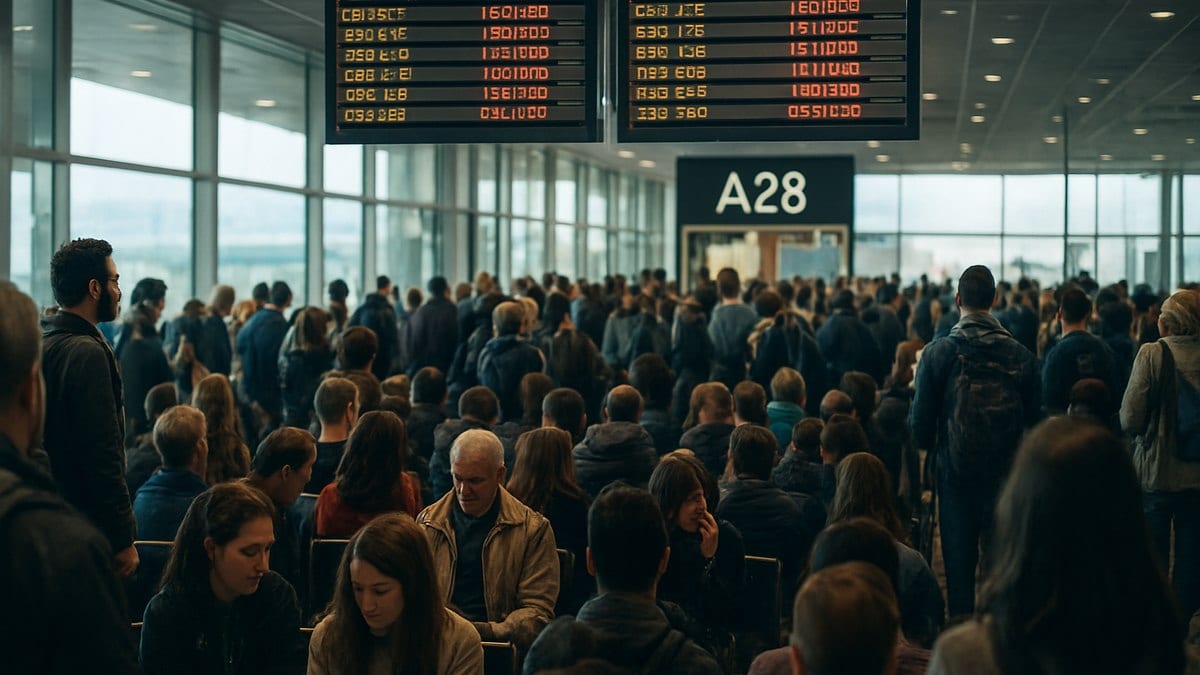
For travelers on the ground, the statistics translated into long queues at check-in counters and customer-service desks, crowded gate areas and tight competition for scarce alternative seats. Social media posts and passenger accounts collected by travel outlets on April 11 depicted scenes of packed terminal corridors as families, business travelers and vacationers attempted to negotiate new arrangements.
Consumer advice regularly issued by transportation agencies and passenger-rights groups emphasizes that when large-scale delays unfold, options vary depending on whether a disruption is categorized as within an airline’s control or the result of weather and air-traffic constraints. In the April 11 case, publicly available data and weather maps pointed to a mix of both, complicating expectations around meal vouchers, hotel accommodation or cash refunds.
Recent disruption reports for the US market indicate that more than one in five passengers can expect some form of delay in a typical year, with a smaller share encountering cancellations that may qualify them for reimbursement or compensation under certain policies. Analysts say days like April 11 compress those probabilities into a single intense window, generating waves of missed weddings, lost workdays and additional hotel nights that are not always covered.
Travel-planning resources advise that during such events, passengers tend to secure the best outcomes by using multiple channels at once, including airline apps, websites and call centers, rather than relying solely on physical queues at the airport. Same-day alternatives may include rerouting through secondary hubs, shifting to later departures or, when schedules allow, postponing nonessential trips until conditions stabilize.
Weather Patterns Keep Pressure on Spring Travel
Climatological summaries for the late winter and early spring of 2026 show a sequence of disruptive systems crossing the continental United States, from a major March blizzard that hammered the Upper Midwest and Great Plains to repeated severe-weather episodes in the central and southern states. The April 11 storm arrived in the wake of that already unsettled pattern, compounding the workload for airlines, airports and air-traffic controllers.
In the Midwest, the latest Arctic air surges and heavy snow bands have battered ground transport, while also complicating de-icing operations and runway maintenance for airports. Farther south, severe-thunderstorm outlooks have highlighted the risk of damaging winds and hail near key flight corridors, the sort of conditions that often prompt route adjustments and temporary slowdowns in arrival and departure rates.
Humanitarian organizations and emergency-management agencies had already been signaling concern about the broader impacts of these systems in the days leading up to April 11, with guidance focusing on power resilience, road safety and shelter options. For aviation, the same atmospheric triggers translated into shifting jet streams, turbulence forecasts and cloud layers that required pilots and dispatchers to build in additional buffers.
Industry observers note that as climate variability drives more frequent episodes of extreme weather in different seasons, planning assumptions built around historical norms are increasingly being tested. The April 11 wave of flight delays, layered on top of passenger volumes close to or above pre-pandemic levels, provided another example of how fragile the balance between capacity and resilience can be across the US air-travel system.
What Travelers Can Do As Disruptions Mount
Travel guidance produced by aviation regulators, consumer advocates and large travel agencies consistently stresses preparation as a first line of defense on volatile days like April 11. Recommendations include booking the earliest feasible flight of the day, favoring nonstop routes when possible, and building longer layovers into itineraries that cross multiple weather-prone regions.
Experts in flight-disruption patterns also highlight the value of keeping airline apps and text alerts activated, even when skies appear clear at departure or destination airports. In events such as the April 11 disruption, many of the most significant delays stemmed from conditions hundreds of miles away, where storms and winter weather forced ground holds or reduced arrival rates at key hubs.
For travelers already stranded mid-journey, publicly available advisories suggest exploring alternative airports within driving distance, checking whether the same carrier has open space on nearby routes, and, where budgets permit, weighing the cost of last-minute tickets on different airlines against the expense of an extra night or two on the road. Flexible tickets and travel insurance that covers weather-related disruption can also play a role in cushioning the financial impact of days with widespread delays.
With severe weather outlooks indicating that storms will continue to sweep across parts of the country into mid-April, passengers planning to fly in the coming days are being urged by travel outlets to monitor forecasts closely and to treat the April 11 experience as a reminder that even routine domestic journeys can be upended with little notice when the national aviation system comes under strain.