

Mexico’s sheer size and diversity can be intimidating on a map. Yet for travelers on the ground, moving between its coasts, highland cities, and small-town corners is often surprisingly smooth. Over the past decade, Mexico has quietly built one of the most user-friendly travel networks in the Americas, blending extensive bus routes, expanding low-cost airlines, and a booming tourism ecosystem that increasingly caters to independent visitors.
Mexico’s Tourism Boom Is Fueling Easier Travel
Mexico is not just popular; it is in the middle of a sustained tourism boom, and that growth directly translates into better infrastructure and more options for travelers. Official figures show that international arrivals and tourism spending have climbed steadily since 2023, with total international visitor numbers now well above pre-pandemic levels. Tourism already accounts for a meaningful share of national GDP and employment, which gives the government and private sector strong incentives to keep improving how people move around the country.
Recent data from national statistics agencies and tourism authorities indicates that Mexico welcomed tens of millions of international tourists in 2024, with forecasts pointing to further increases through 2025 and into 2026. Major gateways such as Cancun, Mexico City, Puerto Vallarta and Los Cabos have recorded particularly strong growth, especially from the United States and Canada. As a result, airports have expanded capacity, new routes have opened, and local tourism operators in both classic resorts and emerging destinations have adapted to serve a larger and more diverse mix of visitors.
This growth is not limited to international tourism. Domestic travel within Mexico also plays a crucial role, with tens of millions of Mexicans taking overnight trips each year. Busy holiday periods and the steady expansion of middle-class travel have encouraged investment in highways, regional airports, hotels, and tourist services in secondary cities. For foreign visitors, that domestic demand is an asset: routes and services that once catered mainly to locals now offer reliable, straightforward options for anyone eager to explore beyond the big-name resort towns.
The net effect is that travelers today arrive in a Mexico that is significantly easier to traverse than even a decade ago. Whether you want to ride a comfortable bus from the capital to colonial cities, catch an inexpensive flight to the opposite coast, or pair independent exploration with locally run tours, the basic logistics are usually simpler than first-time visitors expect.
Intercity Buses: The Backbone of Easy Overland Travel
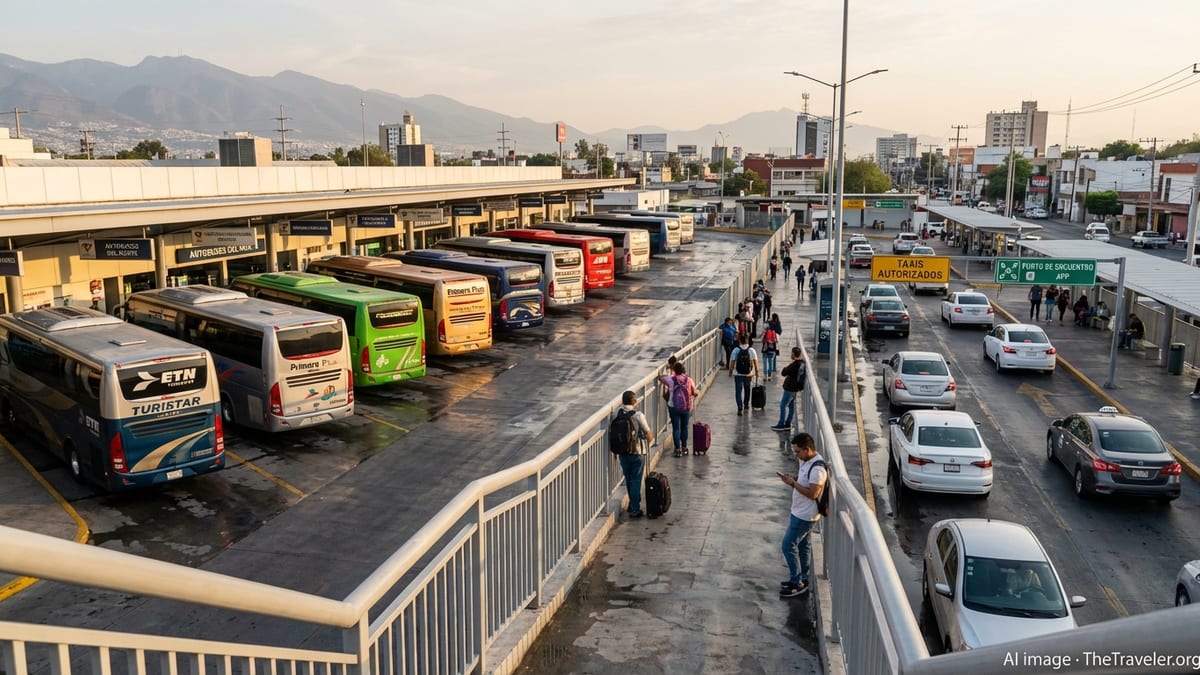
For many journeys across Mexico, long-distance buses are the most practical and accessible option. The country has a dense network of intercity services that link large metropolitan areas with smaller regional hubs and even remote towns. In much of the country, these buses function as the equivalent of intercity trains, running frequently, on fixed schedules, and with multiple comfort levels that travelers can choose according to budget.
Mexico’s first-class and so-called executive or luxury buses are a revelation for travelers accustomed to basic coaches elsewhere. Major companies typically run modern, air-conditioned fleets with reclining seats, onboard restrooms, seat-back entertainment on some routes, and ample luggage capacity. On key corridors between cities such as Mexico City, Puebla, Querétaro, Guadalajara, Oaxaca, and Mérida, departures can be so frequent that travelers rarely need to book far in advance outside peak holidays.
Regional variations exist, and not every company offers the same level of comfort, but overall standards on main routes are high. Many bus terminals resemble small airports, with ticket counters, security, waiting lounges, snack bars, and clearly posted departure screens. That familiarity helps first-time visitors navigate the system quickly. Staff at larger stations are increasingly accustomed to foreign travelers, and while not everyone speaks English, clear signage and digital tickets reduce the need for complex conversations.
For budget-conscious travelers, Mexico’s bus network is particularly attractive. When compared with many other regions, fares remain competitive relative to distance and quality of service. On routes where there is direct competition from low-cost airlines, bus companies often respond with promotions or multiple comfort tiers, letting travelers balance time, cost, and experience. The result is a network where covering hundreds of kilometers in a single, straightforward journey is usually a matter of picking a departure time rather than assembling a complicated transport puzzle.
Low-Cost Airlines Shrink Distances Across the Country
Mexico’s rapidly expanding network of low-cost airlines has transformed the practical distance between its regions. Destinations that once required all-day or overnight bus rides are now connected by short, relatively affordable flights. Carriers have added new domestic routes year after year, capitalizing on strong demand from both international visitors and Mexican travelers shuttling between major cities and beach destinations.
Recent industry developments indicate that leading low-cost airlines have moved toward closer cooperation under a shared holding structure, with the stated aim of expanding connectivity and strengthening ultra-low-cost models. While regulatory approvals are still in progress, the underlying trend is clear: carriers are betting on a future where more people fly within Mexico, more often, at lower fares. They serve multiple airports in the Mexico City area as well as hubs such as Monterrey, Guadalajara, Tijuana, and Cancun, allowing travelers to route trips creatively and often cheaply.
For travelers, this means it is increasingly simple to string together far-flung regions in a single itinerary. You might land in Mexico City, explore the capital and nearby highland towns, then hop a short flight to the Caribbean coast, the Pacific beaches, or the Baja California peninsula. In many cases, flying between regional cities avoids backtracking through the capital altogether, saving both time and money.
That said, travelers should still approach domestic flights with the same pragmatism they would use anywhere. Low-cost fares often come with tight baggage allowances and fees for extras, and schedules can shift during busy seasons or operational changes. Booking a bit of buffer time between connections, downloading your boarding pass in advance, and double-checking airport names in the Mexico City region are simple steps that help keep air travel within Mexico as easy in practice as it looks on a route map.
Highways, Rental Cars, and Road Trips
Look at a current highway map and one thing stands out quickly: Mexico’s main corridors are well connected by paved roads, including extensive toll highways that parallel slower free roads. For travelers comfortable driving abroad, this network opens the door to flexible road trips that link big cities with smaller villages, nature reserves, and archaeological sites at your own pace.
On key routes between major urban centers, toll highways typically offer multiple lanes, good pavement, and regular service plazas with fuel, restrooms, and food. These roads are designed to keep freight and passenger traffic flowing efficiently, and they are widely used by local drivers and long-distance buses alike. For travelers, they dramatically simplify navigation: once you are on the right toll highway, you are often following the same road for several hours with clear signage pointing toward the next major city.
Rental cars are widely available in airports and popular tourist centers, with international brands operating alongside local agencies. For travelers used to driving in the United States or Canada, the mechanics of renting and driving are familiar: standard documentation, optional insurance packages, and a mix of manual and automatic vehicles. Prices vary seasonally, but competition among agencies in major destinations helps keep options available.
As with any country, driving in Mexico involves reasonable precautions and situational awareness. Travelers should research current conditions in specific states, aim to drive major segments in daylight, and plan refueling points in more remote regions. Yet on well-traveled routes to and between main tourism centers, road trips can be straightforward, rewarding, and far less daunting than many first-time visitors assume from afar.
Digital Tools and Booking Platforms Smooth the Way
One of the reasons traveling across Mexico feels easier today is the simple fact that so much trip planning can be managed from a phone. Intercity bus tickets, domestic flights, museum entries, and even small guesthouses can often be researched and reserved in advance through widely used apps and global booking platforms. This digital layer sits on top of Mexico’s physical infrastructure, translating complex networks into clear options and schedules.
Major bus companies increasingly offer online timetables, seat selection, and digital boarding passes. Travelers who once had to navigate crowded terminals to buy tickets on the day of travel can now compare departure times and prices, then walk into the station with confirmation already in hand. For those who prefer flexibility, it is still possible to purchase tickets in person, but having digital tools as a backup reduces stress, especially for overnight or popular holiday routes.
Domestic airlines, for their part, have embraced mobile-first operations, from booking to check-in. Apps and email updates notify travelers of gate changes or schedule adjustments, and digital boarding passes are widely accepted. Combined with ride-hailing services in many cities, this makes airport transfers smoother and more predictable, even for those with limited Spanish.
Travelers also benefit from navigation apps that provide real-time traffic data, which are particularly useful in large metropolitan areas such as Mexico City, Guadalajara, and Monterrey. Digital maps help drivers choose toll routes, avoid congestion where possible, and locate fuel stations and rest stops along the way. Language translation apps further ease communication in smaller towns or bus terminals where English is less common, helping travelers confirm schedules, ask directions, or clarify hotel details with more confidence.
Safety, Practicalities, and On-the-Ground Reality
Public debate about safety in Mexico can create the impression that travel across the country is inherently complicated or risky. The reality for most visitors is more nuanced. Major tourism corridors, popular beach resorts, and historic cities continue to welcome large numbers of international and domestic travelers every year. Local and federal authorities, along with private operators, have strong incentives to keep these areas functioning smoothly.
In practice, traveling safely across Mexico often comes down to the same habits that make trips easier anywhere: staying informed, sticking to well-used routes, and paying attention to local advice. Governments in several countries publish regularly updated travel advisories, which can help visitors understand regional variations and make informed decisions about where and how to move around. Within Mexico, local tourism offices, hotel staff, and reputable tour operators can offer current, practical guidance about neighborhoods, road conditions, and transport options.
From a logistical standpoint, most travelers find that everyday practicalities are straightforward. Fuel stations are common on main highways, intercity buses follow clear schedules, and airports are accustomed to handling high volumes of leisure traffic. Banking and payments are familiar too: cash remains useful for small purchases, but card acceptance has expanded substantially in cities and major tourist areas, and ATMs linked to global networks are easy to find.
Adopting a realistic, informed mindset helps align expectations with on-the-ground reality. Mexico is a large and diverse country, and no single description captures every region. There are places where visitors should exercise extra caution or avoid nonessential travel, and other places where strolling between cafes at night feels as relaxed as in any popular Mediterranean city. Understanding that spectrum, rather than seeing the whole country through a single lens, allows travelers to take advantage of the well-developed infrastructure while still exercising common sense.
Regional Hubs Make It Easy to Explore Beyond the Big Names
One underappreciated reason travel across Mexico feels manageable is the role of regional hubs. Cities such as Mérida, Puebla, León, San Luis Potosí, Tuxtla Gutiérrez, and Chihuahua, among others, serve as gateways to their surrounding states and natural regions. Many have airports with domestic connections, major bus terminals, and a growing range of hotels and guesthouses shaped by both business and leisure travel.
These hubs function as logistical anchors for wider exploration. For example, basing in a mid-sized city might allow travelers to reach archaeological zones, pueblos mágicos, mountain trails, or coastal villages via short bus rides or day tours. Instead of attempting to cross the country in one continuous push, travelers can design itineraries that move in comfortable steps from one hub to the next, with each stop offering its own cultural and culinary experiences.
Tourism authorities at federal and state levels have actively promoted these regional destinations as part of a broader strategy to spread economic benefits beyond the most famous resorts. That promotion has encouraged investment in accommodations, tour operations, and transport links, which in turn makes it easier for independent travelers to navigate. Many of these hubs also maintain historic centers, markets, and museums that reward slower, more immersive stays.
As connectivity improves, it is becoming more common for visitors to pair a classic beach stay with time in less-visited states, whether to experience indigenous cultures, highland cities, or nature reserves. With thoughtfully chosen hubs and reasonable travel days, crossing long distances within Mexico can feel like a string of manageable jumps rather than a daunting marathon.
The Takeaway
Mexico’s scale and complexity are real, but so is its capacity for hospitality and movement. A dense network of long-distance buses, expanding low-cost airlines, and well-traveled highways gives visitors multiple ways to crisscross the country. Digital tools simplify planning and booking, while regional hubs and a booming tourism sector ensure that services are available far beyond the marquee destinations.
Travelers who arrive expecting chaos or constant difficulty are often surprised by how quickly they find a rhythm: booking a bus online one day, hopping a short domestic flight the next, and arranging local taxis or rideshares without much fuss. Challenges can arise, as they do anywhere, but in most of the country’s main travel corridors, the basic act of getting from point A to point B is more routine than dramatic.
Approached with realistic expectations, a bit of advance research, and the flexibility to adapt, crossing Mexico becomes less of a logistical hurdle and more of a fundamental pleasure of the journey. The infrastructure is in place, the services are practiced, and the country’s long-standing culture of travel means that most visitors will find Mexico not only richly rewarding, but far easier to navigate than they imagined back home.
FAQ
Q1. Is it easy to travel long distances across Mexico without a car?
Yes. A widespread network of intercity buses and an increasing number of domestic flights connect most major cities and tourist regions, allowing travelers to cover long distances without driving.
Q2. How comfortable are Mexico’s long-distance buses for foreign travelers?
On main routes, first-class and executive buses are generally modern, air conditioned, and comfortable, with reserved seats and onboard restrooms that meet or exceed many travelers’ expectations.
Q3. Are domestic flights in Mexico usually affordable?
Fares vary by season and route, but competition among low-cost airlines often keeps prices relatively accessible, especially when tickets are booked in advance or during promotions.
Q4. Do I need to speak Spanish to use buses and airports in Mexico?
Spanish helps, but it is not essential on main routes. Clear signage, digital tickets, and staff accustomed to tourists mean that travelers with limited Spanish can usually navigate without major problems.
Q5. Is it safe to take intercity buses in Mexico?
Most visitors who use established companies on well-traveled routes experience routine, uneventful journeys. As always, it is wise to follow local advice and choose reputable operators.
Q6. How reliable are online booking platforms for buses and flights?
Major airlines and bus companies offer online booking and digital tickets that work well for most travelers, though it is sensible to keep confirmation emails and screenshots in case of connectivity issues.
Q7. Can I rely on card payments and ATMs while traveling around Mexico?
In cities and popular tourist areas, card acceptance is common and ATMs tied to international networks are easy to find, though carrying some cash remains helpful for small purchases and rural stops.
Q8. Is driving in Mexico practical for visitors from the United States or Canada?
Many visitors rent cars and use Mexico’s toll highways, which are broadly similar to freeways in North America. With normal precautions and daytime driving, road trips can be straightforward.
Q9. How crowded do transport services get during peak seasons?
During major holidays and high season in beach resorts, buses and flights can sell out and prices may rise, so advance booking is recommended if you are on a tight schedule.
Q10. Can I easily combine different regions of Mexico in one trip?
Yes. With domestic flights, long-distance buses, and regional hubs, travelers commonly link central highland cities, Caribbean beaches, and Pacific coasts in a single, coherent itinerary.