

More news on this day
Immigration and Customs Enforcement agents are beginning work at Transportation Security Administration checkpoints in major U.S. airports today, following President Donald Trump’s directive to deploy immigration officers into front-line aviation security roles amid a prolonged Department of Homeland Security funding standoff.
Get the latest news straight to your inbox!
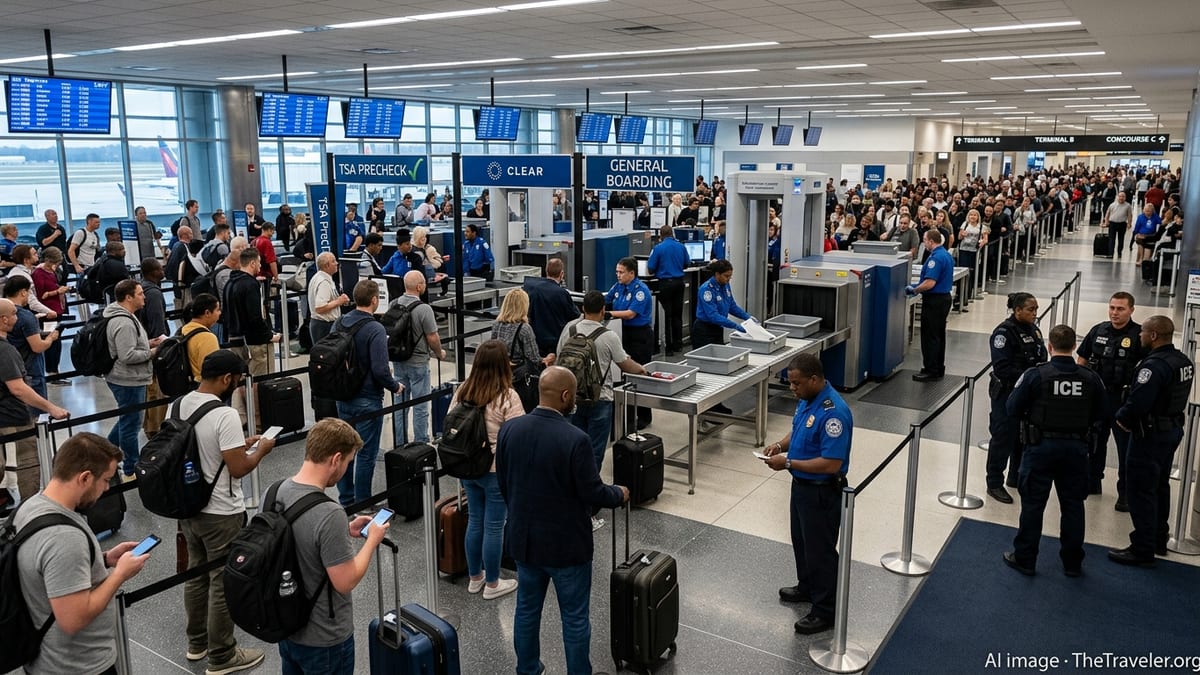
How ICE Ended Up at Airport Security Lanes
The decision to send ICE personnel into airports emerged after weeks of mounting disruption from a partial shutdown at the Department of Homeland Security, which has left tens of thousands of TSA officers working without pay and contributed to an uptick in sick calls and resignations. Publicly available information shows that the administration framed the move as a way to relieve pressure on exhausted TSA staff and shorten hours long lines that have plagued some of the nation’s busiest hubs.
According to published coverage, Trump had floated the idea of using ICE as a backstop for the TSA as security lines lengthened and as negotiations over DHS funding stalled. Over the past week, the administration signaled that immigration officers could be shifted from interior enforcement duties and border operations to airports if lawmakers did not approve a new spending bill. With no agreement in place, that contingency is now moving into practice.
Reports indicate that ICE officers are being deployed to a growing list of large and midsize airports, including facilities in Atlanta, New York, Chicago, Phoenix and Pittsburgh. Local aviation authorities and airport operators have been notified that the agents will appear in and around screening areas, although many operational details remain fluid.
Travel and aviation analysts note that the deployment is taking place at the start of the busy spring break travel period, when domestic leisure demand typically spikes and airport congestion intensifies, particularly at early morning and late afternoon banked departure waves.
What ICE Agents Are Actually Doing at Checkpoints
Despite social media claims that ICE is “replacing” TSA, available guidance suggests a more limited role. Public reporting indicates that immigration officers are not being assigned to operate X-ray scanners, conduct physical pat-downs, or interpret advanced imaging technology. Those core security functions remain restricted to certified TSA screeners who have undergone specialized training and recurrent testing.
Instead, ICE personnel are expected to focus on tasks around the periphery of the checkpoint, such as monitoring exit lanes, checking identification documents, and providing a visible law enforcement presence in crowded queuing areas. By taking over those duties, the administration argues, more TSA officers can be shifted back onto scanning stations and bag checks, where staffing shortfalls have been most acute.
Union leaders representing federal security workers, however, have raised concerns that inserting immigration enforcement agents into civilian screening spaces could blur lines between aviation security and immigration control. Statements from labor groups emphasize that ICE officers are not certified in the detection of explosives and other aviation-specific threats, warning that redirecting them from their usual caseload does not address the underlying manpower and pay issues within TSA.
Travelers arriving at airports today are likely to see ICE officers in tactical gear standing near security lines, positioned at choke points where passengers present boarding passes and IDs, or patrolling along the edges of public concourses. Some agents may also be stationed near secondary screening rooms and exit corridors that connect secure zones with public arrival halls.
Traveler Experience: Longer Lines, Higher Anxiety
For passengers, the immediate impact is uneven. At some airports, reports describe persistent delays, with travelers queueing for more than an hour during peak periods even as ICE agents circulate around the checkpoint. At others, where staffing levels have been shored up or flight schedules adjusted, wait times appear closer to typical late March levels but with a noticeably heavier enforcement presence.
Consumer advocates say the visual of armed immigration officers near security lanes is heightening anxiety among noncitizens, mixed-status families, and even U.S. passport holders who worry about intensified questioning. Civil rights organizations have warned that the combination of long lines, frayed tempers, and heavily armed personnel could escalate minor disputes into larger confrontations, particularly if communication around procedures is inconsistent.
Airport managers and airline customer-service teams are bracing for more missed flights and rebooking headaches as travelers adjust to the new normal. Several airports are advising passengers to arrive significantly earlier than usual, especially for early morning departures and transcontinental or international connections where security queues are already under strain.
Within terminals, the deployment is also reshaping the atmosphere that many travelers associate with the start of a holiday or business trip. Instead of the familiar blue-uniformed TSA presence at checkpoints, travelers at affected airports now navigate a more layered security landscape in which TSA screeners share space with dark-uniformed ICE officers and, in some cases, local police or airport security staff.
Legal, Civil Liberties and Operational Concerns
The decision to position immigration officers at TSA checkpoints is drawing scrutiny from legal scholars and civil liberties advocates, who argue that it raises new questions about how far immigration enforcement can reach into domestic travel. According to commentary in major national outlets, critics worry that the arrangement could turn routine domestic flights into de facto interior checkpoints where immigration status becomes intertwined with standard aviation screening.
Advocacy groups are closely watching whether ICE officers use their presence near checkpoints to initiate status checks or detain individuals flagged for unrelated immigration issues. While there is no clear public directive mandating such actions at airport security lanes, the mere possibility has sparked calls for Congress to seek more transparency from DHS about rules of engagement and data collection in these spaces.
Operational experts also question the long term wisdom of relying on ICE as a stopgap measure in lieu of stabilizing TSA’s own workforce through predictable pay and benefits. Published analyses point out that shifting agents away from their primary investigative and removal duties could delay ongoing immigration cases and reduce field capacity elsewhere, while doing little to resolve structural staffing gaps at airports.
As the shutdown drags on, the arrangement is likely to face court challenges, legislative hearings, and potential state and local pushback from jurisdictions that have already clashed with federal immigration authorities over previous enforcement surges in courthouses, neighborhoods, and transit systems.
What Travelers Should Know Before Heading to the Airport
For travelers flying in the United States in the coming days, the most immediate advice from airport and airline announcements is practical: plan for additional time and be prepared for a more complex security environment. Many airports are recommending that passengers arrive at least two hours early for domestic flights and three hours early for international itineraries, with extra buffer on peak travel days.
Experts in air travel stress that TSA procedures themselves remain largely unchanged. Standard rules about liquids, electronics, and prohibited items still apply, and passengers will continue to move through metal detectors or advanced imaging machines operated by TSA officers. The difference is that more law enforcement uniforms may be visible in and around the queues.
Passengers concerned about civil liberties implications are being encouraged by rights organizations to carefully document their experiences, including wait times and any interactions that appear to go beyond routine security screening. Several groups have published guidance explaining what travelers can and cannot be asked at security, and under what circumstances they must answer questions or consent to searches.
With the DHS funding impasse unresolved as of today, it is unclear how long ICE will remain embedded at TSA checkpoints. For now, travelers face an airport landscape in flux, where the familiar rhythms of check in, screening and boarding are unfolding under the watchful eyes of an additional federal agency whose primary mission lies outside the aviation world.