

More news on this day
Long and unpredictable security lines are rippling across major U.S. airports as an ongoing partial federal government shutdown strains Transportation Security Administration staffing, pushing Phoenix Sky Harbor into the ranks of hubs reporting mounting delays.
Get the latest news straight to your inbox!
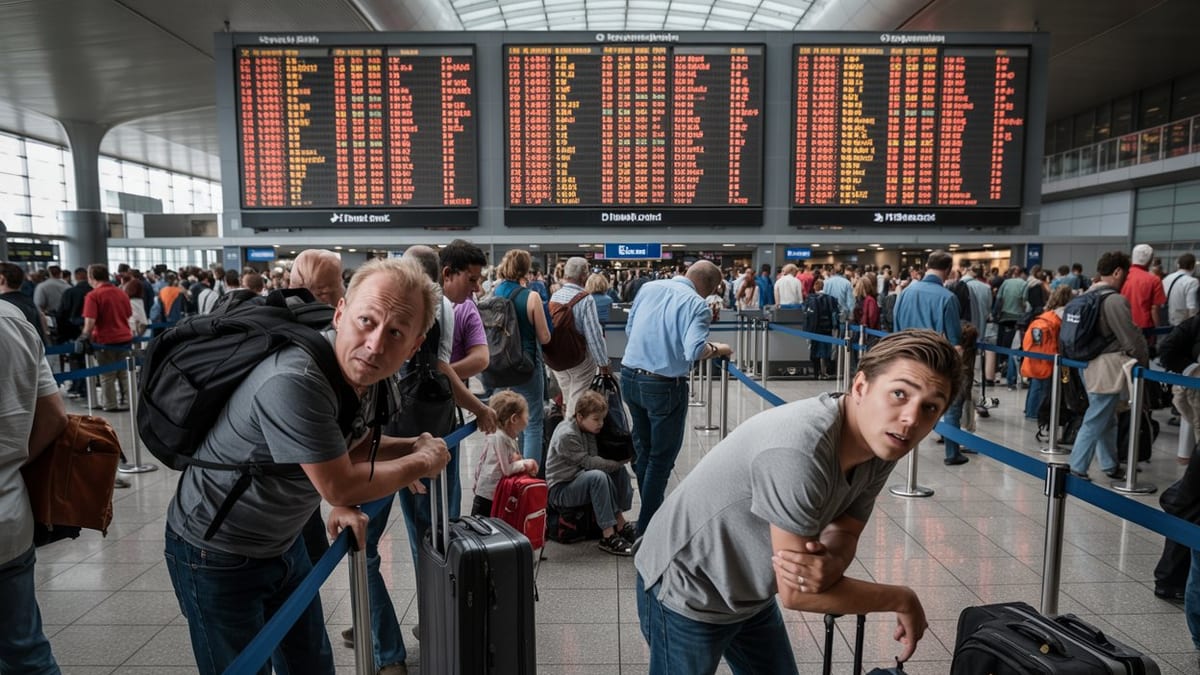
Image by Latest International / Global Travel News, Breaking World Travel News
Phoenix Sky Harbor Feels the Strain of a National TSA Crunch
Phoenix Sky Harbor International Airport has emerged as a prominent example of how the partial shutdown of the Department of Homeland Security is affecting everyday travel. Publicly available local coverage shows that TSA officers at Sky Harbor have been required to work without pay for weeks, as appropriations for the agency remain stalled. The result has been longer-than-normal lines at checkpoints during what is already one of the airport’s busiest seasons.
Reports from Phoenix-based outlets describe travelers arriving to find security queues stretching well beyond typical morning and evening peaks. While wait times have fluctuated from manageable periods of about 10 to 20 minutes to more acute backups, officials operating the airport have urged passengers to arrive significantly earlier than usual. The combination of heavier spring passenger volumes and unpaid federal staff has made day-to-day conditions difficult to forecast.
National and local analyses indicate that Phoenix is part of a broader group of airports where staffing shortages, higher sick calls and attrition among screeners are beginning to bite. As the shutdown drags on, policy experts warn that what began as sporadic slowdowns in late February has evolved into more frequent and disruptive queues by late March, with Sky Harbor now firmly in the mix of affected hubs.
Louis Armstrong New Orleans, LaGuardia and Chicago O’Hare See Hours-Long Lines
In the eastern half of the country, conditions at several large airports have been markedly worse. Coverage from national outlets points to Louis Armstrong New Orleans International Airport in Louisiana as one of the hardest-hit facilities, with TSA waits at times approaching two hours. The airport has issued multiple public alerts urging travelers to arrive even earlier than airline recommendations because of reduced screening capacity.
New York’s LaGuardia Airport has also reported persistent security backups tied to the shutdown, compounding separate operational challenges. Travel industry reporting notes that LaGuardia has seen lines extending well beyond the security hall during peak periods, especially in terminals hosting heavy domestic traffic. The congestion has coincided with broader flight disruptions around New York’s airspace, where weather and staffing problems have combined to delay or cancel hundreds of flights in a single day.
In the Midwest, Chicago O’Hare International Airport has likewise featured prominently in data tracking the worst delays. Recent coverage cites elevated TSA wait times alongside weather-related slowdowns, with passengers in some cases facing extended queues before reaching the checkpoint. Analysts say O’Hare’s role as a key national and international hub means even moderate slowdowns there can reverberate across the network, magnifying the impact of the shutdown-driven staffing crunch.
Washington Dulles, Atlanta and Houston Highlight Uneven Impacts
The picture is not uniform across the country, and Washington Dulles International Airport in Virginia illustrates that complexity. Local reporting around the capital region indicates that, despite the shutdown, wait times at Dulles have often remained within typical ranges, even as neighboring airports brace for potential spikes. Travel watchers attribute the relative stability to how staffing is allocated among Transportation Security Administration teams and the airport’s mix of international and domestic traffic.
Farther south, however, Hartsfield-Jackson Atlanta International Airport in Georgia and Houston’s major airports in Texas have faced more visible strains. Business and general-news outlets have highlighted scenes of lengthy security lines in Atlanta as spring break travel ramped up, noting that the nation’s busiest airport has little margin when federal staffing thins. In Houston, reports from local media describe hours-long waits at security checkpoints, with some travelers missing departures despite arriving well in advance.
The Department of Homeland Security’s broader shutdown has led to an unusual step at some of these facilities: the deployment of Immigration and Customs Enforcement personnel to help cover security duties. Coverage from multiple national outlets notes that ICE agents have been sent to airports in Atlanta, Houston and Phoenix, among others, in an attempt to stabilize checkpoint operations. Analysts describe the move as an emergency measure that underscores how fragile the system has become under prolonged funding uncertainty.
California, Florida and Other States Brace for Spring Travel Pressures
Airports in California and Florida, two of the country’s busiest travel markets, are also confronting the implications of the shutdown as spring and early summer demand builds. In California, major hubs such as Los Angeles International and San Francisco International have been preparing for potential surges in wait times, drawing on experience from earlier shutdowns that produced rolling disruptions. Travel advisories and consumer guidance published in recent days have urged passengers using these airports to monitor security conditions closely and allow additional time.
In Florida, where tourism-heavy cities depend on seamless air travel, large airports in Miami, Orlando and the Tampa Bay region have been flagged in national analyses as at risk for greater delays if staffing losses deepen. Industry observers point out that these facilities often see concentrated peak flows around cruise departures, theme-park schedules and holiday weekends, which can quickly expose any gaps in checkpoint staffing.
Reports from travel organizations and aviation experts emphasize that smaller and mid-sized facilities across states such as North Carolina, Colorado and Nevada are not immune. While their absolute passenger numbers are lower than those at the largest hubs, these airports typically have leaner federal staffing to begin with. As a result, even a modest uptick in sick calls or resignations among screeners can translate into unexpectedly long lines and missed flights for local travelers.
Shutdown Politics Turn TSA Lines Into a National Flashpoint
The protracted funding impasse has effectively turned airport security lines into one of the most visible symbols of the current federal shutdown. Background materials from policy groups and travel industry associations stress that TSA officers are designated as essential employees, which requires them to report to work even when paychecks are delayed. Over time, that has driven higher attrition, more unscheduled absences and a growing reliance on overtime and temporary measures to keep lanes open.
Recent congressional hearings and public statements from advocacy groups have focused on whether recurring shutdowns are eroding the resilience of the aviation security system. Analysts argue that each new funding lapse makes it harder to retain experienced screeners and plan staffing across hundreds of airports, leaving the system more vulnerable to sudden surges in demand. The current episode, they note, has arrived just as travel volumes are rebounding toward record levels.
For travelers passing through Phoenix Sky Harbor, Washington Dulles, Louis Armstrong New Orleans, Chicago O’Hare, LaGuardia and dozens of other airports nationwide, the policy debate translates into one immediate reality: uncertainty at the checkpoint. With federal funding still unresolved, publicly available forecasts suggest that uneven, sometimes severe TSA delays could remain a defining feature of U.S. air travel in the weeks ahead.