

More news on this day
Airport security lines across the United States are beginning to shorten as Transportation Security Administration officers prepare to receive long-awaited pay, yet reports indicate that delays could persist for weeks and Immigration and Customs Enforcement personnel may remain a visible presence at terminals even after paychecks resume.
Get the latest news straight to your inbox!
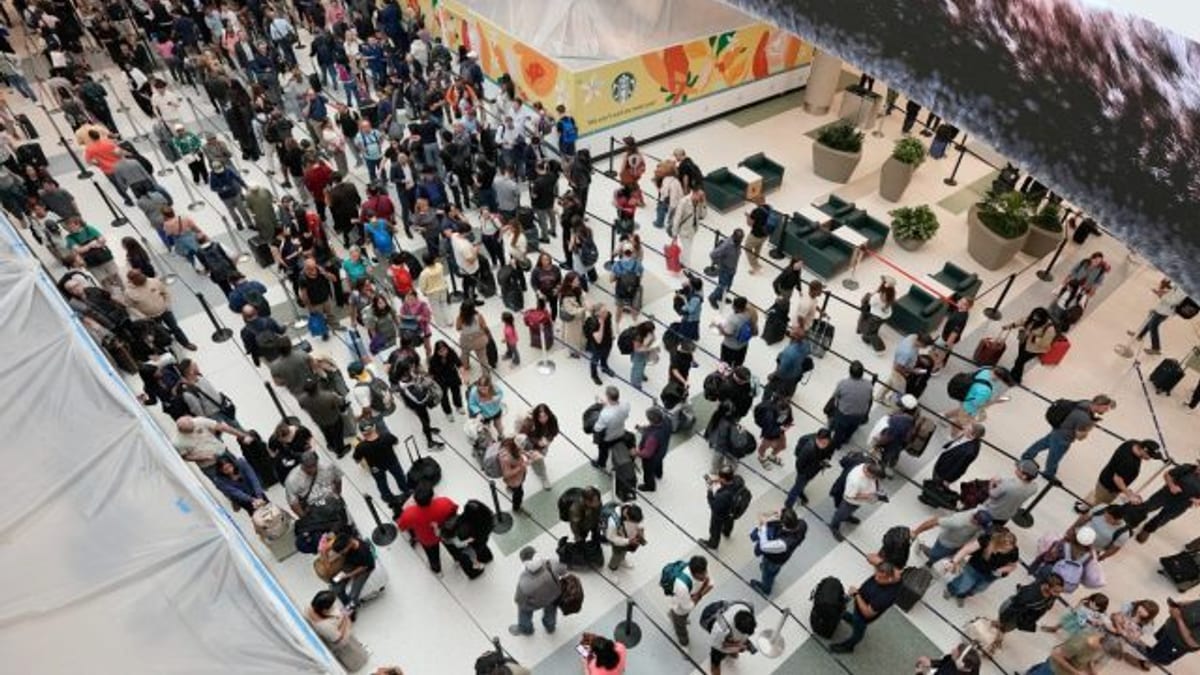
Image by KXAN Austin
Pay relief arrives, but shutdown standstill continues
Publicly available information shows that the partial shutdown of the Department of Homeland Security, which began on February 14, has grown into the longest such funding lapse in U.S. history. While most DHS operations remain without full appropriations, the White House has directed the department to use existing funds to resume pay for tens of thousands of TSA screeners who have been working without pay for weeks.
According to coverage from national outlets, the order is intended to ease intense pressure at major hubs where travelers have faced hourslong queues, missed flights and repeated cancellations. Security wait times at airports such as Atlanta and Orlando have started to stabilize compared with peak gridlock, yet data highlighted by travel industry publications indicates that average waits in some large markets are still well above seasonal norms.
Budget analyses and congressional summaries show that the directive to pay TSA staff does not resolve the underlying dispute in Congress over broader DHS funding, particularly for immigration enforcement. As a result, TSA salaries are being covered through temporary reallocations rather than a long-term appropriations deal, leaving open questions about how long the current arrangement can be sustained.
For travelers heading into the heart of the spring break period, the mixed picture means that some choke points are easing even as the system remains fragile. Airlines and airport operators are warning that any renewed spike in absenteeism or passenger volumes could quickly expose remaining weaknesses in security staffing.
Staffing shortages linger after weeks without pay
Labor data cited in recent reporting show that hundreds of TSA officers have resigned or transferred during the shutdown period, adding to an agency that already struggled with high turnover and low morale even before the current crisis. Union summaries describe agents falling behind on rent, child care and medical bills, while social media posts from current officers reference missed paychecks and mounting personal debt.
Even as back pay begins to flow, analysts note that the agency cannot instantly replace lost experience. New hires require vetting, training and certification before they can operate screening equipment on their own, and many of those processes are themselves affected by reduced administrative capacity during the funding lapse.
Airport performance snapshots compiled by travel and aviation outlets suggest that smaller regional airports with lower volumes are returning to more typical wait times, while several large hubs remain constrained by staffing gaps. In some cases, management has consolidated checkpoint lanes or redirected officers from lower demand periods to peak hours, a strategy that reduces flexibility when schedules change or irregular operations occur.
Policy experts point out that the temporary pay solution may slow the attrition but is unlikely to reverse it in the short term. After weeks of uncertainty, some officers have already committed to other jobs, and others may continue to pursue exits if they believe future shutdowns could again interrupt their pay.
ICE presence at terminals may become the “new normal”
In an effort to keep airports functioning during the worst of the TSA shortfall, the administration directed Immigration and Customs Enforcement to send agents to several major hubs to assist with security operations. According to televised interviews and published coverage of senior DHS figures, those agents have been tasked with visible duties such as guarding access points, monitoring lines and supporting crowd control so that certified TSA officers can remain focused on screening.
Recent national television interviews with the administration’s border and immigration leadership, summarized by multiple news outlets, suggest that the ICE deployment is likely to remain in place even as TSA pay resumes. Officials have publicly indicated that ICE personnel will continue their airport role until they assess that terminals are fully back to normal staffing and operational capacity, a threshold that may be difficult to define while the broader DHS shutdown continues.
Civil liberties advocates and some travel commentators have expressed concern about an expanded ICE presence in civilian travel spaces, pointing to past reporting that highlighted fears of racial profiling and mission creep when immigration enforcement overlaps with routine passenger screening. Opinion pieces in regional and campus media have questioned how long an emergency deployment can last before it effectively becomes a standing feature of airport security.
For travelers, the change can alter the atmosphere at checkpoints. Passengers are now more likely to encounter armed ICE officers alongside TSA uniforms while queuing for security, a visual reminder of how immigration enforcement and aviation screening have become intertwined during the funding crisis.
Congress deadlocked over DHS funding and enforcement priorities
Legislative tracking by national political outlets shows that the House and Senate remain deeply divided over a long-term spending bill for DHS. The central fault line involves funding levels and policy constraints for ICE and Customs and Border Protection, with one side pressing for robust enforcement resources and the other seeking changes in detention and deportation practices alongside any additional money.
The House recently advanced a funding package that ties new support for TSA and other DHS components to increased resources for immigration enforcement. Early reactions from Senate leaders, as described in widely circulated statements, indicate that the proposal is unlikely to move forward in its current form. Alternative frameworks have surfaced in the Senate, including narrower continuing resolutions, but none has yet secured the bipartisan support required to reach the president’s desk.
Budget experts quoted in public reports warn that this legislative stalemate leaves operational agencies navigating a patchwork of temporary fixes. While TSA pay has been prioritized through executive action, other segments of DHS remain subject to furloughs, delayed grants and curtailed planning, all of which can ripple into travel and border operations.
Without a comprehensive agreement, airports and airlines must continue planning around uncertainty. Schedules for adding new security staff, reopening closed lanes or upgrading screening technology can be difficult to finalize when future funding levels and conditions are unclear.
What travelers should expect in the weeks ahead
Travel industry analyses published in recent days suggest that security conditions will likely vary significantly by airport and time of day as the system adjusts to resumed pay, lingering vacancies and the ongoing involvement of ICE. Some large hubs that saw extreme waits during the worst of the shutdown have already reported measurable improvement, yet they are not fully back to pre-shutdown performance benchmarks.
Analysts indicate that if Congress swiftly agrees on DHS funding and TSA is able to stabilize its workforce, delays at many airports could ease further over the next several weeks. However, if the shutdown drags on or new political complications emerge, the current mix of partial pay relief, emergency deployments and staffing workarounds may have to continue well into the summer travel season.
Commentary from aviation consultants suggests that passengers will need to remain flexible while the situation evolves. While the immediate crisis of unpaid screeners is beginning to abate, the structural issues that produced the bottlenecks have not yet been fully resolved, and the continued presence of ICE agents at airports underscores how closely security operations are now tied to the broader debate over immigration and border policy.