

More news on this day
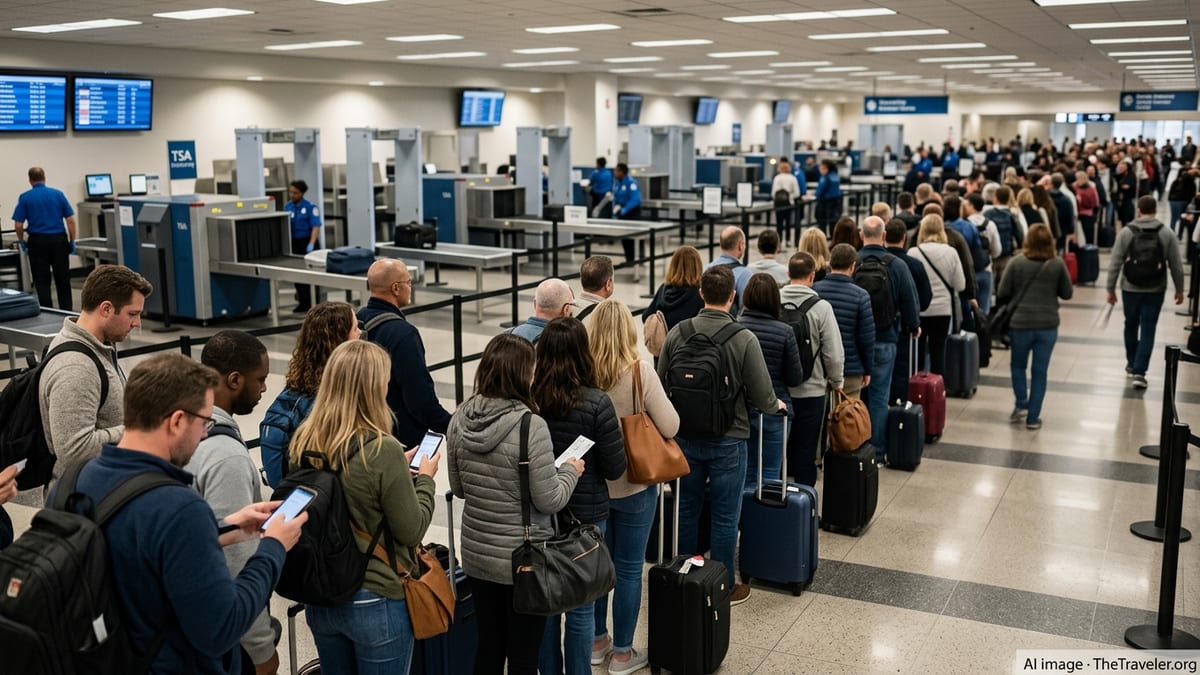
U.S. airport security lines are swelling again as spring break demand, a recent federal funding lapse and uneven staffing combine to push TSA wait times higher at many major hubs.
Get the latest news straight to your inbox!
Rising demand meets renewed operational strain
Transportation Security Administration checkpoint waits are lengthening just as the U.S. enters another busy travel period. Federal data shows airline passenger volumes in late 2025 running above pre‑pandemic levels, and large hubs reported some of their busiest years on record. More travelers are now funneling through airport security on peak mornings and evenings, creating longer queues even when operations run smoothly.
Recent coverage of the 2026 federal funding lapse highlights how fragile those operations can be. Reports indicate that unpaid or overextended officers, higher sick calls and the risk of temporary checkpoint closures have translated into multi‑hour waits at some airports, particularly at major hubs such as Houston and Atlanta. Even where lines are shorter, the perception of chaos has pushed many travelers to arrive extraordinarily early, which in turn can create new bottlenecks at certain times of day.
Some airports are still managing to keep typical waits within about half an hour outside peak surges, according to public updates and local reporting. However, the patchwork nature of staffing and passenger demand means conditions can change quickly. Travelers flying through different terminals in the same city can experience dramatically different delays, especially where one checkpoint is constrained by construction or temporary staffing shifts.
Industry groups note that the long‑term trajectory still points toward record passenger volumes in 2026, with more crowding at security unless screening capacity, technology and staffing increase in step. For travelers, that means preparing for longer baseline waits while learning to recognize the specific patterns and pressure points at the airports they use most.
Why wait‑time data is less reliable right now
Technology has made it easier to check security conditions before leaving for the airport, but recent developments have complicated the picture. The MyTSA mobile app, which aggregates wait‑time estimates and historical data, remains a widely used reference. Yet a recent funding interruption reduced active management of some government digital tools, and travelers have reported inconsistencies in posted wait times at several large airports.
Independent trackers that pull live checkpoint feeds from airport websites have emerged to fill some of the gaps. These tools rely on airport‑run systems that display conditions by terminal or checkpoint, offering another snapshot of current congestion. Local outlets have highlighted variations between these feeds and what travelers actually encounter, underscoring that all such tools are estimates rather than guarantees.
Airports themselves are adjusting how they present information. Some have temporarily suspended real‑time wait‑time dashboards when rapid staffing changes or surging demand made the numbers unreliable, while others now emphasize broader guidance such as expected busy periods instead of minute‑by‑minute predictions. For travelers, the practical takeaway is to treat digital wait‑time readings as one input in planning, not a firm promise.
Security planners and academic research alike point to the difficulty of forecasting how passenger behavior affects queues. When large numbers of travelers show up far earlier than recommended, security demand can spike at unexpected times, distorting historical patterns. That behavior, combined with funding and staffing uncertainty, helps explain why even sophisticated models are struggling to keep pace with conditions on the ground this spring.
TPG‑style strategies to beat the worst of the lines
Travel experts at outlets such as The Points Guy have long emphasized that preparation and timing can matter as much as the posted wait time. One consistent theme is to schedule flights outside the busiest bank of early‑morning departures when possible. Midday and late‑evening departures often see shorter security lines, especially at airports dominated by business travel that peaks between 6 a.m. and 9 a.m.
Enrollment in TSA PreCheck and, for international trips, Global Entry remains a core recommendation for frequent flyers. Published government figures show that PreCheck passengers typically clear security more quickly than those in standard lanes when dedicated lines are operating. Even during periods of strain, travelers with access to expedited screening often report more predictable experiences, though experts caution that PreCheck lines can also lengthen at the most crowded hubs.
Seasoned travelers also stress the value of choosing the right checkpoint. Many large airports maintain multiple screening points, and terminal maps or airport social feeds sometimes indicate which ones tend to be less congested. Walking a few extra minutes to an alternate checkpoint connected airside can sometimes save half an hour or more in line, a tactic frequently highlighted in travel‑advice columns.
Preparation before reaching the conveyor belt remains just as important. Packing with security in mind, wearing slip‑on shoes, avoiding unnecessary metal accessories and keeping electronics and small liquids easy to access can speed up each traveler’s time at the x‑ray machine. When multiplied across hundreds of passengers, those small efficiencies can help keep the overall line moving faster.
Planning your airport arrival in a shifting environment
Determining when to arrive at the airport is becoming more complex as wait times fluctuate. Traditional guidance of two hours before domestic flights and three hours before international departures is increasingly treated as a minimum starting point on peak days. Many airlines and airports now advise building in extra time when flying early in the morning, late in the afternoon or around major holidays and school breaks.
At the same time, some airports have urged local travelers not to arrive excessively early during stable periods, arguing that four‑ or five‑hour cushions can create unnecessary crowding at checkpoints and gate areas. Recent reporting from several U.S. hubs suggests that when large numbers of passengers show up well ahead of schedule in response to alarming headlines, it can actually worsen backups during certain windows.
Experts recommend a more tailored approach. Travelers are encouraged to factor in the specific airport’s recent performance, the day of week, the airline’s check‑in cutoffs and whether they have access to expedited screening. Using a combination of airline apps, airport social updates and tools such as MyTSA shortly before departure can help refine the arrival time, while still preserving a buffer for unexpected traffic or security surges.
Families, large groups and travelers unfamiliar with a particular airport generally benefit from even more conservative planning. Navigating unfamiliar terminals, checking bags, managing strollers or mobility aids and coordinating boarding passes can all add time before reaching the checkpoint, making an extra margin advisable when wait times are already elevated.
How travelers can adapt in the months ahead
With continued growth in air travel expected through 2026 and ongoing fiscal uncertainty affecting federal agencies, security lines are likely to remain a central stress point in the U.S. travel experience. Public documents outlining TSA’s budget plans reference efforts to add staff and expand advanced screening technology, but those improvements take time to deploy and may not keep pace with surging demand at every airport.
In the near term, travel publishers such as The Points Guy are emphasizing flexible itineraries and realistic expectations. Building in extra time, choosing less congested travel days where possible and being prepared for queues to stretch longer than advertised can reduce the risk of missed flights and make delays less disruptive.
Travelers can also pay closer attention to how their home airports communicate about security conditions. Many now share checkpoint opening times, renovation updates and guidance on the best entrances to use during construction or temporary closures. Keeping an eye on those notices in the days leading up to a trip can provide a more accurate picture than national averages or generalized advice.
Although individual travelers cannot resolve the structural causes of rising wait times, they can adjust their own habits to navigate the system more smoothly. In an era of record passenger volumes and strained federal budgets, combining reliable information with smart planning is becoming as essential to a successful trip as the ticket itself.