

More news on this day
TUI River Cruises has ordered two next‑generation, methanol‑ready river ships scheduled to enter service in 2028, a move that would expand its fleet to ten vessels and reinforce the operator’s focus on sustainable growth across Europe’s inland waterways.
Get the latest news straight to your inbox!
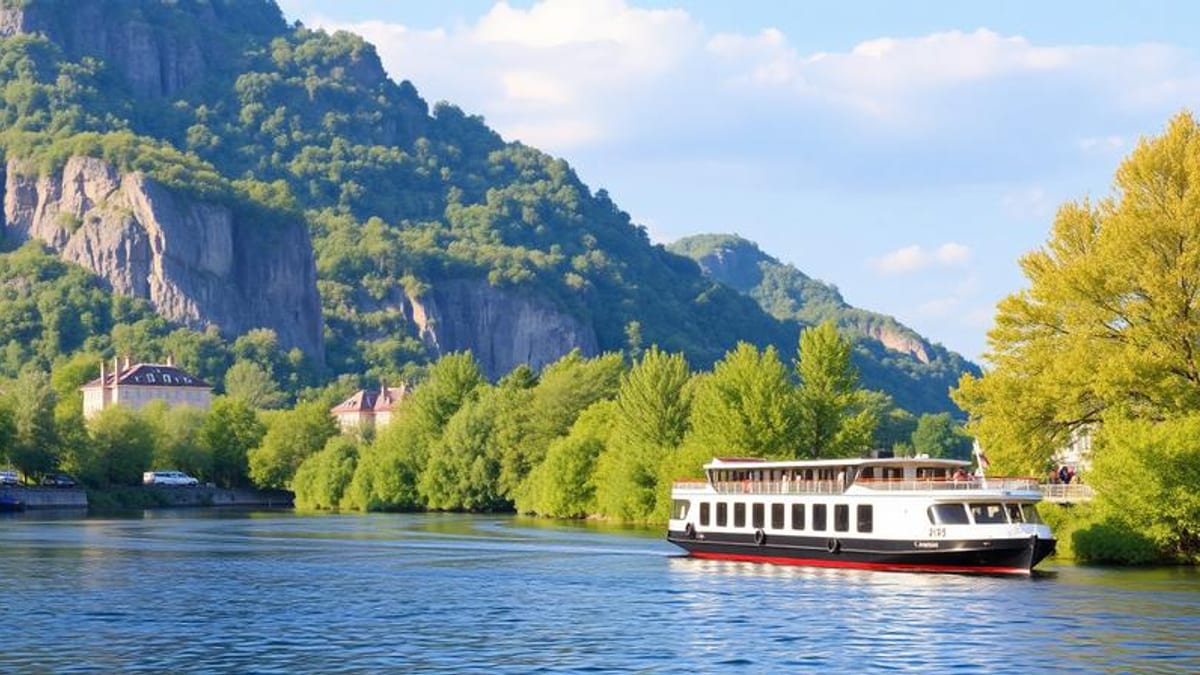
Image by International Cruise News: Latest Cruise Line & Cruise Ship News
New Orders Anchor Ambitious Fleet Expansion Plan
According to recent industry coverage, TUI River Cruises has signed contracts for two newbuild river vessels that are being designed with the foundations to operate on alternative fuels, particularly methanol. The agreement was reported alongside the christening of TUI Aria in Frankfurt, a ceremony that underlined the brand’s continuing investment in the river sector.
Publicly available information indicates that the two newly ordered ships are planned to debut in 2028. They follow the arrival of TUI Aria, which is being introduced as the sixth ship in the TUI River Cruises fleet, sailing the Rhine, Moselle and the Dutch and Belgian waterways. Company brochures show that further capacity is already in the pipeline with additional vessels such as TUI Luzia, a new‑build ship set to enter service in 2027, as the line incrementally broadens its European deployment.
Group factbooks and recent financial reports suggest that TUI’s broader cruise segment, which includes ocean brands TUI Cruises and Marella Cruises, has identified river cruising as a key growth area within its holiday portfolio. The order for two more river ships by 2028 positions TUI River Cruises to reach a ten‑ship fleet within the next few years, consolidating its status as a mid‑sized but fast‑growing player in Europe’s competitive river market.
The expansion also forms part of a wider newbuild program across TUI’s cruise brands, which have taken delivery of several ocean ships in recent years. While those larger vessels operate on the high seas, the river division is being used to diversify the cruise offering, target different customer segments and balance capacity across short‑haul European destinations.
Alternative Fuels and Design Features Target Lower Emissions
Details released through shipbuilding and cruise industry channels show that the two new TUI River Cruises vessels are being constructed as methanol‑ready units. This approach allows the ships to run initially on conventional fuels while having the structural and technical capability to switch to methanol or other low‑carbon options as they become commercially and infrastructurally viable along European rivers.
Industry analysis notes that methanol is attracting growing interest in both ocean and river cruising because it can reduce greenhouse‑gas emissions and particulate pollution when produced from renewable sources. By specifying methanol readiness at the design stage, TUI River Cruises is aligning its fleet planning with evolving European climate policies and port‑side environmental regulations that increasingly favor cleaner propulsion solutions.
Earlier additions to the fleet highlight the same sustainability trajectory. TUI Aria, for example, has been promoted with an emphasis on modern energy‑efficient systems and the inclusion of features such as an indoor pool that maximise guest comfort within a compact footprint. The forthcoming new‑build TUI Luzia has similarly been presented as part of a new generation of river ships with upgraded interiors and improved efficiency compared with earlier tonnage.
Shipbuilding commentary also points to a broader trend across the sector in which operators commission vessels that are “future‑proofed” for regulatory change. Shore‑power connectivity, battery‑ready configurations and hull forms optimised for low‑speed efficiency are increasingly common in European river ship designs. TUI River Cruises’ latest order fits this pattern, reflecting an expectation that ports will tighten emissions requirements further in the run‑up to and beyond 2030.
Rising Demand for Culturally Rich River Itineraries
Travel trade and financial reports indicate that consumer interest in river cruising has continued to strengthen since European travel fully reopened, with passengers drawn to culturally rich itineraries that combine city sightseeing, regional cuisine and scenic landscapes. Operators such as TUI River Cruises have sought to capture this demand by introducing themed itineraries along the Rhine, Moselle, Danube and other major waterways.
TUI River Cruises literature highlights itineraries that include Dutch and Belgian waterways, Christmas market sailings and, more recently, Nile River programs operated by the ship TUI Al Horeya from winter 2024. The expansion beyond core central European routes demonstrates an effort to broaden the product beyond traditional river corridors while using the same small‑ship format and adults‑focused onboard experience.
Market analyses describe river cruising as offering a different value proposition from large ocean ships, with typically fewer than 200 guests onboard, frequent port calls and direct access to historic city centers. The two new ships scheduled for 2028 are expected to add capacity on popular European routes where berth availability and seasonal demand have supported higher pricing and strong occupancy in recent years.
By moving toward a ten‑ship fleet, TUI River Cruises is positioning itself to offer a wider lattice of departures and embarkation points, which can help spread demand more evenly across the season. This is particularly pertinent as some European cities discuss caps on the number of visiting vessels, encouraging operators to diversify their embarkation ports and develop alternative itineraries.
Balancing Growth With European Regulatory Pressures
The decision to invest in new river ships comes amid a tightening regulatory environment across Europe, where several cities are implementing measures to manage visitor numbers and reduce environmental impacts from cruising. Public discussions and municipal plans in destinations along the Rhine and in the Netherlands highlight concerns about congestion, air quality and shoreline infrastructure pressure.
Industry observers note that river cruise operators are responding by adopting cleaner technologies, investing in shore‑power connections where available and adjusting itineraries to comply with local caps on ship calls. Methanol‑ready propulsion and improved energy efficiency, such as that planned for TUI River Cruises’ newbuilds, fit within this wider effort to align cruise tourism growth with municipal climate and liveability goals.
At the same time, regional tourism boards and economic studies continue to emphasise the contribution of river cruise visitors to local economies, particularly in smaller towns that benefit from direct spending on guided tours, dining and cultural attractions. Operators like TUI River Cruises are therefore seeking to demonstrate that additional capacity can be delivered in a way that supports local development objectives while keeping environmental footprints under closer control.
Analysts suggest that the next phase of fleet renewal across European river cruising will likely focus on both technological upgrades and more nuanced deployment strategies. For TUI River Cruises, the step toward a ten‑ship fleet by 2028 signals confidence that responsible growth remains achievable, provided that ships are designed for lower emissions and itineraries are planned in close alignment with evolving local rules.
Competitive Positioning in a Crowded River Market
The European river cruise landscape has become increasingly crowded as established brands add capacity and newcomers launch purpose‑built fleets. Recent announcements from various operators show new ships entering service on the Rhine, Danube and other iconic rivers through the late 2020s, intensifying competition for both guests and prime docking slots.
Within this context, TUI River Cruises is leveraging the wider TUI Group ecosystem, which includes tour operating, airlines and hotels, to feed demand into its river products. Company information emphasises the ability to package river cruises with flights and pre‑ or post‑cruise stays at TUI‑contracted hotels, creating bundled holidays that appeal to European and UK travellers seeking one‑stop planning.
Analysts view the two new methanol‑ready river ships as a strategic tool for differentiation in this crowded space. By combining sustainability credentials with a familiar tour‑operator brand and a curated adults‑only onboard concept, TUI River Cruises aims to carve out a recognisable niche between ultra‑luxury river operators and more traditional, volume‑driven lines.
As bookings for late‑decade river seasons gradually open, the line’s path to a ten‑ship fleet by 2028 positions it to scale up marketing, increase itinerary variety and secure stronger negotiating power with ports and suppliers. How effectively it balances that growth with sustainability commitments and regulatory expectations is likely to shape its standing in Europe’s river cruise hierarchy over the coming years.