

More news on this day
The UK’s Foreign, Commonwealth & Development Office has reiterated strict “no travel” advice for areas of Turkey close to the Syrian border in 2026, sharpening focus on security risks in the southeast while confirming that popular coastal and city destinations remain open to UK holidaymakers.
Get the latest news straight to your inbox!
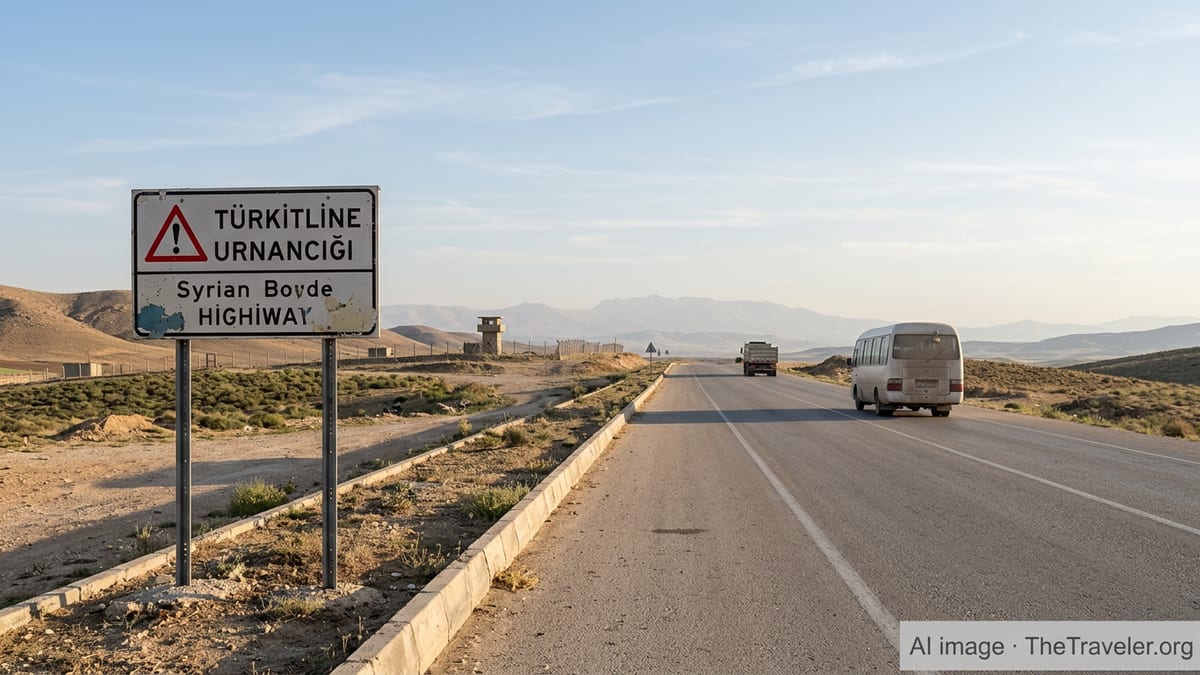
Renewed Focus on High-Risk Border Strip
Publicly available government advice highlights that the UK’s FCDO continues to classify parts of southeastern Turkey near Syria as off-limits due to conflict spillover, terrorism and instability across the border. The warning is framed as “no travel” guidance for areas within a defined buffer zone along the frontier, reflecting the security services’ long-standing concerns about the region.
Monitoring by specialist travel risk trackers points to a January 2026 update that reinforced a 10 kilometre exclusion area along the Syrian border, aligning with earlier printed advisories that already singled out southeastern border provinces as high risk. This approach is consistent with a broader pattern of Western travel advice, which treats frontline border districts differently from the rest of the country.
Reports indicate that the focus remains on rural and peripheral districts where security operations, smuggling routes and proximity to conflict zones increase the likelihood of violence or disruption. There is no suggestion in recent public guidance that mainstream tourist hubs on the Aegean and Mediterranean coasts fall under the “no travel” designation.
The renewed emphasis on the border strip comes at a time of wider regional tension linked to the war involving Iran and Israel, with the eastern Mediterranean closely watched for any spillover effects. Officials reshaping written advice appear to be seeking to separate targeted, risk-based restrictions from the broader picture of Turkey as a functioning mass-market holiday destination.
Which Provinces and Areas Are Affected
Published travel risk summaries and earlier formal advisories identify several southeastern provinces as subject to heightened restrictions, either in full or in part. Materials issued for travellers reference Hakkari and Sirnak as areas where travel is strongly discouraged, together with significant parts of border-facing provinces such as Sanliurfa, Gaziantep, Kilis and Hatay.
Within these provinces, the strictest guidance is applied to locations lying within roughly 10 kilometres of the Syrian frontier, where the risk profile is driven by instability on the other side of the border and an ongoing security presence. External analyses note that this buffer can cover segments of key roads, smaller towns and agricultural areas rather than major tourism centres.
Additional caution is advised for parts of the wider southeast, even outside the immediate strip, with references in publicly available documents to terrorism, sporadic attacks and military activity. These concerns are distinct from the safety picture in Istanbul, Cappadocia, the Turquoise Coast and other established tourism corridors, where the main risks highlighted relate to general crime, crowded places and possible targeted incidents rather than active conflict.
For travellers mapping out itineraries, the practical takeaway from the latest round of guidance is that overland trips into the deep southeast or attempts to approach the Syrian border are strongly discouraged in 2026, while flights and road journeys between core tourist regions elsewhere in Turkey continue to operate within a more familiar risk environment.
Alignment With Other Western Travel Advisories
Turkey’s border warnings sit within a wider international pattern. Comparative assessments compiled by independent travel intelligence platforms show that the United States, Canada and Australia all draw similarly strict lines around the Syrian and, in some cases, Iraqi frontiers, advising against travel within a set distance of the border while applying more moderate cautions to the rest of the country.
This broad consensus is reflected in cross-referenced mapping of “no go” areas, where Turkey’s far southeast appears alongside other border regions worldwide considered vulnerable to spillover from neighbouring conflicts. These maps typically echo the FCDO stance that the key dividing line in Turkey is not between the country as a whole and its neighbours, but between the border strip and the rest of Turkish territory.
The effect for UK tourists is that, despite elevated alert levels tied to regional tensions, Turkey is still treated in 2026 as a viable holiday destination so long as travellers stay clear of proscribed zones. Recent coverage by British media and travel outlets underscores this distinction, noting that package holidays to the main resorts remain on sale and that flights continue to operate, even as the border advisory is restated.
Industry observers suggest that this alignment among Western governments helps insurers, airlines and tour operators apply consistent rules to itineraries, with the Syrian border area viewed as an exception to otherwise manageable risks across most of Turkey.
Insurance, Bookings and What “No Travel” Means in Practice
The practical impact of “no travel” wording is felt most directly in the fine print of travel insurance and package holiday contracts. Consumer guidance and specialist travel law commentary indicate that if a traveller deliberately enters a region that their government has advised against visiting, insurers may refuse to cover claims arising from incidents there, including medical costs, evacuation or personal property losses.
In contrast, if the FCDO were to escalate its advice to cover wider swathes of Turkey, tour operators selling package holidays could be obliged to offer refunds or alternative destinations. At present, publicly available reporting makes clear that this threshold has not been met for the country overall. As a result, holidaymakers cannot generally cancel trips to mainstream Turkish resorts without penalty solely on the basis of anxiety about the wider region.
Travel analysts note that booking patterns for summer 2026 continue to show strong demand for Turkish beach and city breaks, supported by competitive pricing and a relatively liberal visa regime for UK visitors. However, niche itineraries that previously included overland journeys into the southeast or stops near the Syrian border are expected to remain limited while the high-risk designation is in place.
Prospective visitors are being encouraged by consumer advocates to check that their policies clearly state what happens if official advice changes after booking, and to confirm that any planned internal flights or long-distance bus routes do not transit through areas explicitly covered by “no travel” wording.
How UK Travellers Can Navigate Turkey Safely in 2026
For most UK tourists, the current landscape in 2026 still supports trips to Istanbul, the Aegean and Mediterranean coasts, Cappadocia and other interior highlights, provided common-sense precautions are observed. Public information from both government and independent travel organisations stresses the importance of avoiding political demonstrations, being aware of crowded locations, and monitoring local news during periods of heightened regional tension.
Travel experts advise allowing extra flexibility in itineraries in case of airspace adjustments or schedule changes linked to the wider Middle East conflict. Airlines have previously rerouted flights to steer clear of specific areas, which can lengthen journey times even when services remain operational.
For visitors considering more adventurous routes or cultural trips to the southeast beyond well-trodden hubs, the 2026 advisories serve as a clear signal to reconsider or heavily modify plans. Overland crossings into or out of Syria remain tightly constrained, and published accounts from travellers in recent years describe complex permit systems, closures and long delays at many land borders.
Overall, the FCDO’s reinforced message for 2026 separates Turkey’s high-risk border strip, where UK nationals are urged not to travel at all, from the country’s main tourism heartlands, which remain accessible but require heightened awareness and up-to-date preparation.