

More news on this day
Turkish Airlines is sharpening its focus on Nigeria with fresh strategic investments, expanded passenger and cargo capacity, and new business partnerships, positioning the West African giant as a key hub in its wider Africa growth plan while opening fresh avenues for tourism, trade, and entrepreneurship.
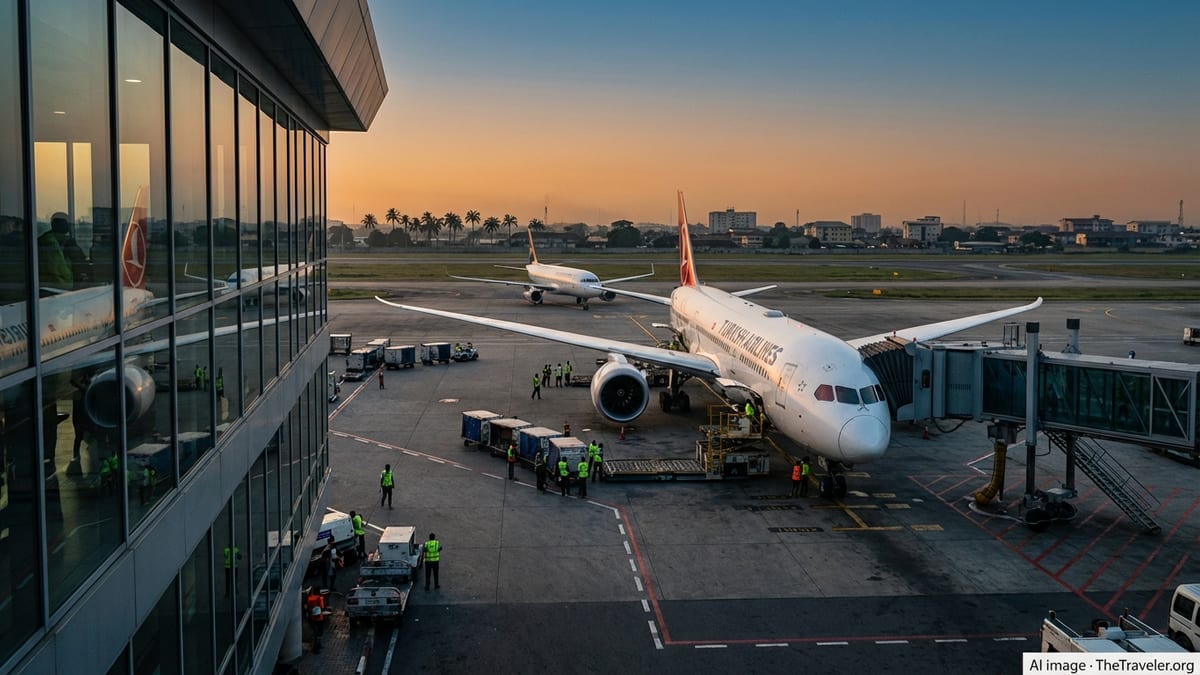
New Routes Cement Nigeria’s Role in Turkish Airlines’ Africa Network
As competition for Africa’s fast-growing aviation market intensifies, Turkish Airlines is steadily reinforcing its Nigerian footprint through additional frequencies, upgraded capacity, and a clearer long-term growth narrative. The carrier, which already serves Lagos and Abuja directly from Istanbul and links Port Harcourt through regional connections, is using Nigeria as a cornerstone of its African strategy, banking on the country’s large population, diversified economy, and expanding diaspora travel demand.
Recent schedule filings and alliance data indicate sustained daily links between Abuja and Istanbul and robust operations to Lagos, as Turkish Airlines continues to rebuild and expand post-pandemic capacity across West and Central Africa. Analysts say that with Nigeria accounting for a significant share of its West African traffic, the carrier’s increased focus on schedule reliability, onward connectivity and tailored fares is a logical progression aimed at locking in market share while new competitors enter the space.
The airline’s Abuja station, which marked its 10th year of operations in 2025, has become particularly symbolic of this deepening commitment. Executives have used anniversary events in the capital to signal that Nigeria is no longer a peripheral outstation, but a market where Turkish Airlines intends to invest in more seats, better ground services and targeted commercial campaigns.
Industry observers expect further tweaks to the network, including seasonal capacity increases and additional cargo frequencies, as the airline’s aggressive global fleet expansion begins to translate into more wide-body aircraft available for high-potential African routes such as Lagos and Abuja.
Tourism Flows Grow on the Back of Istanbul’s Global Hub
Turkish Airlines’ strengthened Nigeria presence is also being calibrated to support tourism flows in both directions, leveraging Istanbul’s rise as one of the world’s most connected hubs. With the airline now serving more destinations than any other global carrier and Istanbul Airport regularly ranking among the most internationally connected, Nigerian travelers are gaining streamlined one-stop access to cities across Europe, Asia, the Middle East and the Americas.
For Nigerian leisure passengers, this means more competitive options to popular destinations such as London, Paris, Dubai, Jeddah and key Asian cities, routed through Istanbul with synchronized connections and simplified baggage handling. Travel agents in Lagos and Abuja report that Turkish Airlines has grown from a niche long-haul option into a mainstream choice for middle-class families, students and religious travelers seeking affordable but full-service itineraries.
The traffic is not one-way. Turkish Airlines and Turkish tourism authorities have been promoting Nigeria as an emerging destination for adventure, culture and business travel from Türkiye and other parts of Europe and Asia. Lagos, Abuja and coastal cities are being profiled in trade fairs, roadshows and airline marketing campaigns as gateways to West African music, fashion, cuisine and investment opportunities, supported by improved flight connectivity and growing hotel capacity.
Travel industry insiders say this mutual tourism push is starting to show results in higher inbound visitor numbers, especially among niche segments such as conference delegates, diaspora returnees and small group tours seeking new African destinations beyond the traditional safari circuits of East and Southern Africa.
Trade and Cargo Links Underpin Broader Economic Ties
Beyond tourism, Turkish Airlines’ Nigeria strategy is tightly woven into a wider web of trade and investment relations between Ankara and Abuja. Bilateral trade has grown over the past decade, helped by Turkey’s rising imports of Nigerian agricultural products and solid exports of manufactured goods, construction materials and household items, much of which moves via air cargo on Turkish Airlines’ freighters and bellyhold capacity.
The airline already operates dedicated cargo flights into major Nigerian gateways, complementing its passenger services and allowing exporters to link quickly into markets in Europe, the Middle East and Asia. For high-value, time-sensitive shipments such as pharmaceuticals, electronics, textiles and perishables, the Istanbul hub offers overnight or next-day connections that can be critical for Nigerian suppliers competing in global value chains.
Recent agreements between Nigerian business associations and Turkish partners have further underlined the central role of aviation connectivity in boosting trade. Memoranda of understanding signed by chambers of commerce and trade facilitation platforms have explicitly cited Turkish Airlines as a preferred carrier for delegations, trade missions and cargo movements, underscoring how route expansion is increasingly seen as an economic enabler rather than a purely transport decision.
Economists note that as Nigeria pushes to diversify exports beyond oil, efficient air links to major markets can give small and medium-sized exporters an edge, particularly in sectors such as fashion, agribusiness, processed foods and creative goods that rely on speed to market and reliable logistics.
Supporting Nigeria’s Entrepreneurs and Business Travelers
Turkish Airlines’ expanding Nigerian operations are also being tailored to the needs of entrepreneurs, start-ups and corporate travelers, a segment that has rebounded strongly as global conferences, trade fairs and cross-border dealmaking return at scale. With daily flights linking Lagos and Abuja to Istanbul and beyond, Nigerian business passengers gain flexible schedules that align with banking hours in Europe and the Middle East, as well as early-morning arrivals that allow same-day meetings in many cities.
Through partnerships with business associations and trade promotion agencies, the airline has been extending discounted fares, group travel solutions and customized itineraries for delegations attending exhibitions in Istanbul and other global hubs. These initiatives lower barriers to international exposure for Nigerian entrepreneurs, making it easier for them to pitch products, secure distributors and build investor relations in markets that previously required multiple connections or higher-cost routings.
Industry sources say the carrier has also been investing in soft infrastructure, including dedicated corporate sales teams, improved lounge access for frequent flyers and streamlined booking tools that integrate with travel management platforms used by Nigerian companies. This business-focused approach has helped Turkish Airlines secure a share of corporate contracts once dominated by European and Gulf carriers.
For Nigeria’s burgeoning tech, fintech and creative industries, the ability to reach key innovation hubs such as London, Berlin, Dubai, Singapore and San Francisco through a single, reliable gateway in Istanbul is seen as a competitive asset. Founders and investors are increasingly building Turkish Airlines into their travel plans as they seek to scale Nigerian ventures across multiple continents.
Strategic Investments Backed by Massive Fleet Expansion
The carrier’s Nigeria ambitions are being underwritten by one of the most significant fleet expansion plans in global aviation. Turkish Airlines has placed large orders for new-generation narrow-body and wide-body aircraft, positioning itself to add capacity across its network over the rest of the decade. Executives have repeatedly highlighted Africa as a core growth region for deploying this additional lift, with Nigeria at the center of that map.
New aircraft bring cost and comfort advantages that can directly influence the Nigerian market. More fuel-efficient jets help the airline keep fares competitive despite volatile fuel prices and currency fluctuations, while upgraded cabins, inflight entertainment and connectivity address rising expectations among Nigerian travelers accustomed to global standards. As the fleet grows, the airline will have greater flexibility to match aircraft types and frequencies to Nigerian demand, including potential seasonal boosts during religious pilgrimage periods, festive seasons and major trade events.
Infrastructure investments at Istanbul Airport complement these fleet moves. Expanded terminal capacity, additional gates and improved transfer processes are designed to shorten connection times and enhance the experience for passengers from Lagos, Abuja and other African points. Aviation analysts say this combination of hardware and network depth is central to Turkish Airlines’ strategy of positioning Istanbul as a preferred transfer point between Africa and the rest of the world.
For Nigerian authorities, the carrier’s long-term investment trajectory offers reassurance that connectivity improvements are not a short-lived response to a single season’s demand, but part of a decade-scale plan that can be factored into national tourism, logistics and investment strategies.
Partnerships With Nigerian Institutions and the Wider Ecosystem
As it deepens its Nigerian footprint, Turkish Airlines is moving beyond traditional airline marketing into more collaborative partnerships with local institutions. Engagements with chambers of commerce, export promotion councils and sector-specific associations have produced joint programs aimed at encouraging Nigerian participation in trade fairs, business forums and cultural events in Türkiye and other markets across the carrier’s network.
These partnerships often include co-branded roadshows, information sessions on export opportunities, and support for delegations traveling to major expos. By positioning itself as a logistical partner for trade and investment, Turkish Airlines strengthens its commercial pipeline while giving Nigerian businesses a familiar and recurring travel solution for their international outreach.
The airline has also increased its profile in Nigeria’s education and cultural sectors. Sponsorship of academic exchanges, scholarship schemes promoted in cooperation with Turkish institutions, and support for cultural festivals featuring Turkish and Nigerian artists have helped to embed the carrier within broader people-to-people ties between the two countries. These initiatives, while modest in cost relative to aircraft orders, are seen as powerful brand builders that can influence travel preferences over the long term.
In parallel, cooperation with Nigerian tourism boards and private-sector destination marketers is broadening the narrative around both markets. Campaigns emphasize multi-stop itineraries where travelers can experience Istanbul’s heritage and shopping scenes alongside Nigerian cultural attractions, coastal experiences and emerging conference venues, all tied together by a single airline ticket.
Opportunities and Challenges in a Competitive Market
Despite the clear opportunities, Turkish Airlines faces a complex operating environment in Nigeria. Exchange-rate volatility, regulatory uncertainty, and wider macroeconomic pressures can affect demand and profitability on international routes. The airline must also contend with strong competition from Gulf carriers, European legacy airlines and an expanding set of African operators that are all targeting Nigeria’s sizeable travel base.
Industry analysts note that capacity decisions into Nigeria require careful calibration to avoid oversupply and fare erosion, particularly during off-peak seasons. Airlines operating in the market have occasionally struggled with blocked funds and regulatory delays, issues that Turkish Airlines will need to navigate through sustained engagement with Nigerian authorities and flexible commercial strategies.
Security concerns and infrastructure constraints at some Nigerian airports can also pose operational challenges, from airspace management to ground-handling capacity. Turkish Airlines has responded by emphasizing operational safety, staff training and close coordination with airport operators to maintain on-time performance and reliability, key factors for both tourists and business travelers choosing routes.
Yet the long-term fundamentals remain compelling. Nigeria’s population is projected to keep growing rapidly, urban middle classes are expanding, and digitalization is making it easier for travelers to compare fares and book international trips. In this context, Turkish Airlines’ early and sustained investments in Nigerian connectivity could yield durable advantages, provided it continues to adapt to market realities and regulatory expectations.
A New Phase in Nigeria–Turkey Connectivity
As Turkish Airlines scales up its presence across Nigeria’s major gateways, aviation specialists see the relationship between airline and country entering a new phase. What began as a handful of weekly services has evolved into a structured, multi-layered commitment encompassing passenger travel, cargo, tourism promotion, trade facilitation and entrepreneurship support.
For Nigerian travelers, the practical effects are already visible in more frequent flights, expanded onward choices and growing familiarity with Istanbul as a stopover city. For businesses, the airline’s network offers a tangible route to new markets and investment partners, supported by institutional collaborations that reduce the friction of going global.
For policymakers and planners, Turkish Airlines’ evolving strategy underscores the importance of aviation as infrastructure for economic diversification. Each additional flight between Istanbul and Nigerian cities represents not only more seats but also more opportunities for ideas, capital and culture to move in both directions.
With fleet expansion under way and Africa remaining central to its global ambitions, Turkish Airlines appears set to keep investing in Nigeria’s skies. How effectively both sides harness that connectivity could shape not just travel choices, but the broader trajectory of tourism, trade and entrepreneurial growth between West Africa and Türkiye in the years ahead.