

More news on this day
A recent update to U.S. health guidance has placed an unexpected focus on Finland, adding fresh disease-related cautions to a Nordic country widely viewed by American travelers as safe, stable and low risk.
Get the latest news straight to your inbox!
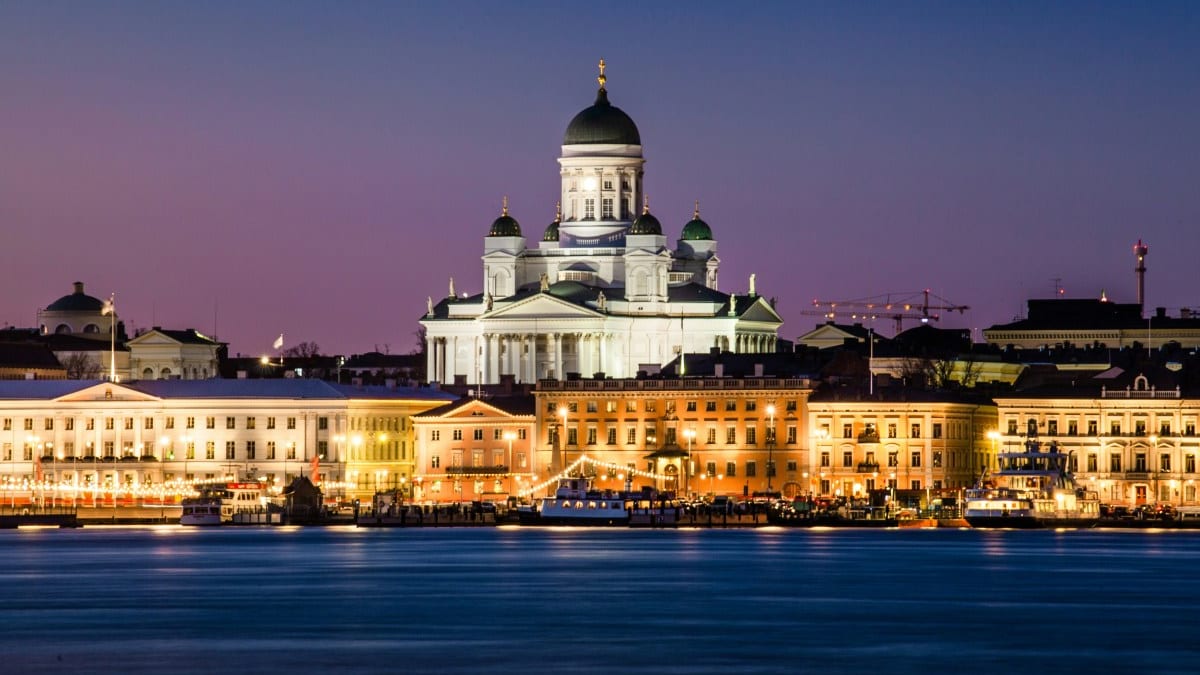
Image by Yahoo Finance
A Health-Focused Twist in Finland Travel Advice
Finland has traditionally appeared near the top of global safety rankings, and U.S. State Department information currently characterizes the country as a low-risk destination where travelers are advised to exercise normal precautions. Against that backdrop, a new wave of health-focused alerts mentioning Finland has drawn unusual attention among frequent travelers monitoring official U.S. guidance.
Recent public health communications highlight Finland among a group of countries where Americans are being urged to review vaccination status and take extra disease-prevention steps before departure. Reports indicate that Finland appears alongside other popular European destinations in updated notices tied to concerns about poliovirus circulation and related surveillance measures across parts of Europe.
The core security assessment for Finland has not shifted into higher-risk territory, and publicly available government documents still reference a baseline advisory level consistent with routine European travel. What has changed is the overlay of health-oriented language that may sound surprising to travelers used to thinking of Finland primarily in terms of saunas, northern lights and orderly city streets.
How Finland Ended Up on a Disease Watch List
Publicly available coverage of recent health alerts shows that U.S. officials and international health bodies have broadened their attention to poliovirus and similar threats, citing detections, surveillance gaps or transmission risks in a range of countries. Finland is included on several of these lists, even though it continues to be viewed as having robust healthcare and strong public health capacity.
According to international health reporting, the inclusion of countries like Finland often reflects surveillance data or regional risk assessments rather than large local outbreaks. In practice, that can mean a nation with very few active cases still appears in a travel-related notice because it is part of a wider region where sporadic detections, importations or vaccination coverage concerns have been documented.
In Finland’s case, experts referenced in news coverage emphasize that the country maintains high general vaccination rates and modern medical infrastructure. The U.S. recommendation for travelers, however, is shaped by a preference for caution whenever poliovirus is detected or monitored within a broad geographic zone, especially for unvaccinated or under-vaccinated visitors.
This blend of regional risk mapping and conservative health guidance helps explain why a country widely regarded as orderly and secure can simultaneously feature in a disease-focused travel advisory. The result is a message that sounds jarring at first glance, even if it does not reflect a dramatic deterioration in day-to-day conditions on the ground in Finland.
What the “Strange” Warning Actually Means for Travelers
For most U.S. visitors, the practical implications of the new language are far less dramatic than the headline might suggest. The emerging guidance centers on standard health precautions rather than sweeping restrictions, and there is no indication in public documents that Americans are being urged to avoid Finland outright.
The key recommendation highlighted in media summaries is for travelers to ensure that routine immunizations, including polio vaccination, are up to date before traveling to any of the listed countries, Finland among them. For some adults, that may translate into consulting a medical professional about booster doses, especially if they have underlying health conditions or plan extended stays.
Travelers are also encouraged, through publicly available health bulletins, to practice basic hygiene measures such as careful handwashing and safe food and water habits. These steps align with longstanding advice for international travel and are not specific to Finland, but the explicit inclusion of the country in disease-oriented messaging has made the guidance more visible than in previous years.
In short, the “strange” aspect of the warning lies more in perception than in substance. A health-focused notice applied to a famously safe Nordic destination stands out, even though the underlying advice resembles routine travel-clinic checklists that many international travelers already follow.
Balancing Health Caution With Finland’s Strong Safety Record
Finland’s broader profile as a destination remains largely unchanged in recent governmental and independent assessments. Travel-focused reports continue to describe low crime rates, efficient emergency services and a high degree of social stability. Tourism research commissioned in Finland notes that the primary obstacles for many American travelers relate to distance, cost and limited awareness, rather than safety.
At the same time, regional news coverage highlights ongoing geopolitical and border-security issues in Northern Europe, including Finland’s closure of its land border with Russia in response to migration concerns and its expanded role within NATO. These developments contribute to a more complex risk environment across the region, even if they have not translated into significant day-to-day disruptions for most visitors.
Health-related advisories now sit alongside these political and security narratives, creating a layered picture of risk that can be confusing for travelers trying to interpret short official notices. For Finland, the juxtaposition of high general safety with more cautious health language feeds the perception that the United States has singled out the country in a way that feels inconsistent with its overall reputation.
Travel analysts quoted in European and U.S. media point out that this tension is increasingly common. Global health bodies and national governments are under pressure to respond quickly to shifting data, which can result in conservative lists and categorizations that sometimes clash with a destination’s image and past track record.
How U.S. Travelers Can Interpret the New Signals
For American travelers planning trips to Helsinki, Lapland or Finland’s lakes region, the evolving guidance suggests a recalibration of planning habits rather than a reason to scrap itineraries. Publicly available U.S. materials still frame Finland as a country where normal precautions are appropriate, while health communications add a layer of disease-specific vigilance.
Travel specialists often advise that prospective visitors treat such notices as prompts to gather information rather than as final verdicts on risk. In practical terms, that can mean checking the current advisory level on official U.S. platforms, reviewing any Centers for Disease Control and Prevention recommendations and consulting a medical professional about vaccines well ahead of departure.
Given Finland’s sophisticated healthcare system and emphasis on public welfare, travelers encountering minor health issues on the ground typically have access to high-quality care. The main goal of the current U.S. messaging is to reduce the likelihood of preventable illness among visitors who may not have thought about polio or related concerns in the context of a European vacation.
As global health alerts become more granular and politically sensitive, countries like Finland may increasingly find themselves appearing in notices that feel out of step with their public image. For travelers, the challenge is to parse these signals carefully, recognizing that an unusual-sounding warning does not necessarily mean a destination has become significantly more dangerous, but that it does warrant a bit more preparation before boarding the plane.