

More news on this day
The United States has dramatically escalated its warnings for travelers in the Middle East, urging Americans to depart Qatar and a growing list of regional hubs as missile attacks, shuttered airspace and mounting security threats trigger massive disruption to air travel and tourism across the Gulf.
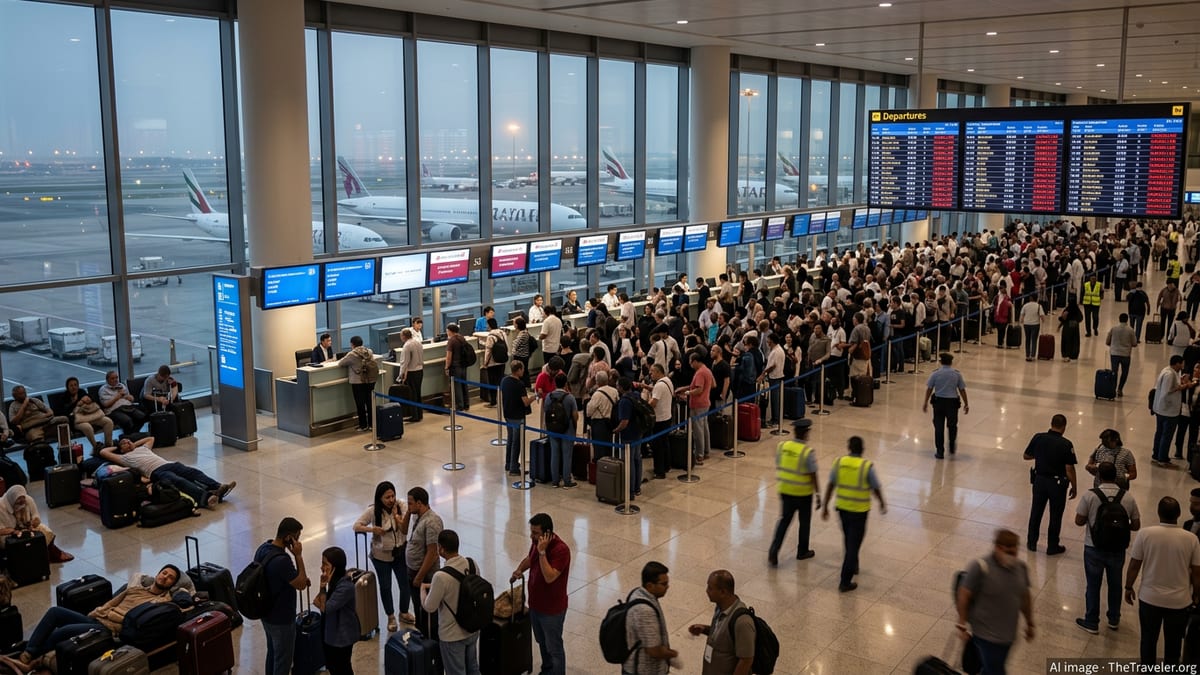
Qatar Added as U.S. Expands High-Risk Advisory List
The State Department this week widened its sweeping travel alert for the Middle East, formally adding Qatar to a roster of countries where Americans are being urged to leave as soon as commercial options allow. The updated advisory comes as the conflict between the United States, Israel and Iran spills across borders, drawing Gulf states deeper into the crisis.
Officials now caution that serious safety risks exist for U.S. citizens in Bahrain, Egypt, Iran, Iraq, Israel, the West Bank and Gaza, Jordan, Kuwait, Lebanon, Oman, Qatar, Saudi Arabia, Syria, the United Arab Emirates and Yemen. The unprecedented cluster warning effectively places much of the region under a single umbrella of elevated danger, reflecting the pace and reach of Iranian retaliatory strikes.
As part of the advisory, Americans in these countries are being told to depart immediately using commercial flights or other available means. Washington has also signaled that charter flights and limited assisted departures may be arranged from select hubs where commercial traffic remains possible, though capacity is constrained and conditions on the ground are volatile.
The rapid expansion of the advisory list underscores how quickly Qatar and its neighbors have moved from transit gateways to frontline states in a widening conflict. For travelers, that shift has transformed what were once some of the world’s most reliable long-haul connections into high-risk corridors subject to sudden shutdowns.
Airport Gridlock and Flight Cancellations Spread Across the Gulf
The surge in security alerts has coincided with unprecedented shocks to aviation networks in the Gulf. Airspace closures and rolling restrictions have affected the United Arab Emirates, Qatar, Saudi Arabia, Oman, Jordan, Bahrain and beyond, creating bottlenecks at key international hubs and grounding thousands of passengers.
Following U.S. and Israeli strikes on Iran on February 28, multiple countries moved to shut or heavily restrict their airspace. Bahrain, Qatar and the UAE have seen near-total suspensions of regular commercial traffic at times, leaving aircraft diverted mid-route, re-routed around the Gulf, or stranded on the ground as airlines scramble to rework schedules.
Major carriers based in the region, including those operating out of Doha, Dubai, Abu Dhabi, Muscat and Riyadh, have cancelled or suspended numerous routes, particularly to neighboring Gulf countries and conflict-adjacent airspace. Some airlines are operating ad hoc evacuation or repatriation flights, but these services are limited, frequently overbooked and subject to last-minute changes.
For passengers, the result has been gridlock inside airports that typically pride themselves on smooth, high-capacity transit. Terminals that serve as global connectors between Asia, Europe and the Americas are now filled with stranded travelers waiting for updates, while transit hotels and nearby accommodations report being at or near capacity.
Missile Threats, Intercepts and Growing Security Fears
At the heart of the new alerts are escalating security concerns tied to missile and drone activity in and around the Gulf. Iranian retaliatory strikes and attempted strikes have targeted or brushed close to critical infrastructure in Qatar, the UAE, Saudi Arabia, Oman, Jordan and Bahrain, including airports, ports and energy facilities.
In Qatar, officials have reported that intercepts of incoming missiles near strategic sites, including areas around Hamad International Airport and U.S. military facilities, have rattled residents and disrupted air traffic. Similar incidents in the UAE and Bahrain have sent debris into civilian areas, while strikes in Saudi Arabia and Oman have hit energy and maritime assets, underscoring the breadth of targets at risk.
Regional governments stress that their air defense systems are active and that many incoming projectiles have been intercepted before reaching their intended targets. Nevertheless, the threat envelope now includes unplanned debris falls, airspace closures triggered with little notice, and heightened military presence in and around major cities and tourist areas.
For foreign travelers, the concern is not only the direct risk from attacks but also the rapid deterioration of local security conditions that can follow. Embassy closures, curfews, restricted movement around diplomatic and military sites, and sudden evacuations all complicate travel plans and raise the stakes for those who choose to remain.
Tourism and Transit Hubs Face Unprecedented Disruption
The new U.S. advisory lands a heavy blow on Gulf states that have spent years positioning themselves as safe, stable gateways for international tourism and business travel. Qatar, the UAE, Saudi Arabia, Oman, Jordan and Bahrain all rely heavily on aviation as a pillar of their economic diversification strategies, drawing millions of visitors for events, stopovers and resort stays.
Travel insurers and risk consultancies report that the volume of claims and assistance requests from the region has surged since the most recent wave of strikes and advisories. Policies are being tested by complex scenarios that involve both conflict-related disruptions and evolving government guidance, with some travelers seeking emergency route changes and others canceling trips outright.
Hotel operators in key cities such as Doha, Dubai, Abu Dhabi, Riyadh, Muscat, Amman and Manama are contending with abrupt swings in occupancy. Guests who cannot depart are extending stays, often on short notice, while future bookings soften as travelers and tour operators rethink itineraries for the spring and summer seasons.
Industry analysts warn that if the current pattern of sporadic missile fire, airspace restrictions and heightened advisories persists, the Gulf’s role as a global aviation crossroads could face sustained strain. Carriers that depend on east-west transfer traffic through Doha, Dubai and Abu Dhabi must now factor in longer routings, higher fuel costs and fluctuating passenger confidence.
Global Ripple Effects and What Travelers Should Expect Next
The U.S. decision to classify such a broad swath of the Middle East as high risk is rippling through other capitals. Japan has already raised its own alert level for several Gulf states, advising its citizens to avoid nonessential travel to Kuwait, Bahrain, Qatar, the UAE, Oman and eastern Saudi Arabia and to prepare for potential evacuation measures.
European aviation regulators have also issued conflict zone bulletins advising airlines to avoid the skies over or near several of the affected countries. That, in turn, is driving a reconfiguration of long-haul routes between Europe and Asia, with flights shifted further north or south to skirt the most volatile areas, adding time and cost for carriers and passengers alike.
Travel experts say anyone planning or currently undertaking a trip to the region should be prepared for rapidly changing conditions. Same-day schedule changes, last-minute airport closures, new security protocols at terminals and short-notice government advisories are all now part of the operating environment for Qatar, the UAE, Israel, Saudi Arabia, Oman, Jordan, Bahrain and other neighboring states.
While some evacuation and limited commercial flights are operating, the overall picture remains fluid and fragile. For now, the clearest signal from Washington and other governments is that travel to much of the Middle East carries elevated and unpredictable risk, and that those who can safely leave should do so while options remain.