

More news on this day
Air travel disruption across the United Arab Emirates has intensified as Gulf Air, FlyDubai, Etihad Airways, Qatar Airways and other carriers cancel more than 50 additional flights, cutting key links between Dubai, Abu Dhabi and destinations from Bahrain and Cairo to Prague and Warsaw.
Get the latest news straight to your inbox!
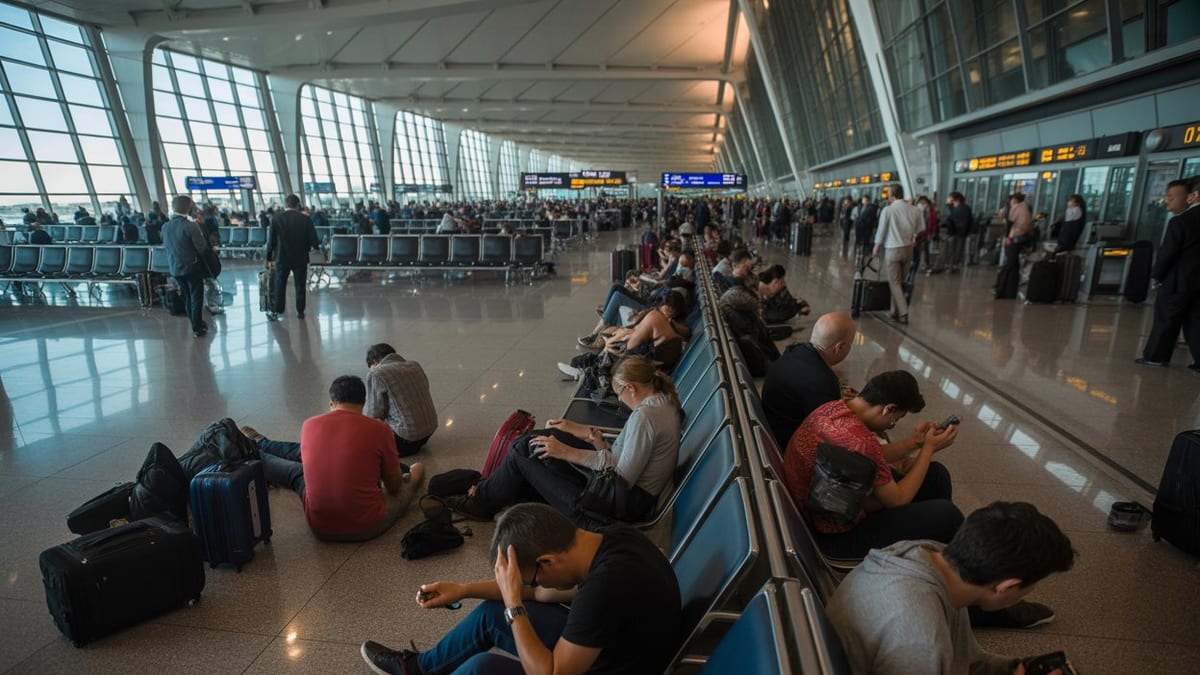
Image by Global Travel Alerts, Advisories, International Travel Alerts
Fresh Wave of Cancellations Hits Gulf Hubs
Published coverage indicates that UAE airports, already operating under constrained conditions following weeks of regional tensions, have seen a new round of schedule cuts affecting both short haul and longer European routes. Flight tracking data and airport notices show that more than 50 services operated by Gulf Air, FlyDubai, Etihad and Qatar Airways have been withdrawn or heavily delayed over the past 48 hours, compounding earlier disruptions.
Dubai International and Abu Dhabi’s Zayed International remain the primary pinch points, as airlines adjust operations in response to partial airspace closures and rerouting around conflict zones. The latest cancellations target high-frequency regional links, particularly to Bahrain and Doha, alongside busy North African connections to Cairo.
Passengers transiting through the Gulf report longer layovers, missed onward connections and last-minute rebookings as carriers consolidate flights onto fewer departures. Publicly available information shows that contingency schedules are being updated repeatedly across carrier websites and airport boards, leaving limited visibility beyond the next few days.
While reduced operations had already become the norm since late February, the latest cuts underscore that airlines do not yet see a rapid return to pre-crisis capacity, especially on routes that cross or border restricted airspace.
Regional Networks to Bahrain, Cairo and Doha Under Strain
The sharpest impact is being felt on intra-Gulf and near-regional corridors that normally rely on dense frequencies and tight connection banks. Services between the UAE and Bahrain, typically a high-volume business and leisure shuttle, have seen another round of cancellations attributed to Bahrain’s continued airspace and airport suspension, forcing Gulf Air and partner carriers to pare back operations.
Routes linking Dubai and Abu Dhabi to Cairo have also been trimmed, with several daily rotations removed or combined. According to published timetables, some flights are operating at off-peak times, while others are downgraded to smaller aircraft, narrowing options for travelers trying to reach or depart Egypt.
Connections to Doha remain constrained as Qatar maintains limits on regular commercial traffic while prioritizing emergency and special-permission operations. This has led to a patchwork of active and inactive flights on the UAE–Doha corridor, with Qatar Airways and UAE-based airlines selectively operating services based on available routing and permits.
The knock-on effect reaches beyond point-to-point traffic. Many travelers who would ordinarily use Bahrain, Cairo or Doha as stepping stones to wider networks across Africa and Asia are now forced to rebook via alternative hubs in Saudi Arabia, Oman or further afield in Europe and Turkey, adding time and complexity to already difficult journeys.
Long-Haul Passengers to Europe Face New Uncertainty
Alongside regional cuts, a number of long-haul and mid-haul services from the UAE to European cities such as Prague, Warsaw and Belgrade have been pulled from sale or cancelled at short notice. Schedule changes captured by global reservation systems show reduced frequencies on select central and eastern European routes, particularly those that ordinarily overfly contested or restricted airspace.
FlyDubai and other low-cost and hybrid carriers serving secondary European markets appear to be focusing on a smaller number of core destinations, redirecting capacity away from thinner routes. Travelers booked on these flights are being shifted onto remaining services or, in some cases, told to route through larger European hubs like Frankfurt, Paris or Istanbul instead.
The timing is particularly challenging for passengers traveling during the busy late-March period, when both business travel and school holiday demand typically support robust traffic flows between the Gulf and Europe. With new cancellations layered on top of previously reduced schedules, available seats on operating flights are tightening and fares on alternative routings have begun to climb.
Industry analysts note that the disruption is rippling well beyond the Middle East, as airlines in Europe and Asia that rely on Gulf feed traffic adjust their own capacity and connection windows in response to unpredictable arrival and departure patterns from Dubai and Abu Dhabi.
Airlines Prioritise Repatriation, Cargo and Essential Travel
In response to ongoing disruption, many Gulf-based airlines have shifted focus toward repatriation flights, limited commercial services and key cargo operations. Public airline statements and cargo circulars describe a strategy built around maintaining humanitarian, medical and essential trade links while scaling back discretionary travel where demand is more flexible.
Etihad and Emirates have already been operating reduced passenger schedules, and the latest cuts by Gulf Air, FlyDubai and Qatar Airways appear to align with this broader regional approach. Some flights previously sold as regular commercial departures are now being used primarily to clear backlogs of stranded passengers or to move urgent freight such as pharmaceuticals and foodstuffs.
Freight operators and logistics providers report that capacity through Gulf hubs remains constrained, with rerouting via alternative corridors adding time and cost to global supply chains. Nevertheless, the continued operation of select widebody services through the UAE has provided a partial lifeline for high-value cargo and critical shipments.
For individual travelers, the emphasis on essential movements means that leisure itineraries are more vulnerable to cancellation or involuntary rerouting. Travel advisers are encouraging passengers to confirm flights close to departure, hold flexible tickets where possible and be prepared for long waits at airports as ground staff work through rebooking queues.
Travelers Confront Prolonged Uncertainty in the UAE and Beyond
With security conditions and airspace restrictions shifting by the day, there is little indication that full-scale commercial schedules will return quickly to the UAE’s main hubs. Industry commentary suggests that airlines are planning in short operational windows, adjusting timetables in response to evolving risk assessments and regulatory notices rather than making long-term capacity commitments.
As a result, passengers traveling to or through Dubai and Abu Dhabi face a higher likelihood of day-of-travel changes, including aircraft swaps, re-timed departures and sudden cancellations. This is especially pronounced on routes to affected cities such as Bahrain, Cairo, Doha, Prague, Warsaw and Belgrade, where the latest wave of cancellations has further thinned already limited options.
Travel industry participants describe a landscape in which traditional hub-and-spoke predictability has been replaced by ad hoc route planning and rapid contingency measures. Airlines are leveraging spare aircraft and crew where available, while also contending with positioning challenges created by detours around closed skies and conflict zones.
For now, publicly available information indicates that travelers with urgent reasons to fly can still reach many destinations via the UAE, but should expect complex routings, possible overnight stops and a greater reliance on alternative hubs outside the most heavily affected parts of the Gulf.