

More news on this day
Hundreds of passengers traveling through the United Arab Emirates are facing major disruption after Emirates, Etihad and other international airlines cancelled more than a dozen flights, severing key links between Dubai, Abu Dhabi and major hubs including New York’s JFK, Newark, Boston, Hong Kong and Jeddah as a powerful winter storm batters the US East Coast.
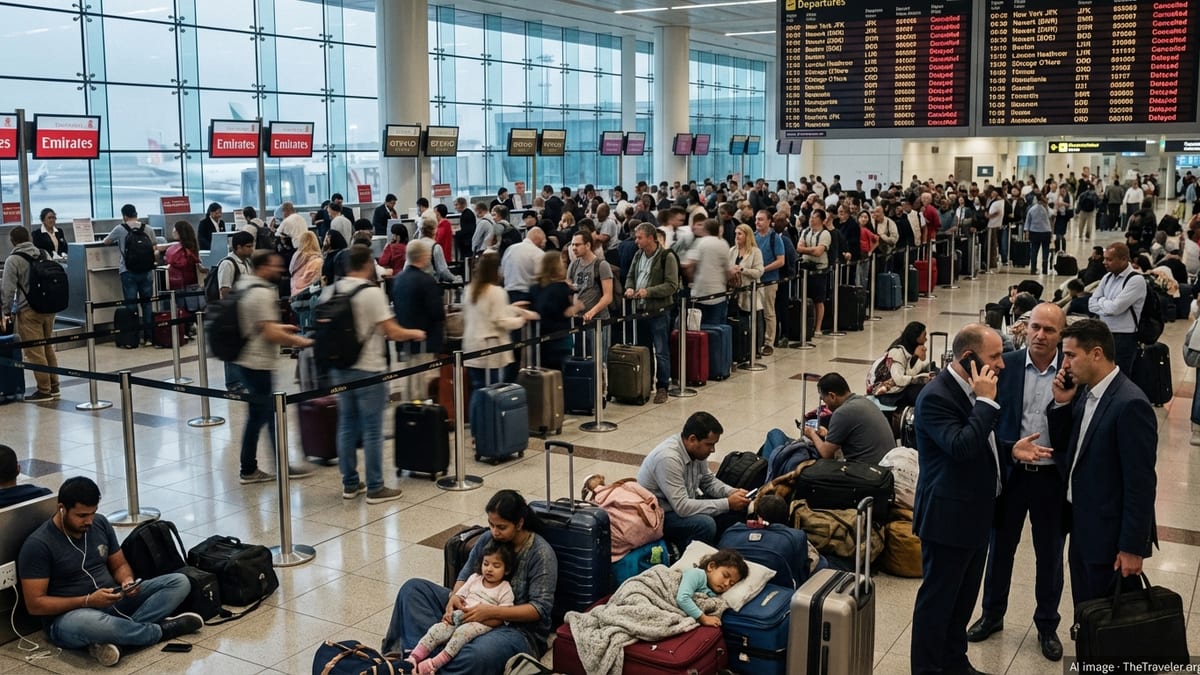
Severe US Storm Ripples Across UAE Hubs
The latest wave of disruptions stems from a fast-developing Nor’easter sweeping across the northeastern United States, bringing blizzard conditions, high winds and heavy snow to airports in New York, Newark and Boston. The severe weather has reduced runway capacity, slowed ground handling and forced authorities to restrict arrivals and departures, triggering knock-on effects for long-haul services from the Gulf.
Emirates confirmed fresh cancellations and schedule changes on services linking Dubai with New York and Boston, as well as onward legs via Athens and Milan that feed its New York and Newark routes. The carrier said several round-trip flights between February 22 and 24 were withdrawn from the schedule as a precaution, citing the “anticipated significant impact” of the storm on operations in the northeastern US.
In Abu Dhabi, Etihad Airways has also pulled multiple flights between the UAE and the United States, including services to New York JFK and Boston. The airline has warned that the situation remains fluid and that further delays or cancellations are possible if weather conditions deteriorate, underscoring how a single major weather system in North America can upend flight schedules across the Middle East and beyond.
Air India and other international carriers serving the Gulf have joined the wave of adjustments, cancelling select New York and Newark flights, which has further tightened already stretched transatlantic capacity for travelers moving through Dubai and Abu Dhabi.
Passengers Stranded as Key Routes to JFK, Newark and Boston Freeze
The operational decisions have left many passengers in the UAE and at outstations unexpectedly stranded, particularly those booked on direct links between Dubai or Abu Dhabi and the New York area. Emirates’ affected services include multiple rotations between Dubai and JFK, as well as flights between Athens and Newark and between Milan and New York that act as important transatlantic gateways for travelers from the Gulf, Europe and Africa.
Etihad’s cancellations and long delays on flights EY001, EY002, EY003 and EY004 between Abu Dhabi and JFK, plus EY007 and EY008 on the Abu Dhabi–Boston route, have further constrained access to the northeastern US. Some services have been rescheduled with significant time changes, while others have been pulled entirely over the peak of the storm, narrowing options for same-day re-accommodation.
Airports in the UAE were reporting crowded check-in areas and transfer desks as airline staff attempted to reroute travelers via alternative hubs or rebook them on later departures once the weather clears. Families heading to the United States for mid-winter breaks, business travelers with fixed commitments and students returning to North American universities were among those facing abrupt itinerary changes and extended layovers.
With the storm also prompting widespread disruption within the US domestic network, many passengers who did manage to depart the Gulf were met with onward cancellations or missed connections on arrival, adding another layer of complexity to journey planning.
Impact Spreads to Hong Kong, Jeddah and Other Regional Gateways
While the most immediate fallout has been on UAE–US sectors, the disruption is rippling through broader long-haul networks. Aircraft and crew rotations timed around transatlantic arrivals and departures are now out of sequence, forcing airlines to adjust schedules on routes to Asia and within the wider Middle East.
In practice, this has meant delays and select cancellations on services connecting the UAE to major Asian hubs such as Hong Kong, as well as important regional destinations including Jeddah. With fleets optimized to operate near full utilization, sidelining wide-body aircraft on weather-affected US routes can quickly create gaps elsewhere in the schedule as airlines work to rebalance capacity.
Travel agents in Dubai and Abu Dhabi reported growing inquiries from passengers concerned that their upcoming flights to non-US destinations could also be affected, even if skies there remain clear. Industry analysts say that even a relatively short-lived weather event, when it hits such heavily trafficked corridors, can cause days of residual disruption as airlines reposition aircraft, reset crew rosters and work through the backlog of displaced customers.
For some travelers, particularly those on tight itineraries connecting from Asia or Africa through the UAE, the cascading delays have meant missed cruises, conferences and family events, with compensation and insurance claims likely to follow.
Airlines Urge Rebooking as Recovery Effort Begins
Emirates and Etihad have both urged affected passengers not to travel to the airport unless their flight status shows as operating, and to use digital channels, call centers or travel agents to explore rebooking options. Both carriers say customers booked on cancelled flights can switch to later departures without change fees, although fare differences may apply during peak travel periods.
Etihad’s latest advisory notes that passengers whose flights have been withdrawn will be rebooked on the next available services once operations stabilize, or may request refunds where eligible. Emirates has issued similar guidance, asking customers to keep their contact details updated so they can receive real-time notifications of any schedule changes as the storm system evolves.
Travel advisors are recommending that passengers headed to or from the northeastern United States build extra buffer time into their journeys this week and remain flexible on routing, as seats on remaining flights from the Gulf into the region are expected to be tight. Some carriers are exploring temporary rerouting via alternative US gateways less affected by the storm, but that too is constrained by crew duty limits and airport slot availability.
Industry observers note that the episode once again highlights the vulnerability of global long-haul networks to extreme weather, even at airports thousands of kilometers away. For Gulf carriers that position themselves as reliable connectors between continents, rapid response and clear communication will be critical to restoring confidence as the clean-up operation gets under way.
What Travelers Through the UAE Should Do Now
Passengers scheduled to fly between the UAE and the United States over the coming days are being advised to monitor their bookings frequently, as airline schedules continue to evolve in line with changing weather forecasts. Checking flight status before leaving for the airport, enabling notifications on airline apps and confirming contact details are among the key steps being urged by carriers and travel agents alike.
Travelers with imminent connections through Dubai or Abu Dhabi to cities such as Hong Kong, Jeddah or other onward destinations are being encouraged to verify whether their inbound US sector is operating as planned, as disruptions on one leg can quickly cascade through the rest of an itinerary. Where possible, agents say, opting for routings that avoid the northeastern US altogether may offer a safer bet until conditions normalize.
Those already stranded in the UAE or at outstations are being told to work closely with airline staff to secure confirmed alternative travel rather than attempting to self-connect on separate tickets, which can expose passengers to additional costs if further delays occur. With the Nor’easter still unfolding, most airlines are cautioning that schedules may only fully stabilize several days after the worst of the weather has passed.
For now, the combination of a powerful US winter storm and the tightly interlinked nature of global aviation networks has turned Dubai and Abu Dhabi, usually among the world’s most reliable transit hubs, into challenging waypoints for thousands of travelers, underlining how quickly conditions can change even in the most sophisticated of aviation markets.