


More news on this day
UAE–Jakarta air links have been severely disrupted after volcanic ash from Indonesia’s Anak Krakatau volcano led to the temporary closure of Jakarta’s main Soekarno Hatta International Airport, forcing Emirates and Etihad to cancel and delay multiple flights between the Gulf and the Indonesian capital.
Get the latest news straight to your inbox!
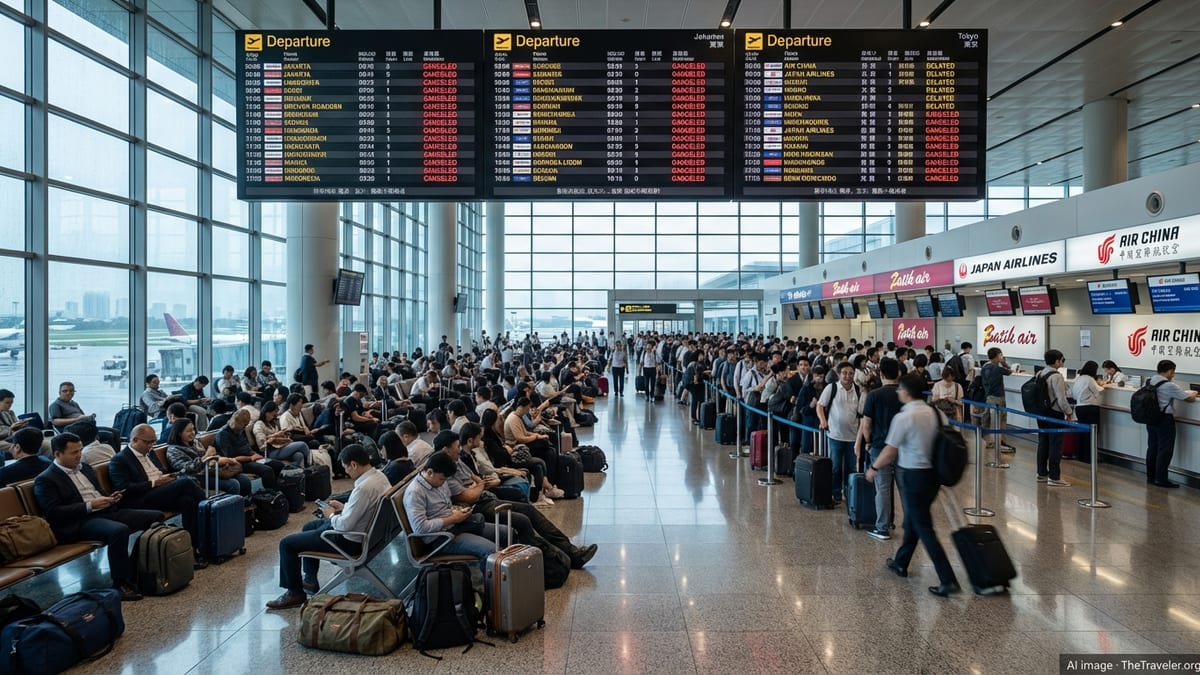
Jakarta airport closure triggers widespread disruption
Jakarta’s Soekarno Hatta International Airport, the primary gateway to Indonesia’s capital, temporarily suspended operations after ash from the erupting Anak Krakatau volcano drifted across key flight paths. Published coverage indicates that the closure began over the weekend and continued into Monday, with ash clouds creating unsafe conditions for take-offs and landings.
Reports from Indonesian and international outlets describe thousands of passengers stranded as the shutdown and subsequent partial reopening rippled through domestic and international networks. Several other airports in western Indonesia also curtailed operations, compounding the disruption for travelers attempting to reroute through alternative hubs.
Anak Krakatau, located in the Sunda Strait between Java and Sumatra, has shown heightened activity in recent days. According to news reports, the latest eruption sent ash thousands of meters into the air, prompting aviation authorities to restrict airspace around Jakarta and leading airlines to suspend or reschedule flights until conditions improve.
Emirates cancels multiple Dubai–Jakarta services
Publicly available operational updates from Emirates show that the carrier has cancelled a series of flights between Dubai and Jakarta on 6 and 7 September 2026. The airline’s advisory for Soekarno Hatta International Airport notes that services EK356 and EK358 from Dubai to Jakarta and EK357 and EK359 from Jakarta to Dubai on 6 September were cancelled due to volcanic ash affecting the airport.
The same notice lists further cancellations on 7 September, with the same four flight numbers suspended in both directions as Jakarta’s airspace restrictions continued. Passengers holding tickets on these flights are being offered rebooking options, and the airline is directing customers to its website and booking channels to check revised itineraries and eligibility for changes.
Emirates also indicates that customers connecting through Dubai to Jakarta will not be accepted for travel at their point of origin until further notice. This measure effectively pauses new transit flows into the Indonesian capital from the Dubai hub while the situation at Soekarno Hatta remains fluid.
Etihad delays Abu Dhabi–Jakarta departures
Etihad Airways has also adjusted its schedule between Abu Dhabi and Jakarta as a result of the ash-related airport closure. The airline’s online flight status tool shows that flight EY472 from Abu Dhabi to Jakarta on 6 September experienced a significant delay linked to the shutdown at Soekarno Hatta International Airport.
The disruption to EY472 has, in turn, affected the return service EY473 from Jakarta to Abu Dhabi, which is listed as delayed on 7 September. Etihad’s advisory encourages affected travelers to monitor their contact details in their bookings so they can receive updated information by SMS or email.
Regional aviation coverage from the UAE highlights that Etihad’s schedule changes sit alongside those of other Gulf carriers serving Indonesia. While some services are delayed rather than fully cancelled, travelers are being urged to verify the status of their specific flight before making their way to the airport.
Impact on UAE–Indonesia travel demand
The UAE is a key gateway for travel between the Middle East, Europe, and Indonesia, with year-round demand driven by tourism, business traffic, and a large Indonesian expatriate community. Online fare and schedule data show multiple daily non-stop and connecting options linking cities such as Dubai, Abu Dhabi, and Sharjah with Jakarta under normal conditions.
In recent weeks, booking platforms have continued to show strong demand for September departures between the UAE and Jakarta, reflecting both holiday travel and the resumption of business trips. The sudden interruption caused by volcanic ash has therefore affected a broad mix of passengers, from long-haul transit travelers to point-to-point regional traffic.
Travel analysts quoted in regional business coverage note that aviation networks in Southeast Asia are accustomed to periodic disruptions from volcanic activity. However, closures at major hubs such as Soekarno Hatta can still have outsized effects on capacity, leading to temporary fare volatility and tighter seat availability once operations resume.
What travelers between the UAE and Jakarta should do
Airline advisories and regional media coverage consistently emphasize that passengers should not assume their flights are operating as scheduled while ash clouds remain a concern. Travelers holding tickets on Emirates, Etihad, or other carriers between the UAE and Jakarta are being urged to check live flight status tools and official travel update pages on the day of departure.
Passengers whose flights have been cancelled or significantly delayed are generally being offered rebooking at no additional fare, subject to seat availability, according to published airline guidance. Those who booked through travel agencies are being directed to contact their agent first, while customers who purchased directly with airlines can use call centers, websites, or mobile apps to request changes.
Travelers already in Indonesia and planning to connect onward from Jakarta may face additional challenges, as domestic schedules are also being adjusted in response to the ash cloud. Industry observers recommend allowing extra time for connections, considering alternative routings through unaffected airports where available, and maintaining flexible plans until aviation authorities signal that operations have fully normalized.
For UAE citizens currently in Indonesia, government advisories reported in local media recommend heightened caution and close monitoring of official updates on air quality, airport status, and potential further volcanic activity. With meteorological conditions and volcanic behavior subject to change, further short-notice schedule revisions remain possible over the coming days.