

More news on this day
The United Arab Emirates is emerging as a key winner from a new wave of regional visa easing, with more flexible rules for returning residents and Indian travelers helping to lift demand for Dubai and Abu Dhabi trips in 2026.
Get the latest news straight to your inbox!
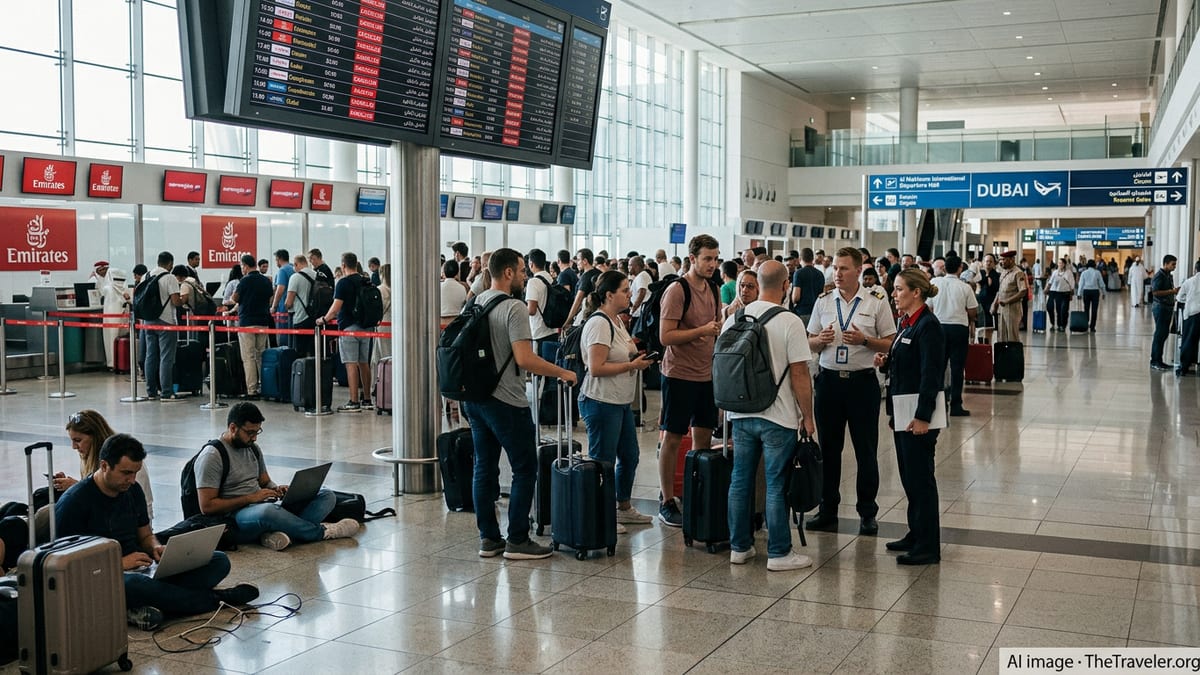
Visa reforms extend UAE’s reach to key origin markets
Publicly available information shows that the UAE has steadily expanded multiple-entry visit visas, long-stay options and visa-on-arrival schemes through 2025 and into 2026, positioning the country as one of the most accessible hubs in the region for residents and visitors alike. Alongside existing visa exemptions for citizens of Gulf Cooperation Council states such as Kuwait, Qatar and Saudi Arabia, the widening menu of permits is designed to keep the UAE at the center of emerging regional travel patterns.
According to published coverage, a major driver has been the gradual relaxation of entry routes for Indian nationals, one of the UAE’s largest tourism and expatriate markets. Since 2024 and 2025, Indian passport holders with qualifying visas or residence permits from destinations including the United States, United Kingdom, European Union and several Asia Pacific states have become eligible for visas on arrival in the UAE, simplifying short-notice trips and family visits. These changes are continuing into 2026 as authorities refine categories and documentation requirements.
Reports indicate that new GCC resident eVisas and extended short and long term tourist visas are also making it easier for UAE based residents to circulate within the wider Gulf and return without complex paperwork. This has helped align the UAE with broader reforms in neighboring Kuwait, Qatar and Saudi Arabia, which are similarly using updated eVisa systems and unified tourist visa concepts to stimulate cross border leisure and business travel.
Industry observers note that by synchronizing with reforms in India, the United Kingdom and France and by facilitating smoother re entry for residents who base themselves in Dubai or Abu Dhabi, the UAE is capturing a growing share of multi leg itineraries that span Europe, South Asia and the Gulf.
Returning residents underpin steady travel demand
Beyond short stay tourists, returning expatriate residents are emerging as a structural pillar of demand for the UAE’s aviation and hospitality sectors. As resident populations in Dubai and Abu Dhabi expand, the number of people taking regular trips to home countries such as India, Pakistan, the United Kingdom and France and then flying back to the UAE is rising in parallel.
Analysts tracking passenger flows through UAE airports point to a strong rebound in 2025, with Abu Dhabi International Airport handling more than 30 million passengers and Dubai International maintaining its status among the world’s busiest hubs. Expanded consular support for long term residency categories, including Golden Visa holders, has further reduced friction for residents who frequently travel and then re enter the country.
Published economic commentary suggests that these returning residents are particularly important for shoulder season occupancy in city hotels and branded residences. When traditional holiday peaks soften, outbound trips for school breaks, summer leave and business travel often end with residents spending additional nights in Dubai or Abu Dhabi before fully resettling into work and home routines, creating a stabilizing effect on room demand.
Travel agents and online booking platforms are responding by bundling resident focused offers that combine flexible airfare, staycations and short getaways, reinforcing a pattern in which the UAE serves simultaneously as home base and holiday destination for a globally mobile community.
Record visitor numbers in Dubai and Abu Dhabi
The policy shift is coinciding with record tourism performance across the country’s two largest emirates. Official visitor statistics show that Dubai welcomed more than 19 million international overnight visitors in 2025, marking a third consecutive record year for the city’s tourism sector and outpacing many global rivals. Industry reports highlight hotel occupancy in Dubai at close to 80 percent on average, with premium segments achieving even higher levels during major events and peak seasons.
Abu Dhabi has registered similar momentum. Data released in early April 2026 indicates that the emirate welcomed around 26.6 million visitors in 2025, with hotel revenues rising sharply on the back of higher average daily rates and longer stays. The Department of Culture and Tourism’s Tourism Strategy 2030 has emphasized both leisure attractions and business events, with new museums and cultural landmarks adding to the destination mix.
Bank and consultancy research on the wider UAE economy projects that tourism and travel related services will remain a key growth engine in 2026, supporting non oil gross domestic product expansion. Estimates for Dubai point to economic growth above 4 percent, partly driven by rising visitor numbers and population inflows, while Abu Dhabi is expected to benefit from both corporate activity and family oriented tourism.
With air connectivity still expanding and hotel pipelines adding capacity at the higher end of the market, the UAE’s challenge is now to manage strong demand without eroding the price competitiveness that helped fuel the recovery.
GCC visa convergence and the “grand tour” effect
The UAE’s reopening to returning residents is taking place alongside broader regional moves that could reshape how visitors structure their itineraries. Kuwait’s rebooted eVisa system for Gulf residents, Saudi Arabia’s expanding tourism visa and the anticipated launch of a Unified GCC Tourist Visa are all contributing to the concept of a multi stop “grand tour” that links Dubai and Abu Dhabi with neighboring capitals.
Condensed travel advisories and tourism briefings describe how residents of the UAE with valid permits can increasingly enter nearby Gulf countries with streamlined applications or visas on arrival. In turn, those same travelers are encouraged to route flights via Dubai or Abu Dhabi, where extensive long haul networks connect to Europe and Asia, including key markets such as India, the United Kingdom and France.
Travel planners note that this convergence is changing booking behavior. Rather than spending an entire holiday in a single city, visitors are beginning to split time between Dubai’s urban attractions, Abu Dhabi’s cultural districts and other Gulf destinations, while still relying on UAE airports as arrival and departure gateways. The UAE benefits from this pattern by capturing multiple hotel nights at the start or end of trips and by selling experiences around shopping, dining and entertainment.
The expected rollout of cross border rail and potential future high speed links between emirates is also seen as a medium term catalyst, enabling visitors who fly into Dubai or Abu Dhabi to explore further afield while keeping the UAE as their primary base.
New opportunities for airlines, hotels and investors
For airlines, the surge in returning residents and easier access for Indian and European travelers is reinforcing the UAE’s role as a long haul transfer hub. Carriers based in Dubai and Abu Dhabi have added frequencies to key Indian cities and increased capacity on routes to London and Paris, capitalizing on both point to point demand and connecting traffic heading to wider European destinations.
Hotel operators report growing interest in long stay products, serviced apartments and branded residences that cater to residents who frequently travel and then extend their return to the UAE with short leisure breaks. Mixed use developments in Dubai Marina, Business Bay, Yas Island and Saadiyat Island are marketed with this audience in mind, emphasizing proximity to airports and key business districts.
Real estate and tourism investment reports highlight that international buyers from India, the United Kingdom and France are increasingly drawn to UAE property and hospitality assets, partly because of the ease with which they can travel in and out under the evolving visa framework. Investor sentiment is being further supported by wider economic reforms, stable taxation policies and long term residency pathways that offer clarity on future access.
As 2026 progresses, policymakers and industry stakeholders will be closely watching whether these combined trends sustain current record levels of demand or trigger the need for additional capacity and regulatory fine tuning. For now, the UAE’s decision to keep its doors open to returning residents and to streamline access for key partner countries places Dubai and Abu Dhabi firmly at the center of the region’s travel story.