

More news on this day
Hundreds of air travelers were left stranded across England and Scotland on April 4 as major airports in London, Manchester, Edinburgh, Glasgow and Newcastle recorded 34 cancellations and 465 delays, disrupting operations for British Airways, Virgin Atlantic, Emerald Airlines, easyJet and several other carriers.
Get the latest news straight to your inbox!
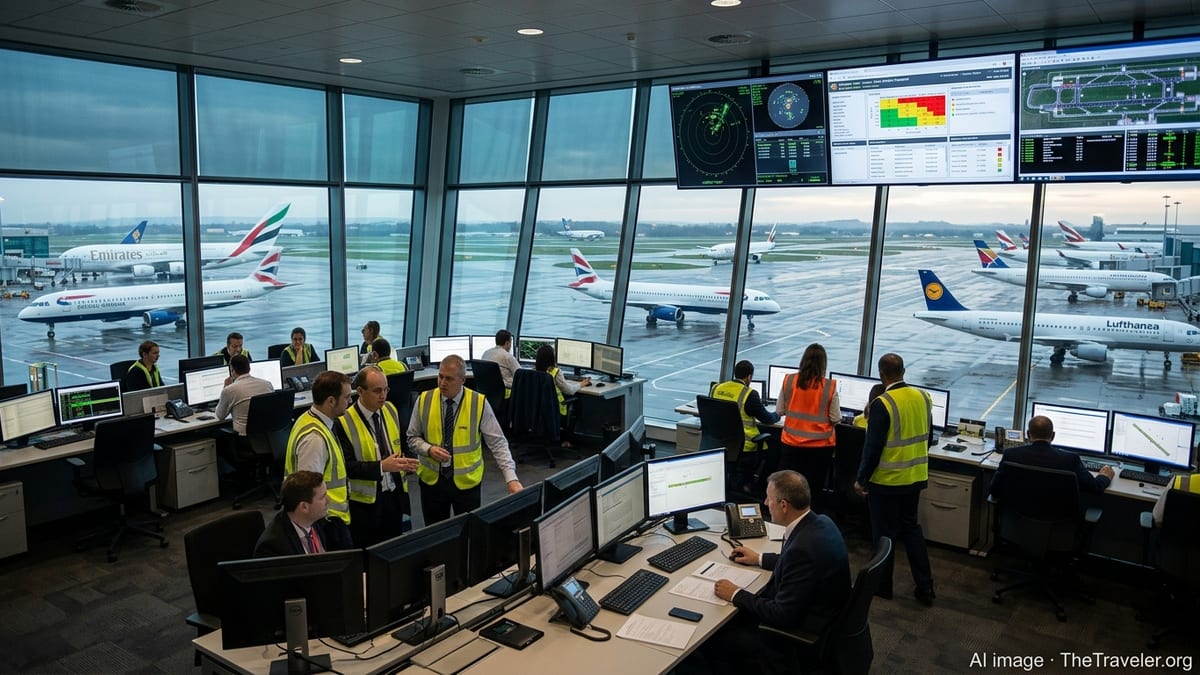
Delays Swell Across Key UK Airports
Publicly available flight status boards on April 4 show a concentrated wave of disruption across six major UK airports, with London, Manchester, Edinburgh, Glasgow and Newcastle all reporting significant operational challenges. Heathrow alone accounted for a large share of the problems, with more than 160 delayed departures or arrivals and over a dozen cancellations, while Gatwick, Manchester, Edinburgh, Glasgow International and Newcastle combined added hundreds more late-running flights and additional scrapped services.
Data compiled from aviation tracking platforms indicates that, across these airports, at least 465 services were delayed and 34 were cancelled over the course of the day. While the majority of flights eventually departed, the volume of late operations created a sharp mismatch between scheduled and actual movements, leaving passengers facing missed connections, tight transfer windows and uncertainty over onward travel plans.
The disruption at these UK hubs forms part of a wider pattern of volatile operations seen in early April, with several European and long haul networks already under pressure from weather, airspace constraints and tight aircraft rotations. For travelers flying through London and regional hubs in Scotland and northern England, the result on April 4 was a day marked by extended terminal waits and last minute gate changes.
Although no single cause has been identified as responsible for the entire wave of delays, operational bulletins and publicly available reports point to a mix of factors including weather-related constraints, knock-on effects from earlier schedule disruptions, and congestion in busy European air corridors feeding into the UK.
Major Carriers Hit, From British Airways To easyJet
The disruption was spread across a broad mix of airlines, with British Airways, Virgin Atlantic, Emerald Airlines and easyJet among the most affected brands visible on departure boards. At Heathrow and Gatwick, full service and low cost carriers alike posted late departures, while at Manchester, Edinburgh, Glasgow and Newcastle, regional and short haul operators reported a similar pattern of schedule slippage.
Available performance snapshots show that British Airways services at London Heathrow and some regional airports were among those most frequently delayed, reflecting the carrier’s dense schedule and reliance on tight turnaround times. Virgin Atlantic’s long haul operations also experienced knock-on delays, with extended ground times in London contributing to later-than-planned departures for transatlantic and other intercontinental services.
At the same time, easyJet and other low cost operators serving Gatwick, Manchester and Edinburgh recorded a stream of late-running flights across intra-European and domestic routes. For Emerald Airlines and other regional partners operating under franchise or codeshare agreements, even modest schedule shifts led to missed connections for passengers linking from feeder services onto long haul departures.
Because the disruptions spanned multiple airlines and alliances, stranded passengers often found limited options for same-day rebooking. In many cases, seats on alternative departures were already heavily booked for the first weekend of April, forcing some travelers to accept overnight stays or significant rerouting via secondary hubs.
Passenger Experience: Queues, Rebookings And Limited Options
Reports from social media and local coverage describe crowded check in halls and lengthy queues at rebooking and customer service desks across the affected airports. With delays accumulating through the day, airline staff faced mounting pressure to reassign passengers to later flights, arrange hotel accommodation where required and answer questions about compensation and ticket flexibility.
Many travelers arriving into London, Manchester and Edinburgh on delayed inbound flights missed onward connections to Europe, North America and the Middle East. Some were rerouted through alternative hubs, while others were advised to return the following day as already busy schedules limited the number of spare seats available on immediate replacement services.
In terminals, departure boards showed rows of flights marked as delayed, often by 60 to 90 minutes, and in some cases by several hours. For passengers with short stays or time sensitive commitments, even flights that ultimately departed were significantly less useful than planned, extending journey times and compressing already tight itineraries.
Publicly available commentary from traveler advocacy groups highlights that such multi-airline disruption days can be especially challenging, as passengers must navigate differing policies on meal vouchers, accommodation and rebooking. The experience of April 4 at UK hubs demonstrated how quickly a relatively small proportion of cancellations can translate into a substantial number of stranded or heavily delayed passengers.
Regulatory Protections And What Travelers Can Claim
The latest wave of disruption has once again drawn attention to passenger protections under UK and EU261-style regulations. Consumer guidance notes that travelers departing from UK airports, or flying into the UK on qualifying carriers, may be entitled to assistance and, in some cases, financial compensation, depending on the length of delay, route distance and cause of the disruption.
When cancellations or long delays fall within an airline’s control, passengers are generally entitled to rerouting at the earliest opportunity or to a later date of their choosing, subject to seat availability. Guidance from regulators and consumer organizations also states that, in such cases, airlines must provide basic care, including meals, refreshments and accommodation when an overnight stay becomes necessary.
If the disruption is attributed to extraordinary circumstances, such as certain categories of severe weather or airspace closures, compensation payments may not apply, although the obligation to provide care and rerouting usually remains. For April 4, publicly available information does not yet provide a full breakdown of which flights may fall into each category, leaving many passengers weighing whether to submit claims once airlines finalize their internal classifications.
Advisory material from passenger rights groups encourages affected travelers to keep boarding passes, booking confirmations and any written notices received from airlines, as these documents can be important when pursuing claims or escalating unresolved disputes to alternative dispute resolution bodies or national enforcement agencies.
Outlook For The Remainder Of The Weekend
Operational data and aviation analytics published on April 4 suggest that knock-on effects from the day’s delays may continue into the remainder of the first April weekend, particularly at the busiest London airports and at key regional hubs such as Manchester and Edinburgh. Aircraft and crew available for early morning departures on April 5 may be out of position following late arrivals, increasing the risk of further first wave delays.
Industry observers note that, even if weather conditions and airspace capacity improve, the process of rebalancing schedules after a day of widespread disruption can take several cycles. This dynamic is especially evident at slot constrained hubs like Heathrow and Gatwick, where limited flexibility to retime flights restricts airlines’ ability to rapidly clear backlogs.
Travelers with bookings over the coming days are being advised in public information notices to monitor their flight status closely, use airline apps or text alerts where available, and allow additional time for security and check in procedures at busy departure times. Those with tight same day connections through London or regional UK hubs may wish to consider earlier feeder flights or alternative routings where possible.
With spring travel demand running high and global aviation networks already stretched by recent weather and airspace challenges, the events of April 4 underline the continuing fragility of flight operations at some of Europe’s most important hubs. For passengers across England and Scotland, the day’s numbers translated into missed celebrations, disrupted business plans and a reminder that even a modest percentage of disrupted flights can add up to a major travel headache.