

More news on this day
Thousands of passengers were stranded or facing last-minute itinerary changes on Friday as at least 49 flights serving London and Manchester were cancelled and many more delayed, with Qatar Airways, Delta Air Lines, Qantas, Norse Atlantic and British Airways among the carriers cutting or rerouting services amid the continuing shutdown of key Gulf airspace.
London and Manchester Bear the Brunt of New Wave of Disruption
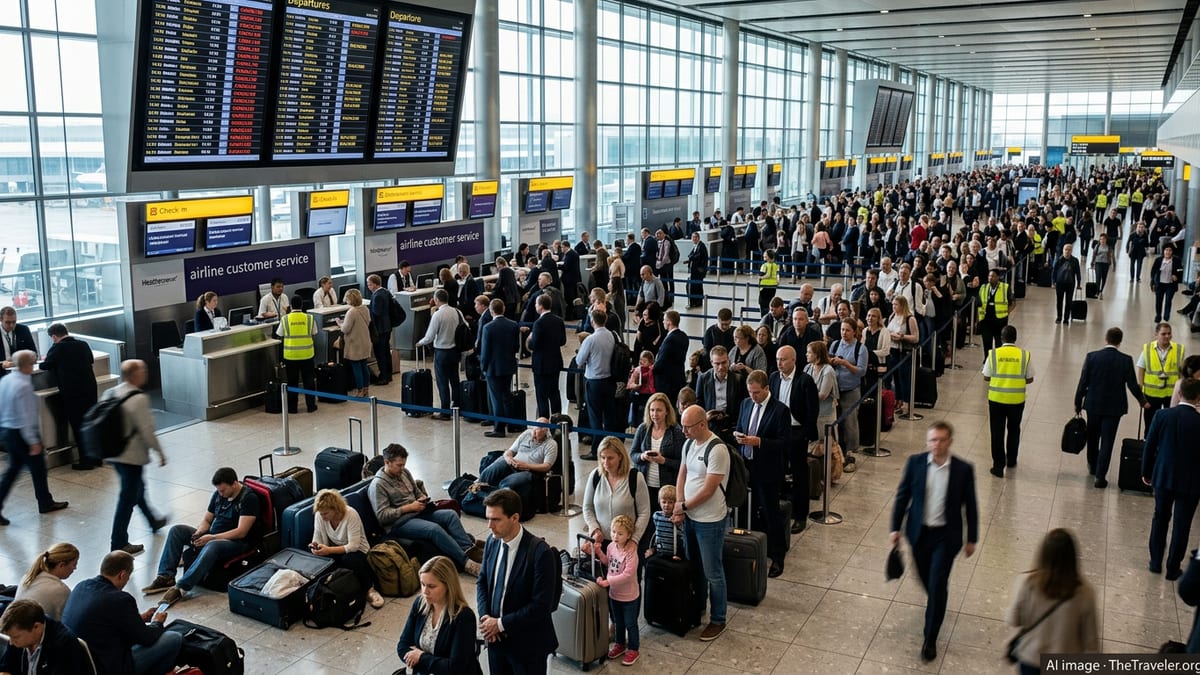
UK hubs once again found themselves at the sharp end of global aviation turmoil, with cancellation boards at London Heathrow, London Gatwick and Manchester filling up through the morning as long-haul and connecting services were pulled from schedules. Operational data indicated that 49 flights touching the UK’s two main long-haul gateways at Heathrow and Manchester were cancelled outright, while dozens more departures and arrivals left significantly late as aircraft and crews struggled to reposition around blocked routes.
Major global carriers including Qatar Airways, British Airways, Delta Air Lines, Qantas and Norse Atlantic were all affected, either cancelling rotations entirely or imposing extended delays on services linking London and Manchester to key intercontinental destinations. Passengers reported queues snaking through departure halls as ground staff attempted to rebook travellers onto scarce remaining seats or arrange overnight accommodation.
While short-haul European links were not immune, the heaviest impact fell on long-haul departures to the Middle East, Asia and Australia as airlines reacted in real time to the evolving constraints in Gulf-region skies. Some flights were cancelled only hours before scheduled departure, leaving travellers with limited alternatives from already busy rival hubs.
At Manchester Airport, which has become a vital secondary long-haul gateway for northern England, a succession of cancellations involving Gulf carriers and transatlantic operators disrupted onward connections to destinations such as Doha, Abu Dhabi and US hubs, compounding delays for passengers who had already endured days of uncertainty.
Gulf Airspace Closures Ripple Across Global Networks
The latest wave of disruption is closely tied to an extended closure or severe restriction of airspace over parts of the Gulf and surrounding region, which has forced airlines to suspend direct services or fly longer diversion routes that consume extra fuel and crew hours. Qatar Airways, with its hub in Doha, has been particularly exposed, sharply curtailing its regular operations and focusing on a slimmed-down schedule of relief and repatriation flights.
Those cuts have an immediate knock-on effect in the UK, where Qatar Airways normally operates multiple daily departures from London and Manchester to Doha, feeding a vast network across Asia, Africa and Oceania. With those services drastically reduced, connecting itineraries that rely on smooth transfers in the Gulf have crumbled, leading to missed onward flights and longer total journey times for those who do fly.
Other carriers, including Qantas and Delta Air Lines, have adjusted by rerouting or retiming flights that would usually cross affected corridors. Qantas’s flagship links between Australia and London, already some of the world’s longest sectors, have been operating on modified routings that avoid closed airspace, stretching block times and adding pressure on aircraft utilisation. Delta’s transatlantic schedule into London has also seen targeted cancellations as the airline reallocates widebody aircraft and crews to more stable routes.
Aviation analysts warn that even when airspace restrictions begin to ease, the process of rebuilding predictable schedules will take time. Aircraft and crews are out of their normal patterns, maintenance windows have been squeezed, and airlines are cautious about restoring capacity while the geopolitical situation remains volatile.
Airlines Scramble With Diversions, Slimmed Schedules and Rebookings
For carriers on the front line, the response has involved a mix of wholesale cancellations, tactical delays and complex diversions. British Airways, which is juggling its own long-haul network constraints with increased demand for alternative routings, has trimmed selected services from London while adding extra capacity on others where possible to support government-organised repatriation efforts and displaced passengers from partner airlines.
Norse Atlantic, a relatively new long-haul low-cost operator, has felt the strain as disruptions ripple through widebody operations. With a smaller fleet and less redundancy than legacy giants, even a handful of cancellations or extended delays on transatlantic sectors into London and Manchester can cascade through its timetable, leading to rolling knock-on effects for subsequent rotations.
Qatar Airways continues to focus on limited relief-style operations out of Doha and select regional gateways, reallocating capacity to routes deemed critical for repatriation and essential travel. This has left many UK-based travellers holding confirmed tickets but without a viable same-day departure, particularly those booked on complex itineraries involving multiple connections beyond the Gulf hub.
Delta and Qantas, meanwhile, are rebooking affected passengers via alternative European and Asian hubs where possible, sometimes using partner airlines to stitch together replacement journeys. However, tight capacity, especially in premium cabins and during peak travel periods, means many travellers are being pushed back by days rather than hours, or offered refunds in lieu of timely alternatives.
Passengers Face Long Queues, Patchy Information and Tough Choices
On the ground, the human impact of the cancellations has been stark. At both Heathrow and Manchester, travellers reported early-morning departure boards quickly filling with red “cancelled” notices as check-in opened, with some only learning of their disrupted plans upon arrival at the airport. For others, overnight emails or app notifications arrived too late to easily reorganise complex onward travel or accommodation.
Families heading for long-planned holidays, business travellers on tight schedules and students connecting to long-haul routes back to Asia and Australia all found themselves waiting in lengthy customer service lines, often with limited real-time detail on when normal operations might resume. Hotel rooms near the airports were in high demand, with some passengers opting to pay out of pocket in the hope of claiming costs back later under compensation regimes.
For those who did manage to travel, journeys were often significantly lengthened by diversion routings and extended connection times. Reports from passengers on reconfigured itineraries described multi-stop journeys through secondary European or Asian hubs, with total travel times stretching well beyond 24 hours and baggage occasionally struggling to keep up.
Travel advisors cautioned that the situation remains fluid, urging passengers with imminent departures to monitor airline apps, email alerts and airport departure boards closely, and to build in flexibility where possible. Many airlines are currently waiving change fees or offering date-change windows for affected routes, but seat availability remains a limiting factor.
Know Your Rights Under UK261 and Airline Policies
With cancellations and severe delays mounting, passenger rights under UK261, the post-Brexit version of the European Union’s compensation regime, have come under renewed scrutiny. In general, when a flight departing from a UK airport is cancelled, airlines must offer travellers a choice between a refund for the unused portion of the ticket or rerouting at the earliest opportunity, including on a later date convenient to the passenger if seats are available.
Cash compensation is more complex, and often depends on whether the root cause of the disruption is considered within the airline’s control. In cases where cancellations stem from external events such as sudden airspace closures or geopolitical conflict, carriers frequently argue that these qualify as extraordinary circumstances, limiting their obligation to pay additional financial compensation even while they remain responsible for care, assistance and rerouting.
Consumer advocates advise passengers to keep detailed records of their disrupted journeys, including boarding passes, cancellation notifications and receipts for meals, ground transport and accommodation. These can be crucial when later submitting claims to airlines or, if necessary, escalating complaints to the UK Civil Aviation Authority or approved dispute-resolution bodies.
With no immediate end in sight to the broader disruption rippling out from the Gulf region, frequent travellers are being urged to factor resilience into their plans: choosing itineraries with longer connection windows, avoiding same-day critical appointments after long-haul arrivals where possible, and considering comprehensive travel insurance that explicitly covers airspace-related cancellations and extended delays.