


More news on this day
Thousands of passengers were stranded across the United Arab Emirates on March 6 as a fresh wave of cancellations and delays rippled through Dubai, Abu Dhabi, Sharjah and Al Maktoum airports, with 417 flights canceled and at least 257 delayed, disrupting services operated by Emirates, Etihad, flydubai, Air Arabia and several international carriers.
Regional Turmoil Keeps UAE Airspace Under Strain
The latest disruption comes amid ongoing regional security tensions that have kept UAE airspace under restricted operations since late February, forcing authorities to repeatedly suspend or sharply curtail commercial traffic. While limited services have gradually resumed in recent days, the network remains heavily constrained and highly vulnerable to further operational shocks.
Airport operators and the UAE’s civil aviation authorities have continued to prioritize safety, allowing only a controlled number of departures and arrivals to operate across Dubai International, Abu Dhabi’s Zayed International, Sharjah International and Dubai World Central at Al Maktoum. This reduced capacity has created a backlog of flights that carriers are struggling to clear, even as they add special and repatriation services.
Today’s figures, with hundreds of cancellations and delays across the system, underline how fragile the recovery remains. Even as some long-haul and regional routes reappear on departure boards, large parts of airline schedules for Emirates, Etihad, flydubai, Air Arabia and foreign carriers are still suspended, adjusted at short notice or subject to rolling delays.
Dubai, Abu Dhabi and Sharjah Bear the Brunt
Dubai International, the world’s busiest international hub, has absorbed the largest share of the disruption. Despite a phased restart of flights, many Emirates services remain canceled or consolidated, and passengers with existing bookings are frequently being rebooked onto alternative departures days later. At Dubai World Central, or Al Maktoum International, only a small number of flights are operating, largely to ease pressure on the main airport and to handle select cargo and special services.
In Abu Dhabi, Etihad has been operating a limited schedule as airspace restrictions gradually ease. However, the capital’s Zayed International Airport has seen continued cancellations throughout the day, particularly on routes to conflict-affected parts of the region. Passengers transiting through Abu Dhabi have been advised not to travel to the airport without confirmed rebookings, as on-the-spot changes remain extremely difficult.
Sharjah International Airport, the main hub for low-cost carrier Air Arabia, has also experienced heavy disruption. Although some flights have restarted under a tightly managed schedule, Air Arabia’s operations remain far from normal, and a significant number of today’s cancellations are linked to its sharply reduced network. The knock-on effect has been felt strongly among budget-conscious travelers and workers who rely on Sharjah’s lower fares and extensive connections across South Asia and the wider Middle East.
Knock-On Effects at Ras Al Khaimah, Fujairah and Al Ain
While Dubai, Abu Dhabi and Sharjah are absorbing most of the disruption, smaller airports in Ras Al Khaimah, Fujairah and Al Ain have not been spared. Ras Al Khaimah International, which serves a mix of leisure and regional traffic, has seen several services canceled or rerouted as airlines consolidate operations at the UAE’s primary hubs. Limited flights that are operating are often overbooked, with stranded passengers from other airports seeking any available seat out of the country.
Fujairah International Airport, typically handling a modest schedule, has also faced disruptions tied to airspace constraints and aircraft positioning challenges. Even a small number of cancellations at such airports can leave travelers with few immediate alternatives, forcing them to undertake long overland journeys to Dubai or Abu Dhabi in hopes of securing outbound flights.
Al Ain International Airport, primarily serving regional routes and occasional charter services, has reported delays and schedule changes as carriers reshuffle aircraft and crews. For residents in the interior of Abu Dhabi emirate who rely on Al Ain for convenient access to regional destinations, the uncertainty has added another layer of complexity to already complicated travel plans.
Airlines Scramble With Rebookings, Refunds and Special Flights
Emirates, Etihad, flydubai and Air Arabia have continued to operate special and limited commercial services in an effort to repatriate stranded travelers and gradually rebuild their networks. Airlines have been prioritizing passengers whose flights were canceled earlier in the week, often consolidating multiple departures into single services to maximize available capacity.
Carriers are urging customers not to travel to any UAE airport unless they have a confirmed booking on a flight that is showing as operating. Many passengers have reported receiving last-minute schedule changes by email or SMS, including significant retimings and rerouting via alternative hubs. With call centers and digital channels under intense pressure, rebooking can take hours or even days, particularly for complex itineraries involving multiple airlines.
Most major carriers serving the UAE are offering a combination of free date changes, route alterations and refunds for affected tickets, in line with their disruption policies. However, with hotel rooms near major airports filling quickly and alternative routes limited by ongoing regional airspace closures, even flexible policies are providing only partial relief for stranded travelers.
Travelers Face Long Queues, Limited Information and Mounting Costs
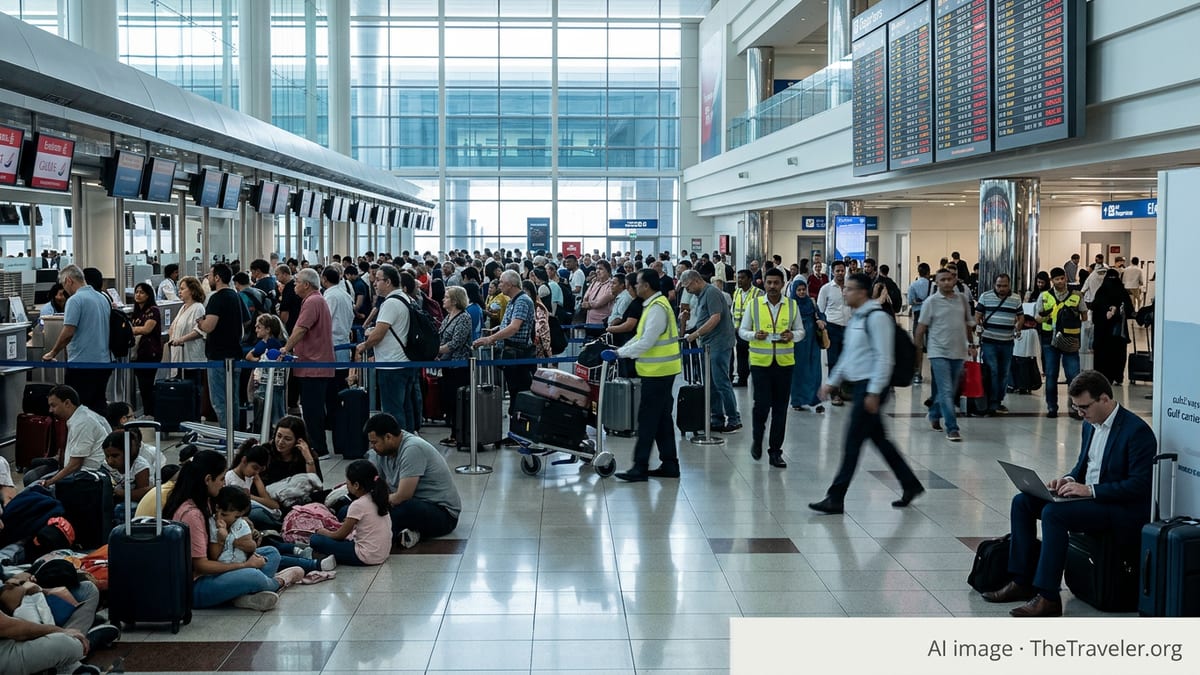
Inside terminal buildings across the country, scenes today ranged from orderly but lengthy lines at check-in and rebooking desks to crowded waiting areas where passengers have been camped out for days. Many travelers arriving at airports without confirmed new itineraries have found little success securing same-day departures, particularly on popular long-haul routes to Europe, North America and South Asia.
Information has remained a major pain point. With schedules changing rapidly, departure boards, airline apps and third-party flight trackers do not always align, leaving passengers unsure whether to remain at the airport or return home. Airport authorities have repeatedly stressed that the most reliable information remains direct communication from airlines, but long waits to reach support channels have only added to traveler frustration.
The financial strain is also mounting. Extra hotel nights, local transport, meals and the cost of rebooked tickets on alternative routes are falling heavily on passengers, especially those whose travel insurance excludes disruption linked to regional conflict or airspace closures. Travel agents in the UAE and abroad are reporting surging demand for any available seats into and out of the country over the coming days, often at significantly higher prices than before the crisis.
For now, aviation authorities and airlines caution that while today’s wave of 417 cancellations and 257 delays is expected to ease as more flights gradually return to the skies, the situation remains fluid. Travelers with upcoming journeys through Dubai, Abu Dhabi, Sharjah, Al Maktoum, Ras Al Khaimah, Fujairah or Al Ain are being urged to monitor updates closely and build in generous buffers for any essential trips.