

More news on this day
UK holidaymakers heading to Spain are being urged to prepare for disruption, as a fresh wave of airport strikes across the country begins to affect flights on some of the most popular routes from Britain.
Get the latest news straight to your inbox!
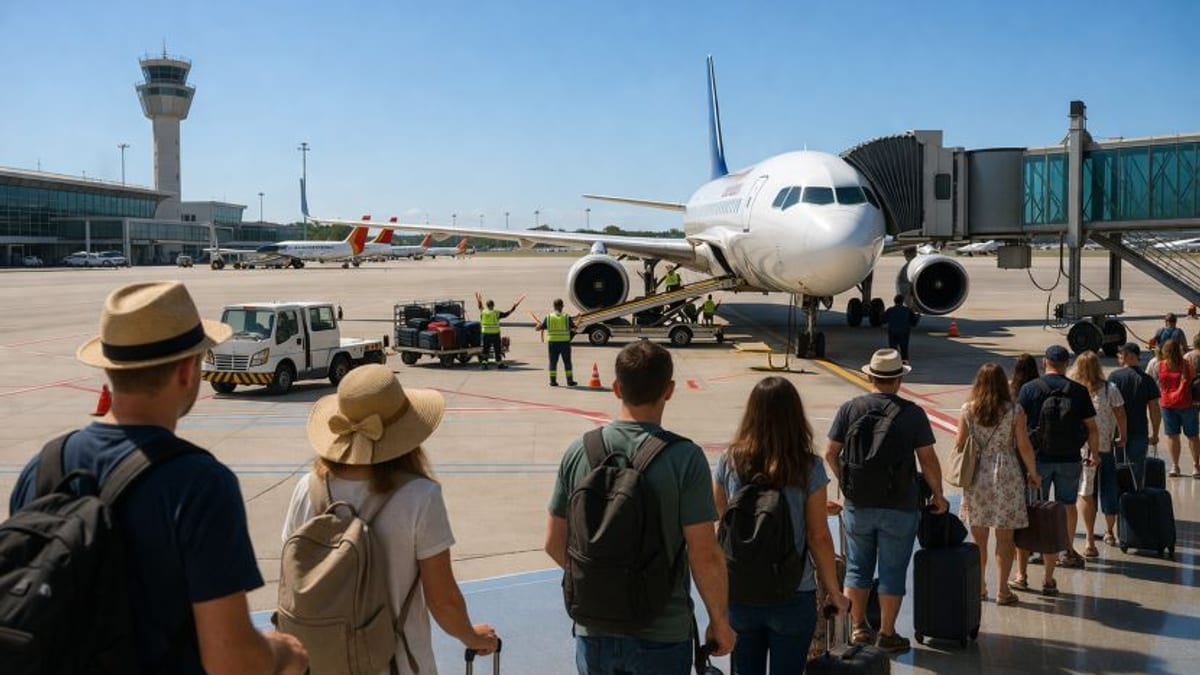
Image by Travel And Tour World
Strike Action Targets Key Spanish Gateways
Publicly available information from Spanish media and travel industry updates indicates that staff walkouts are under way at several major airports used by UK travellers, including hubs on the mainland and in key coastal and island destinations. The industrial action is focused on ground handling and support services that keep flights moving, making it particularly disruptive for holiday traffic from Britain.
Early reports point to disruption building at airports that handle large volumes of UK point to point services operated by low cost and leisure airlines. These airports are central entry points for British visitors heading to resorts on Spain’s Mediterranean coast and island destinations that are heavily dependent on tourism.
While the scale of the first strike days appears uneven from airport to airport, the pattern emerging is one of longer queues, sporadic flight delays and growing pressure on baggage handling at the busiest terminals. Aviation data and traveller accounts suggest that even airports not directly targeted by action are beginning to feel the knock on effect as airlines adjust schedules and reposition aircraft.
Spain remains one of the top destinations for UK holidaymakers, so even limited reductions in staffing levels at large airports can have an outsized impact on British travellers. Industry assessments of recent years show that Spain already accounts for a significant share of air traffic management delays in Europe, so further strain from industrial action risks amplifying existing bottlenecks.
UK Travellers Face Queues, Cancellations And Missed Connections
For British passengers, the most immediate impact is being felt in longer waiting times at check in, security and baggage drop, as well as slower aircraft turnaround times on the ground. Travel forums and social media posts monitored in recent days describe sizeable queues forming at departure terminals in Spain, with some UK bound flights held on the ground while ramp and baggage teams work through backlogs.
Airlines serving the UK Spain market have started pre emptive schedule changes on affected days, trimming frequencies or consolidating services where possible. Publicly available schedules show a rising number of delays and a growing list of flights that have been retimed to avoid peak strike periods, leaving some UK travellers facing earlier departures, late night arrivals or forced overnight stays.
Package holiday operators that rely heavily on weekend rotations into Spanish resorts are also having to review their operations. Industry reporting indicates that tour companies are warning customers about potential wait times on arrival and advising greater flexibility on transfer times between airport and accommodation, particularly at busy gateways where coach operations depend on tightly timed flight arrivals.
The disruption is not limited to direct point to point trips. UK travellers connecting via Spanish hubs to long haul destinations are being advised by airlines and travel agents to allow additional time, as missed connections become more likely when aircraft are held up on the ground. Even modest delays of 30 to 60 minutes can trigger a chain reaction across an airline’s network during peak travel periods.
Union Demands And Duration Of Action Remain In Focus
The strikes stem from long running pay and working condition disputes between unions representing airport and handling staff and the private and public operators that manage Spain’s aviation infrastructure. According to coverage in Spanish and European news outlets, union representatives argue that staffing levels have not kept pace with the rebound in tourism and that wages have lagged behind inflation, particularly at airports serving high growth leisure markets.
Management responses published in recent days emphasise efforts to maintain minimum service levels and highlight the use of contingency staffing and revised shift patterns in an attempt to keep operations flowing. Legal minimum service requirements in Spain mean that a core level of flights must continue to operate even on strike days, but experience from previous industrial action suggests that this framework does not prevent longer queues or knock on delays.
The industrial calendar indicates that strike days are currently planned across several weeks, often clustered around weekends and busy travel periods when the impact on air traffic is greatest. However, the intensity and precise timing of walkouts can change at short notice as negotiations progress, making it difficult for airlines and travellers to plan with certainty.
Travel analysts note that European aviation has become increasingly vulnerable to such disruptions, with recent seasons marked by strikes in several major markets. Data from pan European air traffic bodies shows that staffing and capacity constraints, including industrial action, are now among the leading drivers of delay minutes across the continent.
Advice For British Holidaymakers Heading To Spain
Consumer groups and travel experts are urging UK passengers to follow airline communications closely and to treat departure and arrival times as subject to change while the strikes continue. Many carriers now update their websites and apps throughout the day, providing status alerts, rebooking options and guidance on airport check in times for affected flights.
Passengers are widely being encouraged to arrive earlier than usual at Spanish airports on strike days, particularly for morning departures when security and check in queues can be at their longest. Travellers with separate connecting tickets are being warned that they carry additional risk, as airlines are generally only obliged to assist with missed onward travel when all legs are booked under a single reservation.
Experts in travel rights point out that entitlement to compensation or care can vary depending on the cause of disruption and whether it falls within an airline’s control. Industrial action by airport based staff is sometimes treated differently from strikes directly affecting airline employees, making it important for passengers to review the terms of both their air carrier and their travel insurance.
With Easter and the early summer holiday season approaching, travel industry observers say the situation in Spain will be closely watched by UK tour operators and airlines alike. Many are already shifting capacity within their networks, and some are expected to promote alternative destinations if bottlenecks at Spanish airports persist.
Wider Implications For Spain’s Tourism Hotspots
The timing of the strikes is sensitive for Spain’s tourism industry, which has been experiencing strong demand from the UK market. Recent reporting on European travel trends indicates that British holidaymakers are continuing to favour Mediterranean destinations, with Spain among the chief beneficiaries of shifting demand away from parts of the eastern Mediterranean.
Prolonged disruption at major airports risks denting that momentum, particularly if travellers begin to perceive the journey as unreliable or overly stressful. Tourism businesses in coastal regions and on the islands depend heavily on smooth air links, and even short periods of disruption can complicate staffing, inventory planning and pricing for hotels, restaurants and tour operators.
At the same time, regional governments and tourism boards are conscious of growing local unease about rising visitor numbers in some destinations. The industrial action is unfolding against a backdrop of wider debates about tourism’s impact in Spain, from housing pressures in popular cities to crowding in resort areas during peak season.
For now, the immediate priority for the UK Spain travel market is operational rather than political. How quickly unions and airport operators can find common ground on pay and staffing will determine whether the first wave of strikes is a short lived disruption or the start of a longer period of uncertainty for British travellers heading to their favourite Spanish destinations.