


More news on this day
The United Kingdom has moved into a leading role in an emerging international drive to protect undersea internet cables running through the Strait of Hormuz, as governments from the United Arab Emirates, Germany, South Africa, Australia, Italy, Singapore and other states warn that damage to the region’s fibre infrastructure could reverberate through global connectivity and tourism-dependent economies.
Get the latest news straight to your inbox!
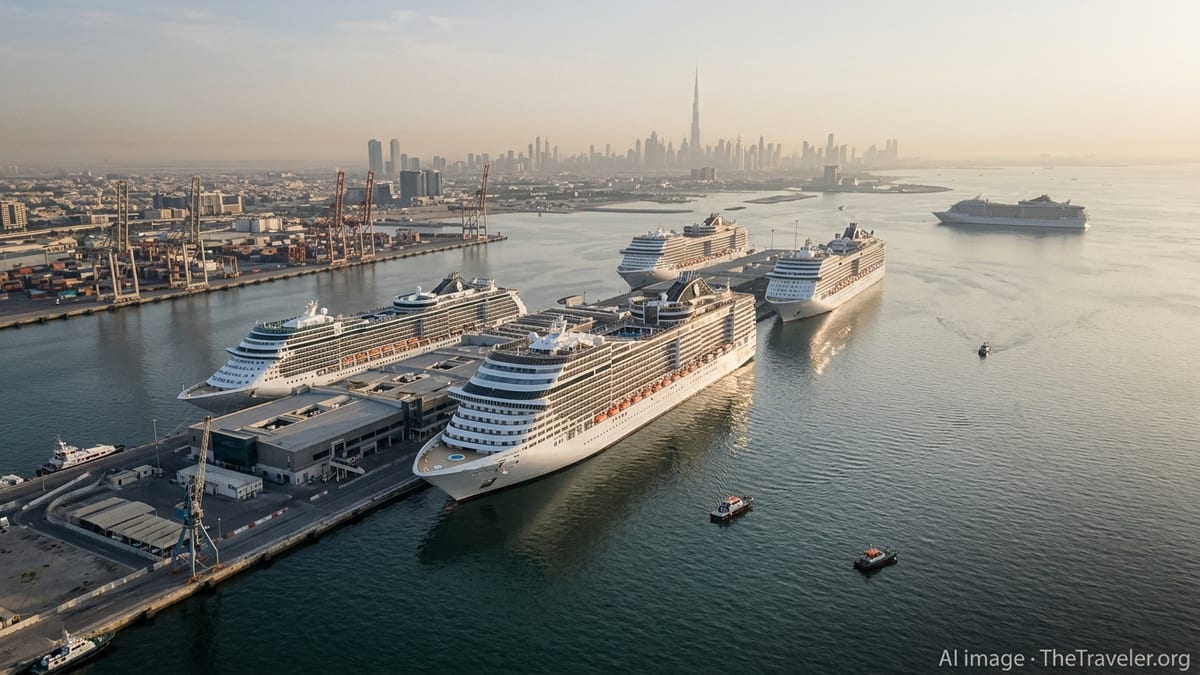
Strait of Hormuz Crisis Expands From Oil To Data Flows
Recent tensions around the Strait of Hormuz have already focused global attention on the waterway’s role in moving nearly a fifth of the world’s seaborne oil. Now, analysts and regional media are highlighting a quieter vulnerability beneath the surface, where clusters of submarine cables carry internet traffic linking Gulf economies to Europe and Asia. Publicly available mapping shows that systems such as FALCON, AAE-1, TGN-Gulf and SEA-ME-WE routes converge in or near the narrow channel between Iran and Oman, forming a dense digital chokepoint for states on both sides of the Gulf.
Reports from regional outlets associated with Iran’s Revolutionary Guard have underscored that at least seven major telecommunications cables transit the area, describing the network as a critical pressure point in the broader confrontation. Commentary in European and Middle Eastern media indicates that the warning has been interpreted by many governments as a reminder that modern sanctions, financial flows and even day-to-day tourism now rely on infrastructure that is largely invisible to the public but increasingly exposed to geopolitical risk.
Security observers note that while shipping disruption in the Strait would immediately hit fuel prices and trade, damage to undersea cables could produce a more complex, cascading shock. Reduced bandwidth, higher latency and patchy service across the Gulf could reach consumers and travel businesses far beyond the region, from online booking platforms in Europe and Asia to airline operations centers and payment processors routed through cloud facilities in the United Arab Emirates and Bahrain.
UK Rallies Partners In New Digital-Security Diplomacy
The UK has used an April summit on the Strait of Hormuz to frame cable security as part of a wider effort to safeguard navigation and economic stability. A joint leaders’ statement issued in London by the United Kingdom and France and endorsed by a widening group of countries linked maritime safety to the protection of critical undersea infrastructure, citing the need to coordinate diplomatic, economic and security responses across allied capitals.
Following the summit, additional states from Europe, the Indo-Pacific and Africa publicly associated themselves with the statement, including Germany, Italy, Australia, South Korea and several Nordic and Baltic nations. According to official readouts and international organization briefings, partners stressed that the same corridor that carries oil and liquefied natural gas also supports cloud services, digital trade and data flows vital to travel, logistics and financial services.
British officials have separately signaled in domestic media that London is reviewing options to contribute naval and surveillance assets alongside allies in the Gulf. Commentators argue that any such deployments, whether under existing European maritime awareness initiatives or new ad hoc coalitions, are increasingly likely to consider undersea cables and coastal landing stations as part of the strategic picture, rather than focusing solely on tanker traffic.
Tourism And Travel Industries Confront Connectivity Risk
Industry analysts say the threat is not merely theoretical. Previous cable failures in the Red Sea and along Africa’s west coast in 2024 showed how quickly localized damage can slow or interrupt service across multiple countries. Technical reports on those incidents found that outages forced operators to reroute traffic over longer paths, causing noticeable delays for cloud services, banking platforms and online booking systems serving airlines, hotels and tour operators.
Travel-sector specialists warn that a similar disruption centered on the Strait of Hormuz could ripple through some of the world’s fastest-growing tourism markets. Gulf destinations such as Dubai, Abu Dhabi, Doha and coastal resorts in Oman depend on always-on connectivity for everything from digital visa processing to real-time room inventory management. Disruptions to payment gateways, check-in systems or airline scheduling tools, even if temporary, could translate into flight delays, overbooked hotels and frustrated visitors at the start of high season.
Beyond the Gulf, countries like South Africa, Singapore, Germany and Australia, which maintain strong air links and tourism flows with the region, are watching the situation closely. Travel and hospitality groups in these markets rely on interconnected reservation platforms and loyalty schemes that route data through regional hubs in the Middle East. Any significant slowdown could swell call-center volumes, complicate customer service and undermine confidence in cross-border travel at a time when long-haul tourism is still rebuilding.
Global Patchwork Response Highlights Systemic Vulnerabilities
The emerging coalition that includes the UK, UAE, Germany, South Africa, Australia, Italy and Singapore reflects a broader recognition that undersea cables are a shared vulnerability rather than a purely regional concern. Policy research published over the past two years has emphasized that around 95 percent of international data traffic moves through submarine fibre, and that key chokepoints from the Red Sea to the Baltic have already experienced politically sensitive damage.
In response, governments on several continents are accelerating work on redundancy and resilience. Initiatives range from new cable projects designed to add alternative routes around high-risk straits to regulatory efforts aimed at encouraging operators to diversify landing sites and coordinate incident reporting. Some Gulf states are investing in terrestrial links through neighboring countries, while European and Asian partners promote standards for rapid restoration and traffic rerouting when faults occur.
However, experts caution that physical protection for cables in narrow, heavily trafficked waters such as the Strait of Hormuz remains challenging. Repair ships face complex permitting, security and insurance conditions, and even routine fixes can take weeks. The current crisis has therefore intensified calls for real-time monitoring of subsea infrastructure, stronger cooperation between navies and telecom firms, and contingency planning across sectors that depend on uninterrupted connectivity, including aviation and tourism.
Digital Resilience Becomes A Core Tourism Strategy
For the global travel industry, the Hormuz cable threat is accelerating a shift in thinking about risk. Destination marketing agencies and tourism boards in Europe, the Middle East, Africa and Asia are increasingly incorporating digital infrastructure scenarios into their crisis exercises, alongside more familiar concerns such as pandemics, natural disasters and airspace closures. Consultants advising hotel chains and cruise operators now recommend mapping their exposure to specific submarine routes and cloud regions, and testing manual fallbacks when online systems slow or fail.
Some leading destinations are also using the moment to argue for investment in local data centers and edge-computing facilities that can keep core services running even when international links are degraded. Others are pushing for clearer communication protocols so that airlines, tour operators and travelers receive timely updates if cable incidents start to affect bookings, payments or border processing.
As the UK and a diverse group of partners rally around the Strait of Hormuz, observers suggest that tourism may emerge as one of the clearest test cases of how societies cope with shocks to their digital lifelines. Whether the current crisis passes without major damage or triggers a serious outage, the episode is already prompting governments and travel businesses to treat undersea cables not as obscure engineering projects but as front-line assets in the effort to keep global journeys moving.