

More news on this day
UK travellers currently in Bahrain are being urged by tour operators and travel advisories to leave while commercial options remain, as regional airspace restrictions keep flights severely limited and raise concerns about possible border disruption.
Get the latest news straight to your inbox!
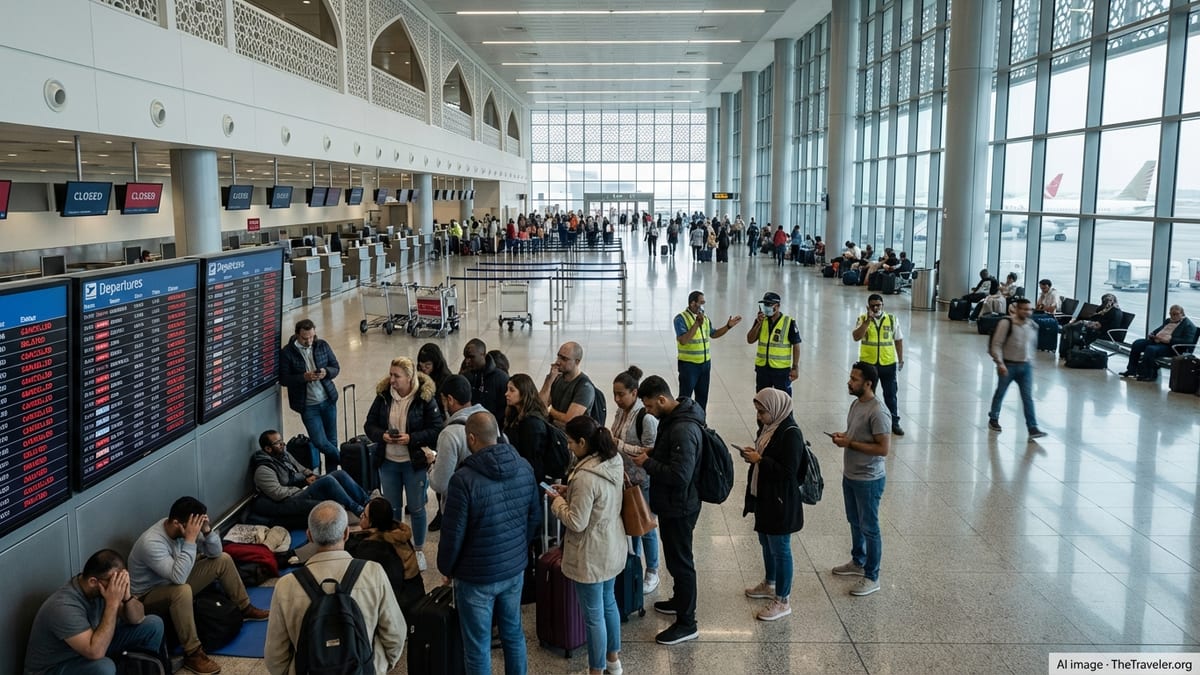
Heightened Warnings for UK Nationals in Bahrain
Recent updates to Middle East travel advisories have placed Bahrain among the states where non-essential trips from the UK are strongly discouraged, reflecting ongoing instability in regional airspace and the risk of sudden operational changes. Package holiday companies with UK customers in the Gulf report that they are prioritising departures from Bahrain and neighbouring hubs, rather than sending in new arrivals, in order to reduce the number of visitors who could become stranded if conditions deteriorate further.
Publicly available guidance on crisis support for British nationals overseas highlights that, in situations where commercial routes are still operating, individuals are expected to make their own arrangements to leave while seats are available. Those who delay departure may later find that capacity is extremely limited or that routes are suspended altogether. This framework is shaping the current messaging directed at UK tourists in Bahrain, where the number of outbound flights remains far below normal schedules.
Reports from major travel brands in the UK and Ireland indicate that Bahrain is being treated in line with wider Gulf restrictions, with advice against all but essential travel and notifications that flights to and from the region may be cancelled or heavily delayed at short notice. Tourists already in Bahrain are being encouraged to speak with airlines and tour companies as early as possible to secure alternative routing, in many cases via neighbouring Saudi Arabia, which is acting as a temporary transit point for some carriers.
Alongside UK-specific information, international travel coverage notes that several governments, including the United States, continue to recommend that their citizens depart countries across the Gulf and wider Middle East while commercial options still exist. This broader pattern of advice is reinforcing the sense of urgency around leaving Bahrain sooner rather than later, particularly for visitors without a compelling reason to remain.
Airspace Closures and a Patchy Return of Flights
Bahrain’s role as a regional aviation hub has been sharply curtailed in recent weeks by conflict-related airspace closures and the knock-on impact on long-haul corridors between Europe and Asia. Travel industry reporting describes Bahrain’s skies as effectively shut for an extended period, with only a small number of tightly controlled corridors kept open to facilitate essential movements and carefully coordinated repatriation services.
According to specialist aviation and consumer travel outlets, a partial reopening of Bahrain’s airspace is now under way following a temporary ceasefire arrangement in the wider regional conflict. Flights are beginning to return to Bahrain International Airport, but on a much-reduced basis compared with pre-crisis schedules. Coverage indicates that the airport operator is working with airlines on a gradual ramp-up, emphasising safety and operational certainty over speed.
Despite that cautious restart, Gulf-focused travel analysis shows that airspace over Bahrain and nearby Kuwait remains heavily restricted, with many commercial services still being rerouted or consolidated. Some carriers are reported to be operating only a handful of services via alternative hubs, including Dammam in Saudi Arabia, effectively bypassing Bahrain as a transit point while still providing limited connectivity for passengers trying to get home.
This fragmented network leaves UK tourists facing a complex journey out of Bahrain. Instead of the usual mix of direct flights and straightforward regional connections, many travellers must navigate last-minute schedule changes, overnight stopovers and indirect routings through other Gulf or European hubs. Seats on these remaining services are under strong pressure from both residents and foreign visitors attempting to leave at the same time.
From Travel Warning to Practical Exit Challenges
Travel crisis documentation released by the UK government in past emergencies explains that once commercial routes become “extremely limited,” evacuating a large number of people from a country becomes significantly harder, and any organised departures depend on availability of aircraft, permissions and safe operating conditions. The present situation in Bahrain is moving toward that scenario, with passengers reporting difficulty in finding reasonably timed or affordable seats, particularly on direct or one-stop routes back to the UK.
International media coverage of the wider Middle East disruption describes a region-wide scramble for outbound flights, with travellers in multiple countries rushing to secure bookings as airlines trim schedules and avoid conflict-affected airspace. Analysts quoted in these reports compare the scale of the shutdown to the early stages of the pandemic, pointing out that both passenger and cargo flows through key Gulf hubs have been heavily affected.
For UK visitors in Bahrain, the principal challenge is not that the border is formally closed, but that practical options are shrinking. With Gulf-based carriers running reduced timetables and some European airlines cutting or consolidating services, competition for remaining seats is intense. Accounts shared across travel forums describe passengers being rebooked multiple times, routed via unfamiliar airports or offered places on special repatriation-style services with flexible departure dates.
Travel companies are advising customers to avoid travelling to the airport without confirmed rebooking, reflecting experiences in other regional hubs where large numbers of passengers have arrived at terminals only to find flights cancelled or rescheduled at short notice. Instead, travellers are urged to maintain close contact with airlines through digital channels, keep devices charged and remain prepared to move quickly if a seat becomes available.
Risk of Sudden Border and Consular Disruptions
While there is currently no widespread reporting of Bahrain imposing strict exit bans on foreign tourists, recent history in the region shows how quickly border regimes can change in response to security incidents. During earlier crises, neighbouring states have implemented abrupt airport closures, suspended land crossings or imposed new documentation checks, all of which significantly slowed or temporarily halted the movement of foreign nationals trying to depart.
In the present conflict, several countries across the Middle East have already seen embassies scale back services or close their doors temporarily, according to European and North American news outlets tracking consular operations. In parallel, some states have instructed their citizens to leave parts of the region immediately, citing the potential for further escalation and the risk that exit routes could narrow or close with little warning.
Against this backdrop, UK tourists in Bahrain are being advised that a relatively orderly departure now may be safer and more predictable than waiting in the hope of a full return to normal travel patterns. If the security situation were to worsen or airspace restrictions were reimposed, the small number of restored flights through Bahrain International Airport could disappear again, leaving only sporadic overland or maritime options, each carrying its own logistical and safety considerations.
Additionally, observers note that consular assistance can be constrained when flight options are scarce, as governments may find it difficult to arrange charter or assisted departures without reliable access to airspace and regional airports. This possibility is contributing to the current emphasis on self-evacuation, encouraging British visitors to make use of any confirmed commercial route while it still exists.
Advice for Travellers Still in Bahrain
Travel experts and consumer advocates recommend that UK nationals remaining in Bahrain take proactive steps to safeguard their mobility. This includes monitoring airline apps and official social media feeds for rapid schedule changes, maintaining flexible travel plans and ensuring that passports and any necessary visas remain valid for alternative routings through third countries.
Tour operators stress the importance of confirming any rebooked itinerary before checking out of accommodation or heading to the airport, given the frequency of last-minute alterations. Where possible, travellers are advised to keep an extra night of accommodation in reserve or at least budget for contingencies, as some repatriation-style flights have departed at short notice during overnight windows when airspace has been temporarily cleared.
Insurance providers, meanwhile, are updating policy guidance to reflect the escalating risk environment in the Gulf. Some published notices warn that cover for non-essential trips may be restricted once formal advisories against travel are in place, although emergency medical and basic assistance benefits typically continue for those already in the country. Travellers are urged to review their policy wording closely and keep copies of key documents both online and offline.
For UK visitors weighing whether to stay or go, the central message emerging from public travel advice, airline notifications and on-the-ground reports is to act sooner rather than later. With Bahrain’s flight network still operating at a fraction of its usual capacity and the broader regional outlook uncertain, leaving while there are still commercial seats available remains the primary recommendation for tourists who are able to do so.