

More news on this day
Hundreds of British holidaymakers have found themselves effectively trapped on cruise ships in Dubai and across the Gulf, as escalating tensions with Iran, missile alerts and airspace closures turn winter-sun voyages into an anxious wait for evacuation.
Cruise Holidays Halted as Gulf Turns Into Flashpoint
What began as a routine cruise season in the Arabian Gulf has been thrown into disarray as a spiralling conflict involving Iran, the United States and Israel brings shipping and aviation to a near standstill. Multiple large cruise ships, including vessels operated by MSC Cruises, TUI Cruises and Celestyal Cruises, are currently docked in Dubai and other Gulf ports, their departure schedules suspended and passengers unable to continue their itineraries or fly home.
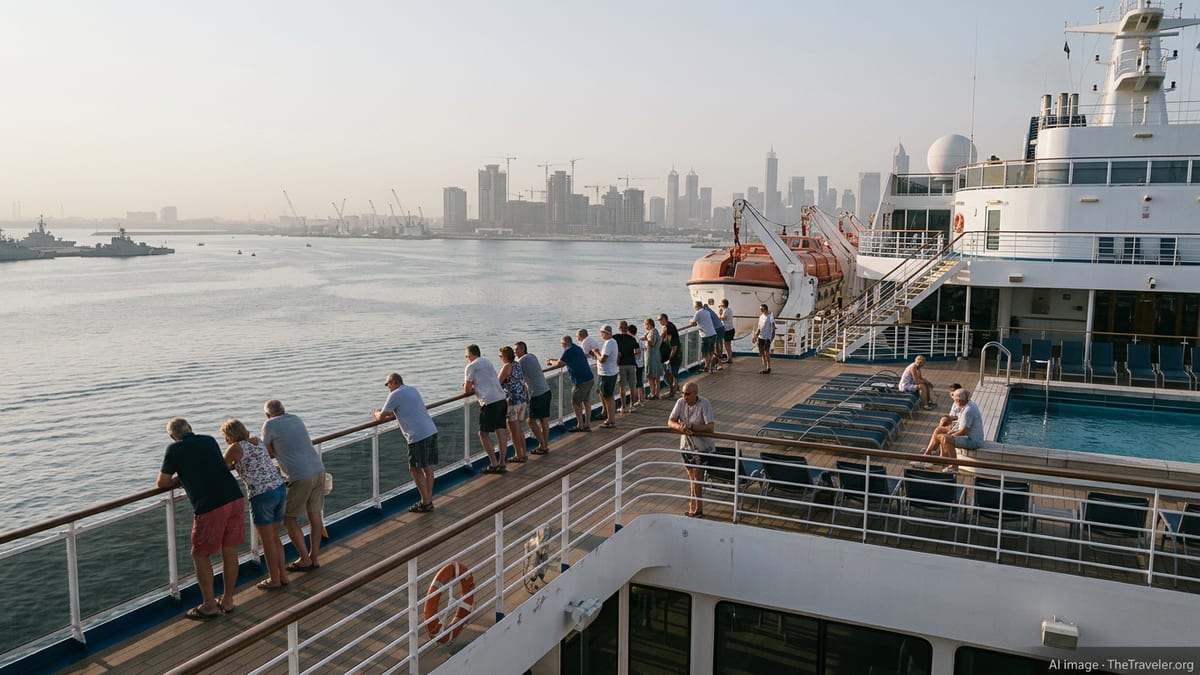
Operators have cancelled upcoming sailings around the United Arab Emirates and wider Gulf region as authorities tighten security and insurers flag elevated war risk. Ships that should have been rotating through popular stops such as Abu Dhabi, Doha and Bahrain are instead remaining in port, taking on the role of floating hotels while the situation develops. For many UK passengers, the view from the pool deck is no longer of carefree city skylines but of military aircraft, patrolling coastguards and an unusually quiet harbour.
The partial closure of the Strait of Hormuz, one of the world’s most critical maritime corridors, has further complicated movements. Cruise lines are avoiding transits through the narrow waterway after Iranian forces and allied groups increased missile and drone activity. With regional airspace also intermittently shut and commercial schedules slashed, many ships that might otherwise reposition to safer waters are effectively pinned in place.
Against this backdrop, reports circulating among passengers of Iranian officials threatening to target shipping in the Gulf have heightened unease. While governments and cruise companies stress that civilian vessels are not believed to be direct targets, the risk of miscalculation in congested waters has become a central concern for both security planners and anxious families back in the UK.
Life Afloat: ‘Gilded Cage’ for Stranded British Holidaymakers
For the British tourists caught up in the disruption, daily life has narrowed to the confines of their ships. Some have described their situation to UK media as a “gilded cage” experience: safe for now, with food, cabins and entertainment still available, yet overshadowed by uncertainty and the constant scroll of news alerts on their phones.
On board vessels moored in Dubai’s Port Rashid and nearby cruise terminals, regular activities continue in a muted fashion. Restaurants serve reduced menus as ships manage supplies more cautiously, while entertainment teams adjust programmes to avoid appearing insensitive. Passengers report moments of surreal contrast, with people still gathering at pools and lounges even as they receive phone notifications of missile interceptions and new travel warnings.
The psychological toll is mounting, particularly for those travelling with children or elderly relatives. Many British guests say they spend hours in guest services queues seeking any information on when they might be flown out. Others are in constant contact with worried family members at home, sharing video clips of quiet terminals, distant explosions or defensive interceptors streaking across the night sky.
Yet, accounts from on board also highlight a sense of camaraderie amid the tension. Passengers have spoken of informal support networks forming in corridors and at breakfast tables, with WhatsApp groups springing up to share updates from news outlets, embassy advisories and airline notifications. Crew members, many of whom come from across Asia and Eastern Europe, are praised by guests for calm communication even as they manage their own anxieties about the unfolding conflict.
Emergency Repatriation Flights and Government Warnings
As the disruption continues, governments are moving from travel advisories to active evacuation planning. The UK Foreign, Commonwealth & Development Office has urged Britons across the region, including those on cruises, to register their presence and closely follow official guidance. Ministers in London have confirmed that contingency plans for mass repatriation are in place, with priority given to the most vulnerable.
In Dubai, the first specially arranged flights for stranded European cruise passengers have already departed, and UK citizens are being allocated seats where possible on both chartered and limited commercial services. Cruise lines are working with Gulf carriers such as Emirates and Etihad to secure blocks of seats from Dubai, Abu Dhabi and other regional hubs, though capacity remains tight and schedules volatile.
Passengers on ships docked in Dubai describe a pattern of sudden late-night announcements advising travellers to be ready for early-morning transfers to the airport, often with only a few hours’ notice as flight slots are confirmed. Those selected for outbound flights are escorted off in tightly controlled groups, passing through terminals operating under heightened security and with visible military and police presence.
At the same time, the UK government has toughened its travel advice for the wider Gulf, cautioning against all but essential travel to several states and warning transiting passengers that onward journeys cannot be guaranteed. Insurance companies are reviewing cover for trips involving the region, and travel agents back in Britain are scrambling to reroute or refund future bookings that included Gulf cruise segments or stopovers in Dubai and Doha.
Cruise Lines Juggle Safety, Logistics and Customer Fallout
For cruise operators, the crisis in the Gulf is a complex blend of safety management, logistical improvisation and brand risk. Companies with ships stranded in Dubai and neighbouring ports have activated emergency response teams, bringing together security experts, marine operations specialists and customer service leads to coordinate a day-by-day approach.
Routing decisions are being made in close consultation with local port authorities and naval coordination centres, with operators reluctant to move vessels until there is a clear and sustained reduction in threat levels. In some cases, lines have signalled that once air corridors stabilise, ships may reposition directly to the Mediterranean or other regions, bypassing the Strait of Hormuz altogether for the foreseeable future.
On the customer-facing side, cruise companies are issuing rolling updates to guests and travel agents, promising refunds, future cruise credits or alternative itineraries. However, the unprecedented nature of the disruption means policies are sometimes updated on the fly, contributing to confusion among passengers on board and those with imminent departures from UK airports. Call centres and social media teams are reporting heavy volumes from concerned customers seeking clarity on whether their spring and summer sailings will proceed.
Industry analysts say the episode could dampen demand for Gulf cruising in the short term, particularly among British travellers now watching images of missile interceptions over Dubai’s skyline. The region has invested heavily in marketing itself as a glamorous winter cruising hub, but the optics of tourists sheltering on ships while military tensions flare nearby may prove difficult to shake.
What UK Travellers Need to Know Now
For Britons currently booked on Gulf cruises or planning to transit through Dubai, the most urgent advice is to stay informed and flexible. Travel experts recommend checking official Foreign Office advisories daily, staying in close contact with cruise lines and airlines, and being prepared for last minute itinerary changes or cancellations. Travellers are also urged to review their insurance policies carefully, paying attention to exclusions related to war and civil unrest.
For those already on the affected ships, patience and clear communication with both crew and fellow passengers are emerging as essential. While some repatriation flights are now leaving Dubai and nearby hubs, the process is likely to be phased, with vulnerable travellers prioritised. Passengers are being told to keep essential documents, medication and a small bag of belongings ready for rapid disembarkation should their names appear on an evacuation list.
Looking ahead, the cruise industry and Gulf tourism authorities will be under pressure to restore confidence once the security situation allows. That will likely involve visible coordination with international navies, reassessed routing that minimises exposure to contested waters, and more robust contingency planning for rapidly changing threat environments.
For now, however, hundreds of British tourists remain in limbo on ships moored off Dubai and other Gulf ports, watching the unfolding geopolitical drama from their balconies and sun decks, and waiting for a safe route back to the UK to open.