


More news on this day
Rail passengers using London Euston and key routes in and out of the capital are being urged to continue travelling only if their journey is essential, as a rare red heat warning and mounting infrastructure strain force operators to prolong emergency guidance.
Get the latest news straight to your inbox!
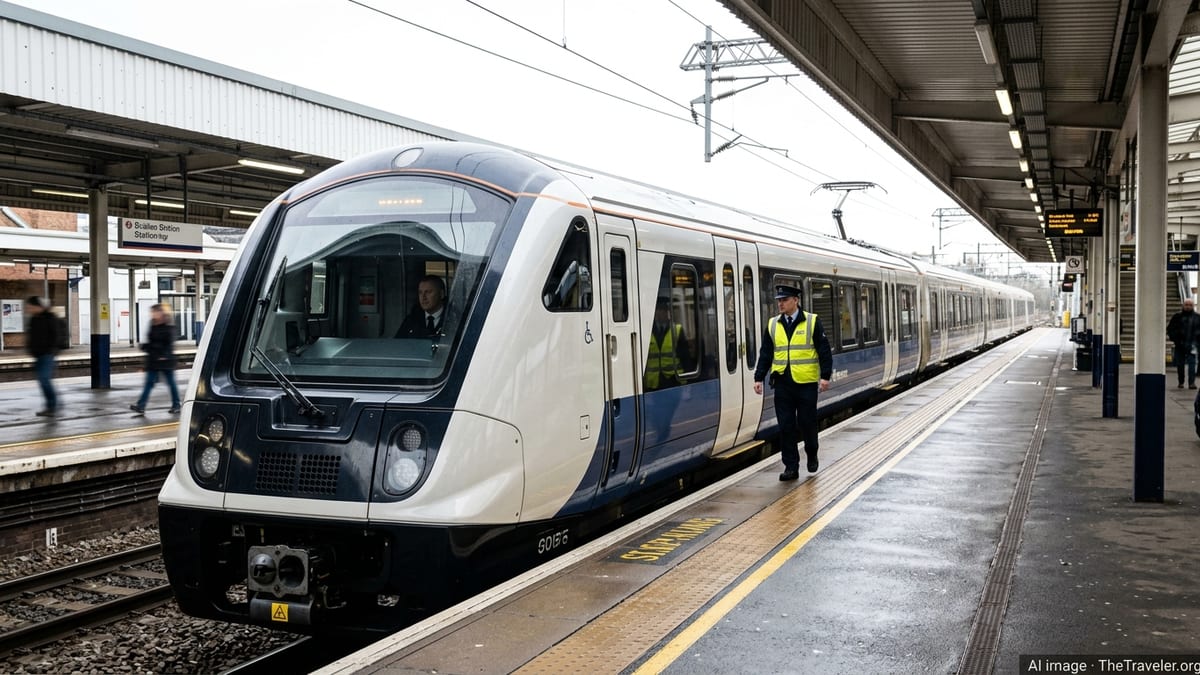
Warning extended as heatwave intensifies over network
Publicly available information from Network Rail’s media centre shows that an “essential travel” warning originally issued for Wednesday 24 June and Thursday 25 June has now been extended to cover Friday 26 June for services to and from London Euston. The change reflects updated forecasts that keep temperatures in the mid-30s Celsius across large parts of England and Wales, with the Met Office issuing a red extreme heat alert for parts of the country.
Rail services are expected to keep running on the affected days, but operators are moving to reduced-speed, amended timetables, resulting in slower journeys and a higher likelihood of disruption. Passengers are being advised that delays, short-notice cancellations and last-minute changes to stopping patterns remain likely while the extreme temperatures persist.
The extended warning focuses particularly on intercity and long-distance services using Euston, a major gateway for routes along the West Coast Main Line. Reports indicate that trains serving destinations in the Midlands, the North West and Scotland are among those facing the most significant timetable adjustments while the heatwave continues.
Alongside the Euston corridor, National Rail’s disruption information indicates that other operators across England and Wales are also maintaining advice to travel only if journeys are absolutely necessary during the period of hot weather, reinforcing the message that rail travel remains severely constrained in the short term.
Infrastructure at risk from extreme temperatures
Rail industry guidance explains that prolonged, intense heat can seriously affect infrastructure, particularly steel rails and overhead power lines. When temperatures rise sharply, rails can expand and, in extreme cases, buckle, forcing trains to run at lower speeds to maintain safety margins. Overhead wires on electrified routes can also sag or become damaged in the heat, creating a risk of failures that can shut down sections of the network.
According to published coverage of previous heat events, Network Rail typically responds by imposing blanket or corridor-specific speed restrictions where track temperatures are forecast to be highest. Those restrictions increase journey times and reduce the capacity of the network, as fewer trains are able to operate through key bottlenecks each hour. In addition, signalling and power equipment can be more prone to faults when exposed to sustained high temperatures.
This week’s conditions coincide with an already challenging period for parts of the national network, with separate disruption reported on the Midland Main Line after a serious collision near Bedford and capacity constraints remaining in place while investigations and repairs continue. The combination of incident-related disruption and heatwave precautions has sharply reduced the margin to recover from even minor issues.
Rail engineers are carrying out additional inspections and deploying maintenance teams to monitor vulnerable locations, particularly exposed stretches of track and complex junctions. Even with these measures, operators are highlighting that infrastructure risks are likely to persist until temperatures fall back to more normal seasonal levels, limiting the ability to restore full timetables quickly.
Impact on passengers and ticket flexibility
Passengers planning to use affected services over the next few days are being asked to reconsider their journeys where possible. National Rail’s status pages and individual operator updates stress that those who can postpone or re-route trips should do so, freeing up space on the reduced services for travellers who have no alternative to rail.
Several train companies are offering increased flexibility on existing tickets, allowing customers to travel on alternative days without additional charges if they choose to avoid the peak of the heatwave. Some operators are also advising that tickets purchased for the most heavily affected dates can be used on later services, subject to capacity, to help spread demand over a longer period.
National Rail’s disruption summaries emphasise that passengers who must travel should be prepared for longer journey times, busy trains and limited options in the event of cancellations. Replacement bus or taxi services are not guaranteed during the extreme weather period, as the same conditions affecting rail infrastructure can also undermine the reliability of parallel road networks.
Consumers are being encouraged to keep records of disrupted journeys, including retaining tickets and noting planned versus actual travel times, to support any delay compensation claims once services return to more stable operation. Compensation policies vary by operator, but most follow a delay-based framework that provides partial refunds for significantly extended trips.
Advice for those who still need to travel
For travellers whose journeys cannot be postponed, train companies are circulating practical advice aimed at reducing risks while on the move. Passengers are urged to carry sufficient water, wear light clothing and, where possible, avoid travelling at the hottest times of day. Stations and trains may experience higher-than-usual internal temperatures, particularly where older rolling stock offers limited air conditioning or ventilation.
Operators recommend that customers check journey planners and live departure boards immediately before departure and again during any connections, as timetables are being updated frequently in response to conditions on the ground. Travellers are also advised to build in generous interchange times, especially at major hubs, to account for late-running services.
Published guidance from past heatwaves indicates that passengers should be prepared for trains to be held at signals for extended periods if rails ahead are being inspected or if congestion builds up around restricted sections. In such cases, remaining on board unless instructed otherwise and following on-train announcements is generally advised as the safest course of action.
Accessibility needs are another concern highlighted by industry information. Passengers who require assistance are encouraged to contact operators in advance where possible so that staff can plan support around altered timetables and platform changes. With staffing also under pressure during extreme weather events, advance notice can be critical to ensuring that boarding and alighting can be managed safely.
Broader pattern of climate-related disruption
The extended essential-travel warning around London Euston fits into a broader pattern of weather-related disruption that has increasingly affected European transport networks in recent years. While historically associated more with autumn storms or winter snow, significant timetable changes tied to high temperatures have become more common as summers grow hotter and more volatile.
Reports from previous UK heat events show that mainline corridors, urban commuter networks and airport-linked services are all vulnerable when temperatures exceed thresholds built into legacy rail infrastructure standards. As a result, calls to travel only if essential are appearing more frequently alongside traditional advisories for flooding or high winds.
Industry documents and public statements suggest that long-term responses are focusing on reinforcing or replacing track, updating power systems and enhancing real-time monitoring of infrastructure temperature. However, many of these upgrades require years to implement and substantial investment, leaving operators reliant on temporary measures such as speed restrictions and emergency timetables when sudden heatwaves strike.
For now, passengers are being urged to treat the latest essential-travel guidance as a signal that conditions on the network remain fragile. With extreme temperatures forecast to ease only gradually, those planning rail journeys over the coming days are likely to face continued adjustments and should prepare for a more cautious operating environment than usual.